
Just so we’re all on the same page. Please ensure you’ve made yourself acquainted with my disclaimer
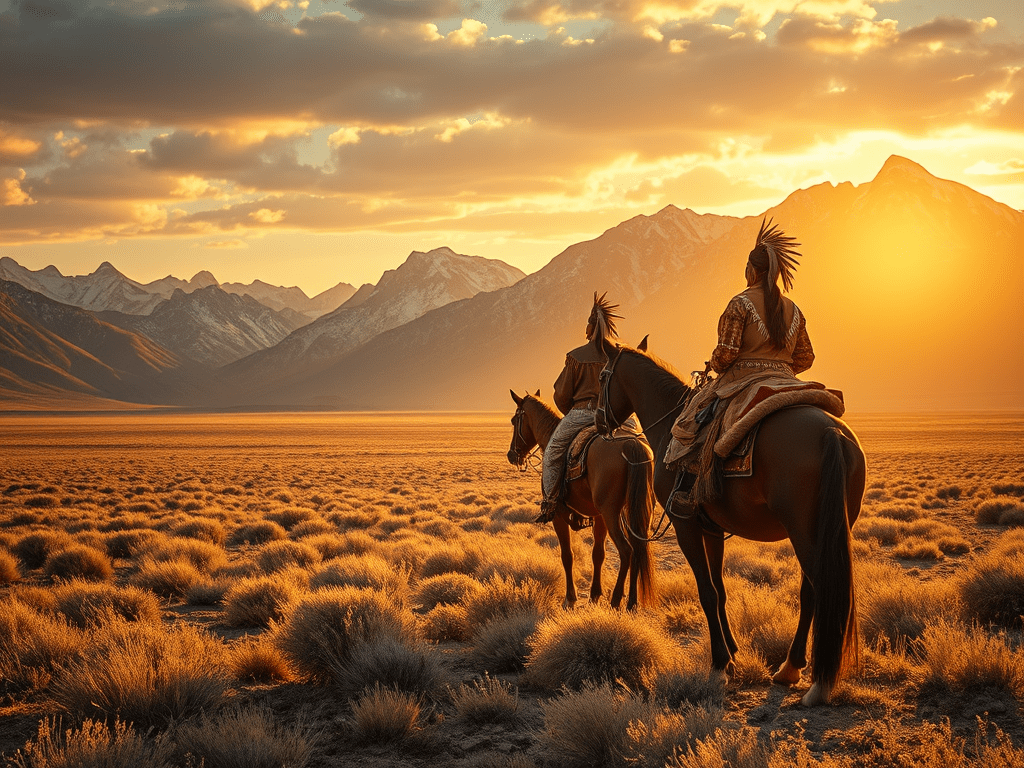
So, throughout this whole deep dive, I kept wondering—who were the last Native Americans to live their traditional way of life before colonization fully took over? Obviously, there’s no way to pinpoint an exact person or tribe, but the western interior and northern Great Plains were among the last areas in what’s now the U.S. to be significantly impacted by European colonization.
Places like Montana, Wyoming, North Dakota, South Dakota, and parts of the Rocky Mountains remained largely under Indigenous control until the late 19th century. Several factors slowed colonization in these areas, including:
1. Geography Was on Their Side
- Way Off the Beaten Path: This region was far from the early European strongholds along the East Coast and even from Spanish/Mexican settlements in the Southwest.
- Rough Terrain: The Rocky Mountains, endless plains, and straight-up unforgiving deserts made it hard for settlers to move in.
- Not Exactly Prime Real Estate (At First): The extreme climate and limited water sources didn’t exactly scream “dream homestead” to early colonizers.
2. Indigenous Tribes Weren’t Having It
- Dominance of Native Tribes: Powerful groups like the Lakota, Cheyenne, Comanche, and Crow dominated the plains, thrived on horseback, and effectively shut down expansion efforts for centuries.
- Late Interaction with Europeans: Many tribes in this area had little to no contact with Europeans until the 18th or even 19th century, especially those farther north and west.
3. Colonization Took Its Sweet Time
- Lewis and Clark (1804-1806): Their expedition was the first major American attempt to explore the region post-Louisiana Purchase, but actual settlement? That took decades.
- Homestead Act (1862): Large-scale settlement only kicked off when the U.S. literally gave away free land and built railroads to make getting there easier.
- The Final Stand: The Indian Wars of the late 19th century, including the Battle of Little Bighorn (1876) and Wounded Knee Massacre (1890), marked the end of Indigenous military resistance.
A Fight for Survival and Resilience
In the late 19th century, the Indigenous peoples of the Great Plains put up a relentless fight to protect their land, culture, and way of life. But despite their resistance, the U.S. government systematically broke treaties, stripped them of their homelands, and forced them onto reservations. The 1868 Treaty of Fort Laramie, which had promised the Lakota ownership of the Black Hills, was cast aside the moment gold was discovered there in the 1870s. It was a pattern repeated again and again—agreements were signed, land was promised, and then, when it became convenient for settlers, the promises were shattered.
But even as colonization pressed forward, Native American people refused to disappear quietly. Their fight was more than a war over land—it was a battle to keep their very identity from being erased.
The Destruction of a Way of Life
For Plains tribes, the buffalo was everything. It provided food, clothing, shelter, and tools—it was at the center of their survival, economy, and culture. The U.S. government understood this and used it as a weapon. In the 1870s and 1880s, the government openly encouraged the mass extermination of buffalo, wiping out millions in just a few decades. The once-thriving herds of over 30 million were reduced to a few hundred by the turn of the century. This wasn’t just an attack on a food source—it was a calculated move to starve Indigenous resistance into submission.
But the destruction didn’t stop there.
With the buffalo gone and many tribes confined to reservations, the government set its sights on breaking their cultural and spiritual traditions. Sacred ceremonies, like the Sun Dance, were banned, and spiritual leaders were persecuted. The goal was clear—strip away the old ways and force Indigenous peoples to assimilate into white American society.
Perhaps one of the most devastating policies of this era was the boarding school system. Indigenous children were taken from their families, sometimes by force, and sent to government-run schools where they were forbidden to speak their native languages, practice their traditions, or wear their traditional clothing. Their hair was cut, their names were changed, and any attempt to hold onto their heritage was punished.
The motto of these schools? “Kill the Indian, save the man.”
For many children, these schools weren’t just places of forced assimilation; they were places of abuse, neglect, and trauma. Some never saw their families again. Some didn’t survive at all.
Resilience Against All Odds: A Revival of Native Nations
Despite relentless efforts to erase them, Native American tribes across the continent have endured. Their spirit remained unbroken, and many of their cultures, though deeply scarred, survived. However, not all were so fortunate—some tribes were completely wiped out, their languages silenced, their traditions lost to war, disease, forced assimilation, and outright genocide. Entire tribes vanished, existing now only in scattered records. Yet, for the tribes that did survive, the story is one of revival, resistance, and resilience—a testament to their strength and determination to reclaim what was taken from them.
- Leaders fought back. Indigenous leaders across North America have spent decades battling for recognition, land, and sovereignty. Legal victories, like the return of sacred lands and the enforcement of treaty rights, have helped some tribes reclaim what was taken.
- Cultural revival movements have flourished. Once-banned languages are being revived and taught to new generations. Sacred ceremonies, dances, and traditions that were driven underground are now celebrated openly at powwows, festivals, and within Native communities.
- Tribal sovereignty stands strong. Today, Native Nations continue to fight for land, self-governance, and justice. The struggles are ongoing—land disputes, environmental battles, and political representation—but the voices of Indigenous peoples are louder than ever.
For those tribes that were lost, their stories deserve to be told. For those that survived, their future is being written by a generation determined to reclaim their identity. While the scars of colonization remain, Native American cultures are not relics of the past. They are living, breathing forces shaping the future, carrying forward the knowledge, resilience, and strength of those who came before them.
Grit, Gowns, and Gilded Dreams: Everyday Life in 1900 America
By the turn of the 20th century, the United States was undergoing rapid industrialization and urbanization, yet much of the population still lived in rural farming communities. Life was defined by economic class, geographic location, and ethnicity, but overall, it was a time of transition from a largely agrarian society to an industrialized world.
Population & Demographics
- Total U.S. population: ~76.2 million people.
- Urban vs. Rural: Around 40% lived in cities, while the majority still lived in rural areas.
- Largest cities: New York City (3.4 million), Chicago (1.7 million), Philadelphia (1.3 million).
- Immigration boom: Millions of immigrants, mostly from Southern and Eastern Europe (Italians, Poles, Russians, Greeks, etc.), were arriving through Ellis Island, dramatically changing the country’s demographics.
Diet: Staple Foods & Drinks
Most Americans still ate home-cooked meals, often made with fresh, seasonal, and locally available ingredients. Processed and pre-packaged foods were starting to emerge but were not widespread.
- Staple Foods:
- Bread & Biscuits (homemade or bakery-bought).
- Meat (beef, pork, chicken, and game meats).
- Potatoes & Root Vegetables (carrots, turnips, onions).
- Beans & Rice (common for working-class families).
- Eggs & Dairy (milk, butter, cheese).
- Seasonal Fruits & Vegetables (apples, pears, cabbage, tomatoes).
- Canned goods (corn, beans, tomatoes) were growing in popularity.
- Drinks:
- Water (often contaminated in cities).
- Coffee & Tea (very common).
- Milk (unpasteurized, leading to illness in some cases).
- Beer, Cider, & Whiskey (alcohol was widely consumed, even at breakfast).
- Soda Drinks like Coca-Cola (invented in 1886) and Dr. Pepper (1885) were gaining popularity.
Clothing & Fashion
Clothing styles were dictated by social class, gender, and location (urban vs. rural).
- Men’s Clothing:
- Suits (wool, dark-colored, three-piece for middle-class & wealthy).
- Button-down shirts with stiff, high collars.
- Suspenders (belts weren’t common yet).
- Bowler hats & fedoras in cities, wide-brimmed hats in rural areas.
- Women’s Clothing:
- Long dresses with corsets (for upper and middle-class women).
- Gibson Girl style (high-neck blouses, puffed sleeves, long skirts).
- Aprons & simpler dresses for working-class women.
- Children’s Clothing:
- Girls wore long dresses with pinafores.
- Boys wore knee-length pants (knickerbockers) until their teens.
- Shoes: Most were leather boots or lace-up shoes. Sneakers existed but were uncommon.
Housing & Living Conditions
- Urban Housing (Cities):
- Tenement apartments for immigrants and factory workers (often overcrowded, poorly ventilated).
- Row houses and townhouses for middle-class families.
- Mansions & brownstones for the wealthy.
- Rural Housing (Farms & Small Towns):
- Log cabins, clapboard houses, or sod houses (especially in the Midwest & frontier regions).
- Lacked electricity, running water, and indoor plumbing (outhouses were common).
- Heating & Lighting:
- Coal or wood-burning stoves for heat.
- Kerosene lamps & candles for lighting (electricity was rare outside cities).
Health & Medicine
- Life expectancy:
- Men: ~47 years.
- Women: ~50 years.
- If you survived childhood, you could often live into your 60s or 70s.
- Child Mortality Rate: ~20-30% of children died before age five due to disease and poor sanitation.
- Common Health Issues:
- Infectious diseases (tuberculosis, pneumonia, diphtheria, typhoid fever).
- Malnutrition & vitamin deficiencies (especially in poor communities).
- Workplace injuries (factories and mines were dangerous).
- Medical Care:
- Doctors were expensive, and most treatments were home remedies.
- Germ theory was still new, so many treatments were unsanitary.
- Vaccines existed for smallpox but not much else.
Social Structures & Family Life
- Marriage & Family:
- Most people married in their early 20s.
- Women typically had 4-6 children (though infant mortality was high).
- Monogamy was the norm, divorce was rare and socially frowned upon.
- Challenges of Childhood:
- Many children worked in factories, mines, and farms.
- Public education was improving, but many kids left school early to work.
Entertainment & Leisure
- Popular Games & Activities:
- Board games: Checkers, chess, and Parcheesi.
- Outdoor games: Marbles, hopscotch, and jump rope.
- Sports: Baseball (growing in popularity), boxing, and horse racing.
- Baseball began taking shape in the mid-19th century, with the first recorded game played in 1846 in Hoboken, New Jersey. The sport grew in popularity, especially after the Civil War, when soldiers spread the game across the country. In 1869, the Cincinnati Red Stockings became the first professional team, and by 1876, the formation of the National League helped establish baseball as an organized professional sport. By 1900, baseball had become a beloved national pastime, with teams, leagues, and fans fueling its rapid rise.
- Vaudeville Shows: Live variety acts, comedy, music, and circus performances.
- Books & Newspapers: Mark Twain, Louisa May Alcott, and dime novels were widely read.
Currency & Economy
Adjusting for inflation, $1 in 1900 is equivalent to approximately $37.57 in 2025
- Average Income:
- Farmers: $300-$500 per year (depending on crops).
- Factory Worker: $400-$600 per year.
- Childlabor was common, with children making as little as $1 per week for long hours in factories, mines, or textile mills.
- Skilled Tradesman (carpenter, blacksmith, machinist, etc.): $600–$1,200 per year
- Doctors & Lawyers: $1,500–$5,000 per year (though rural doctors made far less)
- Successful Businessman or Industrialist: $10,000+ per year (with top tycoons making millions)
- Middle Class vs. Poverty:
- The majority of people were poor or working-class, living paycheck to paycheck.
- For most working-class families, making ends meet was a challenge, especially with large families. Many relied on bartering, growing their own food, or working multiple jobs to survive. Meanwhile, wealthy industrialists (like Andrew Carnegie and John D. Rockefeller) controlled vast fortunes, making the gap between the rich and poor one of the widest in American history.
- Cost of Living & Purchasing Power
Despite these wages seeming low by today’s standards, the cost of living was also much lower. Here’s what some common goods and services cost around 1900:- Loaf of bread: 5 cents
- Gallon of milk: 27 cents
- Dozen eggs: 21 cents
- Pound of beef: 12 cents
- Newspaper: 1 cent
- Rent for a small house: $10–$20 per month
- Currency Used:
- The gold standard was still in place.
- Paper money & coins (silver dollars, gold coins, and smaller denominations).
- Bartering:
- In rural areas, people still bartered food, livestock, and services.
Religion & Culture
- Christianity dominated (Protestantism & Catholicism were most common).
- Art & Literature:
- Realism & Impressionism were popular artistic movements.
- Famous artists: Winslow Homer (realist painter), Mary Cassatt (impressionist).
- Famous writers: Mark Twain (Adventures of Huckleberry Finn), Henry James, and Emily Dickinson.
Tools & Appliances Available
- Kitchen:
- Cast iron stoves (cooking with wood or coal).
- Hand-cranked butter churns, meat grinders, and egg beaters.
- Household Items:
- Sewing machines (for making clothes).
- Hand-pumped wells for water in rural areas.
- Work & Transportation:
- Steam-powered machinery (factories, trains).
- Horse-drawn carriages & early bicycles.
- Electric streetcars were emerging in major cities.
Technological and Industrial Advancements (1850-1900)
- Transcontinental Railroad Completed (1869)
- The joining of the Union Pacific and Central Pacific railroads at Promontory Summit, Utah transformed transportation, connecting the coasts and enabling faster migration and commerce.
- Travel across the country was now possible in days instead of months.
- Bessemer Process (1850s-1860s)
- Allowed for mass production of cheap, strong steel, fueling the rise of railroads, skyscrapers, and bridges.
- Invention of the Telephone (1876)
- Alexander Graham Bell patented the telephone, changing communication forever.
- By 1900, thousands of homes and businesses were connected.
- Electricity and the Light Bulb (1879)
- Thomas Edison perfected the incandescent light bulb, allowing cities to be illuminated at night.
- The spread of electric power extended work hours and modernized factories.
- Typewriter and QWERTY Keyboard (1873)
- Christopher Latham Sholes invented the modern typewriter, leading to more efficient office work.
- Created new job opportunities for women in clerical work.
- Overview: This comedy became a huge hit in the mid-1800s, most famously because it was playing at Ford’s Theatre in Washington, D.C., when President Abraham Lincoln was assassinated in 1865. The play is a lighthearted farce, focusing on an American visiting his wealthy relatives in England.
- Why it was popular: It was comedic and easily accessible for a wide audience. Its humor helped make it a favorite in many American theaters.
Major Battles and Wars (1850-1900)
- American Civil War (1861-1865)
- The war between the Union and Confederacy over slavery and state rights resulted in 620,000–750,000 deaths, the abolition of slavery, and a fundamentally changed nation.
- Key battles:
- Battle of Antietam (1862) – Bloodiest single day in American history,
with a tally of 22,727 dead, wounded, or missing on both sides. - Battle of Gettysburg (1863) – A turning point in the Civil War, this Union victory halted Confederate advances into the North.
- Siege of Vicksburg (1863) – Gave the Union control of the Mississippi River.
- Battle of Antietam (1862) – Bloodiest single day in American history,
- Battle of Little Bighorn (1876)
- Also called Custer’s Last Stand—Lt. Col. George Custer and his men were defeated by Lakota Sioux and Cheyenne warriors.
- One of the most famous Native American victories against U.S. forces.
- Wounded Knee Massacre (1890)
- Marked the end of Native American armed resistance in the West.
- U.S. troops killed around 300 Lakota Sioux men, women, and children in South Dakota.
- Spanish-American War (1898)
- Sparked by U.S. intervention in Cuba and the sinking of the USS Maine.
- This short war ended Spanish colonial rule in the Americas, leading to U.S. control over territories like Puerto Rico, Guam, and the Philippines.
Extreme Weather Events and Natural Disasters
- The Great Chicago Fire (1871)
- A massive fire destroyed much of Chicago, burning over 17,000 buildings, killing hundreds, and left 100,000 people homeless.
- This led to major reforms in building codes improved fire safety measures and urban planning.
- The Great Blizzard of 1888
- One of the worst winter storms in U.S. history, dumping up to 50 inches of snow.
- Killed over 400 people and shut down New York City for weeks.
- The Johnstown Flood (1889)
- A dam collapse in Pennsylvania sent 20 million tons of water rushing into the town.
- Over 2,200 people died, making it one of the deadliest floods in U.S. history.
- The Galveston Hurricane (1900)
- The deadliest natural disaster in U.S. history, killing over 8,000 people in Texas.
- Led to the construction of seawalls and hurricane preparedness plans.
Cultural and Social Changes
- Emancipation Proclamation and the 13th Amendment (1863, 1865)
- Slavery was officially abolished in the U.S., reshaping Southern society and economy.
- Reconstruction Era (1865-1877)
- Federal troops occupied the South to enforce new civil rights laws.
- Ended with the rise of Jim Crow laws and voter suppression.
- The Gilded Age (1870s-1900s)
- Period of extreme wealth for industrialists like Rockefeller, Carnegie, and Vanderbilt.
- Marked by corruption, monopolies, and the rise of labor unions.
- Ellis Island Opens (1892)
- Became the main immigration processing center for millions of European immigrants.
- Rise of Labor Unions and Strikes (1880s-1890s)
- Industrialization led to harsh working conditions, sparking labor movements like the Haymarket Affair (1886) and the Pullman Strike (1894).
- The Women’s Suffrage Movement Gains Momentum (Late 1800s)
- Leaders like Susan B. Anthony and Elizabeth Cady Stanton pushed for women’s right to vote culminating in the Seneca Falls Convention (1848).
- The National American Woman Suffrage Association (NAWSA) was founded in 1890.
Medical and Scientific Advancements
- American Red Cross Founded (1881)
- Clara Barton established the organization to provide emergency relief and medical aid.
- Germ Theory Gains Acceptance (1860s-1880s)
- Doctors began using antiseptics and sterilization to prevent infections. Which helped reduce deaths from surgery and childbirth.
- X-Rays Discovered (1895)
- Allowed doctors to see inside the human body without surgery, which revolutionized medical diagnosis.
- First U.S. School of Nursing Opens (1873)
- Bellevue Hospital School of Nursing trained the first generation of professional American nurses.
Significant Political Moments
- Assassination of Abraham Lincoln (1865)
- John Wilkes Booth shot Lincoln at Ford’s Theatre in Washington, D.C.
- The nation mourned, and Vice President Andrew Johnson took over during the difficult Reconstruction period.
- Plessy v. Ferguson (1896)
- Supreme Court ruled that racial segregation was legal under the “separate but equal” doctrine.
- Legalized Jim Crow laws, leading to decades of racial discrimination.
- The Homestead Act (1862)
- Gave 160 acres of free land to settlers who farmed it for five years.
- Encouraged westward expansion and settlement.
Entertainment Time Travel
Let’s step into the 1800s, where entertainment was all about live experiences and a rich blend of music, books, and performances that brought people together. No screens or on-demand streaming, just pure, in-the-moment enjoyment.
Live music was huge, with orchestras, operas, and folk bands filling concert halls. The theater was a popular night out, offering everything from dramatic plays to vaudeville shows full of comedy and variety. If you were into storytelling, novels from authors like Mark Twain and Louisa May Alcott were the talk of the town—books that captivated audiences and sparked conversation for years.
People didn’t gather around their phones for entertainment; instead, they came together for live readings, lectures, and storytelling sessions. It was a time when the energy of a live performance or a compelling book was everything.
Now, let’s dive into the music, literature, and performances that shaped this golden era of entertainment!
Playlist of Real Songs and Artists from 1850-1900 America
1. “Beautiful Dreamer” (1864) – Stephen Foster
- A romantic ballad that became one of Stephen Foster’s most beloved songs, epitomizing the gentler side of 19th-century American music. It was incredibly popular in the 1860s and remains iconic today.
2. “Battle Hymn of the Republic” (1861) – Julia Ward Howe
- A patriotic anthem that became a rallying cry during the American Civil War, still popular and widely sung today in patriotic contexts.
3. “Maple Leaf Rag” (1899) – Scott Joplin
- This ragtime classic from the late 1800s helped define the genre and is still one of the most famous pieces of early jazz.
4. “When the Saints Go Marching In” (Late 1800s, Traditional)
- A spiritual that grew in popularity during the late 1800s and became iconic in early jazz, often performed in churches and later adapted by jazz bands.
5. “The Yellow Rose of Texas” (1850s)
- One of the most famous folk songs associated with Texas, the song became an anthem of the Confederacy during the Civil War and is still widely recognized today.
Adult Entertainment
1. “The Virginian” (1902) – Novel by Owen Wister
- One of the first Western novels, this book helped shape the cowboy archetype and depicts life in the American West during the late 19th century.
2 “McTeague” (1899) – Novel by Frank Norris
- A dark, gritty look at working-class life in San Francisco in the late 1800s, this novel explores greed, corruption, and societal struggles of the time.
3. “Deadwood” (2004-2006) – TV Show (Set in the 1870s)
- A brutal, historically grounded drama about the lawless town of Deadwood, South Dakota, during the late 19th century. It portrays real historical figures like Wild Bill Hickok and Calamity Jane.
4. “Hell on Wheels” (2011-2016) – TV Show (Set in the 1860s-1870s)
- Focuses on the building of the Transcontinental Railroad, showing the tensions between former Confederate soldiers, freed slaves, and immigrants working on the railway.
5. “The Ox-Bow Incident” (1943) – Movie (Set in 1885, Based on 1940 Novel)
- A classic Western film about frontier justice and mob mentality, depicting life in the Old West and the moral struggles of the time.
Film from this era
During 1850-1900, the film industry was still in its infancy, with movies only beginning to emerge in the 1890s. The most popular films of this era were short, silent, and often documentary-style rather than narrative-driven. Here are a few of the most notable films made in America during this time:
1. “Empire State Express” (1896)
- Why It’s Important: One of the earliest train films, showing the famous Empire State Express speeding down the tracks.
- Length: ~1 minute
- Why Adults Watched It: At the time, seeing moving images of real-life events was a novelty, and trains symbolized progress and modernity.
2. “American Mutoscope and Biograph Films” (1890s-1900s)
- Why It’s Important: The Biograph Company (founded in 1895) created a series of short films depicting urban life, Wild West scenes, and dramatic re-enactments. Some famous examples include:
- “Buffalo Bill’s Wild West Show” (1894) – A real recording of Buffalo Bill Cody’s famous traveling show.
- “Sioux Ghost Dance” (1894) – One of the first motion pictures of Native American traditions.
- “Execution of Mary, Queen of Scots” (1895) – A staged historical reenactment with early special effects(using a dummy to simulate a beheading).
Children’s Entertainment
1. “Little House on the Prairie” (1935) – Book Series by Laura Ingalls Wilder (Set in the 1870s-1880s)
- One of the most famous historical children’s series, based on Wilder’s real childhood experiences living on the frontier.
2. “Adventures of Huckleberry Finn” (1885) – Novel by Mark Twain
- A classic novel about life along the Mississippi River, exploring themes of freedom, race, and morality.
3. “Frontier House” (2002) – PBS Reality Show
- A historical reality series where modern families live as homesteaders in the 1880s, facing the same challenges as real 19th-century pioneers.
4. “The Wonderful Wizard of Oz” (1900) – L. Frank Baum
- A revolutionary American fairy tale, filled with magical adventures, and exploring themes of self-reliance, bravery, and friendship.
5. The Adventures of Tom Sawyer (1876) – Mark Twain
- A classic American novel about a young boy’s mischievous adventures along the Mississippi River, capturing themes of freedom, childhood, and adventure.
6. Little Women (1868) – Louisa May Alcott
- A beloved coming-of-age story about four sisters navigating life during and after the American Civil War, showcasing family bonds and personal growth.
7. An American Tail (1986) – Movie
- A heartwarming animated film following the journey of a young Russian-Jewish mouse, Fievel, who immigrates to America with his family, highlighting the immigrant experience.
Popular Theater
During the period from 1850 to 1900, theater was a major form of entertainment. Plays ranged from comedies to dramas, and the 1800s saw the rise of several important playwrights and iconic works. Here are some of the most popular plays from that time:
1. “Our American Cousin” (1858) by Tom Taylor
- Overview: A lighthearted comedy, this play gained lasting fame because it was being performed at Ford’s Theatre in Washington, D.C., when President Abraham Lincoln was assassinated. It centers on a humorous American from Vermont who visits his aristocratic English relatives.
- Why it was popular: The play’s humor and accessibility made it a hit with a wide range of audiences. Its association with the Lincoln assassination only added to its historical significance.
2. “Uncle Tom’s Cabin” (1852) by George A. Aiken (adapted from Harriet Beecher Stowe’s novel)
- Overview: This play, based on the landmark anti-slavery novel by Harriet Beecher Stowe, became a cultural phenomenon. It dramatized the horrors of slavery and helped spread abolitionist sentiment across the U.S.
- Why it was popular: It resonated deeply with the nation’s ongoing debates about slavery and race relations, and became one of the most performed plays of the 19th century.
3. “A Doll’s House” (1879) by Henrik Ibsen
- Overview: This Norwegian play about the struggles of Nora Helmer, who is trapped in an oppressive marriage, challenged social norms and gender roles. It became one of the most controversial plays of the time.
- Why it was popular: It pushed boundaries with its critique of society and marriage, and it sparked conversations about gender inequality, leading to its widespread performance in Europe and the U.S.
4. “The Importance of Being Earnest” (1895) by Oscar Wilde
- Overview: A satirical comedy of manners, this play by Oscar Wilde mocks the social conventions of the British upper class. It is filled with witty dialogue and comedic misunderstandings.
- Why it was popular: Wilde’s sharp wit and critique of Victorian society made it both amusing and thought-provoking, quickly becoming one of the most beloved plays of its time.
5. “Hamlet” (adapted productions) by William Shakespeare
- Overview: While Shakespeare’s works were written centuries earlier, during the 1800s, they continued to be widely performed and adapted. Hamlet remained one of the most frequently performed plays of this era.
- Why it was popular: The enduring relevance of Shakespeare’s themes, particularly in terms of politics, family, and revenge, kept Hamlet a staple of many theater repertoires.
Authentic 1900s Homestead Feast (Using only period-accurate ingredients and tools)
Breakfast
Beverage: A strong cup of black coffee, boiled over the stove or an open fire, served plain or with fresh cream if available.
Meal: Buckwheat Pancakes cooked on a cast-iron griddle, served with hand-churned butter and pure maple syrup, tapped from nearby trees or purchased in a tin.
Side: Fried Apples—peeled, sliced, and pan-fried in a cast-iron skillet with butter and a sprinkle of sugar or honey.
Supper
Appetizer: Deviled Eggs made the old-fashioned way—hard-boiled over a woodstove, mashed with butter, salt, and a touch of mustard, then stuffed back into the whites.
Entrée: Roast Beef with Gravy—a slow-roasted beef cut, basted in its own drippings, cooked in a wood-fired oven or cast-iron Dutch oven. The gravy is made by whisking pan drippings, flour, and broth over a fire or stove until thickened.
Sides:
- Mashed Potatoes—peeled by hand, boiled in a large pot over a wood stove, then mashed with butter and warm milk.
- Baking Powder Biscuits—made from flour, baking powder, butter, and milk, mixed by hand and baked in a cast-iron oven.
Dessert: Pioneer Brownies—a simple, fudgy dessert made with cocoa powder, butter, sugar, eggs, and flour, baked in a cast-iron pan and served warm.
Modern Homestyle Comfort (A contemporary take on the classic meal, using modern tools and techniques)
Breakfast
Beverage: Espresso-based coffee (latte or Americano), brewed with a modern espresso machine, served black or with frothed milk.
Meal: Fluffy Buckwheat Pancakes with a touch of vanilla and cinnamon, cooked on a non-stick griddle and topped with whipped butter, maple syrup, and toasted pecans.
Side: Caramelized Cinnamon Apples—pan-fried with butter, brown sugar, and cinnamon, finished with a drizzle of honey.
Supper
Appetizer: Gourmet Deviled Eggs—classic deviled eggs, but elevated with a creamy blend of mayonnaise, Dijon mustard, smoked paprika, and crispy bacon crumbles.
Entrée: Herb-Crusted Roast Beef with Rich Pan Gravy—a garlic- and rosemary-rubbed roast, slow-roasted in a convection oven for perfect tenderness, served with a wine-infused pan gravy.
Sides:
- Buttery Garlic Mashed Potatoes—boiled Yukon Gold potatoes whipped with cream, butter, and roasted garlic, blended with an electric mixer for extra smoothness.
- Flaky Cheddar Biscuits—a modern twist on baking powder biscuits, made with sharp cheddar, garlic butter, and a sprinkle of fresh herbs, baked to golden perfection.
Dessert: Decadent Chocolate Chunk Brownies—rich, chewy brownies made with melted dark chocolate, espresso powder, and sea salt, baked in a glass dish for even cooking, and topped with whipped cream or vanilla bean ice cream.
 Time Traveling Table
Leave a comment