
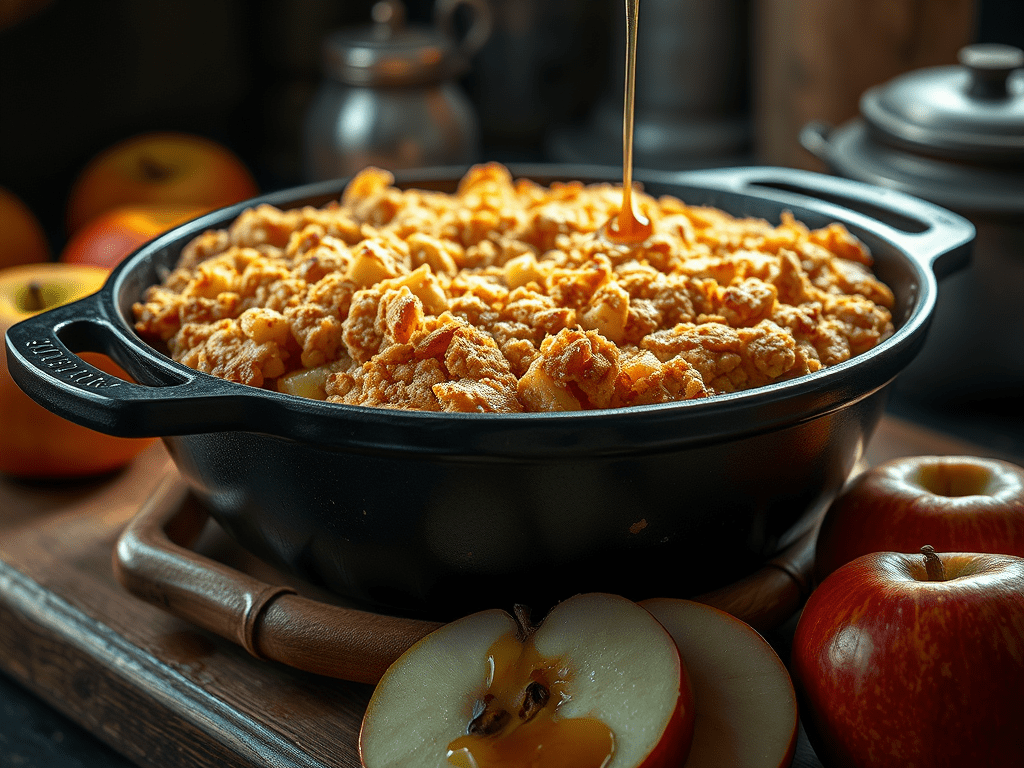
If there’s one dessert that screams cozy, it’s apple crisp. That warm, cinnamony goodness with a crunchy, buttery topping—it’s basically fall in a skillet. But did you know that while the term crisp wasn’t used back in the 1700s, settlers were already onto something just as delicious? Early American cooks often baked apples with a crumbly topping made from oats, flour, and fat, creating a rustic, no-fuss dessert that hit all the right notes of sweet, tart, and crunchy. No fancy pie crust required—just simple ingredients, a cast-iron skillet, and a love for turning humble apples into something magical.
Ingredients:
- 6 medium apples (any tart variety, such as crabapples or early orchard apples)
- 1/2 cup honey (or maple syrup, if preferred)
- 1 teaspoon cinnamon (or nutmeg, if available)
- 1 cup oats
- 1/2 cup flour (whole wheat, if available)
- 1/2 cup butter (or lard, if butter is unavailable)
- A pinch of salt
Instructions:
- Preheat the Oven:
- Set your oven to 350°F (175°C) and let it heat up.
- Prepare the Apples:
- Peel, core, and slice the apples into thin wedges or slices.
- Place the apple slices directly into your cast iron skillet.
- Flavor the Apples:
- Drizzle the apples with honey or maple syrup (whichever you prefer).
- Sprinkle with cinnamon (or nutmeg) and toss everything to coat evenly.
- Make the Topping:
- In a separate bowl, combine the oats, flour, and a pinch of salt.
- Cut the butter (or lard) into small pieces and mix it into the dry ingredients using your fingers or a pastry cutter until the mixture becomes crumbly.
- Assemble the Crisp:
- Spread the oat topping evenly over the apples in the cast iron skillet, covering them completely.
- Bake:
- Place the skillet in the preheated oven.
- Bake for about 30-40 minutes, or until the apples are soft and bubbling and the topping is golden brown and crispy.
- Serve:
- Let the apple crisp cool slightly before serving. This dish would have been enjoyed warm, and could be served with fresh cream, if available.
Notes:
- Sweeteners: Settlers used honey or maple syrup instead of sugar, as refined sugar was scarce or expensive in 1700s America.
- Butter/Lard: Either could be used, depending on what the household had on hand.
- Oats: A common grain that settlers relied on, often cooked or baked into dishes.
- If you want a more caramelized topping, you can increase the honey or maple syrup by a tablespoon or two.
- For an extra crispy texture, you can broil the crisp for 2-3 minutes at the end of baking, but be sure to watch it closely.
I was making this apple crisp and pouring maple syrup into the measuring cup when I stopped and thought, Wait… would maple syrup be kind of a luxury back then? Half a cup seemed like a lot, and if it feels expensive to me now, wouldn’t it have been way out of reach for most colonists? Turns out, they were basically swimming in the stuff.
In 1700s America, maple syrup and maple sugar were the go-to sweeteners, especially in New England, where maple trees were everywhere. Colonists often made way more than they needed—some families even produced thousands of pounds of maple sugar, which they’d use for trade or extra income. While making it was a labor-intensive process, it was still far more affordable than imported cane sugar, which was heavily taxed and tied to the slave trade. At one point, maple sugar was half the price of cane sugar, making it the everyday sweetener of choice.
 Time Traveling Table
Leave a comment