
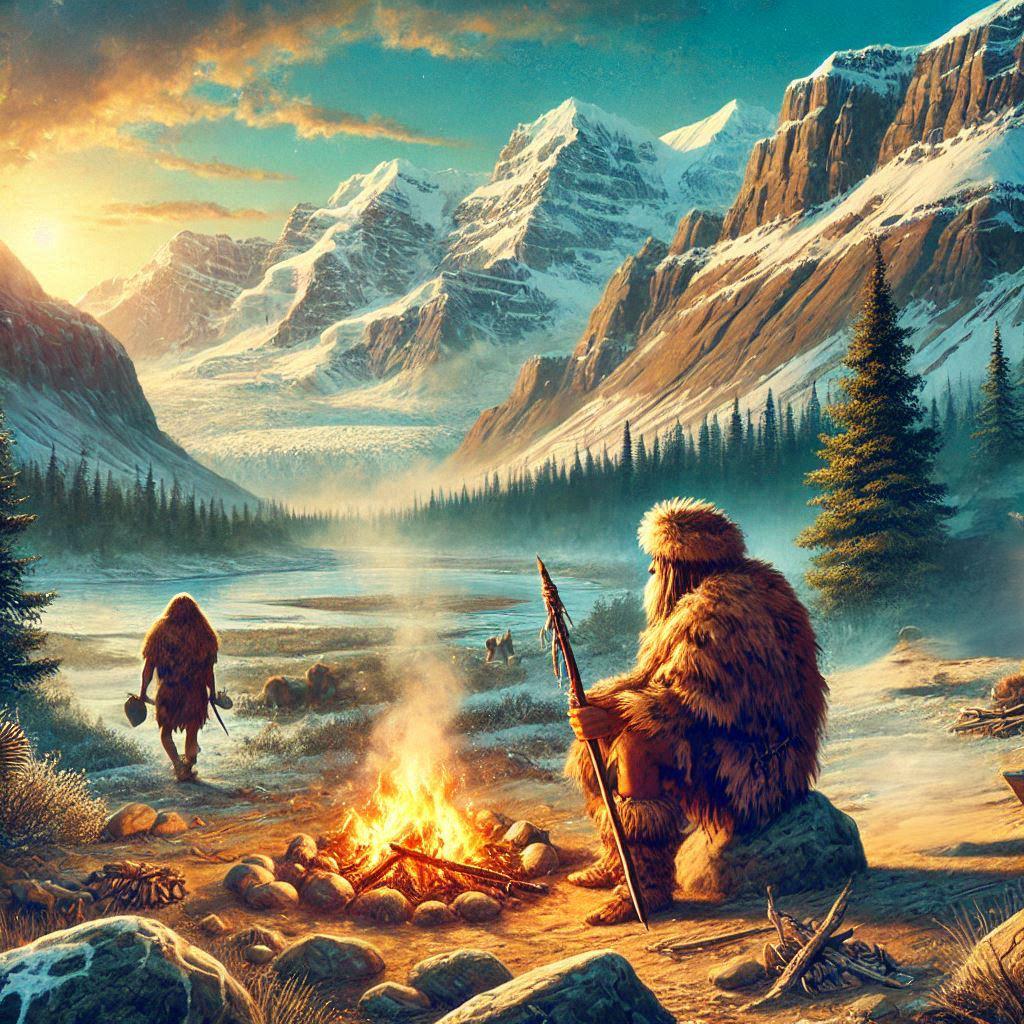
Just so we’re all on the same page. Please ensure you’ve made yourself acquainted with my disclaimer
Crossing Continents: The OG Road Trip
The first people arrived in the Americas during the last Ice Age, when lower sea levels created a land bridge known as Beringia between Siberia and Alaska. This migration is believed to have occurred at least 15,000 to 20,000 years ago, though some evidence suggests that human presence in the Americas could date back even earlier, potentially up to 30,000 years ago or more.
These early inhabitants are often referred to as Paleo-Indians. They gradually spread throughout North, Central, and South America, developing diverse cultures and societies over thousands of years. The Clovis culture, known for its distinctive stone tools, is one of the earliest well-documented cultures in North America, dating back to around 13,000 years ago.
The migration of people into what is now the United States occurred during the Pleistocene Epoch (commonly known as the Ice Age), likely between 20,000 and 13,000 years ago, though exact dates remain debated among archaeologists. Here’s an overview of how and when this migration happened:
How Did They Migrate?
- Bering Land Bridge:
- During the Ice Age, much of the Earth’s water was locked in glaciers, causing sea levels to drop. This exposed a land bridge, called Beringia, connecting Siberia (in modern Russia) to Alaska.
- Early humans from Asia crossed this land bridge, likely following herds of large animals such as mammoths, mastodons, and bison, which they hunted for food.
- Coastal Migration Theory:
- Some evidence suggests that early humans may have also migrated along the Pacific coastline using primitive boats or by walking along ice-free shorelines.
- They could have relied on marine resources, such as fish and shellfish, to sustain themselves.
- Ice-Free Corridor:
- As glaciers began to retreat around 13,000 years ago, an ice-free corridor opened between the Laurentide and Cordilleran ice sheets in what is now Canada. This allowed migrants to move south into the interior of North America.
When Did Migration Occur?
- Earliest Migration (20,000–16,000 Years Ago):
- Some archaeological evidence suggests that humans reached the Americas as early as 20,000 years ago. This is supported by tools and possible campsites found in locations like the Gault Site in Texas and Meadowcroft Rockshelter in Pennsylvania.
- Clovis People (13,000 Years Ago):
- The first widely recognized migration occurred around 13,000 years ago, associated with the Clovis culture, which left behind distinct stone tools (Clovis points). These tools have been found across North and South America, suggesting rapid expansion.
- Pre-Clovis Evidence:
- Newer discoveries (e.g., Monte Verde in Chile, dating to 18,000 years ago) suggest that humans were present in the Americas earlier than the Clovis culture, meaning migrations might have begun earlier than previously thought.
Why Did They Migrate?
- Following Game:
- Early humans were hunter-gatherers who followed large herds of animals across the land bridge and into new territories.
- Climate Changes:
- The harsh Ice Age climate may have forced groups to move in search of more hospitable environments and reliable food sources.
- Exploration and Adaptation:
- As highly adaptable people, these groups likely migrated into new regions to explore and exploit available resources.
Evidence of Early Migration
- Clovis Points:
- Distinctive spear points found throughout North America are key evidence of early humans.
- Monte Verde (Chile):
- A site predating the Clovis culture, showing evidence of human habitation around 18,000 years ago.
- Buttermilk Creek Complex (Texas):
- Stone tools dating to around 15,500 years ago, suggesting pre-Clovis human activity in North America.
Impact of Migration
- Adaptation to New Environments:
- As humans spread across the Americas, they adapted to a wide range of ecosystems, from the Arctic tundra to temperate forests and arid deserts.
- Cultural Diversity:
- Over thousands of years, these early peoples developed distinct cultures, languages, and lifeways, laying the foundations for the many Native American cultures that would emerge.
A Day in the (Very Cold) Life
Life in the United States in 18,000 BC, during the Upper Paleolithic period, was shaped by the Ice Age and the arrival of the first humans in the Americas. These people were hunter-gatherers, living in small, nomadic groups. Below is an overview of various aspects of life during this time:
Estimated Population
- Population: Approximately 10,000–30,000 people in all of North America, primarily small, scattered groups, concentrated in areas with abundant resources.
Diet
- Staple Foods:
- Meat: Mammoths, mastodons, bison, elk, and small game like rabbits, birds, and fish where available.
- Plants: Roots, tubers, wild berries, and nuts gathered seasonally.
- Beverages:
- Water from streams, rivers, and melted ice or snow.
Clothing
- Clothing which consisted of cloaks, leggings, and moccasins were made from animal hides and furs, processed using basic tools. Items were tailored to provide warmth and mobility, essential for survival in cold climates.
Housing
- Shelters: Temporary structures made of wood, bones, and animal hides. Some groups used caves or rock overhangs for shelter.
- Nomadic Lifestyle: Shelters were moved frequently as groups followed game animals and changing seasons.
Health and Life Expectancy
- Child Mortality: Likely exceeded 50%, as infections, injuries, and malnutrition were common.
- Life Expectancy: If someone survived childhood, they could live to 30-35 years.
- Health Challenges: Hunting injuries, infections, parasites, and wear on teeth from a gritty diet were common. Seasonal hunger was also a concern.
Social Structures
- Small Bands: Groups of 20–50 people were typical. Leadership was informal, based on skills such as hunting or knowledge of the environment.
- Marriage and Family:
- Relationships were likely flexible and practical. Monogamy may not have been strict, as alliances between groups were more critical than romantic ties.
- Women likely began bearing children between 15–18 years, and men became fathers around 18–20 years after proving their skills.
- A woman might have 3-5 children, though many would not survive childhood.
Challenges for Children and Parenting
- For Children:
- Hazards: Exposure to cold, predation by animals, accidents (such as drowning or falling), and malnutrition were significant risks.
- Learning: Children had to quickly learn survival skills, including tracking, hunting, and gathering.
- For Parents:
- Balancing the care of children with the demands of hunting and gathering.
- Extended breastfeeding (2–4 years) to provide nutrition during lean periods.
Religion and Faith
- Spiritual beliefs were likely centered on the natural world. Evidence suggests early humans revered animals and natural phenomena. Simple rituals and burial practices indicate a belief in an afterlife.
Tools and Technology
- Stone Tools: Flaked stone points on spears for hunting, scrapers for processing hides, and cutting blades.
- Bone Tools: Fish hooks, awls, and bone needles for sewing clothing.
- Fire: Used for cooking, warmth, light, and protection.
- Language: Humans had likely developed the full range of linguistic capabilities seen in modern humans, but without any recorded scripts, their languages remain speculative. The symbolic art and carvings from this period hint at a growing capacity for abstract thought
Key Trials and Events
- Climate:
- The Ice Age defined the environment, with glaciers advancing and retreating.
- Migration:
- Groups were moving southward from the Beringia region into new and varied ecosystems.
Challenges
- Climate:
- Much of the continent was covered in glaciers due to the Ice Age. The environment was cold, with tundra, open plains, and limited forested areas in unglaciated regions.
- Surviving harsh winters and unpredictable weather was a constant challenge.
- Resource Scarcity:
- Food resources fluctuated seasonally, and hunting large animals like mammoths and bison required high coordination and risk.
- Predators:
- Humans shared the landscape with dangerous megafauna, including saber-toothed cats, dire wolves, and short-faced bears.
- Mobility:
- Groups were highly mobile, requiring knowledge of large territories and the ability to adapt quickly to new environments.
Musical Instruments in 18,000 BC
Instruments during this time were simple and made from natural materials. Music likely played a role in rituals, storytelling, communication, and entertainment. The following instruments were used:
- Rattles: Made from dried gourds, shells, or animal bones filled with pebbles or seeds. Rattles added a percussive element to group performances.
- Percussion Sticks: Bones or wooden sticks struck together to create rhythmic sounds. These were likely used in dances or group rituals.
- Bullroarers: Flat pieces of wood or bone spun on a cord, creating a low, vibrating hum. These may have been used for long-distance communication or spiritual rituals.
- I had never heard of this instrument before and had to hear what it sounded like. Here is a Bullroarer In Action
Listen, Watch, Read
If you’d like to be fully immersed into this time period here are so ideas.
Note: Most depictions are of this time are heavily fictionalized, speculative, or inspired by early human life rather than directly based on archaeological accuracy. Below are adult and children’s suggestions that capture the essence of this time period or its themes.
Adult Recommendations
- Movie: 10,000 BC (2008)
A dramatic, fictionalized tale of early human life, focusing on hunting mammoths and survival. While historically inaccurate, it provides a cinematic sense of prehistoric struggles. - Book: The Mammoth Hunters by Jean M. Auel
Part of The Earth’s Children series, this novel delves into the lives of hunter-gatherers, their relationships, and their dependence on nature. - TV Show: Walking with Cavemen (2003)
A BBC documentary exploring the lives of early humans, including their behaviors, tools, and evolutionary changes. It combines scientific insight with dramatic reenactments.
Children’s Recommendations
- Movie: The Croods (2013)
An animated film about a prehistoric family navigating survival, discovery, and change. I watched this film and it is extremely fictionalized and has nonsensical animals, but is a cute story. - Book: Stone Age Boy by Satoshi Kitamura
A book where a modern boy travels back in time to meet a Stone Age family, learning about their tools, food, and way of life. - TV Show: Dinosaur Train (PBS)
While more focused on dinosaurs, the show introduces concepts of prehistoric environments and the creatures that early humans might have encountered. - Book: Boy of the Painted Cave by Justin Denzel
A story about a boy in prehistoric times who dreams of becoming a cave painter while navigating the expectations of his clan. - Movie: Ice Age (2002)
An animated film set during the Ice Age, featuring prehistoric animals and humans. While anthropomorphized, it provides a fun introduction to the era’s climate and challenges.
Music Recommendations
I like having some background music on to get me in the zone while preparing and enjoying my meals. For this time period though, with the instruments available I had a really hard time finding anything that didn’t have drums or flutes. I spent what was in my opinion an excessive amount of time looking, so I just listened to a track that was nature sounds with a campfire. This is the track that I specifically chose: Outdoor Campfire with Nature Sounds
Authentic Meals of the Hunter-Gatherer Era
Note on Historical Accuracy: While these recommendations capture elements of the prehistoric world, many take creative liberties. As people were not creating meal plans, they were eating to survive. You had fish for breakfast if you could catch it and berries for dinner should you find some. BUT if they were creating meal plans, it might have looked like this
Breakfast
- Beverage: water or if it’s winter: melted snow
- Meal: Berry and Nut Mix
- For West coast areas this would be pine nuts, acorns, hazelnuts, and California bay nuts with strawberries, blackberries, salmonberries, huckleberries, elderberries, serviceberries, and manzanita berries
- For Southwest areas this would be pine nuts (specifically piñon), acorns, walnuts, with gooseberries, currants, manzanita berries, and hackberries
- For Central areas this would be hazelnuts, walnuts, hickory nuts, and acorns with buffaloberries, chokecherries, elderberries, currants, and hackberries
- For the Southeast areas this would be acorns, hickory nuts, black walnuts, pecans, and chestnuts with blackberries, blueberries, strawberries, elderberries, and dewberries
- Side note on blueberries: Native Americans have been using wild blueberries for thousands of years, both as a food source and for medicinal purposes. They were a vital part of the diet for many Native American tribes, who also dried them for use in the winter months. European settlers in North America learned about blueberries from Indigenous peoples and began incorporating them into their diets and cultivation practices. The domestication of blueberries began in the early 20th century, with significant contributions from agricultural scientists like Elizabeth Coleman White and Frederick Coville, leading to the widespread cultivation of blueberries we see today.
- Side note on pecans: Pecans are native to North America, specifically the southern United States and northern Mexico. Indigenous peoples, including Native American tribes such as the Algonquin, were the first to use pecans as a food source, consuming them fresh or incorporating them into various dishes. They also traded pecans and used them as a form of currency.
European settlers learned about pecans from Native Americans and began to incorporate them into their diets and agricultural practices. Pecans became a significant crop in the southeastern United States, where the climate is particularly suitable for their growth. Today, the U.S. is one of the largest producers of pecans in the world.
- For East coast areas this would be acorns, hickory nuts, black walnuts, beechnuts, and chestnuts with blueberries, cranberries, blackberries, raspberries, elderberries, gooseberries, and currants
Snack
- Nuts
Dinner
- Entrée: Grilled Fish – Salmon. Grill over a campfire either over the flames or on a hot stone from the fire.
- Side: Amaranth Flatbread: Grind seeds and add water, enough to hold together. Grill on hot stone from fire
- AI initially suggested flatbread made from mesquite pods or cattail pollen. I chose to not try these because I either had no idea how to go about locating this or it was just a tad out of my food palette range. If you know how to locate these items or feel curious enough feel free to alter meal plan to include these items.
- Side: Wild Green Salad: gather edible wild greens like lambs quarters, purslane, and sorrel and and toss with wild onions, berries, and a drizzle of honey
- note on wild greens. I did learn that dandelions are not native to the Americas and the colonists brought those over with them. So should you go foraging, dandelion greens are not historically accurate for this time.
- Beverage: Good old fashion H2O
Dessert
- Honeycomb and berries
Ancient Flavors, Modern Methods
Breakfast
- Beverages: Herbal Infusion; brew a simple tea using local herbs, like yarrow or juniper berries
- Breakfast: Berry and Nut Mix; a mix of wild berries (such as blueberries, raspberries, and strawberries), and a variety of nuts (pine nuts and pecans)
Snack
- Nut mix
Dinner
- Entrée: Grilled Fish – Salmon. Prepared how ever you see fit, please keep in mind that lemons were not present in America at this time.
- Side: Amaranth Flatbread
- Side: Mixed Green Salad: toss with onions, berries, and a drizzle of honey
- Beverage: Herbal Infusion: brew a simple tea using local herbs, like yarrow or juniper berries
Dessert
- Honeycomb and Berries
- I got my honeycomb from my local farmer’s market. I’ve also seen it a time or two at my local grocery store. If you can’t locate any then just straight honey is fine.
 Time Traveling Table
Leave a comment