
Just so we’re all on the same page. Please ensure you’ve made yourself acquainted with my disclaimer.
Heads up! This post contains affiliate links. If you click and buy, I might earn a small commission – think of it as a tip for my historical taste-testing adventures. It won’t cost you a penny more, but it keeps my time-traveling table spinning. Thanks for the support!
Surviving and Thriving: A Day in the Life of your Favorite 13,000 BC Forager
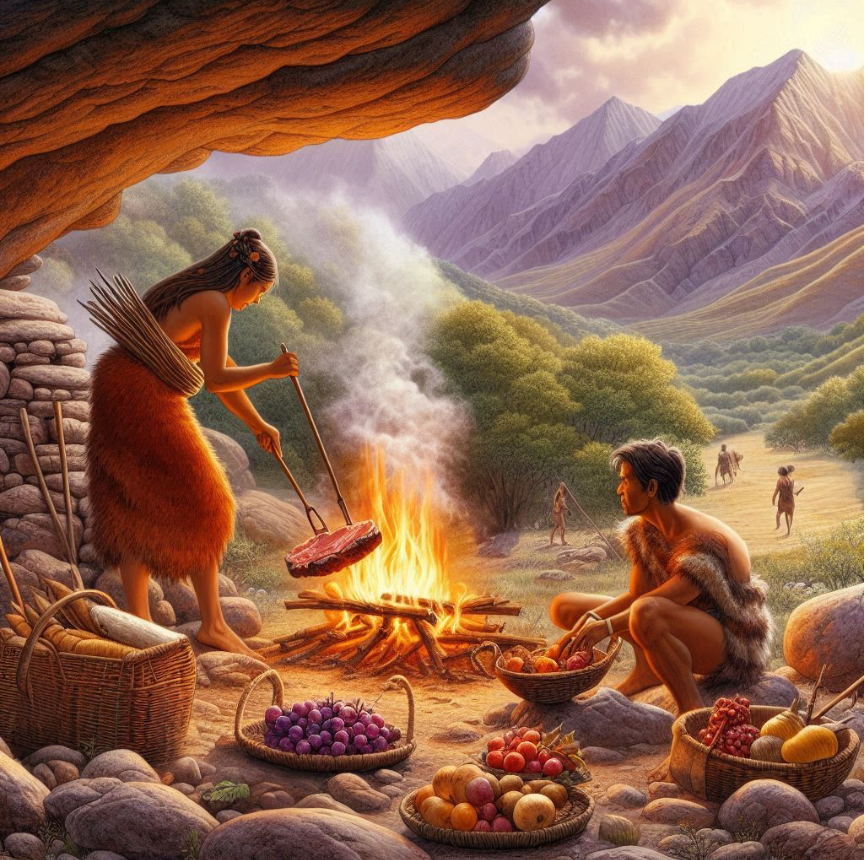
In 13,000 BC, the United States was inhabited by Paleo-Indians, early hunter-gatherer societies. This period was part of the Late Pleistocene, during the last Ice Age, and life was deeply shaped by the environment, available resources, and the ongoing transition in human culture and technology.
Estimated Population
The estimated population in 13,000 BC in the Americas (including the United States) was likely between 5,000 and 20,000 individuals. These numbers are based on archaeological evidence of small, dispersed bands of people.
Diet
Staple Foods:
- Animal-Based: Large game like mammoths, mastodons, giant bison, and ground sloths were primary sources of protein. As these megafauna began to decline, smaller animals like deer, rabbits, and fish became more important.
- Plant-Based: Wild fruits, nuts, seeds, and tubers. Early foragers likely gathered acorns, berries, wild onions, and roots. Seasonal availability heavily influenced the diet.
Drinks:
- Freshwater from rivers, lakes, and springs was the primary beverage.
Clothing
Clothing was made from animal hides and furs, tailored for warmth and durability. People used bone needles and sinew to stitch garments. Decorative elements, such as beads made from shells or carved bone, were sometimes incorporated.
Housing
Housing was temporary and adapted to a nomadic lifestyle. Common structures included:
- Tipis or tents made from animal hides stretched over wooden frames.
- Brush shelters or lean-tos constructed from branches and leaves.
- Caves or rock shelters when available.
Health Outlook
- Life Expectancy: Those who survived childhood could live into their 30s or 40s. A few may have reached their 50s or 60s.
- Childhood Survival Rate: Likely only 30-40% of children survived to adulthood due to malnutrition, disease, or accidents.
- Healthcare and Medicine: Healthcare was rudimentary and based on natural remedies. Plants with medicinal properties were used for pain relief, wounds, and fevers. Shamans or healers performed spiritual and physical care.
Social Structure
- Community Organization: People lived in small, kin-based bands of 20-50 individuals.
- Monogamy and Marriage: Likely flexible; monogamy was common but not universal. Marriage age was likely in the teens, coinciding with puberty. Women typically had their first child in their late teens or early twenties.
- Number of Children: High fertility was common, but high child mortality meant fewer children survived to adulthood.
Challenges for Children
- Infant and Child Mortality: High rates due to limited medical care and exposure to environmental dangers.
- Physical Demands: Children were expected to contribute to survival early, learning hunting, foraging, and crafting skills.
- Environmental Dangers: Predators, extreme weather, and accidents posed constant threats.
Religion and Faith
Religion likely centered on animism, the belief that spirits inhabited animals, plants, and natural elements. Rituals, art, and ceremonies were used to honor these spirits.
Art
Artistic expression included:
- Carvings: Bone and ivory carvings of animals or symbolic designs.
- Rock Art: Petroglyphs and pictographs depicting hunting scenes, animals, or abstract symbols.
- Ornamentation: Beads, pendants, and painted hides.
Beads in 13,000 BC were crafted from natural materials and served as decoration, status symbols, or elements of rituals. They were made using labor-intensive processes that required significant skill and patience.
Materials for Beads
- Animal-Derived Materials:
- Bone: Carved from animal bones, often polished for smoothness.
- Antler: Used for its hardness and durability.
- Ivory: Derived from mammoth tusks or other large animals, prized for its beauty.
- Shells:
- Marine or freshwater shells were shaped into beads, especially in areas near water sources.
- Stone:
- Soft stones like soapstone, turquoise, or hematite were shaped into beads.
- Quartz and other semi-precious stones, when available, were used for their aesthetic qualities.
- Plant-Based Materials:
- Seeds or nuts, often dried and polished, could be used as beads.
- Teeth or Claws:
- Animal teeth or claws were drilled to create beads, symbolizing strength or spiritual connection.
Bead-Making Process
- Sourcing Materials:
- Materials like bone, antler, or stone were collected during hunting or scavenging.
- Shells or stones were gathered from rivers, lakes, or coastal areas.
- Shaping:
- Chipping and Carving: Stones and bones were chipped using flint tools, then ground or smoothed with sandstone.
- Drilling Holes: Holes were made using awls or pointed tools crafted from bone, antler, or stone. Repeated twisting or boring created a hole through the material.
- Polishing:
- Beads were polished using sand, water, or fine abrasives to create smooth surfaces.
- Stringing:
- Beads were threaded using sinew, plant fibers, or strips of leather. These could be worn as necklaces, bracelets, or sewn onto clothing.
Cultural Significance
- Beads were not just decorative but also held cultural and symbolic meanings, representing identity, status, or spiritual beliefs.
- The creation of beads likely involved significant effort, suggesting that they were highly valued within these early communities.
This artistry demonstrates the creativity and resourcefulness of Paleo-Indians, even with the limited tools available.
In 13,000 BC, musical instruments were basic and crafted from natural materials, reflecting the available resources and the cultural practices of the time. Music likely played a role in rituals, storytelling, social bonding, and possibly even in hunting or spiritual ceremonies.
Musical Instruments
- Percussion Instruments:
- Drums: Animal hides stretched over hollowed logs or frames created basic drums. These would be beaten with hands or sticks.
- Rattles: Made from hollow gourds, shells, or bones filled with seeds, pebbles, or dried beans.
- Clappers: Two pieces of wood, bone, or antler struck together to produce rhythmic sounds.
- Wind Instruments:
- Flutes: Simple flutes crafted from hollowed-out bones or reeds, with holes carved for varying pitches.
- Whistles: Smaller wind instruments made from bird bones or reeds.
- String Instruments:
- Bow Harps (Proto-Strings): Hunting bows might have doubled as simple string instruments, with strings plucked or struck.
- Other Sound-Making Tools:
- Rocks and Sticks: Used as basic rhythm instruments.
- Bullroarers: Flat pieces of wood or bone swung on a string to create whirring sounds.
Usage of Music
- Ceremonial Use: Music was likely used in rituals and dances, often tied to hunting, seasonal changes, or spiritual practices.
- Storytelling: Songs or rhythms could accompany oral traditions, helping to preserve and transmit cultural knowledge.
- Social Bonding: Music likely played a role in strengthening group cohesion, particularly during gatherings.
- Practical Functions: Rhythmic sounds might have been used during hunting to coordinate efforts or to mimic animal calls.
Language and Writing
- Language: Oral traditions and spoken languages were the primary means of communication.
- Writing: No written systems existed, but symbolic art may have conveyed meaning.
Tools and Technology
- Stone Tools: Projectile points (e.g., Clovis points) for hunting, scrapers for processing hides, and knives for butchering.
- Bone and Antler Tools: Needles, awls, and fishhooks.
- Fire: Used for cooking, warmth, and protection.
Challenges
- Environmental Changes: The climate was warming, leading to the extinction of many megafauna and forcing shifts in hunting and gathering strategies.
- Survival Pressures: Limited resources, dangerous predators, and competition between groups.
- Extreme Weather: Periodic ice sheet retreat caused flooding and shifting ecosystems.
Advancements Since 18,000 BC
- Improved Hunting Tools: The widespread use of the Clovis point made hunting more efficient.
- Broader Diets: Transition from a reliance on megafauna to more diverse food sources.
- Cultural Complexity: Increased use of symbolic art and possibly more structured social roles.
Entertainment
Bangers from the Stone Age
The music of this period would likely consist of rhythmic drumming, simple melodic patterns on flutes, and layered percussive sounds, with vocal chants or humming forming the core of the music. For this time period I listened exclusively to this album, it had nature sounds and music that felt like could have been (and potentially has been) around for generations.
Firelight to Spotlight: Stories of 13,000 BC
Depictions of 13,000 BC in popular media are rare, but some works explore prehistoric times and early human life. Here are recommendations for both adults and children:
I’m For Adults
- Movie: 10,000 BC (2008)
- A fictionalized adventure following a hunter-gatherer on a journey to rescue his tribe from an advanced civilization. Though not entirely accurate, it portrays life in prehistoric times.
- TV Show: Primal (2019–2022)
- An animated series by Genndy Tartakovsky featuring a human and a dinosaur surviving in a brutal prehistoric world. While highly fictionalized, it captures the harshness of prehistoric life.
- Book: The Mammoth Hunters by Jean M. Auel (1985)
- A novel in The Earth’s Children series, focusing on interactions between human groups and their relationships in a prehistoric setting.
- Movie: Quest for Fire (1981)
- A realistic portrayal of early human groups struggling to survive and preserve their way of life while discovering fire.
For Children
- Movie: The Croods (2013)
- An animated film about a prehistoric family venturing out of their cave to explore the world. It’s humorous, imaginative, and lightly based on early human life.
- TV Show: Dinosaur Train (2009–2020)
- An educational series following dinosaurs, but it also includes discussions about early ecosystems and life during prehistoric times.
- Book: Stone Age Boy by Satoshi Kitamura (2007)
- A story about a modern boy who travels back in time to the Stone Age, where he learns about prehistoric life.
- Movie: Ice Age (2002)
- Although focused on animals, this animated film provides a lighthearted depiction of life during the Ice Age, a time when humans and megafauna coexisted.
- Book: Boy of the Painted Cave by Justin Denzel (1988)
- A novel about a young boy in the Stone Age who dreams of being a cave painter despite societal taboos.
Flavors of the Ice Age
Breakfast
Meal: Smoked fish with a side of foraged greens.
- Fish (like trout or salmon) was smoked over a fire, paired with fresh wild greens like sorrel.
Beverage: Cool spring water
Dinner
Light Snack/Appetizer:
- Roasted hazelnuts and sunflower seeds.
- Nuts and seeds were a common energy-boosting snack for hunter-gatherers.
Entree:
- Roasted Bison with Wild Herbs
- Bison meat seasoned with gathered wild herbs like sage or juniper, cooked over an open flame.
Sides:
- Roasted Root Vegetables
- Wild carrots, Jerusalem artichokes, and onions roasted until tender.
- Wild Rice
- Boiled wild rice, native to regions of North America, served plain or with a touch of fat for flavor.
Dessert:
- Honey and Berry Compote
- A mixture of wild berries (like blueberries, blackberries, and raspberries) cooked down with a drizzle of honey to create a sweet, tangy treat.
Beverage:
- Cool spring water
Ancient Flavors, Modern Methods
Breakfast
Meal: Smoked fish with a side of foraged greens.
- Fish (like trout or salmon) cooked to your choosing. If you had a smoker this would be the best and most authentic by flavor standards. Paired with wild greens like dandelion or sorrel.
Beverage: Cool spring water with a splash of mashed wild berries for a hint of flavor.
- A simple and refreshing drink made with easily available resources
Dinner
Light Snack:
- Roasted hazelnuts and sunflower seeds.
Entree:
- Roasted Bison with Wild Herbs
- I used chunks of beef with sage, green onions, and chives that I pulled from my garden
Sides:
- Roasted Root Vegetables
- I made a mix of carrots, sweet potatoes, russet potato, and onions with salt
- Wild Rice
- Boiled wild rice, native to regions of North America, served plain or with a touch of fat for flavor.
Dessert:
- Honey and Berry Compote
- A mixture of wild berries (like blueberries, blackberries, and raspberries) cooked down with a drizzle of honey
Beverage:
- Cool spring water infused with wild mint leaves.
 Time Traveling Table
Leave a comment