
Just so we’re all on the same page. Please ensure you’ve made yourself acquainted with my disclaimer
Heads up! This post contains affiliate links. If you click and buy, I might earn a small commission – think of it as a tip for my historical taste-testing adventures. It won’t cost you a penny more, but it keeps my time-traveling table spinning. Thanks for the support!
1100 AD Shenanigans: A Day in the Life of America’s Original Trailblazers
In 1100 AD, the land that is now the United States was home to diverse Native American cultures, each shaped by their environment. People lived in semi-nomadic or sedentary communities depending on their region and available resources. Here’s a detailed breakdown:
Population
- Estimated population: Around 7–10 million people in North America.
- Dense populations in areas like the Mississippi River Valley (Mississippian culture) and the Southwest (Ancestral Puebloans).
- Smaller nomadic groups in the Great Plains and Northwest.
Climate and Weather
Eastern Woodlands (Northeast, Great Lakes, Southeast)
- Climate: Temperate with distinct seasons.
- Summer Highs: ~75–85°F (24–29°C).
- Winter Lows: ~15–30°F (-9 to -1°C), colder in the Northeast.
- Precipitation: Moderate to high, with plenty of rain supporting forests.
Great Plains (Central U.S.)
- Climate: Semi-arid to temperate.
- Summer Highs: ~85–95°F (29–35°C), with occasional heatwaves.
- Winter Lows: ~10–25°F (-12 to -4°C).
- Precipitation: Lower than Eastern Woodlands; droughts were common.
Southwest (Arizona, New Mexico, etc.)
- Climate: Arid to semi-arid desert and high plateau regions.
- Summer Highs: ~90–110°F (32–43°C).
- Winter Lows: ~20–40°F (-6 to 4°C) in high altitudes; milder in deserts.
- Precipitation: Low, with monsoon rains in late summer.
Pacific Coast (California to Pacific Northwest)
- Climate: Mild Mediterranean (California) to temperate rainforest (Pacific Northwest).
- California Annual Average Temperature:
- Summer Highs: ~75–85°F (24–29°C).
- Winter Lows: ~40–50°F (4–10°C).
- Pacific Northwest Annual Average Temperature:
- Summer Highs: ~65–75°F (18–24°C).
- Winter Lows: ~30–40°F (-1 to 4°C).
- Precipitation: Heavy in the Northwest, moderate in California.
Rocky Mountains and Intermountain West
- Climate: Mountainous and variable.
- Summer Highs: ~70–85°F (21–29°C) in valleys.
- Winter Lows: ~0–20°F (-18 to -6°C), colder at higher altitudes.
- Precipitation: Snowfall in winter, moderate rain in valleys.
Southeast (Florida, Gulf Coast)
- Climate: Subtropical.
- Summer Highs: ~85–95°F (29–35°C), humid.
- Winter Lows: ~40–55°F (4–13°C).
- Precipitation: High, with frequent rainfall and occasional hurricanes.
These ranges are estimates based on historical climate reconstructions and regional geography. Variability due to elevation, proximity to water, and other factors would have influenced local conditions significantly.
Diet (Staple Foods and Drinks)
Staple Foods:
- Eastern Woodlands: “Three Sisters” (corn, beans, squash), wild game (deer, turkey), nuts (acorns, hickory), and fish.
- Southwest: Corn, beans, squash, chili peppers, and domesticated turkeys.
- Great Plains: Bison (hunted), wild berries, roots, and seeds.
- Pacific Northwest: Salmon, shellfish, seaweed, berries, and nuts.
Drinks:
- Water was the primary drink. Some tribes brewed herbal teas.
Clothing
- Clothing was made from animal hides, plant fibers, or woven materials depending on the region:
- Eastern Woodlands & Great Plains: Deerskin tunics, leggings, moccasins.
- Southwest: Cotton garments dyed with natural pigments.
- Pacific Northwest: Cedar bark and animal hides.
Clothing was often adorned with beads, shells, or quills.
Housing
- Eastern Woodlands: Longhouses (communal) and wigwams.
- Southwest: Adobe pueblos and cliff dwellings.
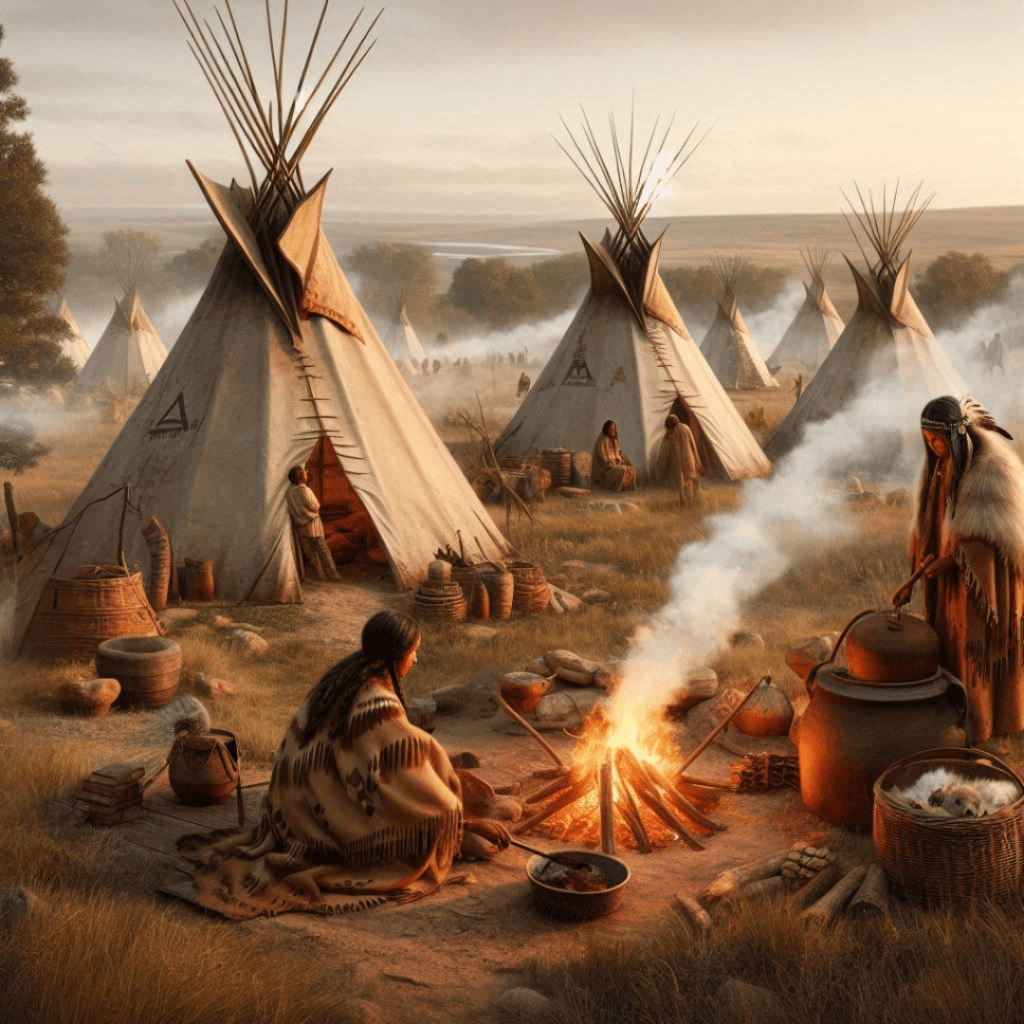
- Great Plains: Tipis (portable).
- Pacific Northwest: Cedar plank houses.
Health Outlook
Life Expectancy:
- Child survival: Around 50-60% of children survived to adulthood.
- Average life expectancy (if survived childhood): 40-50 years.
Healthcare and Medicine:
- Herbal medicine was common, using plants like willow (natural aspirin) and echinacea.
- echinacea was primarily used as a natural remedy for infections and wounds. They would make poultices from the plant’s roots and apply them to cuts, insect bites, and other injuries to promote healing and reduce inflammation. Echinacea was also used to boost the immune system and treat colds and respiratory infections.
- Medicine men and women played central roles in health.
- Challenges included infection, injuries, malnutrition, and childbirth complications.
Social Structures
- Most societies were organized into tribal communities with extended families and clans.
- Leadership often involved councils of elders or chiefs.
- Marriage:
- Often monogamous.
- Women married in their late teens; men married slightly older.
- First children were often born shortly after marriage.
- Children per family: 4-6, but many did not survive to adulthood.
Games and Pastimes
- Stickball (a precursor to lacrosse) was popular in the Eastern Woodlands.
- Games of chance using dice made from bones or seeds.
- Storytelling, dancing, and ceremonial rituals were integral to social life.
Religion and Faith
- Strong spiritual beliefs tied to nature, ancestors, and the cosmos.
- Practices included rituals, dances, and offerings to spirits or deities.
- Examples: Sun worship in Mississippian culture, kiva ceremonies in the Southwest.
Art
- Pottery, basket weaving, beadwork, and carvings were common.
- Art often had spiritual or ceremonial significance.
Musical Instruments
Native American music around 1100 AD was deeply tied to ceremonies, storytelling, and communal activities. Instruments were made from natural materials and often had spiritual significance.
Instruments:
- Drums:
- Materials: Animal hides stretched over wooden frames.
- Use: Central to ceremonies, dances, and storytelling. Different rhythms were used for different events (e.g., healing ceremonies or war dances).
- Flutes:
- Materials: Wood, bone, or cane.
- Use: Played solo or during ceremonies to evoke emotions or tell stories. Often associated with courtship.
- Rattles:
- Materials: Gourds, turtle shells, or hide filled with pebbles or seeds.
- Use: Accompanied dances and rituals, providing a rhythmic background.
- String Instruments:
- Primitive bowed or plucked instruments.
- Use: Rare, but likely played for personal enjoyment or storytelling.
- Whistles:
- Materials: Bone, wood, or reed.
- Use: Used in rituals, signaling, or storytelling.
- Percussive Instruments:
- Clappers or sticks made from wood or bone.
- Use: Simple rhythms to accompany chants or dances.
How Music Was Used:
- Ceremonies: Spiritual rituals, healing, or seasonal celebrations.
- Storytelling: Music enhanced oral traditions and helped preserve history.
- Community Events: Dances, games, or social gatherings.
- Personal Reflection: Flutes were often played alone for meditation or courtship.
Language and Writing
- Over 300 languages were spoken.
- Oral traditions dominated; some symbols and pictographs were used for storytelling.
Tools and Technology
- Stone, bone, and wood tools.
- Bow and arrow for hunting.
- Agriculture tools like digging sticks.
- Canoes made of hollowed logs or bark.
Challenges
- Climate change: Droughts in the Southwest led to migrations.
- Intertribal conflicts over resources.
- Health challenges due to lack of modern sanitation or immunization.
Advancements Since 0 BC
- Development of advanced agricultural systems like irrigation in the Southwest.
- Rise of large ceremonial centers (e.g., Cahokia).
- More specialized tools and pottery.
The Rise of Cahokia and Large Ceremonial Centers
Around 700-1400 AD, the Mississippian culture flourished in what is now the southeastern United States. One of the most significant developments of this period was the rise of large ceremonial centers, with Cahokia being the most prominent example.
- Location: Near present-day St. Louis, Missouri.
- Significance: It was the largest and most complex pre-Columbian archaeological site north of Mexico.
- Population: At its peak, Cahokia was home to an estimated 10,000-20,000 people, making it one of the largest cities in the world at the time. Cahokia was larger than London was in AD 1250.
- Architecture: The site is famous for its massive earthen mounds, the largest of which, Monks Mound, stands over 100 feet tall and covers 14 acres.
- Function: These centers served as political, religious, and cultural hubs, where ceremonies, trade, and governance took place.
- Legacy: Cahokia played a crucial role in the social and political landscape of the Mississippian culture, influencing surrounding regions.
Significant Events
- Mississippian culture emerged (~900-1100 AD), known for mound-building and complex societies.
- Droughts (~1100-1200 AD) in the Southwest likely contributed to the decline of the Ancestral Puebloans.
Entertainment
Adult Media
There are limited fictional or non-fiction works specifically set in the United States during 1100 AD. However, these selections explore Native American cultures, environments, and history before European contact:
Movies/TV Shows/Books:
- “Native America” (2018)
- PBS docuseries exploring the history, culture, and innovations of Native American civilizations, including those in North America.
- “Pathfinder” (2007)
- This film depicts a fictional story of a young Norse boy raised by Native Americans after being left behind during a failed Viking expedition. It combines elements of Native and Norse cultures, set around 1000 AD.
- “People of the River” by W. Michael Gear and Kathleen O’Neal Gear
- Historical fiction about the Cahokia culture in the Mississippi River Valley.
- “1491: New Revelations of the Americas Before Columbus” by Charles C. Mann
- A comprehensive non-fiction book examining indigenous cultures before European contact, with insights into life around 1100 AD.
Children’s Media Depicting Life in 1100 AD United States
For younger audiences, most depictions focus on general pre-Columbian Native American life or fictionalized settings inspired by indigenous cultures:
Movies/TV Shows/Books:
- “Brother Bear” (2003)
- A Disney animated film inspired by Native American stories and traditions, focusing on family, nature, and transformation.
- “Brother Bear 2” (2006)
- A continuation of the original, further exploring relationships, traditions, and the natural world.
- “Children of the Longhouse” by Joseph Bruchac
- A story about two Mohawk siblings in pre-Columbian North America, showcasing daily life and cultural practices.
- “If You Lived with the Iroquois” by Ellen Levine
- An educational book explaining the daily lives of the Iroquois people, with details reflecting their pre-contact traditions.
These selections provide a mix of historical accuracy and creative storytelling to help audiences visualize life in 1100 AD. For children, the focus is often on relatable narratives that integrate cultural learning.
Jammin’ Through Time: Your 1100 AD USA-Inspired Playlist
Since no actual recorded music exists from this time, here are modern tracks and artists that capture the spirit, instruments, and traditions of Native American music:
1. Music by R. Carlos Nakai
- A modern Native American flutist who keeps ancient flute traditions alive.
2. Music by Mary Youngblood
- Known for her flute compositions inspired by Native American traditions.
These artists are modern recreations or continuations of traditions, but they provide an authentic connection to the music and culture of 1100 AD Native America.
Gourmet Time Travel: Whip Up a 1100 AD American Feast with Ancient Tools & Tricks!
Breakfast
- Meal:
- Steamed cornmeal porridge with a drizzle of honey (if available locally) or mashed berries for natural sweetness.
- Grilled fish or smoked trout (prepared the evening before).
- Beverage: Herbal tea made from foraged plants like mint, sumac, or yaupon leaves (a caffeinated holly plant in the Southeast).
Main Meal
- Light Snack:
- Roasted sunflower seeds and a handful of dried cranberries or blueberries.
- Entrée:
- Venison – I recently came across some ground venison, and I don’t think I’ve ever tried it before. What really surprised me was the color—it was such a rich crimson that I was excited to try it, even though I’m not a big meat eater. I cooked it in a skillet with green onions and sage, and honestly, it turned out really good. I’d definitely eat it again!
- Side (Grain/Bread):
- Cornbread: Made by grinding corn with a stone mortar and pestle, mixing with water, and cooking on a heated flat stone.
- Side:
- Roasted Squash and Beans: Cubed squash roasted in a clay or stone oven with cooked beans, flavored with wild garlic or herbs.
- Dessert:
- Triple Berry Cobbler with a Cornbread Topper: A combination of blackberries, raspberries, and blueberries sweetened naturally and topped with a cornbread mixture.
- I loved this so much from 1000 BC meal plan, I just had to do it again. I still used Jiffy corn bread and their recipe for oven specs.
- Triple Berry Cobbler with a Cornbread Topper: A combination of blackberries, raspberries, and blueberries sweetened naturally and topped with a cornbread mixture.
- Beverage:
- Warm water infused with cedar or pine needles for a light, refreshing tea rich in vitamin C.
Gourmet Time Travel: Whip Up a 1100 AD American Feast with 21st Century Tricks!
Breakfast
- Meal:
- Steamed cornmeal porridge with a drizzle of honey (if available locally) or mashed berries for natural sweetness.
- Grilled fish or smoked trout (prepared the evening before).
- Beverage: Herbal tea made from foraged plants like mint, sumac, or yaupon leaves (a caffeinated holly plant in the Southeast).
Main Meal
- Light Snack:
- Roasted sunflower seeds and a handful of dried cranberries or blueberries.
- Entrée:
- Grilled Venison: Marinated with herbs such as wild onion or juniper, cooked over an open fire.
- Side (Grain/Bread):
- Cornbread: Made by grinding corn with a stone mortar and pestle, mixing with water, and cooking on a heated flat stone.
- Side:
- Roasted Squash and Beans: Cubed squash roasted in a clay or stone oven with cooked beans, flavored with wild garlic or herbs.
- Dessert:
- Triple Berry Cobbler with a Cornbread Topper: A combination of blackberries, raspberries, and blueberries sweetened naturally and topped with a cornbread mixture.
- Beverage:
- Warm water infused with cedar or pine needles for a light, refreshing tea rich in vitamin C.
Tools and Techniques Used
Tools:
- Stone Mortar and Pestle: For grinding cornmeal and crushing herbs or nuts.
- Clay or Stone Cooking Vessels: Used for boiling, baking, or roasting foods.
- Bow Drill: To start a fire for cooking.
- Stone Knives: For cutting meat, squash, and other ingredients.
- Wooden or Bone Utensils: For stirring, serving, or eating.
- Flat Stones: Heated over fire to cook flatbreads like cornbread.
Techniques:
- Open-Fire Cooking: Venison and fish grilled directly over a fire using wooden skewers or laid on flat rocks.
- Roasting in Ashes: Squash and beans roasted close to the coals for even cooking.
- Steaming: Cornmeal porridge steamed in clay pots with heated stones.
- Grinding and Mixing: Corn kernels ground into flour using a mortar and pestle for cornbread.
 Time Traveling Table
Leave a comment