
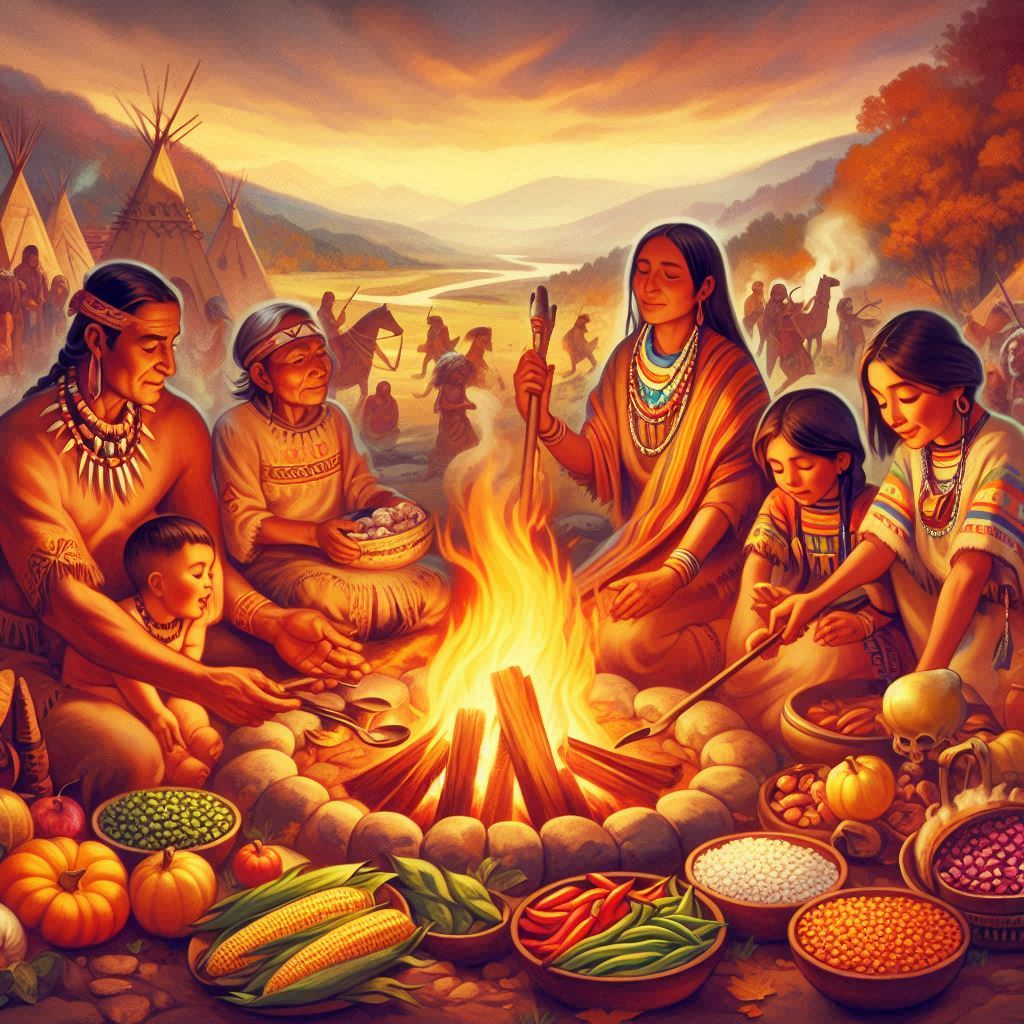
Just so we’re all on the same page. Please ensure you’ve made yourself acquainted with my disclaimer
Living Large in 1200 AD: A Day in the Life of America’s First Innovators
Here’s a comprehensive overview of life in the area that is now the United States in 1200 AD, focusing on Native American societies.
Estimated Population
- Estimated population: Approximately 4–10 million
- In what is now the U.S., population density was lower in the Great Plains and arid Southwest but higher in areas like the Mississippi River Valley, the Southeast, and the Pacific Northwest.
Climate and Weather
- The Medieval Warm Period (950–1250 AD) was ongoing, with warmer-than-average global temperatures.
- Eastern Woodlands: Summers 75–85°F, winters 20–40°F.
- Southwest (Ancestral Puebloan areas): Summers 90–100°F, winters 20–40°F at higher elevations.
- Great Plains: Summers 80–100°F, winters 0–30°F.
- Pacific Northwest: Mild, 40–70°F year-round with high rainfall.
- These conditions influenced agriculture and settlement patterns.
Diet
Staple Foods:
- Eastern Woodlands & Mississippi Valley: “Three Sisters” crops—maize (corn), beans, and squash—were staples, along with nuts, berries, fish, and game like deer and turkey.
- Southwest: Corn, beans, squash, and domesticated turkeys; supplemented by wild plants like agave and cactus fruits.
- Great Plains: Bison meat and pemmican (preserved meat); some maize and squash near river valleys.
- Pacific Northwest: Salmon was critical, along with shellfish, berries, and acorns.
Drinks:
- Water was the main beverage. In some regions, herbal teas or beverages made from fermented corn or wild fruits were consumed.
Clothing
- Made from locally available materials:
- Eastern Woodlands: Deerskin clothing, including tunics, leggings, and moccasins, often decorated with dyed porcupine quills.
- Southwest: Cotton textiles, sometimes dyed or woven into intricate patterns.
- Great Plains: Animal hides, particularly bison, used for robes and tunics.
- Pacific Northwest: Cedar bark and animal skins for clothing.
Housing
- Eastern Woodlands: Longhouses (communal) or wigwams (smaller, dome-shaped dwellings) made of wood, bark, and reeds.
- Southwest: Adobe or stone pueblos, often built into cliffs for insulation and defense.
- Great Plains: Tipis, made from bison hides, were portable to accommodate a nomadic lifestyle.
- Pacific Northwest: Cedar plank houses, built to withstand heavy rainfall.
Health and Medicine
- Healthcare: Medicine was deeply tied to spirituality. Shamans or healers used herbs, rituals, and spiritual guidance to treat illness.
- Life Expectancy: If one survived childhood, they might live to 40–50 years.
- Child Survival: Roughly 50–60% of children survived to adulthood due to risks like malnutrition, disease, and accidents.
- Common Challenges: Malnutrition during crop failures, infections, and injuries.
Social Structures
- Highly varied but generally communal and kinship-based:
- Eastern Woodlands: Matrilineal societies were common; clans determined roles and inheritance.
- Southwest: Strong clan systems with roles divided by gender; women often controlled agriculture, men handled hunting and ceremonies.
- Great Plains: Nomadic tribes followed bison migrations; leadership was often merit-based.
- Marriage and Family: Monogamy was typical. Marriages occurred around ages 15–20. Families often had 4–6 children, though infant mortality was high.
Leisure and Games
- Games:
- Stickball (a precursor to lacrosse) in the Eastern Woodlands.
- Dice games and hoop-and-spear contests.
- Storytelling, dancing, and music were common leisure activities.
- Passing Time: Pottery, weaving, carving, and community events like feasts and ceremonies.
Religion and Faith
- Rich spiritual traditions often tied to nature.
- Animism was prevalent, with reverence for spirits in animals, plants, and natural forces.
- Ceremonial structures like mounds (Mississippian) or kivas (Puebloans) were central to religious life.
Art and Language
- Art: Pottery, beadwork, textiles, carvings, and petroglyphs.
- Language: Over 300 languages in North America, grouped into linguistic families (e.g., Algonquian, Iroquoian, Siouan).
Musical Instruments in 1200 AD United States
Music was an integral part of spiritual rituals, celebrations, and daily life in Native American cultures during 1200 AD. Instruments were crafted from natural materials and served both ceremonial and entertainment purposes.
Common Instruments:
- Drums:
- Made from hollowed-out logs, clay, or stretched animal hides.
- Used in ceremonies, storytelling, and dances to maintain rhythm and connect to the spiritual world.
- Flutes:
- Carved from wood, bone, or reed.
- Played for storytelling, courtship, and rituals.
- Rattles:
- Made from gourds, turtle shells, or woven materials filled with seeds or pebbles.
- Used in rituals to create rhythmic sounds.
- Whistles:
- Fashioned from bird bones or wood.
- Used in hunting rituals or signaling during ceremonies.
- String Instruments:
- Rare but occasionally found, like the Apache fiddle (single-string instrument made from wood and sinew).
- Jew’s Harps:
- Small instruments made of wood or bone, used to produce simple melodies.
How They Were Used:
- Rituals: Drums and rattles were central to religious ceremonies, often used to invoke spirits or accompany sacred chants.
- Social Gatherings: Music facilitated community bonding, storytelling, and celebration.
- Personal Use: Flutes and whistles were often used for personal expression or to communicate emotions like love or sorrow.
Tools and Technology
- Tools were made from stone, bone, and wood:
- Bow and arrow for hunting.
- Flint knives and scrapers for processing hides.
- Grinding stones for cornmeal.
- Canoes for transportation in water-rich areas.
Challenges
- Climate: Droughts, especially in the Southwest, caused migration and societal changes.
- Conflict: Intertribal warfare for resources and territory.
- Disease: Epidemics
Advancements and Trials Since 1100 AD
- Advancements:
- Increased reliance on agriculture (e.g., expansion of the “Three Sisters”).
- Sophistication in mound-building cultures (e.g., Cahokia).
- Trials:
- Environmental changes, such as the Great Drought in the Southwest (~1270–1300 AD), disrupted societies like the Ancestral Puebloans.
Entertainment
Here’s a list of media that portrays or is inspired by the time period and cultures of the pre-Columbian United States around 1200 AD.
Adult Media
- Movies/TV Shows:
- “Native America” (2018) (PBS Series): A documentary series exploring the civilizations of Native Americans before European colonization, including their culture, technology, and spirituality.
- Books:
- “1491: New Revelations of the Americas Before Columbus” by Charles C. Mann: A nonfiction book offering a comprehensive look at Native American societies before European arrival.
- “People of the River” by W. Michael Gear and Kathleen O’Neal Gear: A historical novel set in the Cahokia civilization along the Mississippi River.
Children’s Media
- Movies/TV Shows:
- “Brother Bear” (2003): A Disney movie inspired by Native American cultures, focusing on respect for nature and spiritual connections.
- Books:
- “The Birchbark House” by Louise Erdrich: A middle-grade book about an Ojibwe girl’s life, giving a window into Native American life in pre-contact times.
- “Children of the Longhouse” by Joseph Bruchac: A historical novel that explores the life of children in an Iroquois village.
- “If You Lived With the Cherokee” by Peter and Connie Roop: A children’s nonfiction book that provides insight into the daily life and traditions of the Cherokee people.
These works are great starting points to explore the vibrant cultures, traditions, and stories of Native American societies during or inspired by this era.
Suggested Playlist
Since this period predates written musical notation or recordings, we can reference traditional Native American songs that reflect the music of the time. These are modern interpretations or songs inspired by ancient traditions:
Recommended Artists for Authentic Sounds:
- R. Carlos Nakai – Known for Native American flute music, preserving ancient traditions.
- Joanne Shenandoah – Vocalist who blends Iroquois traditions with modern storytelling.
- Robert Tree Cody – A master of Native flute music.
- John Two-Hawks – Focuses on spiritual and ceremonial compositions.
Feast Like It’s 1200 AD: The OG Farm-to-Table Menu
Here is a meal plan based on the foods, tools, and techniques available in the Americas in 1200 AD:
Breakfast
- Beverage: Herbal tea made from local herbs such as mint, yarrow, or sage steeped in boiled water. Alternatively, plain water would have been common.
- Meal: Cornmeal porridge cooked over a fire, sweetened with mashed berries (blueberries or raspberries) and crushed nuts (like walnuts or pecans).
Light Snack
- Roasted Pumpkin Seeds: Cleaned and roasted over an open flame or hot coals, lightly salted with naturally harvested salt.
Entree:
- Grilled Bison Steak:
Bison meat seasoned with wild herbs like sage or juniper and cooked over an open fire on a stone or wooden spit.
Side:
- Three Sisters Salad:
A mix of corn kernels, cooked beans, and roasted squash, combined with wild greens like purslane. Dressing made from pressed sunflower seed oil and wild herbs.
Side:
- Cornbread:
Ground cornmeal mixed with water and cooked on a flat stone heated by fire or in an earthen oven.
Dessert
- Dried Berry Pemmican:
A combination of dried berries (cranberries, blueberries, or chokeberries) and crushed nuts (hazelnuts or pecans), mixed with a small amount of rendered fat (like bison tallow), shaped into cakes.
Beverage
- Pine Needle Tea:
Brewed from pine needles steeped in boiling water, rich in Vitamin C, or plain water.
1200 AD Eats: Ancient Flavors, Modern Flair
Breakfast
- Beverage: Herbal tea made from local herbs such as mint, yarrow, or sage steeped in boiled water. Alternatively, plain water would have been common.
- Meal: Cornmeal porridge, sweetened with mashed berries (blueberries or raspberries) and crushed nuts (like walnuts or pecans).
Light Snack
- Roasted Pumpkin Seeds
Entree:
- Grilled Bison Steak:
Bison meat seasoned with wild herbs like sage or juniper and cooked how ever you’d prepare a normal beef steak. If bison steaks aren’t available in your local grocery store, you could also go for normal beef steaks.
Side:
- Three Sisters Salad:
A mix of corn kernels, cooked beans, and roasted squash, combined with wild greens like purslane or dandelion leaves. Dressing made from pressed sunflower seed oil and wild herbs.
Side:
Dessert
- Dried Berry Pemmican:
A combination of dried berries (cranberries, blueberries, or chokeberries) and crushed nuts (hazelnuts or pecans), mixed with a small amount of rendered fat (like bison tallow), shaped into cakes.
Beverage
- Pine Needle Tea:
Brewed from pine needles steeped in boiling water, rich in Vitamin C, or plain water.
Tools and Techniques Used
Tools:
- Stone Tools: Handcrafted knives, scrapers, and grinders for cutting meat, crushing grains, and preparing vegetables.
- Mortar and Pestle: Used to grind corn into meal and crush herbs or nuts.
- Fire Tools: Spits, fire pits, flat stones, or clay ovens for cooking.
- Baskets and Clay Pots: Used for mixing ingredients, boiling liquids, or serving food.
- Animal Skins and Gourds: Containers for water, oils, and other liquids.
Techniques:
- Roasting and Grilling: Cooking meat, vegetables, and seeds directly over a flame or on hot stones.
- Boiling and Steeping: Using heated stones to bring water to a boil in clay pots or animal-hide containers.
- Baking: Using an earthen oven or heated stones to bake items like cornbread.
- Preservation: Drying berries, nuts, and meats to create pemmican and other long-lasting foods.
This meal plan authentically represents what could have been eaten by Native Americans in 1200 AD, utilizing their tools, techniques, and available ingredients.
 Time Traveling Table
Leave a comment