
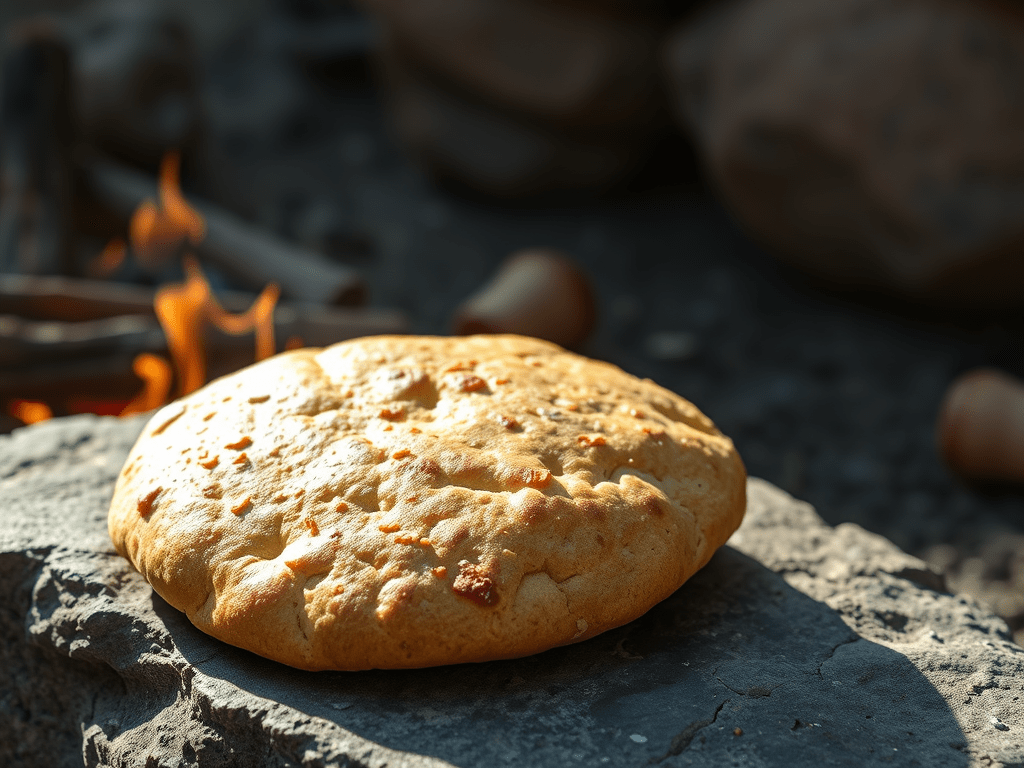
Before quinoa hit our grain bowls and chia seeds took over Instagram, there was amaranth, a tiny and mighty seed that’s been around for thousands of years. Cultivated by Native American communities across parts of what is now the U.S., amaranth wasn’t just a staple crop, it held ceremonial and cultural significance, prized for its resilience, nutrition, and spiritual value. It powered civilizations long before “superfood” became a marketing term.
So when I decided to make amaranth flatbread… let’s just say I was diving into uncharted territory. I had never made flatbread before, and had never tasted amaranth in my life. So yeah, this recipe felt like a leap. But color me surprised: my family devoured it. Like, seconds and thirds, no hesitation. Me? I’ll be honest… it wasn’t love at first bite. The flavor was earthy and different, and I wasn’t sure how I felt about it. But watching my crew rave about it totally changed my perspective.
Sometimes the most meaningful recipes are the ones that connect us to stories bigger than ourselves, even if they take us a little outside our comfort zone.
Ready to bake something ancient and new all at once? Let’s get into it.
Ingredients:
- 2 cups amaranth flour (you can make this by grinding amaranth seeds in a blender or food processor)
- 1/2 cup water (adjust as needed)
- 2 tablespoons honey
- A pinch of salt
Instructions:
- Making the Dough:
- In a large bowl, combine the amaranth flour and a pinch of salt.
- Gradually add water to the flour mixture while stirring. You may not need the entire 1/2 cup, so add it slowly until the dough starts to come together.
- Once the dough starts to form, add the honey and continue to mix until it is evenly incorporated.
- Kneading the Dough:
- Transfer the dough to a clean surface and knead it for about 5-10 minutes. The dough should be smooth and slightly sticky but should not stick to your hands excessively. If it’s too dry, add a little more water; if it’s too sticky, add a bit more flour.
- Shaping and Using the Dough:
- The dough can be shaped into small balls, patties, or other forms as desired.
- Once shaped, these dough pieces can be dried and later eaten as is, or they can be baked or lightly toasted in a dry skillet until they are firm and slightly golden.
Optional: Baking or Cooking
- If you want to bake the dough shapes, preheat your oven to 350°F (175°C). Place the shaped dough pieces on a baking sheet lined with parchment paper and bake for about 15-20 minutes, or until they are firm and slightly golden.
- Alternatively, you can cook the dough shapes in a dry skillet over medium heat for a few minutes on each side until they are firm and slightly browned.
 Time Traveling Table
Leave a comment