
Heads up! This post contains affiliate links. If you click and buy, I might earn a small commission – think of it as a tip for my historical taste-testing adventures. It won’t cost you a penny more, but it keeps my time-traveling table spinning. Thanks for the support!
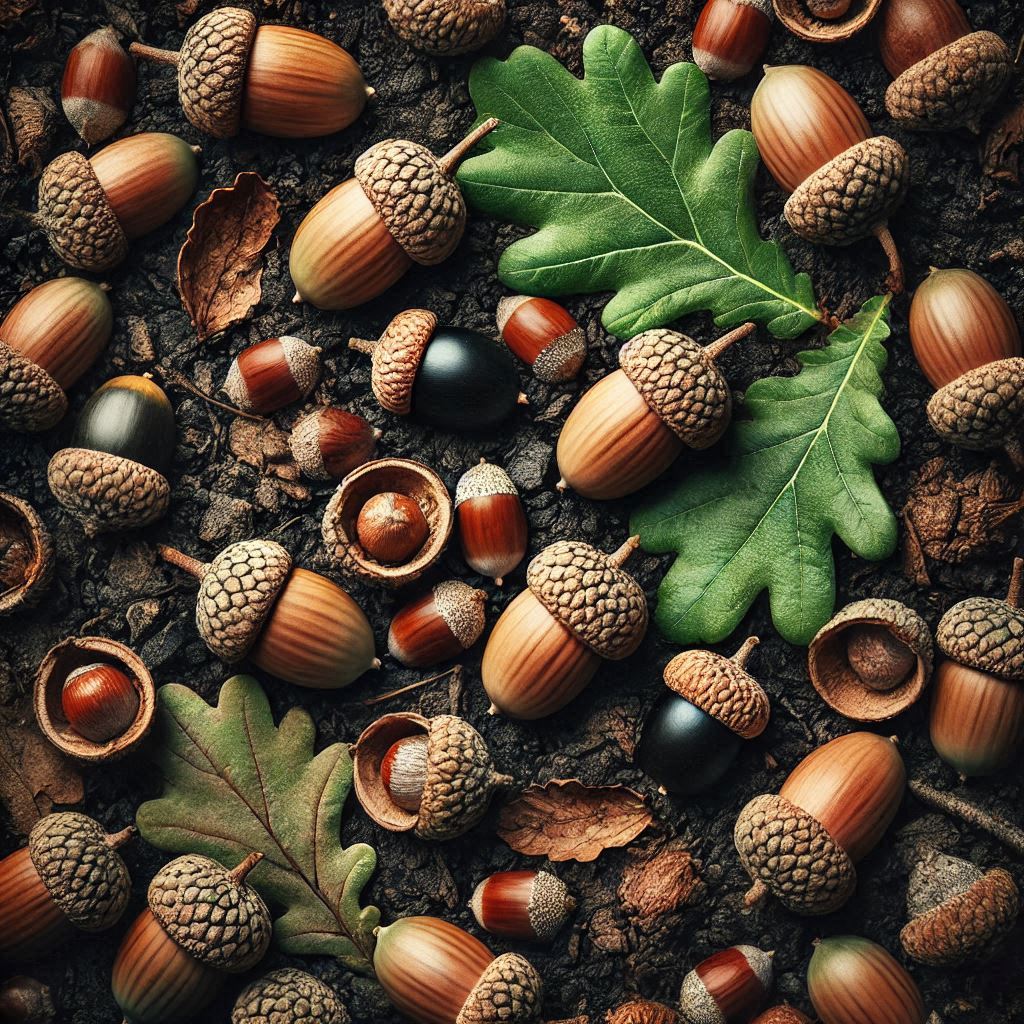
This flatbread led me down a whole “are you serious” train. I assume most people have seen an acorn. I live in a location where people frequently have oak trees in their yards, so I’m very familiar with them. So imagine my SHOCK at finding out it is impossible to find acorn flour.
Given its importance in the diets of prehistoric people, I figured this would be something that, if not readily available, then at least something I could buy. Nope. It isn’t. I could not find it. Then I thought, well okay, I’ll just buy like a pound of acorns and grind it myself. Also a big nope. You can buy acorns online, but they’re mostly for crafts and whatnot, where you’re buying 10-20 nuts. I did not think this was going to provide me with enough flour for what I wanted to make.
I then considered just going foraging through my neighborhood and being that weirdo picking up handfuls of acorns from someone’s park strip. THEN I read about how to process them and thought that seemed so time-consuming that I also wasn’t about that either. Unlike hunter-gatherers, whose job is essentially finding ways to survive, I have a full-time job and a grocery store just down the road.
So I thought, well I suppose this is why flour isn’t available—because it’s time-intensive. BUT THEN I did find “acorn starch,” which initially made me angry as I thought, so someone IS willing to process acorns… just not for flour. So I bought this and gave it a whirl. See below for my review.
Processing Acorns
- Gathering: Collect acorns from oak trees. Ensure they are free of mold and pests.
- Shelling: Crack open the acorns using a rock or similar tool to remove the shells and extract the nuts.
- Leaching: Acorns contain tannins, which are bitter and can be toxic in large amounts. To remove tannins:
- Cold Water Method: Place shelled acorns in a mesh bag or porous container. Submerge in a running stream for several days, or repeatedly rinse in several changes of cold water until the water no longer turns brown and the acorns taste mild.
- Hot Water Method: Boil acorns, changing the water several times until it runs clear and the acorns taste less bitter. Note: This method can reduce some of the nutritional value.
- Drying: Once leached, dry the acorns completely. This could be done by spreading them out in the sun or using a low fire.
- Grinding: Pound or grind the dried acorns into a coarse flour using stone tools like a mortar and pestle.
Recipe
Ingredients
- 1 cup acorn flour (prepared as described above, should you want Acorn Starch, click here)
- 1/2 cup water
- A pinch of salt (optional, if available)
- 1 tablespoon fat (if available)
Making Acorn Bread
- Mixing: In a large bowl, combine the acorn flour with a pinch of salt (if using). Gradually add water, about 2 parts flour to 1 part water, and mix until a thick, dough-like consistency forms. Adjust the water as necessary to achieve a workable dough. The dough should be pliable but not too sticky. Add fat if you have it for a softer texture.
- Shaping: Divide the dough into small balls and shape each one into a thin, round flatbread or a small, flat cake. These will be quite simple and rustic in form.
- Cooking:
- Stone Baking: Heat a flat stone over an open fire. Once the stone is hot, place the flatbread on it. Cook for 2-3 minutes on each side or until they are firm and have slight char marks. Turn occasionally to ensure even cooking.
- I cooked just on a skillet in my kitchen.
- Ash Baking: Alternatively, cover the dough with hot ashes and embers. Allow to cook until the bread is firm and slightly browned.
- Stone Baking: Heat a flat stone over an open fire. Once the stone is hot, place the flatbread on it. Cook for 2-3 minutes on each side or until they are firm and have slight char marks. Turn occasionally to ensure even cooking.
- Serving: Once cooked, the acorn bread can be eaten as is or used to accompany other foods like meat, fish, or foraged plants.
Notes
- Flavor: Acorn bread has a distinctive nutty flavor, which might be slightly bitter if not all tannins are removed.
- Texture: It is denser than modern bread, with a texture similar to other ancient breads made from coarse flours.
As I did not use flour, but instead used starch, my flatbread did not turn out great. The outside was slightly like coagulated jelly, and the inside was a dry, crunchy powder. YUM!
But you live and learn. I thought, “How different can pure starch and flour REALLY be?” A lot different I found. If you know where to find acorn flour, PLEASE hit me up!
 Time Traveling Table
Leave a comment