
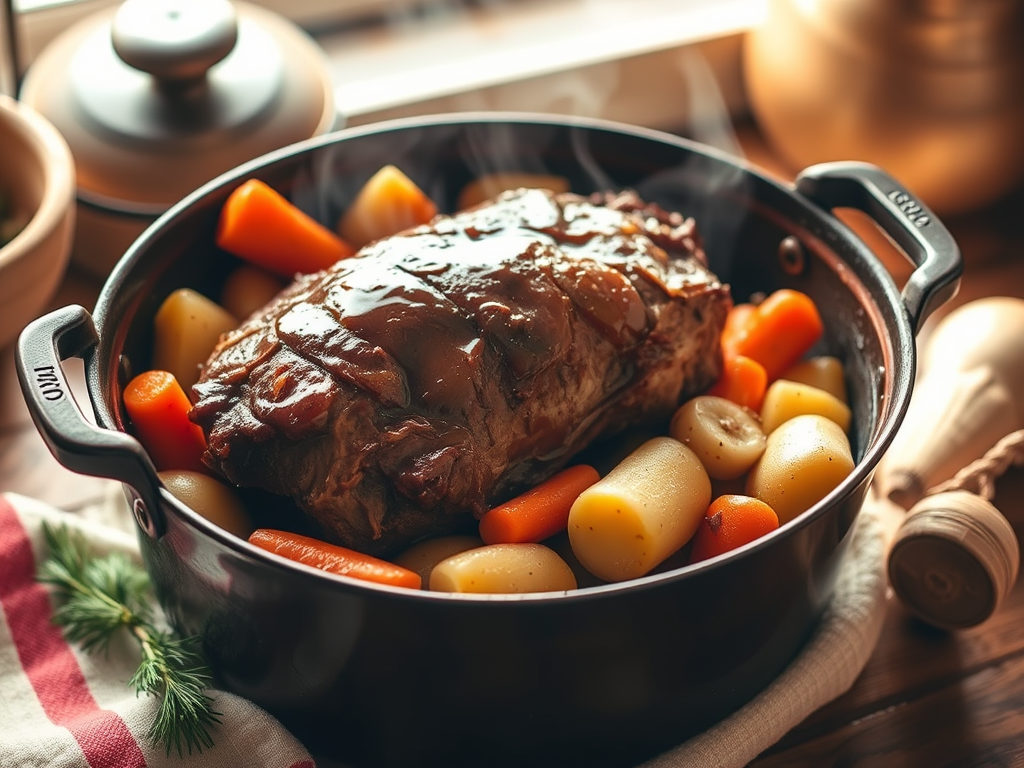
If there’s one meal that screams classic American home cooking, it’s pot roast—though, to be honest, I didn’t grow up eating it. My family didn’t eat beef, so this dish doesn’t give me all the cozy “mom’s cooking” vibes that some people get. But after making it the old-school way, I totally get why it was such a staple in 1910 kitchens.
Back then, refrigeration was limited, and people cooked with what they had on hand. A big, slow-cooked roast was a practical, budget-friendly choice, turning tough, inexpensive cuts of beef into something fall-apart tender and flavorful. Root vegetables—like carrots, potatoes, and onions—were cheap, easy to store, and available year-round, making them the perfect addition to the pot.
This wasn’t just about feeding a family on a budget—it was a Sunday dinner tradition. Families would gather as the rich, meaty aroma filled the house, letting the roast simmer for hours. No instant pots, no shortcuts—just slow, hands-off cooking that made magic happen.
And while I don’t have childhood memories tied to this dish, I can say this—they knew what they were doing in 1910. I made this and it was comforting, rich, and ridiculously satisfying. So if you’re looking for a true throwback meal that’s stood the test of time, this 1910 Pot Roast with Root Vegetables is it. Time to channel your inner early 20th-century home cook and get that pot simmering!
Ingredients:
- 3 to 4 pounds of chuck roast (or another inexpensive cut of beef, like round or brisket)
- 2 tablespoons lard or butter (lard was commonly used in 1910)
- 4 large carrots, peeled and cut into chunks
- 4 large potatoes, peeled and cut into chunks
- 2 medium onions, peeled and quartered
- 2 parsnips, peeled and cut into chunks (optional but typical of the era)
- 3 cloves garlic, crushed
- 2 sprigs fresh rosemary (or 1 teaspoon dried rosemary)
- 1 sprig thyme (or 1 teaspoon dried thyme)
- 1 bay leaf
- 3 cups beef broth (or water if broth wasn’t available)
- 1 cup red wine (optional, but common in the early 1900s)
- Salt and pepper to taste
- 2 tablespoons flour (optional, for thickening gravy)
Instructions:
- Preheat your oven to 325°F (163°C).
- In a heavy-duty Dutch oven or large oven-safe pot, heat 2 tablespoons of lard or butter over medium-high heat. Pat the chuck roast dry and season generously with salt and pepper. Brown the meat on all sides until it develops a nice, deep crust (about 4-5 minutes per side). Remove the roast and set it aside.
- In the same pot, add the onions and cook until they start to soften (about 3-4 minutes). Add the garlic and cook for another minute, being careful not to burn it. If you’re using flour for a thicker gravy, sprinkle it over the onions and garlic and stir to make a roux. Cook for 2 minutes to remove the raw flour taste.
- Return the browned chuck roast to the pot. Add beef broth (or water), red wine (if using), rosemary, thyme, and bay leaf. The liquid should come about halfway up the roast. Bring everything to a simmer.
- Arrange the carrots, potatoes, and parsnips (if using) around the roast in the pot. Season the vegetables with a pinch of salt and pepper.
- Cover the Dutch oven with a lid and place it in the preheated oven. Roast the meat for about 3 to 4 hours, or until the roast is fork-tender and the vegetables are cooked through. About halfway through, check the liquid level and add more broth or water if necessary to keep the roast moist.
- Once the roast is done, remove it from the oven. Discard the bay leaf, and adjust the seasoning with more salt and pepper if needed. If you want a thicker gravy, use a spoon to remove some of the liquid and simmer it on the stovetop to reduce and thicken. Serve the roast with the cooked root vegetables and gravy on the side.
How Do You Know If It’s Done
1. Fork Tenderness (Best Method)
- Insert a fork into the meat and twist. If the meat easily pulls apart, it’s done. If there’s resistance, it needs more time.
- A properly cooked pot roast should be “fall-apart tender.”
2. Internal Temperature (If Using a Thermometer)
- 195–205°F (90–96°C) → Ideal for a tender pot roast (collagen and fat have broken down).
- Below 190°F (88°C) → Meat will still be tough and chewy.
- Above 210°F (99°C) → Risk of drying out.
3. Texture & Appearance
- Meat should pull apart with a fork (not need a knife).
- Vegetables should be soft but not mushy.
4. Cooking Time Check (General Guide at 325°F / 163°C)
- 3-pound roast → 3 to 3.5 hours
- 4-pound roast → 3.5 to 4 hours
- 5-pound roast → 4 to 4.5 hours
If the roast isn’t tender yet, cover and continue cooking for another 30–45 minutes and check again. Patience is key!
 Time Traveling Table
Leave a comment