
Back in July 2024, I kicked off my decades meals adventure, cooking my way through history. I loved the challenge—the research, the connection to the past, the satisfaction of recreating ancient flavors. But somewhere between cooking up grains and simmering stews, I had a realization: Why stop at just cooking history? Why not grow it too?
Of course, reality checked in fast. July isn’t exactly the ideal time to start a garden from scratch—mine was already full of veggies, herbs, and (hopefully) not too many weeds. But as fate (or maybe just my subconscious brilliance) would have it, many of the plants I had chosen were already native to North America.
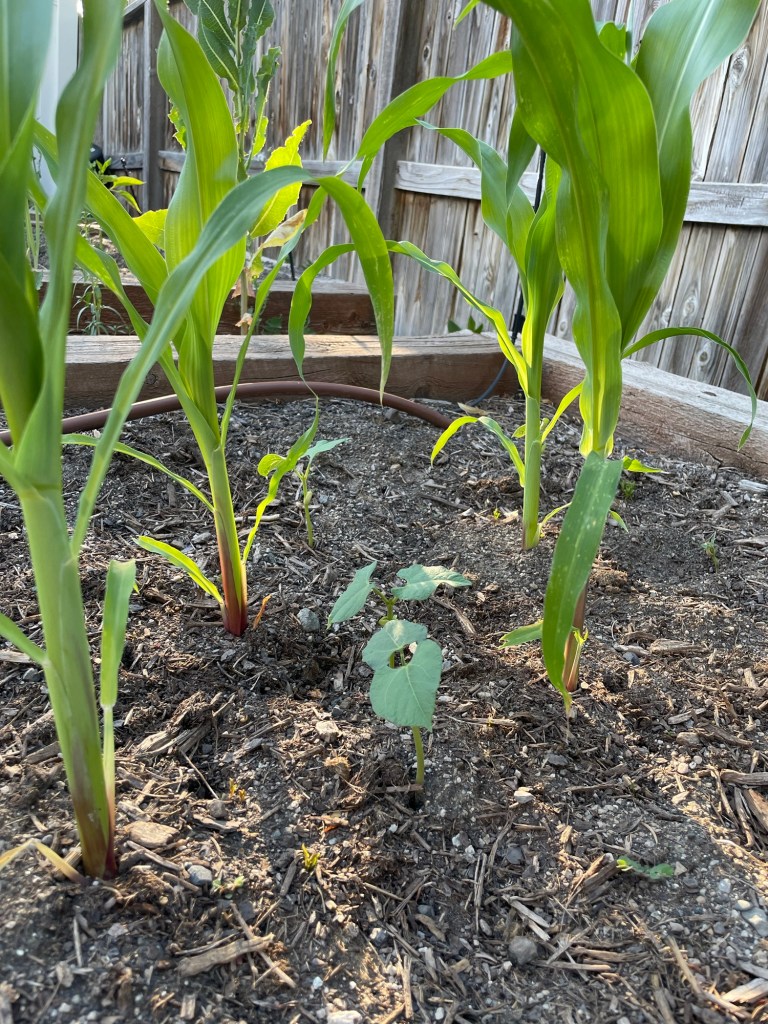
I had already decided to try the Three Sisters Method, an Indigenous planting technique where corn, beans, and squash grow together in a mutually beneficial setup. Corn provides a natural trellis for beans, beans fix nitrogen in the soil to nourish the corn, and squash spreads out along the ground, keeping weeds at bay and locking in moisture. In theory, it sounded perfect. In practice? Well… let’s just say I gained a whole new appreciation for the people who mastered this method centuries before me.
This was my first-ever garden, and what followed was a season full of surprises, setbacks, and a newfound respect for those who cultivated these crops long before garden centers were a thing. Here’s what I learned, what I loved, and what I may never, ever plant again.
Corn: The Crop That Humbled Me
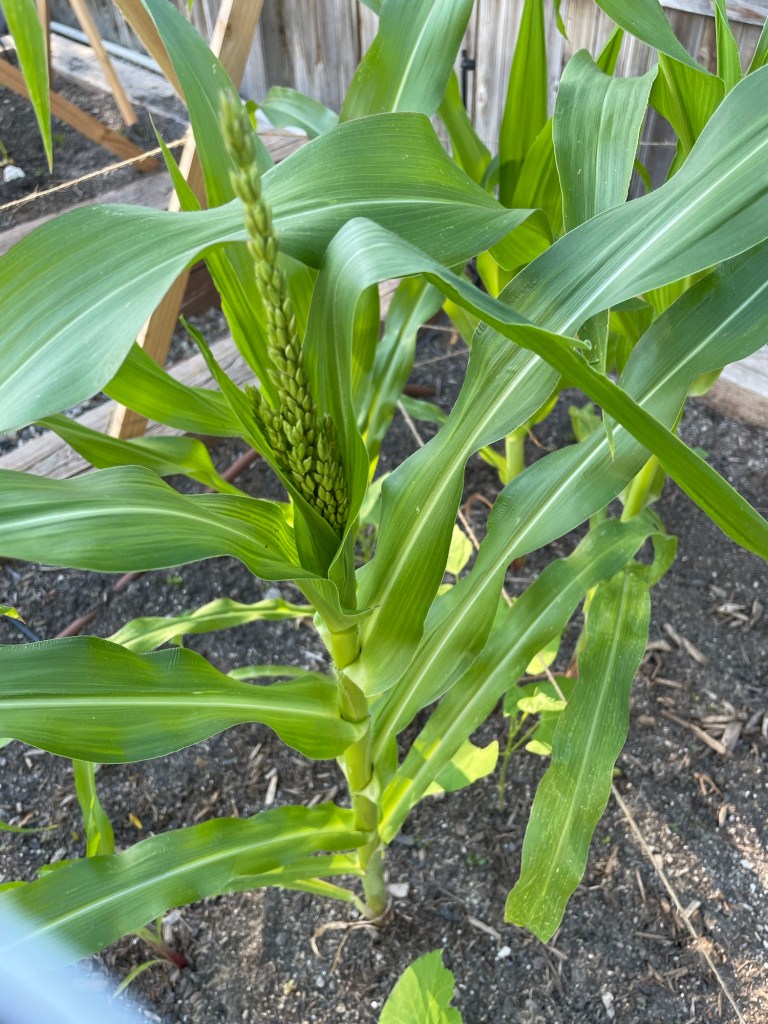
Corn needs warm soil—consistently above 60°F (15.5°C)—which, in my area, means planting a few weeks after the last frost.
I had big dreams for my corn. At first, I wanted to grow historically accurate varieties—the same kinds Indigenous people used a thousand years ago. But the more I researched, the more I realized something important: Indigenous people didn’t eat corn on the cob. Instead, they dried it and ground it into cornmeal.
And honestly? I didn’t have the time (or patience) to harvest and process corn just to discover I didn’t even like it. So, I chickened out and planted standard yellow sweet corn instead.
And… it was kind of a disaster.
I got one fully formed ear of corn. Just one. The rest were sad, underdeveloped baby corns that I had no clue what to do with. Turns out, corn needs better spacing, proper pollination, and maybe a gardener who actually knows what they’re doing. Lesson learned.
The Three Sisters: A Hard-Learned Lesson
I originally chose the Three Sisters Method because I really wanted to grow pinto beans—and I figured if Indigenous farmers perfected this system over centuries, they knew something I didn’t.
Spoiler: They did.
But knowledge takes experience, and I had exactly zero.
My corn struggled. My squash never really got going. I planted:
- Cucumber
- Summer squash
- Zucchini
- Butternut squash
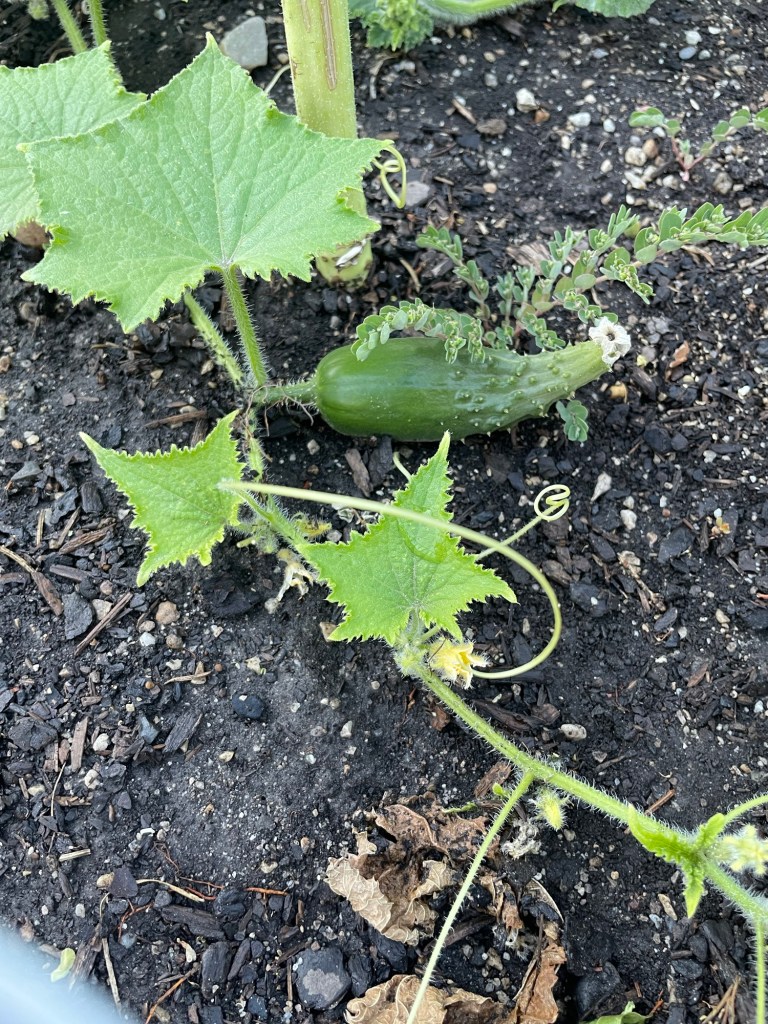
And while other people were practically begging their neighbors to take their extra zucchini, I harvested two cucumbers and one butternut squash. That’s it. Ouch.
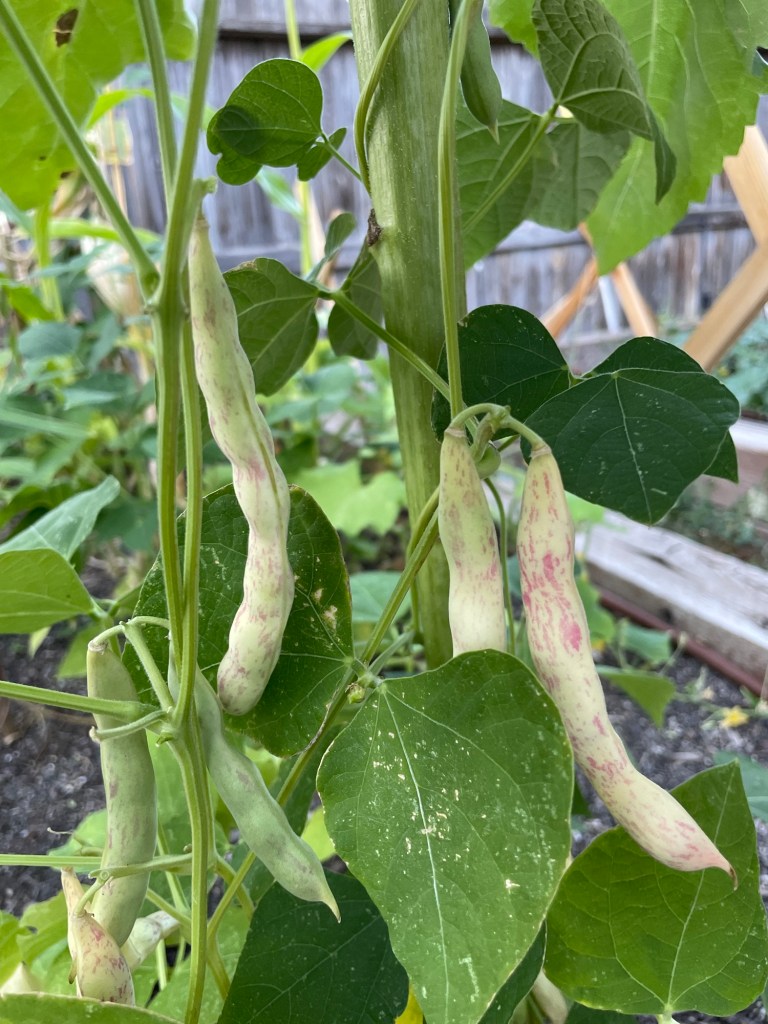
BUT! There was a silver lining—my pinto beans were a huge success.
Watching them grow was fascinating. They started as green pods (which, fun fact, you can eat fresh), then turned mottled like the beans inside, and finally dried out, ready for harvest. Despite my corn and squash failures, I ended up with an incredible pinto bean harvest, so I’m calling that a win.
Looking back, my biggest mistake was planting too late. Since corn in my area needs a later start, that meant my squash—which shouldn’t be planted until the corn is about five inches tall—had an even shorter growing season.
Sunflowers, Strawberries, and the Great Squirrel War
While my Three Sisters struggled, my sunflowers thrived. One grew over six feet tall, and the flower was as big as my face. Sunflowers are ridiculously fun to grow, and next year, I’m planting even more.
I also planted lavender, strawberries, and blueberries. The lavender? Doing okay. The strawberries? Not bad. The blueberries? Absolutely annihilated by my neighborhood squirrels.
It was a massacre.
Also, surprise bonus: my green onions survived the winter. I had no idea they could do that, so discovering them alive and well in the spring felt like a tiny gardening victory.
Going Native: Crops With Deep Roots
While researching, I discovered some amazing native plants that have been cultivated for centuries. Here are a few standouts:
Crops:
- Corn (Zea mays) – A staple of Indigenous agriculture.
- Beans (Phaseolus spp.) – Great for soil health and easy to grow.
- Squash (Cucurbita spp.) – A key part of the Three Sisters.
- Sunflowers (Helianthus annuus) – Beautiful, pollinator-friendly, and productive.
- Wild Rice (Zizania palustris) – A native grain used in traditional Indigenous diets.
Herbs:
- Echinacea – Immunity-boosting and great for pollinators.
- Bee Balm – Smells amazing, attracts bees, and makes delicious tea.
- Mountain Mint – Hardy, fragrant, and spreads like crazy.
- Yarrow – A medicinal herb known for its wound-healing properties.
- Goldenrod – Gorgeous and beneficial for bees.
These plants don’t just look good—they support local ecosystems and connect us to history in a way that feels tangible and meaningful.
Sunflower Seeds: The Snack That Keeps on Giving
After my sunflower success, I had to try roasting the seeds. If you want to do the same, here’s a simple recipe:
Roasted Sunflower Seeds
Ingredients:
- 2 cups whole sunflower seeds (in the shell)
- 4 cups water
- 1/4 cup salt (adjust to taste)
Instructions:
- Rinse the seeds under cold water.
- Soak them in saltwater for at least 2 hours (or overnight for extra flavor).
- Drain and pat dry.
- Roast at 300°F (150°C) for 30-40 minutes, stirring occasionally.
- Cool and store in an airtight container.
They’re crunchy, salty, and dangerously addictive.
Final Thoughts: What’s Next for My Garden?
This first attempt at gardening was equal parts rewarding and humbling. I had victories (pinto beans, sunflowers) and failures (RIP, sad corn), but I learned so much.
Next year, I’m doubling down on native plants, experimenting with new crops for my next historical cooking adventure, and officially declaring war on the blueberry-thieving squirrels.
Gardening is a long game, but I’m here for the ride.
What’s been your biggest gardening win—or fail? Let’s swap stories!
 Time Traveling Table
Leave a comment