
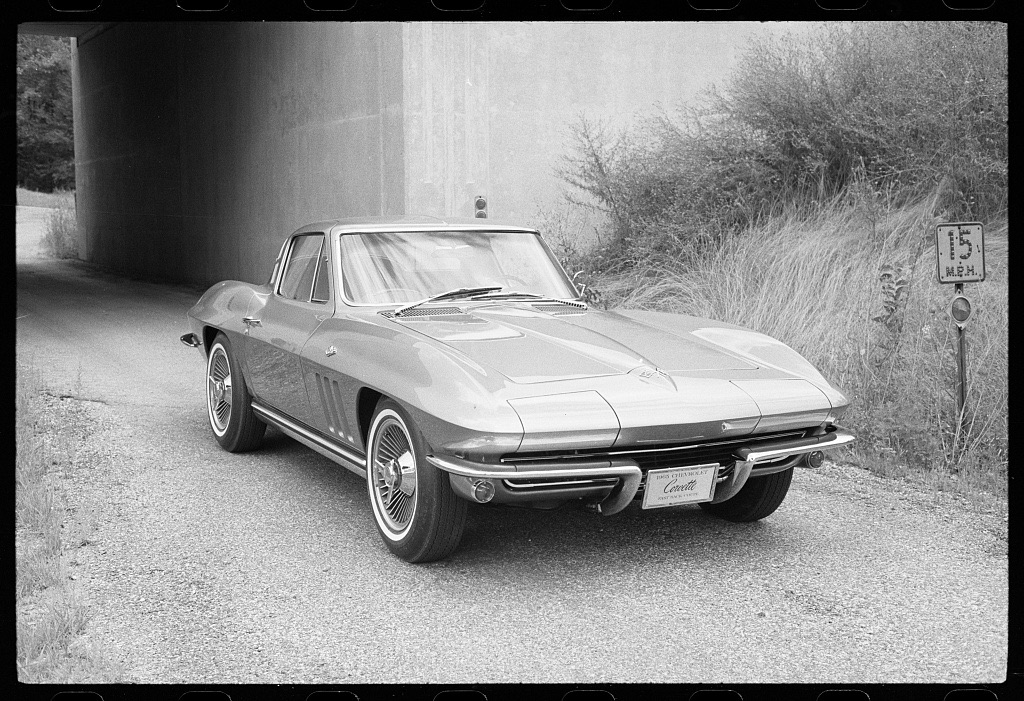
O’Halloran, Thomas J, photographer. Cars in Detroit – Chevy. 1964. August 7. Photograph. https://www.loc.gov/item/2016646557/.
Just so we’re all on the same page. Please ensure you’ve made yourself acquainted with my disclaimer
U.S. Population:
- The 1960 U.S. Census recorded approximately 179 million people.
Top 5 Cities
- New York City (~7.8 million)
- The financial, media, and cultural capital of the U.S. Home to Wall Street, major publishers, the arts (Broadway, museums), and a melting pot of immigrant cultures. It was also the center of advertising’s “Mad Men” era.
- Chicago (~3.6 million)
- A major hub for industry, manufacturing, and transportation. Chicago was vital for commerce and known for its distinct cultural contributions (jazz/blues, architecture) and as a major labor movement center.
- Los Angeles (~2.5 million)
- The heart of the entertainment industry (Hollywood), aerospace, and defense. Its growing suburbs symbolized the rise of car culture, and it played a leading role in shaping American pop culture.
- Philadelphia (~2 million)
- A key center for finance, industry, and higher education. Philadelphia also held deep historical significance as the birthplace of American democracy and was an East Coast manufacturing powerhouse.
- Detroit (~1.7 million)
- Known as the Motor City, Detroit was the automotive capital of the world, home to Ford, GM, and Chrysler. It defined much of America’s mid-century economic might and was the birthplace of Motown music, which reshaped popular culture.
Staple Food
- Breakfast:
- Cold cereals (Corn Flakes, Cheerios, Wheaties)
- Eggs and bacon/ham
- Toast with butter and jam
- Pancakes or waffles (especially on weekends)
- Lunch:
- Sandwiches (bologna, ham, tuna salad, peanut butter & jelly)
- Campbell’s soups
- TV dinners (increasingly popular!)
- Dinner:
- Meat-heavy meals: meatloaf, pot roast, baked chicken, pork chops
- Casseroles (like tuna noodle or green bean)
- Vegetables: canned or frozen green beans, peas, corn, carrots
- Potatoes: mashed, baked, or fries
- Jello salads
- Snacks & treats:
- Potato chips, pretzels, deviled eggs
- Ice cream, pudding, cookies
- Staple drinks:
- Coffee (ubiquitous for adults)
- Milk (especially for kids)
- Sodas: Coke, Pepsi, 7-Up
- Alcohol: Beer, whiskey, gin, and classic cocktails (Manhattans, Martinis, Old Fashioneds)
- Juice: Orange juice was a staple breakfast drink.
Clothing:
- Men:
- Suits and ties for work
- Slim-cut pants, polo shirts, and cardigan sweaters for casual wear
- Hats were still worn, but declining by the late ’60s
- Women:
- Dresses and skirts (often knee-length), with gloves and hats early in the decade
- Aprons in the kitchen
- Toward the late 1960s: more vibrant patterns, miniskirts, and pantsuits
- Children:
- Boys: Shorts, jeans, collared shirts, and crewneck sweaters
- Girls: Dresses with Peter Pan collars, knee socks, Mary Jane shoes
Notable:
By the late ’60s, counterculture styles (tie-dye, bell bottoms, peace signs) were gaining steam but weren’t yet mainstream early in the decade.
Average Middle-Class Home
Square footage & layout:
- The average new single-family home in 1960 was about 1,200 to 1,400 square feet.
- Typical layout:
- 3 bedrooms
- 1 bathroom (or 1.5 in newer/more upscale homes)
- Combined kitchen/dining area
- Living room, sometimes a den
- Many had basements and attics; garages (attached or detached) were becoming common.
Styles:
- Ranch-style houses were extremely popular—single-story, open-plan designs.
- Cape Cod and split-level homes were also common.
- Suburban expansion was booming (thanks in part to the GI Bill and highway expansion), with developments like Levittown symbolizing mass-produced suburban homes.
Exterior:
- Often brick or wood siding
- Yards were well-kept; the suburban lawn became a symbol of middle-class status.
- Most homes had basic appliances:
- Refrigerator, oven/stove (often gas), washing machine
- Dishwashers were a luxury, but gaining popularity later in the decade
- Many homes had black-and-white TVs early in the decade; color TVs became more common by the late 1960s.
- Heating: Mostly oil or gas furnaces; air conditioning was a luxury in most homes early on.
Daily Routine:
- Men: Many men worked 9-to-5 jobs in offices, factories, or retail. A typical day involved commuting (often by car), a structured work environment, and coming home to a meal prepared by their spouse.
- Women: Many women were homemakers, with their day revolving around childcare, cleaning, shopping, and meal prep—though increasing numbers of women were entering the workforce, especially in roles like teaching, nursing, or secretarial work.
Health
1. Life expectancy:
- Men: ~66.6 years
- Women: ~73.1 years
2. Child survival:
- The infant mortality rate in 1960 was about 26 deaths per 1,000 live births.
3. Healthcare & medicine:
- Medical advancements:
- Vaccines: The polio vaccine had become widespread in the late 1950s; measles, mumps, and rubella vaccines were coming into regular use.
- Antibiotics: Penicillin, streptomycin, and newer antibiotics were widely used to treat infections.
- Mental health: The 1960s saw the beginning of deinstitutionalization, as new psychiatric drugs (like Thorazine) became available, though mental health care was still very limited in scope.
- Heart health: The first coronary bypass surgeries began in the 1960s, reflecting big advances in cardiac care.
- Birth control pill: Approved in 1960 (for married women), revolutionizing reproductive health.
- Healthcare system:
- Medicare and Medicaid: launched in 1965, providing health insurance to the elderly and low-income people for the first time.
- Most middle-class families relied on employer-based health insurance.
- Hospital care: Hospitals were modernizing rapidly, but there were still large differences between urban and rural facilities.
- Childbirth & maternal care:
- By the 1960s, about 95% of births took place in hospitals, with growing use of pain relief but less patient-centered care than today.
4. Public health issues:
- Smoking was extremely common (over 40% of adults smoked), and health risks were only beginning to be widely publicized.
- Heart disease and cancer were leading causes of death.
- Environmental health was becoming a concern (e.g., Rachel Carson’s Silent Spring in 1962 spotlighted dangers of pesticides).
Family Life
1. Social structure & family dynamics:
- The nuclear family model (married couple + kids) was the dominant ideal, especially in white middle-class America. Extended families were less likely to live together by this point, compared to earlier decades.
- Religion, community groups, and local clubs (church, PTA, scouting, social clubs) were key to community life.
- The Civil Rights Movement and countercultural movements (hippies, feminists, anti-war activists) were challenging traditional norms, especially as the decade progressed.
2. Marriage & monogamy:
- Monogamy was the overwhelming societal norm and legal expectation.
- The average age at first marriage:
- Women: ~20–21 years old
- Men: ~22–23 years old
3. Children & family size:
- The post-WWII baby boom was winding down by the mid-1960s, but large families were still common, especially early in the decade.
- Average number of children per household: ~3.5 children per family
4. Broader social trends & shifts:
- By the late 1960s, second-wave feminism and the sexual revolution began reshaping attitudes about marriage, child-rearing, and personal freedom.
- The civil rights and anti-poverty movements were also challenging the status quo, gradually increasing opportunities for marginalized communities.
Popular games
For adults:
- Card games: bridge, pinochle, canasta, gin rummy, poker
- Board games: Monopoly, Scrabble, Risk, Clue
- Parlor games: charades, Twister (launched 1966, huge party hit)
For children:
- Board games: Candy Land, Chutes and Ladders, Life, Mouse Trap, Battleship
- Outdoor games : hopscotch, jump rope, kick the can, red rover, hide and seek
- Toys: hula hoops, yo-yos, Etch A Sketch, Rock’em Sock’em Robots, Barbie dolls, GI Joe, Easy-Bake Oven
American Pastimes
Adults
- Attending dinner parties, cocktail parties, or backyard cookouts
- Watching TV: The Ed Sullivan Show, Bonanza, The Andy Griffith Show, The Twilight Zone
- Going to drive-in movies or theaters
- Dancing: at nightclubs, lounges, or local halls (twist, cha-cha, rock & roll)
- Reading: books, newspapers, magazines like Life or Reader’s Digest
- Bowling leagues (hugely popular in the ‘60s)
- Golf or tennis (suburban boom sports)
Children
- Playing outside until dark with neighborhood kids
- Watching Saturday morning cartoons (like The Flintstones, The Jetsons)
- Going to the movies (Disney classics, matinees)
- Reading comic books (Archie, Superman) or Hardy Boys/Nancy Drew
- Listening to records or AM radio
- Attending Scouts, 4-H, or Little League
Common Events
- School dances and sock hops
- County fairs and carnivals
- Parades (Memorial Day, 4th of July)
- Church picnics or potlucks
- School plays and sports games
- Concerts: Elvis, The Beatles (by mid-decade), local rock or jazz bands
- Political rallies or protests (especially by late ‘60s)
Popular plays & theater (Broadway & local)
- “Hello, Dolly!” (1964)
- “Fiddler on the Roof” (1964)
- “Cabaret” (1966)
- “The Sound of Music” (1959, but hugely popular into the 1960s)
- “A Funny Thing Happened on the Way to the Forum” (1962)
- Touring productions of earlier classics like My Fair Lady and West Side Story
Money in America
Conversion Rate: Rough rule of thumb: $1 in 1960 ≈ $10–$11 today
- Average household income: ~$5,600/year
- Minimum wage in 1960: $1/hour
- Poverty rate in 1960: ~22%
Average income
| Job | Wages (2025 equivalent is x10) |
| Farm Laborer | $1,500 |
| Secretary | $3,800 |
| Factory Worker | $4,200 |
| Nurse | $4,400 |
| Construction Worker | $4,800 |
| Teacher | $5,100 |
| Lawyer | $15,000 |
| Doctor | $20,000 |
Common purchases
| Item | Price (2025 equivalent is x10) |
| Postage Stamp | 4¢ |
| Loaf of Bread | 20¢ |
| Gallon of Gas | 31¢ |
| Gallon of Milk | 49¢ |
| Dozen Eggs | 55¢ |
| Movie Ticket | 75¢ |
| New TV Console | $400 |
| New Car | $2,600 |
| Average House | $12,700 |
Faith in America
Religion and faith were hugely influential in the 1960s, though the decade saw both religious revival and questioning.
- Mainstream faiths: Protestant Christianity (especially Methodist, Baptist, Lutheran, Presbyterian), Catholicism, and Judaism were the dominant religious traditions. Church attendance was still very high, especially in the early ‘60s.
- Evangelical rise: Billy Graham was a major figure, packing stadiums for crusades and preaching on TV.
- Catholic moment: John F. Kennedy’s 1960 election as the first Catholic U.S. president was historic.
- Counterculture + spiritual searching: By the mid-to-late ‘60s, many young Americans were exploring Eastern religions (Buddhism, Hinduism), mysticism, or turning to New Age movements alongside the broader counterculture.
Defining Aesthetic and Artists
The art world of the 1960s exploded with new styles, marked by boldness, irony, and rebellion:
- Pop Art — the most defining movement
- Andy Warhol (Campbell’s Soup Cans, Marilyn Monroe portraits)
- Roy Lichtenstein (comic-strip-inspired paintings)
- Claes Oldenburg (giant soft sculptures of everyday objects)
- Minimalism — reducing art to pure shapes and colors
- Donald Judd, Dan Flavin
- Street & political art — especially near the decade’s end, reflecting civil rights, feminism, and antiwar protests.
- Music
- Moog synthesizer (1964) — The first commercially available modular synthesizer; revolutionary for rock, pop, and electronic music.
- Wah-wah pedal (1966) — Made guitar leads cry and sing; popularized by Jimi Hendrix and Eric Clapton.
- Fuzz pedal (1962, Maestro FZ-1) — One of the first distortion pedals, famously used on The Rolling Stones’ “(I Can’t Get No) Satisfaction.”
Design Aesthetics
The 1960s American design world was bold, futuristic, and often playful — reflecting optimism, rebellion, and rapid social change.
- Mid-century modern (early ‘60s)
- Clean lines, organic curves, wood + metal combos.
- Iconic furniture: Eames lounge chair, Saarinen tulip table.
- Color palette: earthy tones with pops of mustard, avocado, and burnt orange.
- Pop design
- Bright, clashing colors; graphic patterns.
- Plastics, vinyl, and synthetic materials.
- Youthful, cheeky, and commercial.
- Psychedelic design (late ‘60s)
- Acid-inspired swirls, vibrant neons, mind-bending patterns.
- Posters, album covers, and fashion reflected the counterculture’s visual language.
- Space Age / Atomic style
- Influenced by the Space Race.
- Jet-age curves, starbursts, bubble shapes.
- Chrome, molded fiberglass, Sputnik chandeliers.
Language and Writing
Language trends:
- Slang like groovy, far out, cool, dig it, square, boss, outta sight — especially among youth.
- Civil Rights language became powerful: freedom, equality, black power, we shall overcome.
- Antiwar and counterculture slogans emerged: make love, not war, peace and love, flower power.
Literature & Writing:
- The rise of the Beat Generation and its lingering influence (Allen Ginsberg, Jack Kerouac, William S. Burroughs).
- Important 1960s novelists:
- Harper Lee (To Kill a Mockingbird, 1960)
- Joseph Heller (Catch-22, 1961)
- Sylvia Plath (The Bell Jar, 1963)
- Kurt Vonnegut (Cat’s Cradle, 1963; Slaughterhouse-Five would come in 1969)
- Civil Rights and political voices: James Baldwin, Malcolm X, Martin Luther King Jr.
- Rise of New Journalism: writers like Tom Wolfe and Joan Didion blending reporting with literary style.
Major New Things
- Color televisions: Color broadcasts became mainstream after 1966, transforming living rooms and entertainment habits.
- Dishwashers (built-in models): No longer just for the wealthy; dishwashers became more common in middle-class kitchens, symbolizing modern convenience.
- Microwave ovens (Amana Radarange): Though still expensive and rare, the microwave began its entry into the home, foreshadowing a revolution in cooking.
- Transistor radios: Small, portable, and cheap — they reshaped how Americans, especially teens, consumed music.
- Polaroid instant cameras (Model 100 Land Camera, 1963): Instant photography was a sensation, bringing a playful, innovative edge to family life.
- Power lawn mowers (gas rotary mowers): Became affordable to suburban homeowners, symbolizing postwar suburban expansion and the rise of the “perfect lawn.”
- IBM System/360 mainframe computers (1964): Not a home appliance, but transformative for American business and technology, laying groundwork for the computer revolution.
Defining Moments
Science & Technology Advances
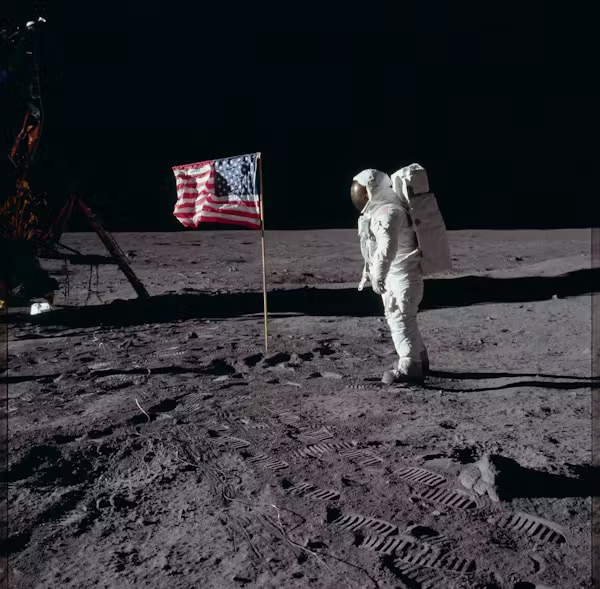
NASA. (1969, July 20). Astronaut Buzz Aldrin salutes the U.S. flag on the Moon during the Apollo 11 mission. NASA Image and Video Library. https://www.nasa.gov/image-feature/astronaut-buzz-aldrin-on-the-moon
- 1960 — First weather satellite, TIROS-1, launched, revolutionizing weather forecasting.
- 1961 — Alan Shepard becomes first American in space (Mercury-Redstone 3, Freedom 7), the U.S. commits to landing a man on the Moon.
- 1965 — First commercial communications satellite, Early Bird (Intelsat I), launched.
- 1966 — Luna 9 (USSR) soft lands on the moon, pushing NASA to accelerate Apollo plans.
- 1969 — Apollo 11 moon landing; Neil Armstrong becomes first human to walk on the moon — ultimate achievement of the space race.
Significant Political & Cultural Moments
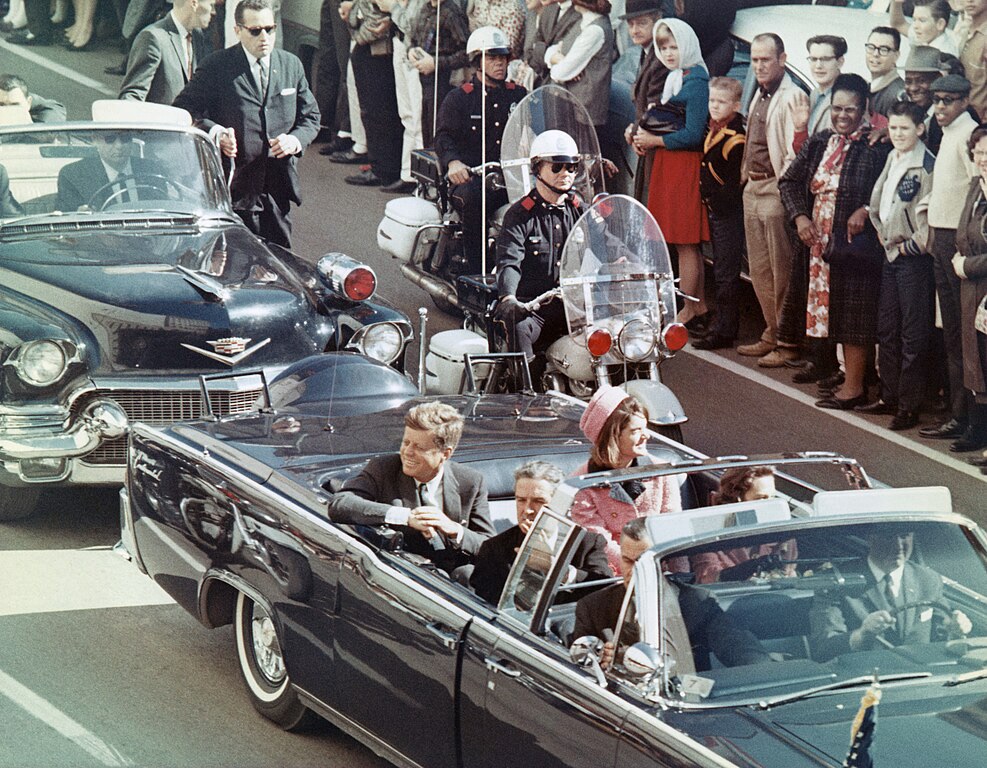
Walt Cisco / Dallas Morning News. (1963, November 22). JFK motorcade in Dallas [Photograph]
- 1960: John F. Kennedy elected president; first televised presidential debates (Kennedy vs. Nixon) reshape political campaigns.
- 1963:
- March on Washington; Martin Luther King Jr. delivers “I Have a Dream” speech; JFK assassinated in Dallas.
- Assassination of President John F. Kennedy in Dallas, Texas; national trauma and cultural turning point.
- 1964:
- Civil Rights Act passed, outlawing segregation and major forms of discrimination.
- Food Stamp Act launches the modern food assistance program.
- 1965:
- Bloody Sunday and Selma-to-Montgomery marches, leading to the Voting Rights Act.
- Medicare and Medicaid established under Johnson’s Great Society.
- U.S. escalates military involvement in Vietnam.
- 1968:
- Assassination of Dr. Martin Luther King Jr.; nationwide protests and riots.
- Assassination of Robert F. Kennedy during his presidential campaign.
Major Trials & Historical Events
- 1961 — Bay of Pigs Invasion (failed U.S.-backed attempt to overthrow Fidel Castro in Cuba).
- 1962 — Cuban Missile Crisis; closest U.S. came to nuclear war with the USSR.
- 1964–1968 — Escalation of the Vietnam War; Tet Offensive (1968) deeply shakes U.S. public opinion.
- 1966–1967 — Supreme Court case Miranda v. Arizona establishes Miranda rights.
Extreme Weather & Disasters

U.S. Geological Survey. (1964, March 27). Good Friday Earthquake at Turnagain Arm
- 1964 — Great Alaskan Earthquake (magnitude 9.2), strongest in North American history.
- 1965 — Hurricane Betsy hits Louisiana; one of the first U.S. hurricanes to cause over $1 billion in damage.
Cultural Icons & Defining Moments
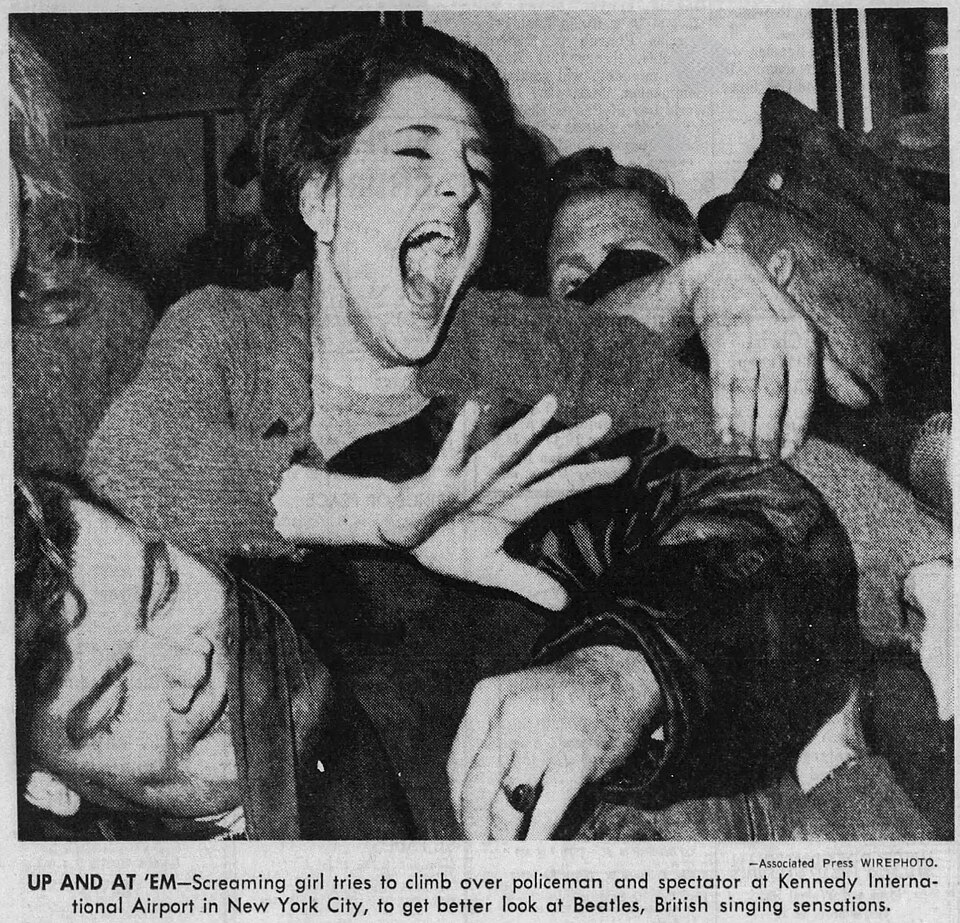
Press and Sun-Bulletin. (1964). Beatlemania fan [Photograph]
- Marilyn Monroe — Died 1962; her image becomes mythic.
- The Beatles’ first U.S. tour (1964) — Kicks off “Beatlemania” and the British Invasion.
- Muhammad Ali — Became heavyweight champion in 1964; refused Vietnam draft in 1967, making headlines.
- Star Trek debuts (1966), introducing groundbreaking cultural ideas in U.S. television.
- Super Bowl I (1967) — Launch of what would become the biggest sporting event in America.
- 1966–67 –Cultural shifts: rise of counterculture, Summer of Love; protests against the Vietnam War grow.
- 1969 — Stonewall Riots in New York; birth of the modern LGBTQ+ rights movement.
1960s American Playlist
- The Beach Boys — “Good Vibrations” (1966)
A masterpiece of studio experimentation and California sound. - Aretha Franklin — “Respect” (1967)
The Queen of Soul’s signature song and a civil rights anthem. - The Supremes — “Stop! In the Name of Love” (1965)
Motown magic that ruled American pop charts. - The Byrds — “Mr. Tambourine Man” (1965)
Folk-rock classic with the signature Rickenbacker 12-string jangle. - Bob Dylan — “Like a Rolling Stone” (1965)
Landmark protest and counterculture anthem. - James Brown — “Papa’s Got a Brand New Bag” (1965)
The birth of funk and a revolution in rhythm. - The Doors — “Light My Fire” (1967)
Psychedelic rock that defined the Summer of Love era. - Jimi Hendrix — “Purple Haze” (1967)
Mind-bending guitar and psychedelic innovation. - The Mamas & the Papas — “California Dreamin’” (1965)
Lush harmonies capturing the yearning spirit of the ‘60s. - Simon & Garfunkel — “The Sound of Silence” (1965)
Haunting folk-rock reflecting the social undercurrents of the decade.
Entertainment
Grownup
- Movie: Forrest Gump (1994)
This epic film spans decades, including significant moments from the 1960s, such as the Vietnam War, Civil Rights Movement, and the cultural shift of the ’60s. It’s one of the most iconic depictions of American history through the eyes of a simple man. - TV Show: Mad Men (2007–2015)
Set in the 1960s, this critically acclaimed show revolves around the advertising world, offering a deep dive into the changing social, political, and cultural landscape of America during this time. - Movie: The Graduate (1967)
A quintessential film of the 1960s that explores youth rebellion, social change, and personal identity. The film’s iconic character, Benjamin Braddock, and his affair with Mrs. Robinson exemplify the cultural shifts of the era. - Movie: Bonnie and Clyde (1967)
This film redefined Hollywood’s approach to violence and anti-heroes, portraying the infamous bank-robbing duo of the 1930s through a lens that resonated with the social upheavals of the 1960s. - Book: Slaughterhouse-Five by Kurt Vonnegut (1969)
A defining work of postmodern literature, this novel blends science fiction with war memoir to reflect on the absurdities of war and the human experience, notably the bombing of Dresden during WWII, and echoes the anti-war sentiments of the 1960s. - TV Show: The Twilight Zone (1959–1964)
Though it began in the late ’50s, the series’ most iconic episodes aired in the early ’60s. It is an excellent portrayal of the anxieties and fears of the era, dealing with issues of technology, war, and societal change. - Movie: Easy Rider (1969)
A counter-culture classic, this road movie about two bikers traveling through America captures the spirit of the 1960s counterculture, as it deals with themes of freedom, rebellion, and disillusionment. - Movie: Dr. Strangelove (1964)
Stanley Kubrick’s dark comedy about the threat of nuclear war during the Cold War offers an excellent depiction of the political and military tension of the 1960s. - American Graffiti (1973, film)
Set in California in 1962, this nostalgic film captures the youth, cars, rock ‘n’ roll, and small-town life just before the cultural explosion of the late ‘60s. - Hidden Figures (2016, film) — Celebrates the Black women mathematicians behind NASA’s 1960s space program.
Children’s
- TV Show: Sesame Street (1969–present)
This groundbreaking educational show began in the 1960s and has been a staple of children’s programming ever since. It teaches children important lessons on everything from numbers to diversity, making it an essential part of 1960s childhood. - Book: Where the Red Fern Grows by Wilson Rawls (1961)
A heart-wrenching story of a young boy and his two dogs, this novel captures rural life in America and the bonds of love and friendship. It remains a staple in children’s literature, reflecting themes relevant to the 1960s. - TV Show: The Brady Bunch (1969–1974)
Although the show began in the late ’60s, The Brady Bunch epitomizes the idealized American family. It was a major influence on American family television. - A Wrinkle in Time (1962, book by Madeleine L’Engle)
A groundbreaking American children’s novel that blends science fiction with a suburban family story. - The Archie Show (1968–1969, TV show)
Animated series following Archie and his friends’ teenage adventures, school life, and music in small-town America; famous for the hit song “Sugar, Sugar.” - TV Show: The Wonder Years (1988–1993)
A nostalgic look back at childhood during the era, focusing on the coming-of-age experience amidst cultural and political changes.
Classic Meal Plan
(Authentic to the Era)
Breakfast
Start your day with a hearty, all-American breakfast: fluffy scrambled eggs with crisp bacon, served alongside buttered toast and a helping of fresh strawberries or a spoonful of sweet strawberry jam. Wash it down with a tall glass of fresh orange juice or a hot cup of coffee — the breakfast table staples of the era.
Dinner/Cookout
Light Snack:
Begin with a crunchy nibble — potato chips or a platter of crisp crudités (carrots, celery, radishes) paired with a rich, homemade French onion dip.
Main:
Fire up the grill for classic American fare: juicy hamburgers stacked with American cheese, lettuce, tomato, pickles, ketchup, and mustard; and sizzling hot dogs tucked into soft buns, dressed with relish, mustard, and ketchup.
Side:
A heaping bowl of classic potato salad with mayonnaise, mustard, chopped celery, and hard-boiled eggs — a picnic table essential.
Side:
Corn on the cob, slathered in butter and lightly salted, rounding out the plate with a touch of sweet summer flavor.
Jell-O Salad:
A molded Jell-O salad — choose from the sunny brightness of Sunshine Salad (lemon Jell-O with pineapple and carrots) or the creamy tang of lime Jell-O with cottage cheese and pineapple — bringing a splash of color and nostalgia to the table.
Dessert:
A slice of homemade cherry pie, warm and bubbling, topped (if you like) with a scoop of vanilla ice cream.
Beverages:
Cold beer or Coca-Cola for the adults, and a tall glass of lemonade for the kids — classic and crowd-pleasing.
Modern Twist Meal Plan
(Nostalgic with a Fresh Update)
Breakfast
Enjoy fluffy scrambled eggs elevated with chives and a sprinkle of Parmesan, served alongside thick-cut bacon. Swap the toast for artisan sourdough or multigrain bread with European butter, plus a side of fresh strawberries drizzled with balsamic glaze. Sip on fresh-squeezed orange juice or a frothy oat milk latte.
Dinner/Backyard Cookout
Light Snack:
Start with artisanal potato chips or a vibrant crudité board — heirloom carrots, rainbow radishes, snap peas — served with a caramelized shallot and Greek yogurt dip.
Main:
Grass-fed beef burgers on brioche buns, layered with sharp cheddar, arugula, heirloom tomatoes, pickled red onions, and housemade aioli.
All-beef hot dogs in brioche buns, topped with gourmet mustard, homemade relish, and caramelized onions.
Side:
A modern potato salad with fingerling potatoes, Dijon vinaigrette, fresh herbs, and capers — lighter and brighter but still comforting.
Side 2:
Grilled Mexican street corn (elote) with cotija cheese, lime, and chili powder — a fun, global twist on corn on the cob.
Jell-O Salad Reinvented:
A deconstructed Jell-O dessert: Prosecco gelée with fresh berries and a whipped mascarpone topping — playful and elegant.
Dessert:
A rustic cherry galette or cherry hand pies, served warm with vanilla bean ice cream or a drizzle of honey.
Beverages:
Craft beer or hard seltzer for the adults; sparkling water, kombucha, or craft sodas for the kids and non-drinkers.
 Time Traveling Table
Leave a comment