
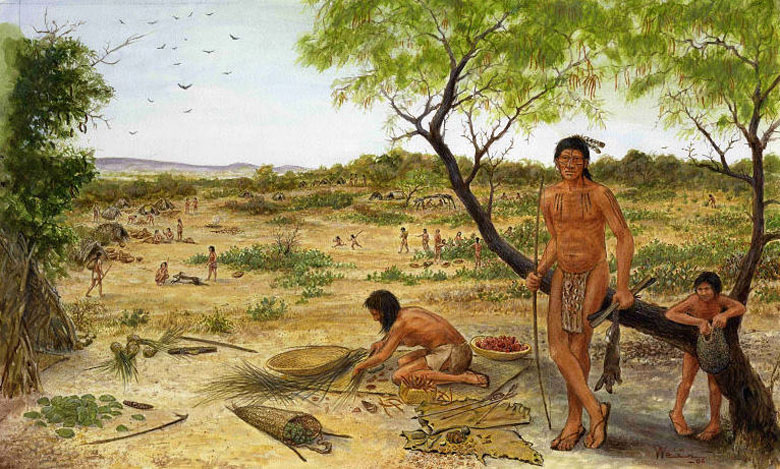
Step into a different time. In this post, we’re heading back to 13,000 BC Mexico, a world before cities, before farming, before even pottery, yet full of ingenuity, flavor, and resilience. We’ll walk through what daily life may have looked like for Mexico’s first hunter-gatherers, from the morning grind (literally, chia seeds in a stone mortar) to the tools that kept communities alive, the foods roasting over open fires, and the early spiritual clues left in ochre-stained caves. Along the way, we’ll meet people whose bones tell stories of long-distance treks, heavy burdens, and the care of their community—and yes, we’ll even roast a whole red snapper wrapped in banana leaves, just like it might have been done on the ancient coastline.
Just so we’re all on the same page. Please ensure you’ve made yourself acquainted with my disclaimer
How People First Got to Mexico
Alright, picture this: It’s the end of the last Ice Age, sea levels are lower, giant animals like mammoths are still roaming around, and a bunch of incredibly resourceful humans are thinking, “Hey, let’s keep walking and see what’s over there.”
The most widely accepted theory is the Bering Land Bridge route, a stretch of land (Beringia) that connected Siberia and Alaska when ocean levels were lower. People crossed it, and then trickled down through North America.
Some groups took an inland ice-free corridor east of the Rockies; others hugged the Pacific coastline, moving by foot and maybe small watercraft, basically on the world’s longest camping trip.
When They Showed Up
- Mainstream consensus: Humans were in the Americas somewhere between 15,000–20,000 years ago.
- In Mexico specifically: We’ve got solid evidence by 10,000–12,000 years ago (sites like Coxcatlán Cave and Tlapacoya).
- Older, debated finds: Sites such as Chiquihuite Cave in Zacatecas have produced stone tools that some researchers date to as early as 26,000–33,000 years ago, but these dates are still controversial.
Home Life
People were nomadic hunter-gatherers, living in small bands that followed megafauna and foraged wild plants. There were no permanent homes or villages yet, just temporary shelters.
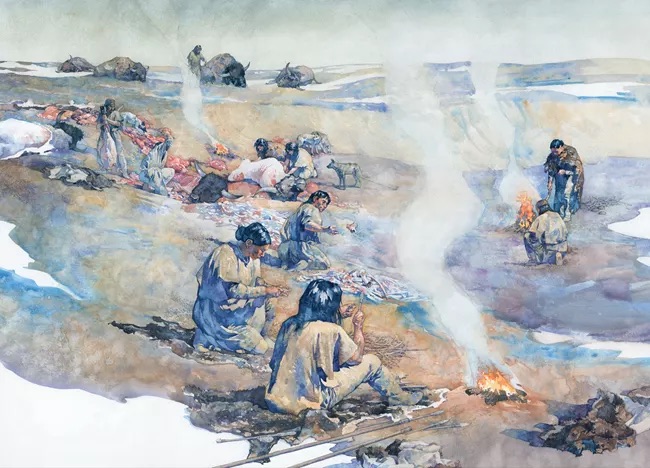
Folsom-Era Campsite Illustration
This illustration captures what part of a Folsom‑era campsite may have looked like after a kill of large prehistoric bison.
NPS Illustration. National Park Service – Great Sand Dunes. Public domain. View source
Shelter Types
- Simple brush huts made from branches, grasses, and leaves.
- Rock overhangs and caves were preferred for protection (e.g., sites like Guila Naquitz Cave in Oaxaca).
- Animal hide structures on wooden frames, easy to transport and rebuild.
Shelters were temporary, moved often, and built near:
- Water sources
- Migration routes of large prey
- Areas rich in seasonal plants
Sleep
In 13,000 BC Mexico, people’s sleep was deeply tied to nature:
- Sleep followed the sun: Most people likely slept soon after dark and rose at dawn. There was no artificial lighting, so night was for rest or quiet activity.
- Segmented sleep: Some researchers suggest “two sleeps” may have been common, a first sleep shortly after sunset, a period of wakefulness in the night (for quiet tasks or storytelling), and a second sleep until morning.
Were naps a thing?
Absolutely! Though they weren’t called “naps,” short periods of rest during the day were practical and natural, especially in hot climates like much of Mexico.
- Midday heat made physical activity difficult. A break or nap in the shade was a smart survival move.
- Long hunts or foraging trips meant irregular energy output, so resting when possible helped conserve strength.
- Caring for children (or being one!) meant daytime sleep was fluid. Kids especially would nap during the day.
- Polyphasic sleep: sleeping in multiple chunks over 24 hours, was more natural for early humans than our modern 9–5 lifestyle. A full night’s sleep plus a nap or two was likely standard.
What did they sleep on?
Beds were natural and improvised, not furniture. Likely options included:
- Mats or bedding of grasses, palm leaves, or soft plant fibers spread directly on the ground or inside shallow pit shelters.
- Elevated sleeping platforms may have existed in some areas to avoid ground moisture or insects.
- Animal hides or skins (like deer or even camelids) could provide insulation and comfort in cooler regions.
- They likely slept near fires (safely arranged), especially in colder seasons.
Communal Sleep
- Families or groups likely slept together, especially children with adults for warmth and safety.
- In camps or shelters, sleeping arrangements were clustered, not isolated. Sleeping was social and protective
Major Tools
Stone Tools
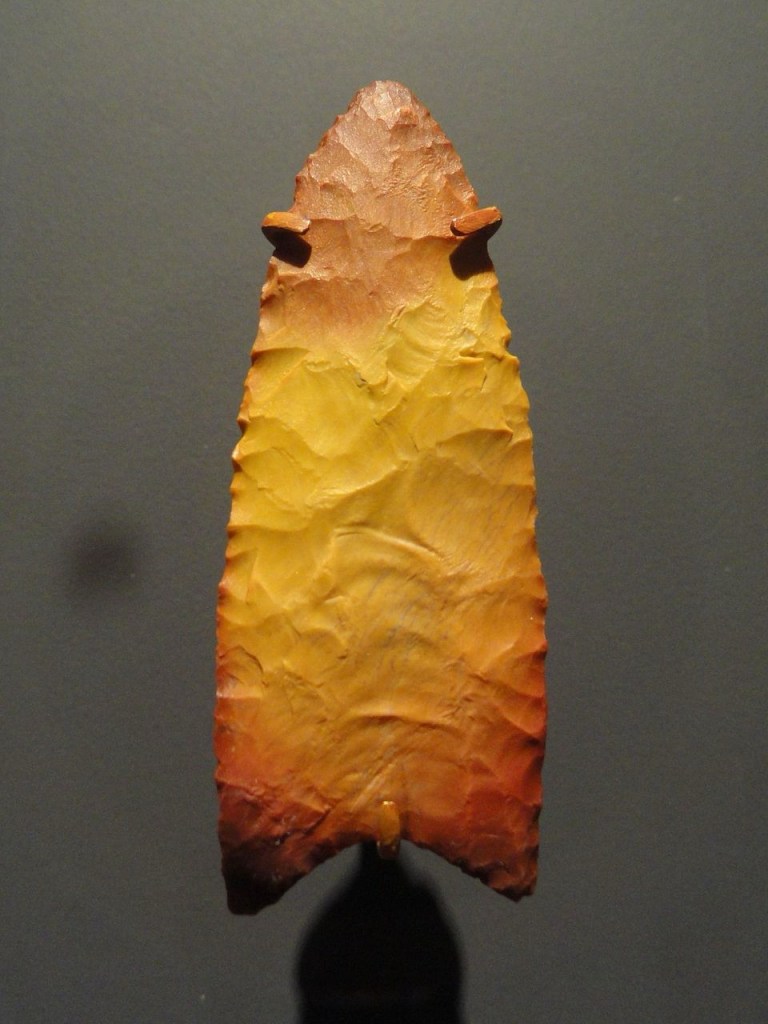
One of the most iconic tools from this period is the Clovis point, a finely crafted stone spearhead used for big game hunting, including mammoths and bison. These tools weren’t just functional; they reflected serious skill and innovation. Clovis points are especially known for their distinctive fluted design, which made them easier to attach to shafts. What’s remarkable is how quickly they spread, in just a few centuries, Clovis points show up almost everywhere across North America, including parts of what is now northern and central Mexico. This rapid expansion suggests both cultural exchange and migration, and it marks the Clovis culture as one of the earliest widespread traditions in the Americas. These were made from chert, obsidian, basalt, and other local stone.
Scrapers and Knives
- For butchering animals, cleaning hides, and cutting plants. Often made from flaked stone; some hafted onto wooden handles.
Hunting Tools
- Spears with stone points – the main weapon for hunting mammoth, bison, camel, and ancient horses.
- Atlatls (spear-throwers) – increased force and distance.
- Clubs or sharp sticks – for smaller animals and defense.
- Fishing gear like barbed bone hooks or spears may have existed, especially in coastal areas.
Food Processing and Daily Tools
Grinding Tool
- Manos and metates – early versions may have been used for crushing wild seeds, nuts, and even early teosinte (wild maize ancestor).
- Mortars and pestles – possibly in use by later groups at the tail end of this period.
Cooking
- Cooking done over open flame, with meat roasted on spits or laid on hot stones.
Storage & Containers
1. Gourds (Calabashes)
- Most common container for liquids and soft food.
- Hollowed, dried gourds (like Lagenaria siceraria) were lightweight, waterproof, and used as cups, bowls, ladles, and even storage vessels.
- Found in archaeological contexts in the Americas well before ceramics, evidence from Peru dates use of gourds back over 10,000 years, and likely much earlier in Mexico too.
2. Woven Baskets
- Crafted from local plant fibers (grasses, reeds, agave fibers).
- Could hold damp or dry foods, including chía mush if thickened.
- Often lined with pitch, clay, or tree sap to make them semi-waterproof.
- These would not survive well archaeologically, but impressions in sedimentary layers and charred remains support their presence.
3. Hollowed Wooden Bowls
- While wood rarely preserves from this time, people did carve bowls, scoops, and troughs from softwood or logs.
- Likely used for grinding, mixing, or serving.
4. Stone Bowls
- Natural stone depression or ground out rock bowl
5. Animal Byproducts Storage
- Used animal bladders or stomachs, skins, or stone-lined pits to store food.
Fashion & Beauty Standards
In 13,000 BC Mexico, people’s clothing, appearance, and beauty standards were deeply tied to practicality, climate, and cultural expression.
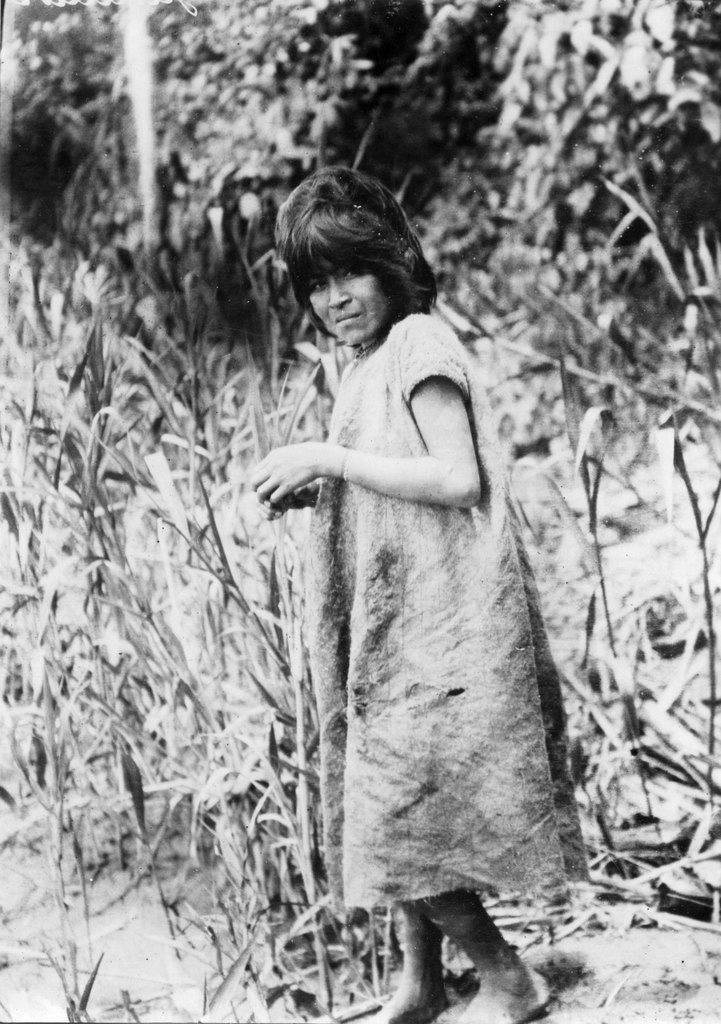
Dress of unspecified bast fibre, Yuracaré, Rio Chimoré, Bolivia (1908–1909). Photograph by Erland Nordenskiöld. Wikimedia Commons – Public Domain.
Clothing & Materials
- Materials: People likely wore clothing made from animal hides, fur, and plant fibers like yucca, agave, or inner tree bark. These were softened, pounded, and possibly tanned using animal brains and fat.
- If you’re like me and read that they wore tree bark and stopped to be like “????” Let me tell you a bit more, cause it might sound strange, but yes, inner tree bark (also called “bast” give another look at the image above) was one of the early materials humans used for making clothing before woven textiles were common. Here’s how and why:
- People didn’t wear rough outer bark, instead, they used the soft, fibrous inner layer of trees like: Mulberry, Yucca, Agave, Basswood, Cedar, Willow
- How Was It Used?
- Stripping & Soaking: They would strip the inner bark, soak it in water to soften it, and then pound it to make it more flexible, kind of like making primitive felt.
- Layering or Twisting: The softened bark could be:
- Worn as sheets, like skirts or wraps.
- Twisted into fibers and then woven or braided into belts, cords, or nets.
- Decorating: Sometimes it was dyed with natural pigments, especially if used for ceremonial wear.
- Why Use Bark?
- It was plentiful, especially in forested areas.
- Water-resistant, breathable, and somewhat insulating.
- Easier to process than tanning animal hides for some groups.
This was especially common in regions with the right trees, while not every early Mexican group used it, it’s likely that pre-agricultural foragers in areas with wild agave or tree species may have made use of it for practical garments.
- If you’re like me and read that they wore tree bark and stopped to be like “????” Let me tell you a bit more, cause it might sound strange, but yes, inner tree bark (also called “bast” give another look at the image above) was one of the early materials humans used for making clothing before woven textiles were common. Here’s how and why:
- Silhouettes: Garments were simple and draped or wrapped. Think loincloths, skirts, capes, or tunics. Layers varied by climate, cooler highlands needed more warmth.
- Fastenings: Leather thongs, bone pins, or fiber cords would have held garments together, no buttons or zippers.
Adornment & Accessories
- Jewelry: Shells, bones, feathers, and stones were used as necklaces, earrings, or arm bands, not just decorative, but often spiritual or status-related.
- Piercings & Tattoos: Likely present. Pierced ears or noses and body paint or tattoos could mark identity, coming-of-age, or spiritual beliefs.
- Headdresses: Feathers or animal elements may have adorned the head during rituals or status displays.
Hair & Grooming
- Hair: Typically long and worn loose, braided, or tied. Men and women likely took pride in their hair, and it could signify age, tribe, or role.
- Facial Hair: among Indigenous peoples of ancient Mexico, including those around 13,000 BC, was typically sparse due to genetic traits common across many Native American groups. This wasn’t just a matter of grooming preference, many individuals naturally lacked significant facial hair. When it did appear, it was often minimal and may have been plucked or left as-is, without much ritual or stylization. There’s little evidence of tools or cultural practices related to beard maintenance from this time, which aligns with the overall absence of prominent facial hair in the population. Smooth faces were a natural and common feature, shaped more by biology than by fashion.
- Grooming Tools: Stone or shell scrapers, obsidian razors, and woven combs could be used for hygiene and styling.
Beauty Standards
- Body Ideals: Fitness and strength were valuable, people were naturally lean and muscular due to their active lifestyles.
- Cosmetics: While no “makeup” as we know it existed, ochre, charcoal, and clay pigments might have been used for face painting, ritual marks, or decoration.
- Gender Expression: Clothing and roles were likely divided along gender lines, with children of all genders dressing similarly until adolescence. In warmer regions like ancient Mexico, clothing was minimal and based more on environment and function than modesty. It was common for women to go topless, wearing skirts or wraps around the waist, while men often wore loincloths. These norms weren’t rigid; clothing and responsibilities likely shifted depending on age, season, task, or community needs.
Diet & Daily Meals
Explore what they grew, hunted, cooked, and craved, because in 13,000 BC Mexico, survival was all about seasonality. As hunter-gatherers, people relied entirely on the wild landscape, shaping their diets around what they could find, forage, or bring down.
Plant-Based Foods
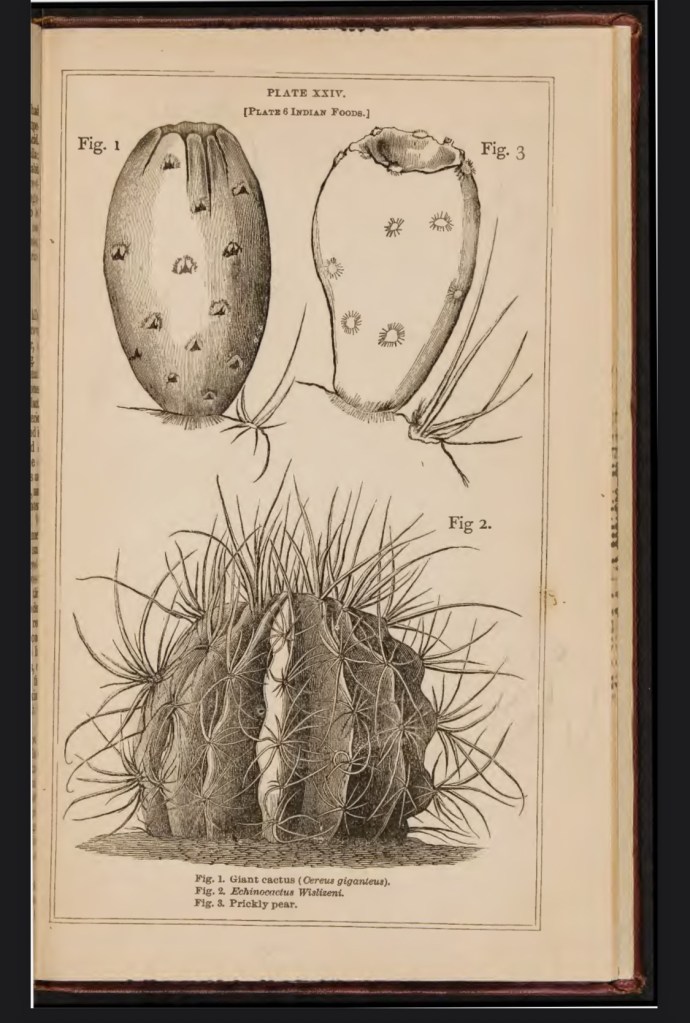
Shipek, F. C. (n.d.). Illustration of cactus and prickly pear. UC San Diego Library Digital Collections.
- Nuts: like pine nuts and acorns, soaked and leached to remove bitterness
- Wild fruits: berries, prickly pear cactus fruit, wild plums
- Seeds: amaranth, sunflower, chia
- Tubers and roots: wild yam, agave hearts, and camas bulbs
- Edible greens and herbs: purslane, lamb’s quarters, wild onions
Animal-Based Foods
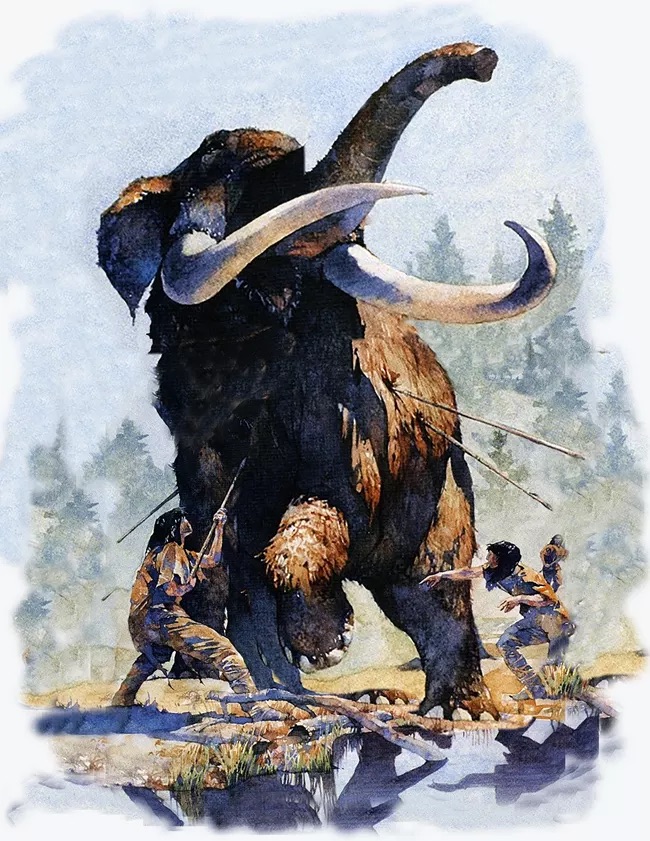
Columbian Mammoth Illustration
For the earliest peoples at Great Sand Dunes, giant Columbian mammoth were a significant source of food, along with a variety of other mammals and plants.
NPS Illustration. National Park Service – Great Sand Dunes. Public domain. View source
- Small and large game: deer, rabbits, wild turkeys, and possibly ancient bison
- Reptiles, fish, insects, and bird eggs (depending on region)
- Mega-fauna: like mammoths or ancient camels (when available) offered massive meat stores, though these hunts were rare and risky.
- Yes you read that right, CAMELS! Camels lived in what is now Mexico during 13,000 BC, though they were part of the now-extinct North American camelid species.
- Camelids in Ancient Mexico: The species was likely Camelops hesternus, a large, prehistoric camelid.
- When did they live? Camelops appeared about 3.5 million years ago and went extinct around 10,000 years ago.
- Yes you read that right, CAMELS! Camels lived in what is now Mexico during 13,000 BC, though they were part of the now-extinct North American camelid species.
Drinks
- Water was the primary drink. It may have been gathered from rivers, springs, or dew collected from leaves.
- There’s no solid evidence for fermented beverages or complex drinks during this period in Mexico, but herbal infusions (like steeped leaves or flowers) are possible.
How Much of the Day Went Toward Food?
Food gathering was a central part of daily life and took up several hours each day. Estimates vary, but many anthropologists suggest:
- 4–6 hours daily were spent foraging, hunting, preparing, and processing food.
- Tasks were often divided by gender and age. Women and children gathered while men hunted, though these roles could flex depending on circumstance.
- Food was also preserved when possible (dried meats, sun-dried fruits/seeds), especially during bountiful seasons, to reduce the need for constant searching.
There was no concept of a “workday” vs “leisure” the way we think of it now, gathering food was life, and everything else revolved around it.
Pure Ancestral Meal
All foods listed would have been gathered, hunted, or prepared using stone-age tools. No modern cultivation, no metal tools, no imported foods.
A Quick Note on the Ingredients: If there’s an ingredient below that doesn’t appeal to you or isn’t available at your store, don’t stress, just skip it, find a similar substitute, or let this recipe inspire you to add your own twist. Back in this time period, recipes didn’t exist in the structured way we know them today. People used whatever they had on hand, and measurements were more of a “feel it out” situation. So embrace the spirit of the age and make it yours!
Breakfast
Meal
- Roasted agave heart: Dug up and slow-roasted overnight in buried coals. Flesh sliced warm, sweet, fibrous, smoky.
- Chía seed mash: Chía seeds hand-ground with a stone, soaked in water in a gourd until gelatinous. Topped with crushed dried berries (if seasonally available).
Drink
- Warm herbal water: Spring water heated using fire-hot stones in a dried gourd, infused with wild mint, yarrow, or ocotillo blossom.
Midday Snack
Snack
- Prickly pear fruit (tuna): Peeled with a stone flake, eaten raw. Juicy, hydrating, sweet.
- Toasted grasshoppers or beetle larvae: Caught near plants, toasted on a hot stone until crisp. Lightly salted (if available from dried salt deposits).
Dinner (Main Meal)
Main Protein
- Whole red snapper, freshly caught from coastal shallows, wrapped in native leaves (like agave or large wild greens). Roasted in firepit for ~40 minutes over coals. Smoked, tender, delicious.
Sides
- Popped amaranth: Tiny seeds tossed on a hot flat stone until popped, puffed, and nutty.
- Sun-dried nopal strips: Wild cactus paddle slices, sun-dried, then gently rewarmed by the fire for chew and tang.
Drink
- Cold herbal water: Gourd filled with clear spring water, infused with wild mint or citrusy herbs, cooled with smooth fire-washed stones.
Dessert
Sweet Dish
- Raw nanche fruit: Fresh-picked and eaten as-is, their tart-sweet flavor balanced with a light drizzle of wild honey
Modern Twist with Ancient Roots
Using contemporary tools, local markets, and substitutions where necessary, but still honoring traditional foods, cooking methods, and flavors.
Breakfast
Meal
- Oven-roasted sweet potato (stand-in for agave heart): Wrapped in foil or banana leaves and baked at a low temperature until caramelized and tender, mimicking the slow, smoky sweetness of traditional firepit roasting.
- Toasted amaranth porridge: Lightly popped amaranth in a dry skillet, stirred into warm water with a spoonful of chia seeds and mashed berry or unsweetened applesauce.
Drink
- Warm herbal tea: Boiled water, steeped with fresh mint, served in a mug.
Midday Snack
Snack
- Fresh prickly pear (store-bought tuna), peeled with gloves or knife.
- Toasted chapulines (Mexican grasshoppers, if available) or roasted salted pepitas if insects aren’t accessible.
Dinner (Main Meal)
Main Protein
- Whole red snapper, cleaned and stuffed with sliced nopales, garlic, onion, and fresh herbs (cilantro, epazote, oregano). Wrapped in banana leaves/foil, tied with green twine or strips of corn husk, and cooked on a grill grate for ~40 minutes until flesh flakes easily.
Sides
- Toasted popped amaranth: Skillet-toasted until puffed and lightly golden, served as a side topping or mixed with pumpkin seeds.
- Quick-charred cactus paddles: Store-bought or pre-prepped nopalitos, grilled with a touch of lime and salt.
Drink
- Chilled herbal agua: Cold water infused with fresh mint, citrus peel, and a drizzle of honey.
Dessert
Sweet Dish
- Roasted nanche fruit: Baked in a ceramic baking dish until skin blister, with a light drizzle of honey, and a pinch of cinnamon or smoked sea salt.
Climate & Environment
In 13,000 BC, near the end of the Last Glacial Maximum, Mexico was cooler and drier than today, with open grasslands and patchy forests. Ice sheets still influenced the weather, shaping how people hunted, foraged, and moved across this wild, changing landscape.
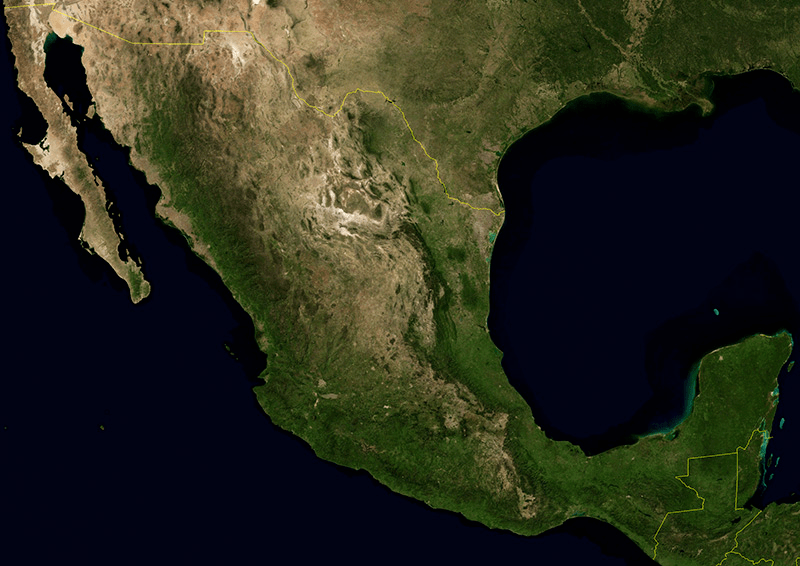
NASA Earth Observatory. (n.d.). Satellite image of Mexico [Photograph]. Wikimedia Commons
Northern Mexico (Deserts & Plains – e.g., Sonoran/Chihuahuan Desert)
- Summer average: ~22–27°C (72–81°F)
- Winter average: ~5–10°C (41–50°F)
- Humidity: ~20–35%
What it felt like:
Mornings were crisp, almost chilly, especially in winter. Days warmed quickly, but the dry air meant sweat evaporated fast, you’d feel the heat on your skin but not get sticky. Nights could be surprisingly cold. It was sunny often, and breezes carried dust and dryness across open plains.
Landscape: You’d walk through wind-swept plateaus and gravelly trails, seeing herds of game animals and wide skies. Shade would be scarce, and plant life low to the ground.
- Think rolling prairie mixed with arid zones, wide expanses with hardy shrubs, scattered trees, and seasonal grasses.
- Rivers and springs were lifelines here, with some scattered caves and cliffs.
Central Mexico (Highlands – e.g., Valley of Mexico, Oaxaca Plateau)
- Summer average: ~18–22°C (64–72°F)
- Winter average: ~5–8°C (41–46°F)
- Humidity: ~30–50%
What it felt like:
Cool, dry air with mild sun. You’d feel a chill in the morning and at night, like an early spring day. By noon, it was pleasantly warm, enough to sit in the sun comfortably, but never hot. At high elevations, the thinner air felt fresh but dry on your lips.
Landscape: Volcanic mountains, high plateaus, valleys. A mix of crisp mountain air and rich, earthy scents. You’d see morning mists, rocky outcrops, and occasional forest clearings. Paths were steep in places but led to sweeping views.
- Rugged and forested in pockets, this region featured elevated basins, surrounded by volcanic peaks (like Popocatépetl).
- Valleys were open and fertile, great for temporary camps.
- Streams and cool springs dotted the landscape, and pine-oak forests covered higher slopes.
Southern Mexico (Tropical Lowlands – e.g., Chiapas, Yucatán Peninsula)
- Summer average: ~22–26°C (72–79°F)
- Winter average: ~16–20°C (61–68°F)
- Humidity: ~55–70%
What it felt like:
A warm day with light breezes, not the steamy tropics of today. The air held a bit of moisture, making your skin feel soft rather than sticky. Forest shade was noticeably cooler. Occasional rains brought a gentle dampness, but overall the environment was less lush and more open than modern tropical zones.
Landscape: Tropical forests, river valleys, seasonal wetlands. You’d walk under partial canopy, with filtered light and the sound of birds and insects. The ground might be damp or root-covered, with open glades near rivers.
- Covered in patchy woodland and proto-jungles, not yet the thick rainforests we know today.
- Rivers like the Grijalva and Usumacinta were dominant, feeding fertile floodplains and wetland ecosystems.
- Caves and cenotes (especially in the Yucatán) were common and often vital water sources.
Coastal Mexico (Pacific & Gulf Coasts)
- Summer average: ~24–28°C (75–82°F)
- Winter average: ~18–22°C (64–72°F)
- Humidity: ~60–75%
What it felt like:
Pleasantly warm with salty sea air. Even in summer, ocean breezes kept it from feeling heavy. The humidity gave the air a soft edge, but without the oppressive mugginess of today’s tropics. It was the kind of weather where you’d feel relaxed outdoors, especially in shaded or breezy spots.
Landscape: Beaches, mangrove swamps, lagoons, dunes. Breezy and humid with rich smells of salt and plant decay. The ground could be soft or muddy, and birdsong would be all around you. Palms and aquatic plants would sway gently in the wind.
- The Gulf and Pacific coasts offered rich estuaries and sheltered coves, with mangrove forests, marshy inlets, and open sandy stretches.
- Rivers emptied into large delta systems, creating brackish wetland zones teeming with life.
Population
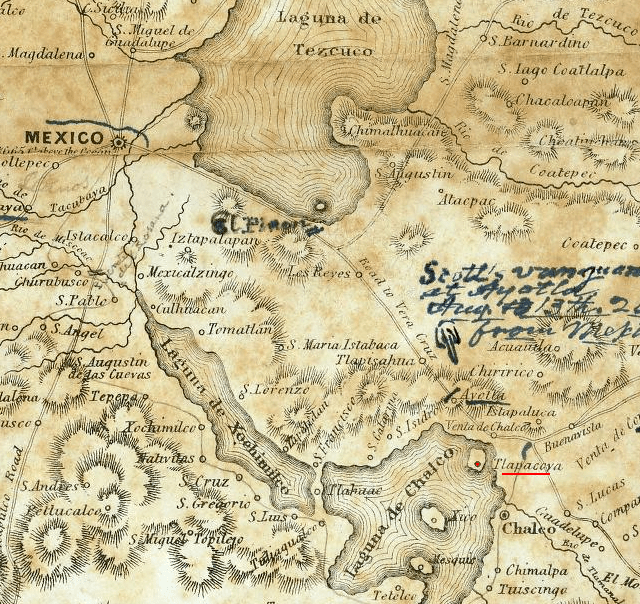
Excerpt from Map of the Valley of Mexico and the Surrounding Mountains (1847), by J. Goldsborough Bruff and John Disturnell, highlighting Tlapacoya. Public domain via Wikimedia Commons.
Estimated Population
While exact numbers are impossible to know, scholars estimate that the entire population of the Americas during this time ranged from a few thousand to perhaps tens of thousands of people.
In what is now Mexico, the population likely numbered in the low thousands, scattered in small, nomadic groups rather than centralized settlements. Each group may have consisted of 20–50 individuals, often moving with the seasons to follow food sources.
Key Regions
Since there were no urban centers, here are five important regions known to have been inhabited around this time, based on archaeological finds:
1. Valsequillo Basin (Puebla)
- Why it matters: Site of some of the oldest tools and fossil evidence in Mexico.
- Finds: Stone tools, bones of extinct megafauna.
- Importance: Shows early human presence and hunting behavior in central Mexico.
2. Chiquihuite Cave (Zacatecas)
- Why it matters: Evidence suggests possible human occupation as early as 26,000 years ago.
- Finds: Thousands of stone tools in cave sediments.
- Importance: Challenges earlier theories about the peopling of the Americas.
3. Tépexpan (State of Mexico)
- Why it matters: Site of the first discovered human fossil in Mexico, associated with Ice Age megafauna.
- Finds: Skeletal remains of the “Tépexpan Man,” mammoth bones, and stone tools.
- Importance: Offers direct evidence of Paleoindian life and hunting practices near ancient lakebeds. Central to debates on early human presence in Mesoamerica.
4. Santa Isabel Iztapan (State of Mexico)
- Why it matters: Site of a mammoth kill with Clovis points.
- Finds: Spear points, mammoth remains.
- Importance: Highlights organized group hunting.
5. El Cedral (San Luis Potosí)
- Why it matters: Continuous human presence for thousands of years.
- Finds: Early tools and later development into sedentary life.
- Importance: Provides a long view of the shift from hunter-gatherers to early farming.
Economy
For Mexico in 13,000 BC, the concept of money, currency, or even a “class system” as we know it today did not exist. This period falls within the Paleoindian era, when people were nomadic hunter-gatherers, long before agriculture, formal economies, or complex social hierarchies existed. Here’s a breakdown of what we do know and can reasonably infer:
What Did They Barter or Trade?
Bartering would have been minimal and likely within or between small bands of people. Value was contextual. A sharpened obsidian blade might be “worth” more than meat in some circumstances and vice versa. Items exchanged might have included:
- Stone tools or blades (especially obsidian or high-quality flint)
- Early trade routes may have existed, we know obsidian from central Mexico was found in far-off regions, implying long-distance exchange of valuable materials.
- Animal hides or bones
- Dried meat or fish
- Shells, feathers, or pigments (such as red ochre)
- Plant fibers or cordage
- Fire-starting materials (resin, dried wood)
Social structure in these early hunter-gatherer communities was largely egalitarian. There weren’t rich or poor in the way we think of today, resources were shared, and everyone contributed in ways that supported the group. Work wasn’t something you got paid for; it was simply part of surviving together. The focus wasn’t income, it was interdependence.
Health & Healing
Explore life expectancy, healthcare practices, and common dangers.
Child Survival & Life Expectancy:
- Child mortality was high: estimated that only about 50–60% of children survived to adulthood.
- For those who did survive childhood, life expectancy was about 30–40 years, with some individuals living longer into their 50s or more, depending on health and environment.
- Life Expectancy in Context – The Tépexpan Woman
Archaeologists in Mexico have uncovered the remains of a woman who lived somewhere between the ages of 36 and 55 (impressively old for her era). Her teeth tell the first part of her life story: half were gone, the rest were worn down to nubs, and some were so infected that the abscesses ate into the roof of her mouth. This wasn’t due to poor hygiene, it was the inevitable result of a lifetime eating fibrous wild plants and vegetables rich in natural sugars.
Her bones reveal the rest. She likely spent decades hauling heavy mecapal bundles, often weighing close to 30 kilograms (about 66 pounds). This repetitive strain caused arthritis in her arms, shoulders, and spine. The wear on her pelvis and thighs shows she walked long distances regularly, starting from a young age. In middle age, she fell hard on her left side, leaving her with chronic pain and a partially immobilized arm.
And yet… she lived well beyond the average lifespan of her peers. The best explanation? Her community stepped in. They probably brought her softer foods and adjusted her workload so she could continue contributing. It’s a reminder that even in a hunter-gatherer society, survival was often a group project (INAH. (n.d.). La mujer de Tépexpan. Museo Nacional de Antropología.).
- Life Expectancy in Context – The Tépexpan Woman
Healthcare & Healing Practices:
- No formal medicine existed yet. Healing was largely based on folk knowledge and observation of nature. Herbal remedies were likely common, using local plants for treating wounds, fevers, and digestive issues.
- Childbirth was most likely a communal and cooperative event, with other women, often close relatives or experienced community members, supporting the birthing mother. This could include daughters, sisters, or grandmothers helping with comfort, encouragement, and practical aid.
- Spiritual healing may have been important even at this time, illness was often seen as connected to balance with nature or the supernatural.
Common Health Issues & Causes of Death:
- Infections and injuries: Cuts, broken bones, and animal-related injuries could be fatal.
- Malnutrition: Periods of famine or low food supply could lead to stunted growth and weakened immunity.
- Parasites and foodborne illness: Without water purification or waste management, digestive issues were common.
- Childbirth complications: A major risk for women.
- Tooth decay and gum infections: Despite diets low in processed sugar, their diets were still high in natural sugars, in addition grit from grinding tools wore teeth down.
- Arthritis and joint pain: Common from a physically demanding life.
Hygiene & Bodily Care:
- Bathing: People bathed in rivers, lakes, or with water collected in containers. Regular water contact was likely common due to proximity to lakes or springs.
- Menstrual care: Likely involved absorbent natural materials (leaves, moss, soft bark) and periods of rest or separation, possibly ritualized.
- Tooth care: No toothbrushes, but some cultures used chewing sticks or rinsed mouths with water.
- Waste disposal: There were no formal latrines, so people kept their living areas clean by going a short distance away, typically about 10 to 50 meters (30 to 160 feet), to relieve themselves or discard menstrual materials. This quick walk helped keep smells and waste out of campsites, avoided attracting predators, and protected nearby water and food sources. Waste was often buried or covered with dirt and leaves to speed decomposition and mask odors, blending practicality with respect for the environment.
Social & Family Structure
Social Structure
- Small bands or kin-based groups: Most communities were made up of 15–50 people, likely extended families. Everyone contributed.
- Egalitarian dynamics: There weren’t kings or formal classes. Decisions were likely made communally or by elders or those with proven survival skills.
- Gender roles existed, but were flexible. Women gathered and processed food, cared for children, and sometimes hunted. Men typically hunted large game.
Marriage customs:
- Monogamy was common, but flexible: Stable pair bonds helped raise children, but rigid rules around marriage likely didn’t exist yet.
- Marital unions were probably informal, based more on partnership and child-rearing than ceremonial rituals.
- Marriage age: Girls may have partnered soon after puberty (~12–14), boys a few years later. Life expectancy was short, so adulthood came early.
Childhood & Parenthood
What was it like to be a kid… or raise one?
- First child: Likely in the mid-teens.
- Number of children: Women may have had 4–6 children across their lives, but many children didn’t survive infancy or early childhood due to infections, accidents, or malnutrition.
- Parenting style: Very hands-on. Children learned by imitation and were included in daily tasks early on. Discipline was likely community-based and modeled by behavior.
- Shared parenting: Older siblings, grandparents, and other group members often helped raise children, a “village” model of care.
Challenges of Childhood
- High infant mortality: Possibly 40–50% of children died before age 5.
- Harsh environments: Injuries, wild animals, infections, and lack of food made survival difficult.
- Early responsibilities: Kids were expected to help with foraging, tool-making, or gathering firewood from a young age.
Challenges of Raising a Family
- High Child Mortality: Making parenting emotionally and physically demanding.
- Food Security: Parents had to ensure enough nutritious food, not just for themselves but also their kids, in a world of seasonal scarcity and unpredictable hunting and foraging.
- Protection: Constant threats from predators, rival groups, and environmental hazards meant parents needed to keep children safe, often carrying or closely supervising them.
- Health Risks: Without formal medicine, injuries or illnesses could quickly become fatal. Caring for sick children required knowledge of herbal remedies and sometimes spiritual healing.
- Mobility: Hunter-gatherer groups moved frequently, so parents had to manage logistics of carrying young kids, supplies, and sometimes older children who weren’t strong enough to keep up.
Pets and Animal Companions
- Dogs were the only domesticated animals at this time in the Americas.
- Dogs were used for hunting, warmth, protection, and companionship.
- Evidence shows they were valued, buried alongside humans, and even mourned.
- No cats, livestock, or other traditional “pets” yet, domestication of animals like turkeys or llamas came much later.
Leisure & Recreation
How did people have fun? Keep in mind this is based on what archaeologists and anthropologists infer from tools, cave art, and the behavior of modern hunter-gatherers with similar lifestyles, as no written records exist from this time.
Adults
Popular Games or Activities
- Atlatl throwing (spear throwing) – Practiced for hunting but also done competitively for fun and skill sharpening.
- As a fun side note: A spear thrown with an atlatl could reach speeds over 100 kmh (60+ mph) and travel up to 275 meters (900 ft). These weren’t just basic tools, in a practiced hand they were high-efficiency, hand-held missile launchers.
- Rock tossing or accuracy games – Using stones to hit targets at various distances, likely for both sport and training.
- Racing or endurance contests – Tests of stamina and speed, especially among young men.
What Did They Do in Free Time?
- Tool crafting – Shaping obsidian, flint, bone, and antler into knives, points, or ornaments.
- Storytelling – Oral histories, myths, and survival tales were shared around firelight.
- Singing and music – Using percussion instruments (drums, rattles, clappers) or natural sounds (whistles, voice mimicry).
- Spiritual or shamanic rituals – Involving chanting, painting, body adornment, or trance-like meditation.
- Body decoration – Making and wearing necklaces, feathers, ochre paint, and simple clothing adornments.
Communal Events
- Hunting expeditions – Group hunts were often social as well as survival-based.
- Seasonal gatherings – To exchange mates, tools, or knowledge with other groups.
- Funeral rites – Rituals around death, including body painting or burying items with the dead.
Children / Families
Games and Play
- Miniature hunting games – Using small spears, sticks, or slings to mimic adult behavior.
- Hide and seek or stalking games – Teaching stealth and awareness in nature.
- Stone stacking or building – Practicing coordination or helping adults with camp setup.
- Animal mimicry – Pretending to be animals to learn behaviors, identify tracks, or just for fun.
- Water play – In rivers, streams, or puddles, learning to swim, throw, or splash.
Pastimes
- Learning by watching – Children shadowed adults to learn fire-making, cooking, weaving plant fibers, etc.
- Dancing and singing – Participated in rhythmic dancing, possibly tied to ritual.
- Helping in camp – Fetching water, collecting firewood, or gathering small edible plants.
Family & Community Events
- Food-sharing feasts – Large game would bring groups together to cook, celebrate, and bond.
- Storytime at night – Fireside tales likely included morality, danger warnings, and magical elements.
- Rites of passage – Early signs of rituals marking adulthood or special skills.
Note:
While all activities served a functional survival purpose, they were also social and entertaining. In 13,000 BC, the line between “leisure” and “necessity” was blurred, throwing a spear might be play for a child but training for a hunt as an adult.
Culture, Language & Religion
Explore the worldview, values, and art of the time.
Spirituality and Belief
While we don’t have written records, there are signs that early Paleoindian communities engaged in ritualistic behavior. Clovis sites across North America sometimes include red ochre with burials or tools, implying ceremonial significance. These communities valued ochre so highly that they sometimes transported it over 100 kilometres (about 62 miles) from its original site. In Mexico’s Yucatán, researchers discovered Paleoindian ochre mines deep in submerged caves, suggesting that this pigment had special value and was carefully collected.
Art
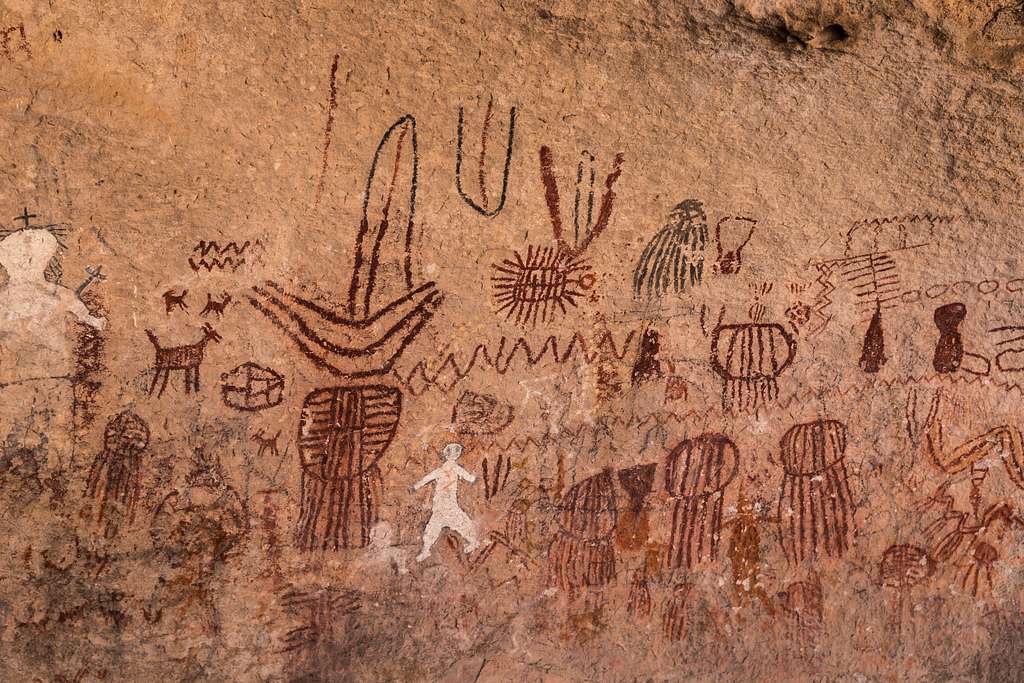
Cueva de las Monas illustration/photo. Public Domain. Source: Picryl — Cueva de las Monas.
Art in Paleo-Indian Mexico was simple but meaningful:
- Portable art like carved bone tools or shaped stones have been found, sometimes etched with patterns or figures.
- Early cave and rock art sites in northern Mexico (e.g. Baja California or Chihuahua) may date back thousands of years. These include:
- Human figures
- Animals
- Abstract symbols like spirals or zigzags
- This art was likely ritualistic or storytelling-based, possibly created during rites of passage or community gatherings.
Language
- While no written records exist, the people living in Mexico in 13,000 BC almost certainly spoke fully developed spoken languages, likely ancestor languages of later Indigenous tongues like Uto-Aztecan, Oto-Manguean, or Mayan families.
- These languages would have supported complex storytelling, myth, instruction, and oral tradition.
Writing
- No writing systems existed in 13,000 BC, not in Mexico or anywhere else in the world. However, some early symbols in rock art may have served as proto-writing, used for tracking seasons, marking territories, or recording stories in a symbolic way.
Music & Instruments
At 13,000 BC during the time of early hunter-gatherer societies in what is now Mexico (and across the Americas) music would have been:
- Entirely oral and improvised
- Made from natural materials available in the environment (bones, wood, stone, shells)
- Tied to ritual, rhythm, and the natural world
No written music or formal instrument construction from this era survives, but here’s what we can reasonably infer, based on archaeological findings and comparison to other early cultures:
Instruments Likely Used
Percussion-Based Instruments
- Hand drums (if any) would have been primitive, possibly made from stretched animal hide over a wooden or hollowed-out frame (like a stump or log).
- Clapsticks or bone clappers – Made from deer bones or hardwoods; used for rhythm during chants or ceremonies.
- Stone-on-stone percussion – Rocks used to create rhythmic sounds, often in pairs.
- Foot stamping or body percussion – Likely the most accessible form of rhythm.
Rattles
- Seed pods, gourds, or turtle shells filled with pebbles or seeds.
Wind Instruments?
- There is no evidence of flutes this early in the Americas, but bone flutes have been found in Europe and Asia dating to this period. It’s possible similar instruments may have existed, though speculative.
- Hollow bird bones or reeds could have served as simple whistles or pipes.
Voice
- Likely the most important instrument.
- Used for:
- Chanting
- Imitating animals or environmental sounds
- Storytelling with melody
- Spiritual connection during hunting or rites
Media You Can Watch or Read Today
Continue your journey with these books and movies and shows.
Adults
Films
Apocalypto (2006)
Language: Yucatec Maya (original); Dubbed/Subtitled: Subtitled in English and Spanish
A visceral and controversial thriller set just before Spanish contact, following a young Maya man’s desperate bid for survival.
Cabeza de Vaca (1991)
Language: Spanish (original); Dubbed/Subtitled: English subtitles available
Based on the real story of Álvar Núñez Cabeza de Vaca, a Spanish explorer who lived among Indigenous peoples and adopted their ways.
TV Shows
1491: The Untold Story of the Americas Before Columbus (2017 – Docuseries)
Language: English (original); Dubbed/Subtitled: Spanish subtitles available (varies by platform)
Educational series based on Charles C. Mann’s bestseller, exploring the sophistication of Indigenous civilizations before European contact.
Books
Popol Vuh
Language: Originally K’iche’ Maya; Translated: Available in Spanish and English
The sacred narrative of the Maya civilization, featuring epic creation stories, heroic twins, and the underworld. Foundational Mesoamerican myth.
Children/Families
Books
- The Corn Grows Ripe by Dorothy Rhoads
Language: English
Ages: 9–12
Set in a contemporary Maya village, this novel follows a young boy’s coming-of-age as he helps plant corn to support his family. It includes realistic depictions of Maya traditions, farming, and daily life, tying ancient customs to present identity. - Children of the Jaguar Sun by W. Michael Farmer
Language: English
Ages: 10+ (Middle grade and up)
A mythic adventure inspired by ancient Maya cosmology, following a young protagonist through a spiritual journey shaped by dreams, ancestors, and sacred natural forces. - Ancient Civilizations of Mexico and Central America (various publishers)
Language: English
Ages: 8–12
A nonfiction introduction to Olmec, Maya, Aztec, and other early Mexican civilizations, featuring real artifacts, maps, and facts in a visual format. - DK Eyewitness: Aztec, Inca & Maya
Language: English
Ages: 9–14
A detailed, photograph-heavy reference book. Covers architecture, food, clothing, belief systems, and daily life in Mexico and Central America, very visual and highly engaging for middle-grade readers. - The Rabbit in the Moon by María Cristina Brusca and T.M. de Oteyza
Languages: English and Spanish
Ages: 5–9
A bilingual retelling of Mesoamerican legends, including how the rabbit came to be in the moon, a tale told by many Indigenous groups in Mexico. The colorful illustrations and poetic style make this a great read-aloud or early reader. - The Hungry Goddess and the Five Suns by Mary-Joan Gerson
Language: English
Ages: 7–12
This book shares Aztec creation mythology, especially the Five Suns story, where the world is destroyed and reborn multiple times. - The First Tortilla: A Bilingual Story by Rudolfo Anaya
Languages: English and Spanish (bilingual)
Ages: 5–9
A charming legend that imagines how corn and tortillas were first discovered, blending ancient Indigenous themes with fantasy. - Nine Worlds in the Sky: Aztec and Maya Myths by Mary-Joan Gerson
Language: English
Ages: 8–12
A beautiful collection of myths and legends from the Aztec and Maya civilizations, illustrated with bold art and grounded in historical storytelling. - Exploradores del pasado: Las primeras aldeas
Language: Spanish
Ages: 7–10
Introduces young readers to early village life in ancient Mexico, including farming, tools, and home construction. - Los Primeros Pobladores de América by Eduardo Matos Moctezuma
Language: Spanish
Ages: 10+
Written by a renowned Mexican archaeologist, this child-friendly overview of the first people to inhabit the Americas. Highlights migration, settlement, and technology in pre-Columbian Mexico.
Traditional Folktales & Myths
- The Popol Vuh
Language: English and Spanish versions available
Ages: 10+ (many simplified versions exist for younger children)
The Maya creation epic, featuring the Hero Twins, the gods of the underworld, and the origin of humans from maize. Core mythology for understanding Indigenous worldviews in southern Mexico. - The Origin of Maize
Language: Oral (retold in books)
Ages: All ages
A widespread story among Indigenous groups (Zapotec, Maya, etc.) explaining how humans received maize from the gods. - El Coyote y la Luna (Why the Coyote Howls)
Language: Spanish and English
Ages: 4–10
A playful folk tale from northern Mexico and U.S. tribes that tells how Coyote tried to steal the moon or stars, leading to his eternal howl. Teaches humility, cleverness, and respect for the sacred.
TV Shows
- Pocoyó Explora – México Prehispánico
Language: Spanish (YouTube series)
Ages: 2–6
A playful animated series where Pocoyó explores ancient Indigenous Mexican culture, like native foods, tools, and myths, using simple visuals and language ideal for preschoolers. - Exploradores de la Historia (Once Niños TV)
Language: Spanish
Ages: 6–12
Animated series featuring time-traveling kids who explore key moments in Mexico’s ancient history, including Indigenous inventions, beliefs, and daily life. - Las Leyendas (Netflix)
Language: Spanish (original); Dubbed/Subtitled: English available
Ages: 8–12
A supernatural adventure series that draws heavily on Mexican folklore and Indigenous monsters, blending historical references with humor and spooky fun. Great for older kids who like myth and mystery. - Yo Soy… (Canal Once)
Language: Spanish
Ages: 6–10
A gentle documentary series where Indigenous children from across Mexico share their lives, languages, rituals, and crafts.
Movies
There are very few children’s movies explicitly about 13,000 BC Mexico, but here are thematically appropriate or folk-inspired options:
- The Road to El Dorado
Language: English (also available dubbed in Spanish)
Ages: 7+
A fictional animated adventure loosely inspired by Mesoamerican settings. While historically inaccurate, it features architecture, ballgames, and myth-inspired elements, best used with guided discussion. - Xico’s Journey (El Camino de Xico)
Language: Spanish (original); Dubbed/Subtitled: English available
Ages: 6–12
A magical, Indigenous-rooted story where a girl and her spirit dog Xico go on a quest to protect their mountain. The film references Indigenous cosmology and relationship to nature.
From the earliest arrivals in what’s now Mexico to the ochre-smeared burials and first whispers of music, life in this era was equal parts survival challenge and cultural experiment. People adapted to shifting climates, carried materials like ochre over 100 kilometers, and crafted tools, ornaments, and (quite possibly) beats that set the stage for millennia of innovation. We don’t have their playlists, but the archaeological record hums with creativity and resilience.
So—would you absolutely thrive here, or would the lack of plumbing and podcasts be your downfall? Drop your hot take in the comments or tag me on social.
 Time Traveling Table

Leave a comment