
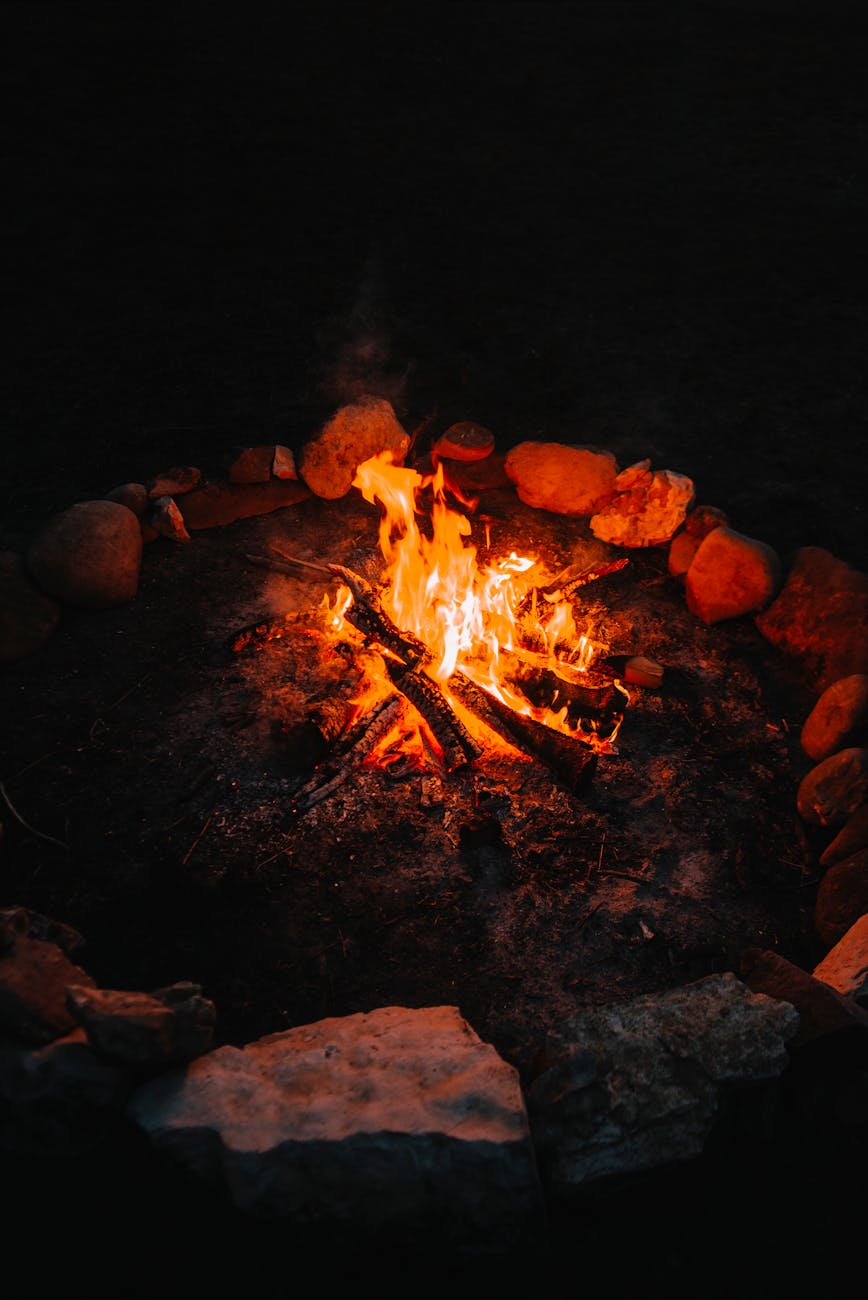
Imagine waking up in 5000 BC Mexico: smoke curling from the hearth, patches of young maize nearby, stories whispered by the fire at night. This post dives into what life actually felt like—meals, homes, beauty, and belief.
Just so we’re all on the same page. Please ensure you’ve made yourself acquainted with my disclaimer
Home Life
Ever wondered what “home sweet home” looked like in 5000 BC? Think cozy huts, shared sleeping mats, and some surprisingly clever ways of keeping clean without a single bathtub in sight.
Imagine life in a shared one-room space—a hut or a seasonal rock shelter, with the fire at the center, literally and socially. By today’s standards, you’re looking at something like 11 to 19 square meters (120-200 square feet). In other words, about the size of a tight studio apartment. Archaeological sites like Guilá Naquitz, along with studies of the Archaic period, suggest people lived seasonally in these small, single-space shelters. Multiroom houses weren’t really a thing yet.
Sleep rhythm, beds, and nap
- Night rest: ~6–8 hours. People usually slept through the night and woke with dawn. Without electric lights to stretch the evening, bedtime often started a few hours after sunset, with waking near or before first light. Archaeologists and ethnographers note this pattern in pre-industrial communities, and by analogy, we can infer that pre-agricultural and early farming households in Mesoamerica followed a similar rhythm.
- Beds: Think simple and portable, woven reed mats, bundled hides, or straw laid right on packed earth. People often positioned their mats close enough to catch the warmth of the hearth’s embers through the night.
- Napping: Contrary to the romantic “siesta” stereotype, habitual midday naps wasn’t the norm. Studies of preindustrial and hunter-gatherer groups show rest was more opportunistic, grabbing shade, pausing after work, or dozing during the hottest hours, rather than a fixed daily schedule. In short: occasional heat-driven naps, not regimented siestas.
The “household appliances” what was new or spreading by ~5000 BC
If we call tools “appliances” in the old vernacular, here are the real game-changers that either appear or become common by this slice of time (compared to earlier millennia):
- Grinding stones (metate & mano): the stone slab and handheld roller are basically the ancient food processor. By this era they are widespread for processing wild and early domesticated seeds and fruits, the central food-prep feature of the household. Think of it as the kitchen’s most sacred stone slab.
- Hearths and storage: By this stage, fires weren’t just casual campfires anymore. Households built stone-ringed hearths for cooking and warmth, with storage pits or baskets set nearby. Keeping food and fire close made daily life more settled and less on-the-move.
- Obsidian tools: Volcanic glass was already being shaped into razor-sharp blades and points, and because it holds an edge and preserves so well, archaeologists find it at many sites. Sharp, useful, and often personal, a household’s best obsidian blade could rise to heirloom status.
- Maize cobs and seeds: A few prized kernels or old cobs might be saved, not just for planting or eating, but as symbols of household abundance—the social currency of a well-stocked pantry. Finds at Guilá Naquitz and Tehuacán include preserved cobs and charred seeds, showing that maize held both practical and symbolic value early on.
Fashion & Beauty Standards
What did style mean in 5000 BCE? From simple wraps and wild hairstyles to the earliest beauty hacks, here’s how people dressed, groomed, and defined “looking good” in ancient Mexico.
Quick note on methods: Direct evidence, like soft tissue, from 5000 BC central Mexico is extremely rare. Most of what we know comes from three sources: (A) durable artifacts such as beads, combs, figurines, and fiber impressions; (B) later pre-Columbian records and ethnographies, used carefully as analogies; and (C) regional comparisons with securely dated finds from nearby areas.
What they wore
- Materials: small handfuls of plant fibers, agave/leaves, inner bark were the raw textiles on hand. These plants were corded, beaten, or spun into string and cloth for wraps.
- Silhouettes: Clothing was simple and pragmatic. Many men wore a loincloth or breechclout, a strip of fabric tied at the hips, while women typically wore either a short wrapped skirt or a rectangular cloth draped and pinned at the shoulder. Picture a single mat’s width of fabric folded, wrapped, and secured. The focus was on function: staying cool in the heat, moving freely for work, and repairing easily with just a piece of cordage.
- Fastenings & construction: Clothes were secured with plant-fiber cords tied in knots, small bone or wooden buttons (not the flat, round kind you’re used to, more like pegs), and the occasional bone pin. Most garments were one-piece wraps or simple panels with only minimal stitching.
Accessories & Adornment
- Beads and pendants: strings of sea shells, stone beads, and worked bone were in wide use as necklaces, hair adornments, and ear/face ornaments; pierced shell beads are archaeologically ancient in the region (and beyond). These are among the clearest early indicators of ornament use.
- Obsidian and bone pieces: small obsidian blades and bone pendants functioned both as tool and status ornament — kept in the hair, attached to cords, or hung from the neck.
Hair
- Hair length & styles: long hair was common, worn loose, plaited (braids), wound into buns, or decorated with bead strings. Later figurines and ethnographic accounts show elaborate buns, side-loops, and beaded hair ornamentation; it’s reasonable to infer simpler versions earlier.
- Facial hair: many Indigenous groups in Mesoamerica historically had sparser facial hair than Europeans; cultural norms often favored removing stray facial hairs (plucking/tweezers) rather than cultivating beards. Written colonial accounts and ethnographic summaries describe hair-removal practices for maintaining a “clean” face, although this is a later source, it probably reflects longer-standing aesthetics around facial hair. So imagine most men with smooth or lightly stubbled faces, kept tidy with plucking.
Cosmetics and cleansing
- Body paint / pigments: red ochre (and other iron-rich pigments) was widely used across ancient peoples for body painting, rituals, and possibly as everyday cosmetics, powdered ochre mixed with fat or water made a paste/paint. Ochre’s antiquity and antiseptic/sun-protective properties make this a safe, widespread inference.
- Plant-based soaps & cleansers: they lacked modern soap bars, but saponin-rich plants (yucca/soap-plant, “amole” types) were used as natural cleaners and shampoos.
Bodies
- Height:
- Adult males: ~160–165 cm ( 5’3”–5’5”)
- Adult females: ~147–155 cm ( 4’10”–5’1”)
- Health & body composition: Bodies reflected the rhythm of the seasons, workloads, and childbirth. People were often lean and muscular during labor-heavy harvests, then fuller in times of plenty. Daily tasks like hauling gourds or grinding maize built powerful shoulders and arms, while abundant harvests, or higher social status, could add body fat.
Diet & Daily Meals
From roasted game to early maize gruel, discover what families foraged, farmed, and feasted on in 5000 BC Mexico.
How people thought about food
Food was not just calories. It was connection, ritual, and insurance for the future. A few saved seeds, a stored gourd of squash, or even a polished obsidian blade for cutting game carried both practical use and symbolic weight. They marked your family’s status, your skill in tending plants, and your tie to the turning seasons. With the first tending of maize/teosinte and early squash, people began valuing stored food differently, weighing it against the immediate bounty of the wild.
What their diet actually looked like
Staples & regularly eaten things
- Early maize / teosinte kernels (in tiny handfuls): proto-corn appears in the record, not full dinner-table maize yet, but increasingly managed and eaten. It was a slowly improving, low-yield crop at this time.
- Squash / gourds: both food (squash flesh, seeds) and practical vessels (bottle gourd).
- Wild plant staples: prickly-pear tunas and nopales, mesquite pods and seeds, acorns or oak nuts where available, piñon/other nuts, and various grass seeds and tubers. These wild foods remained major calorie sources.
- Game & fish: birds, rabbits, rodents, deer, and freshwater fish, hunted or trapped and eaten fresh or roasted on hot stones. Animal protein supplemented plant staples rather than replacing them.
How much of the day was spent on food?
We don’t have time-sheets, so we lean on ethnography + forager/horticulturalist studies:
- If a group was mainly forager-hunter: ~3–5 hours daily, but the job didn’t end there. Processing, grinding on a metate, cooking, and other prep, added several more hours of labor.
- When tending plants (early horticulture) took hold: Once people started tending early gardens of maize and squash, the workload grew. Planting, weeding, and especially harvesting meant extra hours—sometimes several more each day, or long bursts of heavy labor during peak seasons.
In short: typical non-extreme days might look like ~3–6 hours of direct procurement + a few extra hours for processing/cooking/maintenance, but seasonal peaks (planting, harvest, big hunts) could swell that number.
Authentic 5000 BC Mexico Meal Plan
Raw, elemental, and rooted in survival. Stone, fire, hand, gourd.
Breakfast
- Avocado mash: Mashed with the heel of a stone, mixed with crushed wild chili (think hand-pinched, no uniform flakes here).
- With small maize cakes: Dough of ground early maize, patted thin and cooked directly on flat hot stones pulled from the fire. Primitive, but tortilla-adjacent.
- Beverage: Cool gourd of water, sometimes sweetened or flavored with scooped prickly pear pulp.
Light Snack
- Meal: A handful of nuts or seeds (amaranth, squash seeds), eaten alongside freshly gathered berries.
- Beverage: Just water.
Dinner (main meal)
- Entrée: Duck roasted on embers, rubbed with hand-ground chili.
- Side: Steamed wild squash chunks and gathered quelites (leafy greens).
- Side: Simple maize gruel (stone-ground kernels boiled in clay with water).
- Beverage: Water, sometimes with herbs dropped in as an aromatic.
Dessert
- Fruit fire-roast: Split guava or papaya, warmed until sugars caramelize slightly on the edges.
Modern Twist Meal Plan
Keeps the same bones, but layers in modern technique, seasoning, and plating aesthetics.
Breakfast
- Avocado mash with chili flakes, seasoned lightly with sea salt and a drizzle of lime juice, served on mini heirloom-corn tortillas.
- Beverage: Chilled agua fresca of prickly pear, strained for a jewel-pink finish.
Light Snack
- Meal: Trail-mix style bowl of roasted pepitas, amaranth clusters, and fresh blackberries.
- Beverage: A herbal tea latte (lemongrass + honey).
Dinner (main meal)
- Entrée: Confit duck leg finished on the grill with a chili-rub glaze.
- Side: Roasted squash medallions with garlic ghee and a side salad of sautéed amaranth greens.
- Side: Creamy stone-ground polenta (nod to maize gruel, but bougie).
- Beverage: Sparkling herb-infused water (mint, citrus peel).
Dessert
- Grilled guava halves with a honey drizzle and fresh berries, plated with edible flowers.
Climate & Environment
From the muggy coasts to the parched northern deserts and the fertile southern valleys, Mexico’s wildly different climates shaped how people lived, farmed, and survived in 5000 BCE.
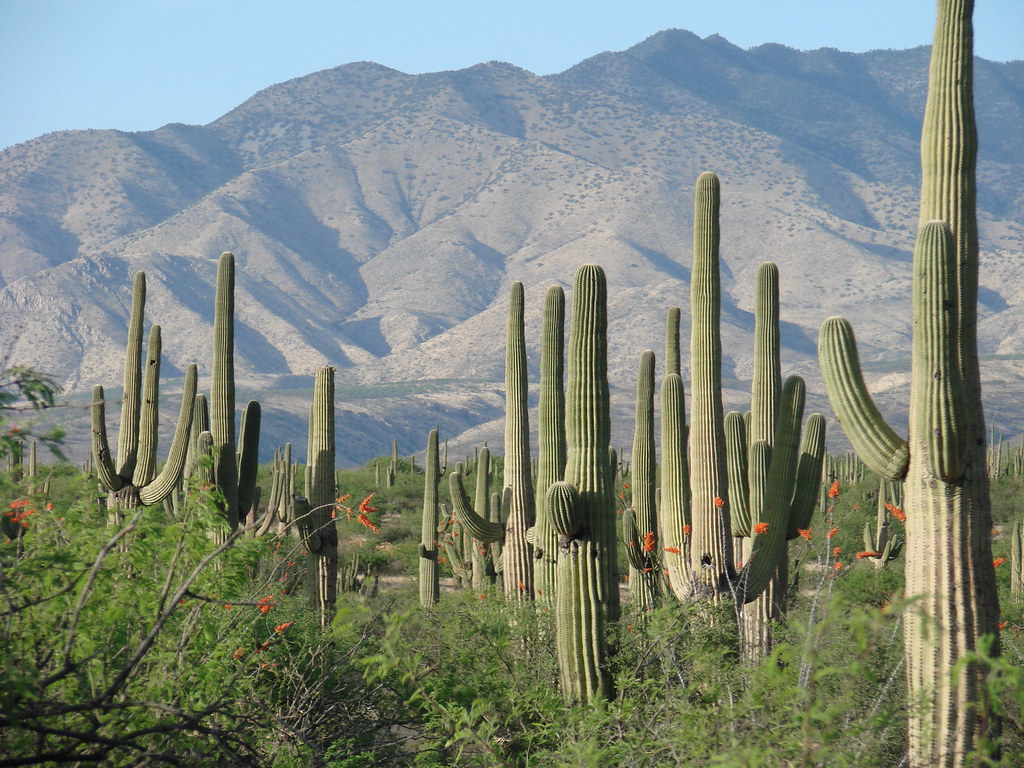
1. Northwest – Sonoran / Baja zone
- Summer:
- Average highs ≈ 39.4 °C / 103 °F
- Average lows ≈ 26.7 °C / 80 °F.
- Feels like: standing beside a sun-heated stone slab, the air is oven-hot by noon; shade is sanctuary.
- Winter:
- Average highs ≈ 24.4 °C / 76 °F
- Average lows ≈ 8.9 °C / 48 °F.
- Feels like: cool nights that bite at the toes if you sleep on a reed mat. Pleasantly warm afternoons.
- Humidity: generally low–moderate; monthly values often ~20–50% depending on season, with coastal/monsoon pulses raising it in late summer. That means the heat is dry, your sweat evaporates fast, your skin feels tight, and shade + a gourd of water are everything.
- Landscape: Broad, sun-baked flats give way to hardy desert plants, low shrubs alongside towering cacti like saguaros and organ-pipes. Rocky washes cut across the land, where footprints in the sand quickly disappear in the afternoon dust.
2. North / Interior Plateau (Chihuahua region)
- Summer:
- Average highs ≈ 33.9 °C / 93 °F
- Average lows ≈ 17.8 °C / 64 °F.
- Feels like: hot days but with cooling that actually arrives at night.
- Winter:
- Average highs ≈ 17.8 °C / 64 °F
- Average lows ≈ 1.1 °C / 34 °F (nights can frost in some years).
- Feels like: thin air and a real bite after sunset, you’ll want extra hides by the hearth.
- Humidity: low to seasonally moderate, roughly ~25–55% across the year; monsoon rains in late summer lift humidity and bring brief green waves. Most of the year feels crisply dry.
- Landscape: patchwork of plateaus, scrubby grasslands, dry riverbeds, and higher ridges.
3. Central Highlands / Basin (Mexico City basin)
- Summer:
- Average highs ≈ 26.7 °C / 80 °F
- Average lows ≈ 13.3 °C / 56 °F.
- Feels like: a gentle, sun-warmed day that still lets you work without wilting, mornings are fresh, afternoons mild.
- Winter:
- Average highs ≈ 21.7 °C / 71 °F
- Average lows ≈ 6.7 °C / 44 °F.
- Feels like: brisk mornings where breath clouds sometimes rise near the hearth; afternoons can be pleasantly warm.
- Humidity: moderate, often ~60–70% during the wet months, feels like a soft blanket in the rainy season, but generally not oppressively sticky.
- Landscape: a broad high valley with fertile soils, dotted with terraces and springs that appear in the wet season. Pine and oak hills rise around the basin, with farmed fields set against rugged volcanic ridgelines.
4. Gulf Coastal Plain (Veracruz / Gulf lowlands)
- Summer:
- Average highs ≈ 32.2 °C / 90 °F
- Average lows ≈ 24–25 °C / 76–77 °F.
- Feels like: heavy, wet heat, your clothing clings and the air itself feels thick; shade and water are survival luxuries.
- Winter:
- Average highs ≈ 24–26 °C / 75–79 °F
- Average lows ≈ 10–18 °C / 50–64 °F (coastal nights are milder).
- Feels like: warm daytime breezes off the Gulf; nights are balmy.
- Humidity: high, commonly ~70–85% across the year. Sensory note: it’s thick, slow air, sweat soaks into fiber and evaporation is sluggish; cooking fires mingle with salt-heavy sea breezes.
- Landscape: broad river valleys, coastal marshes, mangrove belts, and lush lowland forest that eats into the shorelines, landscape of waterways, shells, and mudflats.
5. Yucatán Peninsula / Southeast lowlands
- Summer:
- Average highs ≈ 35.0–36.1 °C / 95–97 °F
- Age lows ≈ 24–25 °C / 75–76 °F.
- Feels like: oven with a wet sponge, blazing sun but a heavy, humid press that makes movement slow. Shade is golden relief.
- Winter:
- Average highs ≈ 29 °C / 84 °F
- Average lows ≈ 18 °C / 64 °F
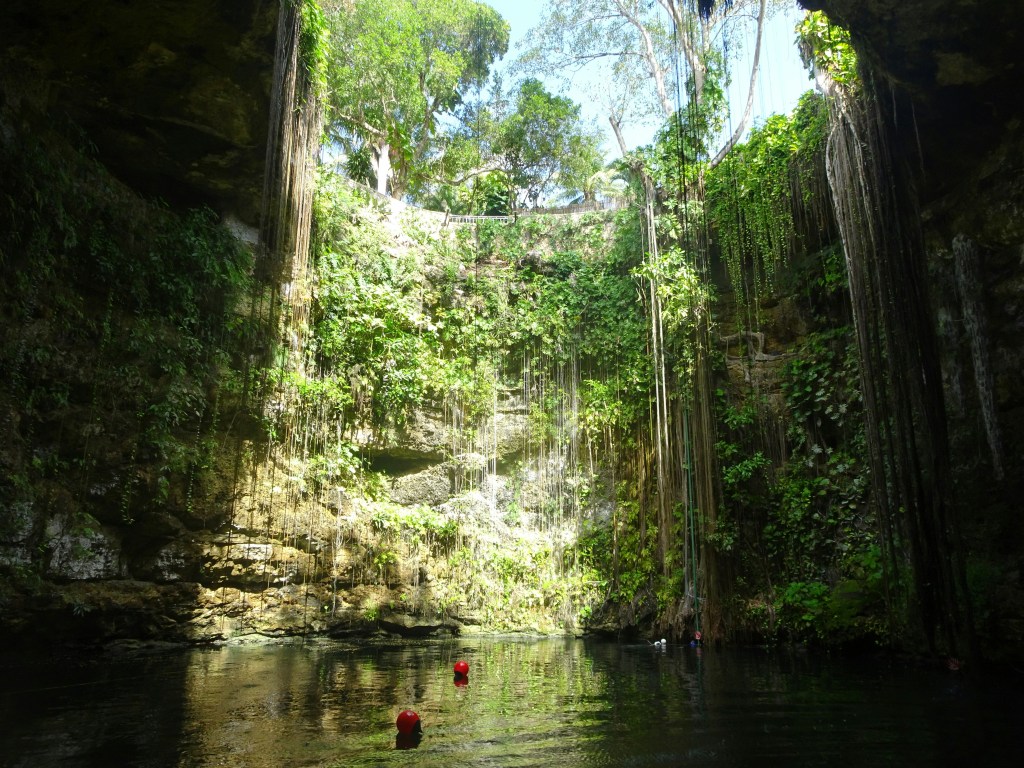
- Feels like: pleasantly warm days and cool, breathable nights near cenotes.
- Humidity: very high in the wet season, often ~75–85% (peaks with afternoon storms). It feels clammy in late spring and summer.
- Landscape: a flat limestone plain with many cenotes (sinkholes). The region has tropical dry forest that loses its leaves during the dry season and regrows when the rains return. Despite the forest drying out, the air stays humid, and most water is found underground.
Population
Scattered bands or growing villages? And just how many neighbors they might have had.
Best Guess on Population: Tens of Thousands
Population Density:
These are average densities spread over the entire modern country. Remember, people actually clustered in resource-rich pockets, so local experience was very different.
Per square kilometre (km²):
- Low estimate (20,000 people): ~0.01 people per km² (≈ 1 person every 99 km²).
- High estimate (100,000 people): ~0.05 people per km² (≈ 1 person every 20 km²).
Per square mile:
- Low: ~0.03 people / sq mi (≈ 1 person every 38 sq mi).
- High: ~0.13 people / sq mi (≈ 1 person every 7.6 sq mi).
What those numbers actually mean on the ground
Averages over modern Mexico sound ridiculously empty, and that’s exactly the point: overall population density was extremely low, but human life clustered in smaller, biologically productive places.
- You didn’t live uniformly spread across 2 million km². Instead you lived in pockets: river valleys, springs, coastal shell-beds, fertile terraces. Those pockets might have dozens or occasionally a few hundred people seasonally, while huge stretches (mountains & deserts) had few or none.
- Local density vs. landscape-average: inside a favored valley (say a fertile spring-fed valley), the local density could be tens or even a few hundred people per 10s of km² during occupation peaks, which feels social and village-like. Outside those pockets the landscape was effectively empty of people.
How often would you see people not in your band?
This depends on where you lived and the season.
- If you were in a remote upland camp or desert band: you might go days to weeks without seeing a non-band group. Foraging ranges were broad and groups spread out; casual contact was infrequent.
- If you lived in a fertile valley, riverine zone, or coastal estuary: you would see other groups more often, passing parties, trade visits, and especially seasonal aggregations. Typical rhythms:
- Daily/weekly contact with neighboring households or nearby families in the same camp.
- Monthly / seasonal meetings for trade, ritual, or mating alliances (e.g., gatherings tied to shellfish runs, harvest peaks, or ritual calendars). Archaeology of macro-band sites supports periodic larger gatherings.
Economy
Pull your mat up to the fire, sip from your gourd, and let’s talk money in a world that mostly didn’t have any.
Short answer
There wasn’t coinage or minted “money” in 5000 BC Mexico. People exchanged by reciprocity, barter, gifting at gatherings, and long-line exchange of valued items, the social economy was woven into kinship and seasonal meetings, not market stalls with prices.
How exchange actually worked
Think of exchange as a basket of social moves, not a ledger:
- Household reciprocity: if you dropped off a gourd of stored squash seeds at a neighbor’s hearth, you expected some help in return later. This is the most basic “currency” of everyday life.
- Barter in kind: one family would swap a bit of dried fish for a handful of crushed wild chili, or a string of shell beads for a well-made stone net weight.
- Gift & prestige exchange at gatherings: at seasonal gatherings (the macro-band meetings we’ve been talking about), people exchanged tokens and prestige goods as part of alliance-making; these flows often began as gifts and later became routinized exchange lines.
- Down-the-line exchange: goods moved away from their source in steps: a coastal shell travels inland by passing from group to group rather than a single trader carrying it a thousand miles.
Major barter / high-value items (what people actually traded)
Here are the objects that functioned like “things you can trade for other things” — measured in strings, handfuls, or polished pieces, not coins.
- Obsidian blades & flakes: prized for razor-sharp cutting edges (indispensable for butchery, hide work, and tool production).
- Marine shells and shell beads: coastal shells, pierced and strung, are durable prestige goods that show up far inland in archaeological deposits. Shells functioned as ornaments, status markers.
- Dried plant products & seed caches: early domesticates (squash, teosinte/maize kernels, dried beans/seeds) and preserved foods were important barter items as households began to store and share surplus.
- Specialized stone tools & ground stone goods: well-made manos/metates, ground-stone axes, and polished pestles could be traded as durable household capital. Good tools take labor to make and travel as valuables.
- Exotic ornaments & prestige materials (feathers, polished stone): some materials didn’t have local use value but carried social value. The deep tendency to value exotic ornaments goes back a long time and fuels exchange.
Health
Step into a world without doctors or pharmacies, where a scratch could be deadly, plants doubled as medicine, and survival itself was the best measure of health.
- Life expectancy (if you survived childhood): Most lived to late 20s–40s. This doesn’t mean people simply died at 40. It’s an average shaped by accidents, childbirth, infections, and occasional famine. Those who avoided the worst risks could live longer, but the hazards of daily life kept the overall numbers lower than today.
- Child survival to adulthood (rough estimate): ~27% infant mortality in year 1 and ~47.5% of children failing to reach puberty.
Common causes & health problems
- Infectious disease (respiratory, diarrheal, parasitic): Crowded hearths, shared water sources, and spoiled food made respiratory illness and diarrhea deadly, especially for infants and frail adults. With more plant tending and storage came rodents, parasite-rich soils, and heavier reliance on starchy foods—all of which made microbial threats more common than in fully mobile foraging camps.
- Childbirth & maternal mortality: childbirth was a major mortality risk for women across pre-modern societies; obstetric complications (hemorrhage, infection) and sepsis were important causes of adult female deaths.
- Trauma and accidents (including interpersonal violence): fractures and traumatic lesions from fights, falls, or hunting/processing accidents.
- Malnutrition, famine, and metabolic stress: Seasonal food shortages, early crop failures, and limited diets during lean times often left people undernourished. This showed up as stunted growth, interrupted development, and greater vulnerability to disease.
Social & Family Structure
Let’s sit on the packed-earth mat and talk kin, marriage, status, and who runs the hearth in 5000 BC Mexico.
Sources & inference: There are no written records from 5000 BC. Most of what we know comes from three sources: (1) Archaic archaeological sites like Guilá Naquitz and the Tehuacán sequences, (2) studies of hunter-gatherer and early horticultural groups used as comparisons, and (3) careful inference from later Mesoamerican practices where continuity seems likely.
Household & family units
- Typical unit: Daily life often centered on a nuclear family, a couple and their children, that could expand into a larger household during seasonal gatherings. In lean times, groups split into small camps of 4–6 people; in plentiful seasons, several families came together in macro-bands of roughly 25–50 around prime water and food sources. This seasonal cycle is especially well documented in the Oaxaca and Tehuacán Archaic sequences.
Average age at first marriage
- Short answer (plausible range):
- Women: ~14–18 years
- Men ~18–25 years.
Childhood & Parenthood
Raising kids wasn’t easy when illness, work, and survival pressed in from all sides. Step into the world of 5000 BC parents and children, where family meant teamwork, discipline was hands-on, and even dogs had their place.
Biggest challenges of being a parent
- High childhood vulnerability: The first years of life were the riskiest, with infectious disease, diarrhea, and complications around birth taking a heavy toll. This created constant stress and the need for intensive care.
- Workload tradeoffs: Households handled grinding, fetching water, tending plants, and small hunts, meaning parents, especially nursing mothers, had to juggle childcare alongside heavy daily labor like metate work and firekeeping. Seasonal peaks, such as harvests or big hunts, made the workload even heavier.
- Perinatal & maternal risk: childbirth was a major mortality risk for mothers.
Biggest challenges of being a child
- Exposure to pathogens and accidents near hearths and work zones. Children lived in crowded, smoke-filled common spaces, increasing respiratory and enteric disease risks.
- Early economic incorporation: kids were expected to learn and contribute early, gathering, watching small flocks, fetching water, helping at the metate. That eased household labor but meant childhood included productive work sooner than many modern contexts.
- High stakes for maternal loss: if mothers died in childbirth or soon after, children’s survival odds fell, making inter-household support crucial.
What parenting looked like (style, norms, and who did what)
- Alloparenting / cooperative breeding: child-rearing was a shared enterprise. Grandmothers, older siblings, aunts/uncles, neighbors, and other caregivers provided substantial care. Practically: a nursing mother might leave a toddler in a grandmother’s care while she grinds at the metate. This system both allowed shorter interbirth intervals for women and better pooled childcare knowledge.
- Affection vs discipline: ethnographic work on foragers shows warm, responsive caregiving mixed with practical boundary setting, children are comforted often, carried a lot, and also expected to learn by doing (gentle correction rather than harsh, institutional punishment). Expect physical closeness (carrying in slings, sleeping near hearth), lots of teaching by example, and firm limits around dangerous tasks.
- Roles by age and gender: girls commonly apprenticed to mothers (plant processing, weaving, childcare), boys shadowed fathers/older boys on hunting, toolmaking, and long-distance tasks, but overlap was common. Children’s play often doubled as training (toy bows, small digging tools, clay animals).
- Obedience & social cooperation: children were taught to cooperate with household tasks and to respect elders’ memory/ritual roles; obedience was tied to survival and alliance maintenance.
Pets — which animals and why
- Dogs: the clearest domestic animal present in many parts of the Americas by this general time span. Dogs served as companions, guards, hunting aides, and sometimes food in hard times; genetic and archaeological studies show dogs were present and moving with human groups in the Americas. So a family might keep a small dog for protection and help with hunting small game.
- Other animals: small rodents or tameable birds are possible as occasional companions, but no broad domestic herds (cattle, sheep, goats) existed in Mesoamerica at this time. Animal management was mainly opportunistic (capturing, taming) rather than full scale herding.
Leisure & Recreation
Life wasn’t all work, people laughed, played, and celebrated too. From children chasing hoops in the dust to adults gathering for music, feasts, and ritual dances, leisure in 5000 BC Mexico was woven into the rhythm of survival.
Adults
Popular Pastimes & Entertainment
- Storytelling & song: Evenings around the hearth were for recounting myths, genealogies, and lessons; this was both entertainment and oral library. Singing and simple instruments (rattles, flutes made of bone or reed) were already in play.
- Dances: Group dances tied to season, harvest, or ritual cycles were common. Movement was a way to honor deities, synchronize the group, and celebrate.
- Crafting as leisure: Adults spent “off-hours” weaving, making beads, or carving small ritual objects. These weren’t just chores, they doubled as relaxation and identity-making.
Common Events
- Harvest feasts: End-of-season gatherings where multiple households pooled food and honored seasonal cycles. These were central to community life.
- Religious observances: Solstice or equinox gatherings around shared ritual spaces. Shamans or ritual specialists directed offerings of food, incense, or feathers.
Children & Families
Games
- Tag & chasing games: Universal across forager/horticultural societies, training reflexes, coordination, and group dynamics.
- Dolls & figurines: fiber dolls were crafted, part toy, part social training.
- Mini-tools for play: Children often mimicked adults with toy bows, tiny metates, or small digging sticks, blending play and apprenticeship.
Common Family Events
- Feasts & dances: Children joined in dances, often in age-groups. Participation taught ritual knowledge and group cohesion.
Culture, Language & Religion
From whispered myths to everyday chatter, 5000 BC Mexico was alive with stories, songs, and spirits. Let’s peek at the languages, gods, and art that colored their world.
- Core shape: religion at ~5000 BC in looked animistic and shamanic, people credited spirits to caves, springs, animals, and key plants (especially squashes and the wild ancestor of maize). Ritual specialists (shamans/healers) mediated with the spirit world through dance, offerings, smoke, and sometimes trance. This is inferred from rock-art contexts, cave offerings, and long ethnographic threads across Mesoamerica.
- Rituals & offerings: People left small offerings (shells, beads, ochre, or figurines) in caves, at springs, or near hearths. Seasonal feasts and family gatherings often included ritual activities to strengthen alliances and mark planting or harvest cycles. Caves, in particular, appear in the archaeological record as sacred spaces, a pattern also seen in later historical accounts.
Art
- Small, portable, symbolic objects: stone figurines, carved bone or shell ornaments, ochre/charcoal pigment on rock surfaces, and simple beadwork.
Language & writing
- Spoken languages: the landscape already hosted ancestors of major Mesoamerican language families (e.g., Oto-Manguean, Mixe-Zoquean, early branches that later diversify into Mayan, Uto-Aztecan, etc.). That means many local dialects and high linguistic diversity, speech was the main medium for memory, law, ritual, and history.
- Writing & literacy: no writing at ~5000 BC. Knowledge transmission was oral + material (figurines, rock art, symbolic caches).
Breakthroughs & Challenges
What big shifts were unfolding in 5000 BC Mexico? From farming experiments to cultural firsts, here’s what was taking root.
1. Early plant management
What happened: Evidence from sites like Guilá Naquitz and the Tehuacán sequence shows people actively managing and selecting plants (squash, bottle-gourd, and early forms of maize/teosinte). This wasn’t full-scale farming yet, but it marked the shift from simply gathering wild plants to tending them: saving seeds, encouraging certain plants, and putting grinding stones to new use.
Why it matters: This slow, careful work is the first step toward agriculture, shaping Mesoamerican lifeways for thousands of years.
2. More formal household tools: metates, hearths, and storage
- What happened: Grinding slabs (metate + mano), stone-ringed hearths, and storage pits or baskets appear more often in the archaeological record. These “kitchen” tools made plant processing and food storage possible on a larger scale, revolutionizing daily life.
3. Big environmental challenge
- What happened: Around 6200 BCE, a long cold and dry spell disrupted rainfall and water sources in southwestern Mexico. Evidence from caves and climate studies shows plants struggled to grow and water levels shifted, making it harder for people to find food.
- Why it matters: These tough conditions likely pushed people to manage plants more carefully, store food, and move seasonally.
Music & Instruments
Close your eyes and listen: rattles, flutes, and drums carried the rhythm of daily life in 5000 BC Mexico.
- Bone & reed flutes / whistles: made from bird wing bones, long hollow reeds, or carved bone. Used for melody, hunting calls, small ritual signals, and intimate ceremonies.
- Rattles & shakers (gourds, shells, seed-filled vessels): hollow shells or gourds filled with seeds, pebbles, or beads; used to keep rhythm in dance, accompany chants, and drive trance in healing rites. Simple, portable, and social.
- Conch & shell trumpets: large marine shells used as signalling horns at the shore or to open/close ritual events inland; sound carries far and marks communal moments.
- Hand drums and simple membranophones: hollow log covered with hide; used for dance, seasonal feasts, and coordinated activities.
- Idiophones / rasps / clappers: notched bones or wooden rasp-boards and wooden clappers for steady rhythm and percussive color, used in ritual and social performance.
(Archaeology + ethnomusicology show these families of instruments across time in Mesoamerica)
Media You Can Watch or Read Today
This era hasn’t gotten its blockbuster. No faithful TV series, no sweeping novels. But don’t worry: here are the closest films, shows, and books that let you taste the past.
Adults
- Platform: PBS / NOVA streaming (episode: First Face of America)
Language: English; subtitles/CC available on PBS.
A documentary that pulls you straight into Mexico’s hidden caves, where divers discover human skeletons preserved underwater for thousands of years. From there, it unfolds like a detective story—scientists tracing clues about how the first people spread across the Americas, what they ate, how they lived, and how they survived massive changes in climate and landscape. It’s not pinned only to 5000 BC, but it’s packed with vivid finds and accessible storytelling. Think sweeping visuals, a curator’s guiding voice, and the thrill of seeing the deep human past come alive on screen. - Popol Vuh
Language: Kʼicheʼ (original); English & Spanish translations widely available (many bilingual editions).
Mythic text (preserved after contact) tells how the world was created, how the first people of maize came to be, and how two trickster-hero twins outsmarted the lords of death. It’s the foundational story of the Maya, carrying their ideas about creation, morality, and the sacred place of maize in human life.
It’s not just a myth, it’s the closest you can get to hearing the voices of ancient Mesoamerica tell their own story.
Kids
- Las Leyendas (Legend Quest) – TV Show
Language: Spanish (original); Dubbed/Subtitled: English available.
Ages: 7–12.
It’s kind of like a spooky adventure cartoon, but with a Mexican twist. The kids go on little ghost-hunting adventures, and there are lots of funny moments so it’s not too scary. What’s neat is that the stories pull from old Mexican legends and folk monsters, so your kids get a little folklore along with the laughs. If your kid likes shows with a mix of spooky and silly, think short, exciting episodes they can dip into, they’ll probably enjoy this one. - The Book of Life – Film
Language: English (original); Dubbed/Subtitled: Spanish dubs/subtitles commonly available.
Ages: 7–12.
It’s a really colorful, musical adventure that uses a lot of Day-of-the-Dead style art and ideas. It’s playful and a little fantastical, so it keeps kids entertained, but it also sneaks in some cool cultural bits about family, tradition, and what happens after we die. It’s actually a great way to spark conversations about big topics, rituals, storytelling, even death, in a way that feels light and imaginative. If your kid likes music, bright visuals, and a little magic, this one’s a good fit. - Popped Secret: The Mysterious Origin of Corn – Short Documentary
Language: English; Dubbed/Subtitled: English captions / educator guides available.
Ages: 10–14 (school-age curious minds).
It’s a short little science film, like 10–15 minutes, that shows how wild grass (teosinte) slowly turned into the corn we eat today. It mixes genetics and archaeology but keeps it simple enough for kids to follow. Super visual, really bright, and feels kind of like a quick classroom video. Perfect if your kid is curious about how stuff grows or likes “origin stories” of food. - El niño de maíz / The Boy of Maize: Mario Bencastro – Bilingual Picture Book
Language: Spanish & English bilingual edition
Ages: 5–10.
It’s a beautiful bilingual picture book that retells the old story of where corn came from. The artwork is really colorful and calming, and the words are simple enough for little kids to follow along. It’s one of those books that works great at bedtime but also sneaks in a little culture and history. Perfect if you want something gentle that introduces kids to big creation stories without being heavy. - Dora the Explorer / Dora and the Lost City of Gold – TV Series/Movie
Language: English (original for classic Dora; Dora episodes are bilingual EN/ES); Dubbed/Subtitled: Spanish/other dubs available.
Ages: 3–8 (Dora series), 8–12 (movie).
It’s not technically ancient history, but Dora’s shows do a good job of sneaking in little archaeology themes, like maps, ruins, and treasure hunts, along with the Spanish words. Super easy and friendly for younger kids. And if your kids are a bit older, the live-action Dora and the Lost City of Gold is basically a kid-safe Indiana Jones, so it keeps the adventure vibe going without being too scary.
Life in 5000 BC Mexico was tough, clever, and communal. Could you trade your coffee maker for a hot stone griddle? Let me know,comment or tag me with your take.
 Time Traveling Table
Leave a comment