
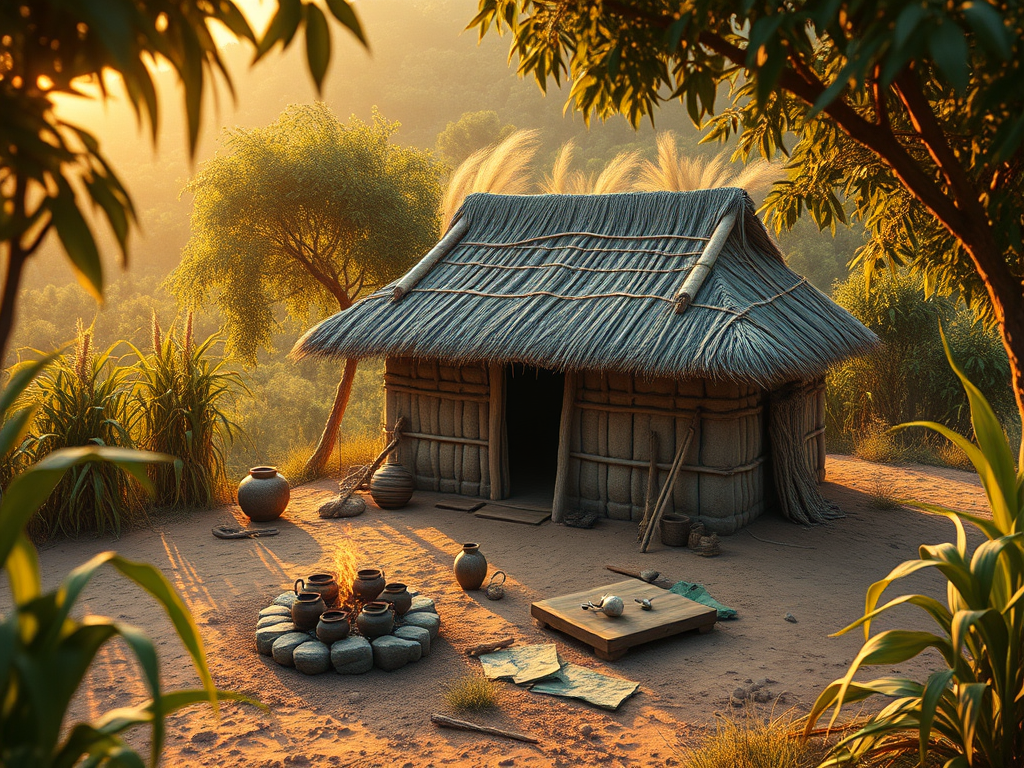
Step into another era, long before the Aztecs or Maya rose to fame. In this post, we’ll wander through Mexico in 1500 BC, a world where maize was just becoming the heart of daily life, families built homes from earth and palm, and faith was woven into every sunrise. From what simmered over the fire to how people dressed, worked, and rested, we’ll uncover what ordinary life really looked like in ancient Mesoamerica.
Just so we’re all on the same page. Please ensure you’ve made yourself acquainted with my disclaimer
Home Life
Homes in 1500 BC Mexico were simple but full of purpose, built from earth, reeds, or clay, with thatched roofs and open hearths where life centered around warmth, food, and family. Sleeping mats, stone tools, and handmade pottery turned these humble spaces into the heart of daily life.
Quick note: Mesoamerica was vast and varied, homes looked different in the humid south, dry north, and high valleys. While small one-room houses with petate mats, metates, pottery, and obsidian tools were common, each region had its own unique style and materials.
- Typical Footprint:
- ~20–40 m² (215–430 ft²) for a single-family dwelling
- 60–66 m² (650–710 ft²) + for larger or wealthier households
- Rooms: most dwellings were single-room buildings used for cooking, sleeping, storage and daily life
- Bathrooms: None. Waste disposal took place outdoors, using simple pits, dung heaps, or basic latrines.
Beds, sleep schedules, and siestas
Beds: the classic sleeping kit was the petate: a woven reed or palm mat that people rolled out to sleep on, often on a slightly raised platform inside the room. The same petate served as a seat in the day and a bed at night; it’s economical, portable, and still used in parts of Mexico today. Richer households might have raised wooden platforms; poorer ones used the earthen floor with the petate.
Sleep schedule: people rose with the light and worked with daylight, awake at or before dawn, work in the fields or household through morning, return for evening tasks, and sleep soon after sunset.
Siestas (naps): In hot climates, short midday rests make sense, and later historic and ethnographic records in the region show midday pauses, think practical behavior, not a formal ritual.
How families lived together
Archaeology shows that households came in many shapes and sizes. Most were small homes for parents and children, but in some places several related families shared the same space and worked together. In bigger settlements, groups of houses could form small compounds where extended families lived and farmed side by side. How people lived together depended on their land, work, and community needs.
Everyday household objects and “new” things since 3000 BCE
Between 3000 BC and 1500 BC many domestic technologies and material habits matured across Mesoamerica. The following items became central in homes by 1500 BCE:
- Pottery / ceramics: by ~1900–1600 BC ceramics appear in different parts of Mesoamerica. Pottery changed cooking, storage, and serving, you could boil, store liquids, and bury offerings in clay vessels.
- Mano & metate (grinding stones): the heavy grinding stone (metate) and hand-stone (mano) became a domestic must. Grinding maize into flour or masa was a daily, back-breaking activity and the metate is one of the most archaeologically visible items inside household sites.
- Obsidian blades & prismatic blades: by the Preclassic obsidian was widely used for cutting and household tools. Its sharp flakes were excellent for butchery, woodworking, scraping and even ritual use. Obsidian’s presence also signals trade networks, because good obsidian sources were in specific volcanic zones.
- Storage pits: households developed features to store dry goods (corn, beans). In some communities you see underground storage pits and small raised working areas. These are practical innovations in household architecture.
- Textiles: We don’t have many actual fabrics from this time because they’ve long since decayed, but clues like marks left on pottery and simple weaving tools show that people were already spinning fibers and weaving basic cloth by around 1500 BC. Showing textiles were becoming a normal part of home life.
Clothing & Adornment
In 1500 BC Mexico, clothing was simple but meaningful. Woven from plant fibers or bark and often tied or wrapped rather than sewn. Personal adornment, like beads, paint, and feathers, reflected identity, status, and connection to nature.
Clothing materials, typical silhouettes, and fastenings
Let’s start with the basics: most fabric came from plants like cotton, maguey (agave), and sometimes from softened bark or wild fibers. People wove these using an early version of the backstrap loom, creating narrow strips of cloth that could be wrapped, folded, or stitched into simple garments. Leather was rare since livestock wasn’t a thing.
Silhouettes were simple and practical. For many farming communities the garment shapes were:
- Loincloths for men.
- Rectangular draped garments for women: pieces that could be folded, held with a sash, or worn as a hole-for-head tunic (precursors of the later huipil). Because backstrap loom textiles are narrow, clothing often looked like rectangles and sashes. Fastenings were usually ties, knots, or sashes, not sewn buttons.
Typical accessories and jewelry
People liked to decorate themselves with things like shell, bone, or stone necklaces, beads, and simple headbands. Over time, fancier materials like jade and greenstone became symbols of status or importance. Jewelry wasn’t just for looks — it often showed who you were, your role in the community, or was used in special ceremonies and trade.
Physical appearance
- Facial hair: In many Mesoamerican populations, adult males often had little beard compared to European counterparts; facial hair was variable and often less emphasized in iconography.
- Tattoos & piercings: We don’t have preserved skin from this time, but later records show that many people in Mesoamerica practiced tattooing and piercing. It’s likely that by this period, people already decorated their skin and wore ear or nose piercings, though styles probably differed by region.
- Average Adult Heights:
- Men: ~160 cm (≈ 5′3″)
- Women: ~145 cm (≈4′9″)
Diet & Daily Meals
Explore what they ate, shared, and celebrated around the fire.
Food was more than “fuel”, it was deeply tied to identity, ritual, and community. Staple crops (especially maize, beans, squash) weren’t just eaten, they had mythic status. Maize in many later Mesoamerican myths is a gift of the gods; ancestors are said to emerge from maize. So even by 1500 BC, cultivating maize was becoming part of spiritual cosmology.
Staple foods & drinks
Here are what people ate (or likely ate) around 1500 BC in Mesoamerica
Staple plant foods:
- Maize (corn): domesticated from wild teosinte. By 1500 BC maize was already well on its way to becoming a main carbohydrate.
- Beans: provided protein and complemented maize.
- Squash (including its seeds)
- Other roots & tubers: in tropical or moist lowlands, things like manioc (cassava), sweet potato, arrowroot; in highlands wild edible roots.
- Fruits, wild plants: avocadoes, wild fruits, cactus fruit, edible flowers, leaves. Foraged greenery and wild plants added vitamins and variety.
Protein sources:
- Game: deer, rabbits, small mammals, birds.
- Fish / aquatic resources
- Insects / larvae
Drinks:
- Likely water from rivers, springs, collecting rain.
- Porous clay vessels for storing and cooling water.
How much time/day used for getting food: foraging, hunting, farming, trading
We don’t have exact hourly logs, of course, but combining archaeological, ethnographic, and experimental evidence we can approximate how people divided their daily/seasonal labor around food.
- Farming (cultivation, tending, harvest): ~3-6 hours/day (or more in harvest periods)
- Foraging & gathering wild plants: ~1-3 hours/day, varying by season.
- Hunting: often took a full day or more for big game; shorter trips for small animals.
Fishing: depended on nearby water sources and could range from a few hours to a full day. - Trading / market exchange (if any): barter or trade for items they couldn’t grow or collect (salt, exotic shells, etc.). Probably occasional, not daily for most households.
- Food prep (grinding, cooking): about 3–5 hours a day, especially for maize, which had to be hand-ground on a metate.
Overall, people likely spent a third to half of their waking time in tasks related directly to obtaining, preparing, and preserving food, especially in the agricultural cycles. The rest for maintenance, childcare, tool making, social / ritual duties, rest.
A Day of Eating in 1500 BC Mexico
Every dish here is made just as it would’ve been then — with stone tools, clay pots, open fire, and ingredients native to the land. Simple, earthy, and full of the flavors that shaped Mesoamerican life.
Morning
- Meal:
- Maize Gruel (Early Atole):A warm, comforting drink made from hand-ground nixtamalized maize simmered in water with a hint of cal.
- A few wild fruits or crushed squash seeds
- Drink:
- Cacao Bean Infusion (Early Cacao Brew): Roasted cacao beans, crushed and steeped in hot water to release their deep, earthy flavor. Unsweetened, rich, and lightly bitter
Midday (While Working or Traveling)
- Snack:
- Toasted pumpkin seeds
- If available, wild berries.
- Drink:
- Cool Water or Light Maize Drink: Fresh spring water carried in gourd vessels, or a thin, slightly tangy maize drink made from fermented atole
Evening
- Main:
- Bean Tamales: Soft maize dough filled with seasoned mashed beans, wrapped in corn husks or fragrant native leaves like hoja santa, then gently steamed over hot stones in a clay pot.
- Side:
- Chili Paste — A bold blend of dried chilies ground by hand with a touch of salt and water.
- Steamed amaranth greens
- Drink:
- Savory Maize Atole: A thick, hearty drink made from the day’s maize, gently warmed and lightly fermented, with hints of chili or fresh herbs.
- Seasonal sweet (occasional treat):
- A touch of roasted squash or mashed tropical fruit like mamey or nance, finished with a drizzle of wild honey.
Modern Twist: 1500 BC Mexico Inspired Day
Modern conveniences and flavors; the ancient heart remains.
Breakfast
- Meal:
- Creamy Corn Atole Bowl: Smooth, warm masa harina blended with water or milk, lightly sweetened with honey or agave, and topped with puffed amaranth or crushed pepitas for a little crunch. Finished with a touch of sea salt or cinnamon for balance.
- Creamy Corn Atole Bowl: Smooth, warm masa harina blended with water or milk, lightly sweetened with honey or agave, and topped with puffed amaranth or crushed pepitas for a little crunch. Finished with a touch of sea salt or cinnamon for balance.
- Drink:
- Crio Bru Cacao Latte: Roasted cacao brewed strong, then frothed with milk for a smooth, velvety sip. Lightly sweeten with honey or cinnamon.
- Crio Bru Cacao Latte: Roasted cacao brewed strong, then frothed with milk for a smooth, velvety sip. Lightly sweeten with honey or cinnamon.
Afternoon Snack
- Snack:
- Toasted Pepitas & Amaranth Mix: A crunchy blend of toasted pumpkin seeds and popped amaranth, lightly salted and mixed with bits of dried guava or golden berries
- Drink:
- Herbal Maize Cooler: A refreshing blend of water, masa harina, and a squeeze of lime juice, chilled for a lightly tangy, earthy drink.
Dinner
- Main:
- Steamed Bean Tamales in Corn Husks: Soft masa made from masa harina and broth (or water), filled with mashed black beans seasoned with a touch of salt and chili. Steamed and served warm in their husks
- Steamed Bean Tamales in Corn Husks: Soft masa made from masa harina and broth (or water), filled with mashed black beans seasoned with a touch of salt and chili. Steamed and served warm in their husks
- Side:
- Rustic Chili Sauce: blend guajillo or pasilla chiles with a bit of garlic and salt (keep it thick and smoky).
- Roasted Squash and Amaranth Greens: roasted butternut or acorn squash tossed in olive oil, with a side of sautéed amaranth greens or spinach.
- Drink:
- Savory Maize Atole: masa harina whisked into hot water or broth, seasoned with a pinch of salt and a drop of chili oil.
- Dessert:
- Honey-Roasted Squash with Cacao Dust: roasted squash brushed with honey, sprinkled lightly with ground cacao nibs or powder.
Climate & Environment
Explore how Mexico’s diverse geography and shifting weather shaped every aspect of daily life
Sonora Desert (Northwest)
Landscape: Rolling desert plains and thorny scrub, dotted with mesquite, agave, and organ-pipe cactus. Open, dry, and sunbaked.
Weather: Mostly dry. Sweat dries quickly, and the air is light. Occasional monsoon storms bring the smell of wet dust and mesquite.
- Summer:
- Days: ~36–42 °C (97–108 °F)
- Nights: ~18–23 °C (64–73 °F)
- Winter:
- Days: ~13–20 °C (55–68 °F)
- Nights: ~3–7 °C (37–45 °F)
- Humidity: ~20–35%.
Sierra Madre Occidental Foothills (West-Central Mexico)
Landscape: Rugged highlands, deep canyons, and forested slopes, think pine and oak mixed with clear streams and foggy mornings.
Weather: Cool, damp mornings warming into mild afternoons. Clothes dry slowly in the shade, and the air smells faintly of pine. Nights are a bit chilly, but daytime sun keeps things comfortable.
- Summer:
- Days: ~19–26 °C (66–79 °F)
- Nights: ~7–13 °C (45–55 °F)
- Winter:
- Days: ~7–14 °C (45–57 °F)
- Nights: ~−1–4 °C (30–39 °F)
- Humidity: 55–75%.
Central Highlands (Mexico City region / Puebla / Morelos)
Landscape: A broad high plateau with volcanic mountains, shallow lakes, and fertile soils.
Weather: Mild and balanced, with cool mornings and warm midday sun. During the rainy season, the air is soft and moist, and the ground smells earthy
- Summer (rainy season):
- Days: ~20–24 °C (68–75 °F)
- Nights: ~9–12 °C (48–54 °F)
- Winter (dry season):
- Days: ~16–20 °C (61–68 °F)
- Nights: ~3–7 °C (37–45 °F)
- Humidity: ~50–70%.
Gulf Coast Lowlands (Veracruz, Tabasco region)
Landscape: Lush, swampy plains with mangroves, palms, and rivers winding through thick tropical vegetation. Fertile but wild: a green maze.
Weather: Hot and sticky. Clothes cling, sweat dries slowly, and the air feels warm and alive. Frogs, insects, and parrots fill the soundscape, with people working early, resting at midday, and returning to tasks when it cools.
- Summer:
- Days: ~29–31 °C (84–88 °F)
- Nights: ~23–25 °C (73–77 °F)
- Winter:
- Days: ~23–26 °C (73–79 °F)
- Nights: ~17–21 °C (63–70 °F)
- Humidity: ~80–90%.
Yucatán Peninsula / Maya Lowlands (Southeast Mexico)
Landscape: Limestone ground riddled with cenotes, draped in lush tropical forest that alternated between wet and dry seasons.
Weather: Hot and humid, with thick, heavy air. Shade from the forest is valuable, and breezes near cenotes are a welcome relief. People work early in the morning and take long breaks during the peak heat.
- Summer (wet season):
- Days: ~27–30 °C (81–86 °F)
- Nights: ~23–25 °C (73–77 °F) nights.
- Winter (dry season):
- Days: ~23–27 °C (73–81 °F)
- Nights: ~19–21 °C (66–70 °F)
- Humidity: ~75–90%.
Population & Major Settlements
Discover where people lived in 1500 BC Mexico, how many there were, and which towns or early cities were the most important hubs of life, trade, and culture.
Total population: ~200,000–1,000,000 people
Top 5 Key Settlements
San Lorenzo region (Gulf lowlands, modern Veracruz / Tabasco)
- Estimated population
- Ceremonial/central area: ~2,000–6,000 people at peak activity
- Surrounding territory: ~10,000–13,000 people across the whole basin
- Why it’s important: San Lorenzo is one of the earliest concentrations of Olmec power. By the Early Formative it shows monumental earthworks, colossal stone heads, organized drainage, craft production, and long-distance networks (basalt sourcing, marine foods). It’s an early political & ritual capital that radiated influence across the gulf lowlands.
San José Mogote / Valley of Oaxaca (central-southern highlands)
- Estimated population:
- Village/administrative center: ~100–500 residents
- Surrounding valley population: ~1,000–2,000 people
- Why important: It’s the largest and most complex settlement in the Valley of Oaxaca at this time and a precursor to Zapotec urbanism (Monte Albán later). It shows early public buildings, irrigation innovation, craft specialization, and inter-regional trade (obsidian, magnetite mirrors).
Tlatilco / Basin of Mexico (Valley of Mexico)
- Estimated population: ~100–2,000 people, including nearby hamlets (Numbers vary depending on how associated settlements are counted).
- Why important: Tlatilco is famous for finely made figurines and early craft production, it’s a cultural-liaison zone in the Basin of Mexico. The Basin itself would later become home to huge urban centers, but at 1500 BC it’s a network of villages with some important ritual sites.
El Manatí / La Venta region & other Gulf-coast ritual loci (Tabasco / Veracruz)
Estimated population: ~100–1,000 people
Why important: This Gulf Coast corridor was the spiritual and ceremonial heartland of early Olmec culture. Offerings at El Manatí and early ceremonial architecture, dating ~1600–1500 BC, show that complex rituals existed even before large population centers like San Lorenzo and La Venta developed.
Pacific coast / Mokaya & early Pacific sites (e.g., La Blanca region, Soconusco predecessors)
Estimated population: ~100–2,000 people
Why important: The Pacific coast of southern Veracruz and neighboring Mexican coastal regions was an early hub of plant domestication, pottery, and long-distance exchange. These communities participated in coastal and inland trade routes that helped connect early Mesoamerican societies.
Health & Survival
What kept people healthy or made them sick? Learn how they healed wounds, handled illness, and what everyday risks shaped life and death.
Average Adult Lifespan: ~35–45 years
As farming took over from foraging, people’s health actually declined in some ways. Settled agriculture meant more reliable food like maize, beans, and squash, but also less variety, more repetitive physical labor, and new problems like dental decay from maize-heavy diets. Anthropologists Mark Nathan Cohen and George J. Armelagos (1984) note that overall health seems to have dropped after the shift to agriculture, showing that “more food” didn’t always mean “better lives.”
Child Survival Rate: ~40–60%
Many children didn’t live to their teenage years — survival rates were lower in crowded or poorer areas and higher where food, cleanliness, and resources were better.
Common health problems & causes of death
- Infectious disease: poor sanitation, contaminated water, parasitic infections, and respiratory infections (pneumonia, bronchitis) caused many deaths, especially among children.
- Parasitic disease & anemia: intestinal worms (hookworm, whipworm, roundworm) were common where open defecation and warm soils exist, heavy parasite loads cause anemia, fatigue, and increased child mortality.
- Malnutrition & childhood stress: seasonal food shortages, weaning problems, and infectious disease produced growth delays and enamel defects (linear enamel hypoplasia) visible in teeth. These stress markers correlate with higher mortality.
- Dental disease: when maize becomes a staple, cavities often rise, tooth wear and infections were common. Nixtamalization reduces some risks but high-carbohydrate diets still changed oral health patterns over centuries.
- Trauma & violence, childbirth complications: many adults died from accidents, fights, or problems during childbirth like hemorrhage or infection.
Healing & Medicine: How People Cared for the Sick
- Healers (curanderos): specialist ritual-healers used a mix of herbal medicine, ritual, massage, and incantation. Their role combined spiritual and physical healing.
- Herbal healing: people used local plants like chilcuague, copal, and other herbs to clean wounds, reduce swelling, lower fevers, and help with stomach troubles or pain.
- Midwives (parteras): women who attended births, provided postpartum care, used herbal steam, and practical assistance (binding, massage).
Childhood & Parenthood
What was it like to be a kid—or raise one?
Challenges of being a parent (and being a child)
- High early mortality: the hardest fact, many infants and young children died of infectious disease, parasites, malnutrition and birth complications. That shaped how families raised children emotionally and practically.
- Food security & seasonality: parents worried about crop failure, seasonal shortages, and weaning nutrition. Milpa cycles meant some months were tight.
- Disease & parasites: lack of germ theory, poor sanitation, and parasite loads made common childhood illnesses dangerous.
- Labor demands: households needed productive members — children learned work early. For kids, the challenge was balancing play/growth with early responsibilities.
What parenting looked like
- Communal, practical, and embodied: parenting was mostly hands-on (breastfeeding, carrying, early involvement in chores, and learning by doing). Children were part of the economy from small ages (helping with the milpa, carrying firewood).
- Breastfeeding & Weaning: mothers probably nursed exclusively for some months, then began introducing soft foods (like mashed maize or plants) by ~6 months, and gradually weaned children by ~2 to 3 years.
- Care networks: neighbors, older siblings, and grandparents helped, childcare was not only the mother’s job. This communal care reduced risk and kept production going.
Roles of the family
- Mother (madre): primary caregiver for infants, responsible for weaning, food prep, textile work, and household organization.
- Father (padre): heavy labor in fields, hunting, protection, participation in public ritual and trade.
- Grandparents / elders: important moral and ritual authorities, they transmitted oral knowledge, genealogy, ritual obligations, and practical skills (healing, midwifery). Elders had social prestige (and sometimes economic control of land/ritual roles).
Expectations of children
- Obedience & socialization: children were expected to follow household rules quickly, social order depended on reliable child behavior.
- Education: informal and practical: elders, parent-teachers, and in the moment learning.
- Work / apprenticeship: by age 6–10 kids already helped with predictable tasks (gathering, weaving helpers, simple field work). Older children learned specialized skills from relatives.
- Marriageability: children (especially girls) were raised with marriageability in mind. Skills in weaving, food prep, and household management increased prospects.
Pets
- Dogs were the main animals living with people. They often stayed close to families, helped with protection, and sometimes were used as food. They were both companions and part of daily life in early Mexican villages.
Leisure & Recreation
What did people do for fun, relaxation, and community connection?
Adults
Main public entertainments
- The Ballgame (early origins): At El Manatí (c. 1600 BC), archaeologists uncovered rubber balls, the earliest known examples of rubber processing, where people blended latex with vine juice to make it bounce. These discoveries mark the beginnings of the Mesoamerican ballgame (the ancestor of later ōllamaliztli). When played publicly, it combined sport, ritual, and spectacle, people gathered to watch, bet, and celebrate, making it one of the first major communal events in the region.
- Ritual dances & music: Dances tied to planting/harvest and to specific ritual calendars were very common. Everyone sang, clapped, and used drums, rattles, conch shells, and flutes. Costumes, body paint, and masks appear in figurines and later ethnohistoric accounts, so expect colorful communal dances at feasts.
- Feasting & communal ritual: Big meals and offerings at plazas or sacred bogs (like early Olmec offerings) were social entertainment: food, drink, storytelling, and gift exchange.
Quiet or small-group pastimes
- Music & instrument-making: Crafting rattles, whistles, and ocarinas, and informal music circles at homes.
- Storytelling & myth recitation: Elders told origin stories, ritual myths, and genealogies, an important recreation that taught history and values.
- Hunting & fishing: For some men, hunting was both work and a prestige pastime, communal hunts could have social displays and feasting afterward.
- Craft leisure: Potters, weavers, and carvers often practiced techniques in communal workshops; there’s an element of pride and friendly competition in technique and decoration.
“Theater” & staged events
- Ritual dramas and reenactments: Not “theater” in the European sense, but ritualized performances that dramatized myths (costumes, masks, music), these were social spectacles in plazas or near sacred spaces.
Children & Families
Play & Toys
- Clay figurines & dolls: Archaeological figurines (e.g., Tlatilco-style pieces) suggest children had small made objects used as toys or ritual dolls. These could double as teaching tools (mimicking adult roles).
- Simple games: Tag/hide-and-seek, imitation of adult chores, and rough team play. Rolling or tossing small objects (stones, balls).
- Rattles, whistles, and toy instruments: Small instruments for children to imitate adult music making.
- Physical games: Jumping, running, and chasing, practical skills disguised as play.
Culture, Language & Beliefs
Discover how people saw the world, expressed themselves, and connected through ritual, and shared traditions.
Olmec People
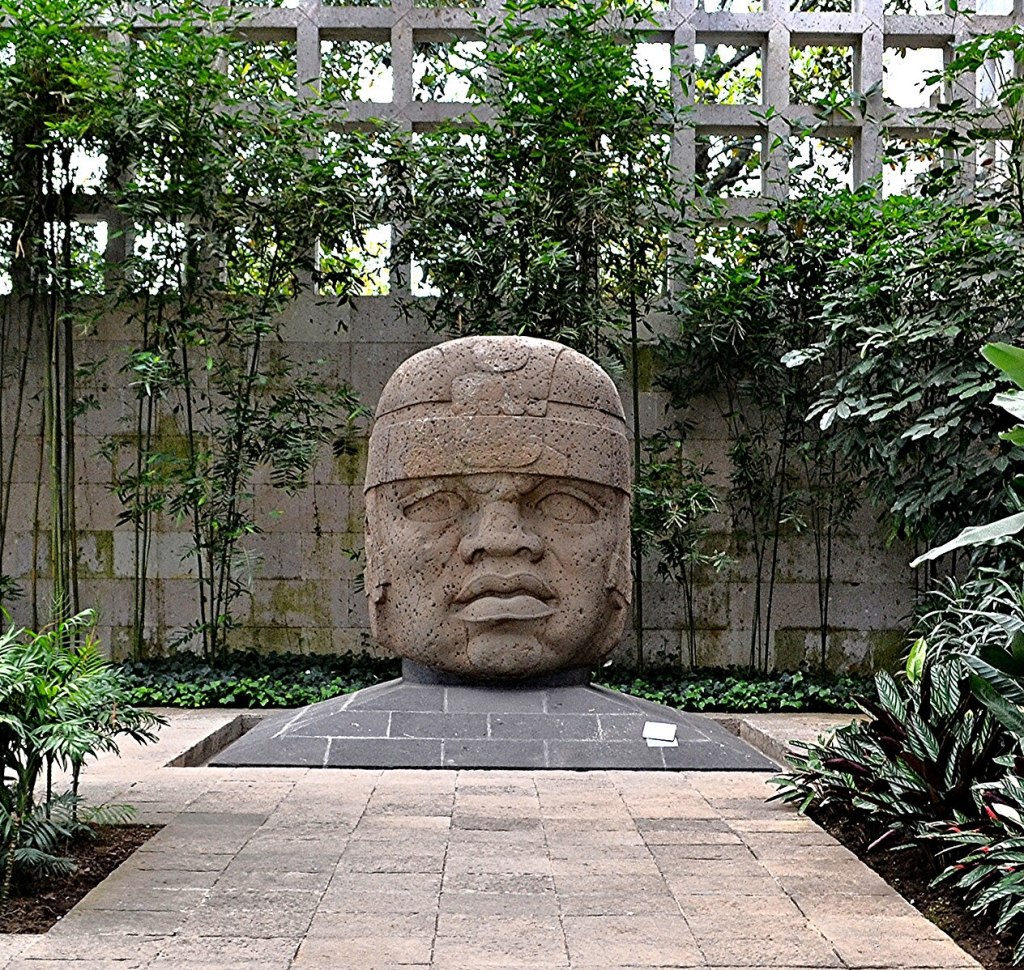
We don’t actually know what the Olmec called themselves, or if they even had a name that united the people of their region. The term Olmec comes from the later Aztec Nahuatl phrase Olmeca-Huixtotin, meaning “people of the rubber country and saltwater.” The Aztecs gave them this name long after the civilization had disappeared.
(Diehl, Richard A. The Olmecs: America’s First Civilization. Thames & Hudson, 2004.)
The Olmec were the earliest known complex civilization in Mesoamerica, the cultural ancestors of later societies like the Maya, Zapotec, and Aztec. Around 1500 BC, they were just beginning to take shape in the Gulf Coast lowlands of modern-day southern Veracruz and Tabasco, Mexico. Their civilization would flourish from roughly 1500 BC to 400 BC, reaching its height between 1200–900 BC.
What makes the Olmec especially remarkable is that they were a pristine civilization, meaning they developed state-level society, cities, art, religion, and governance from scratch, without borrowing the blueprint from any earlier culture. Everything, from their spiritual system to their monumental art, was an original creation that laid the groundwork for Mesoamerican civilization itself.
Even in these early centuries, the Olmec stood out for their innovation and worldview. They began carving basalt sculptures, the first versions of the colossal heads that would later define their art. Their perspective was deeply spiritual and animistic: everything in nature was believed to hold living energy or “spirit force.” Spiritual leaders, likely ritual specialists or vision-seekers, acted as bridges between humans and the divine, using ceremony, trance, and possibly hallucinogenic plants to communicate with the spirit world.
Early Olmec art reveals a fascination with transformation and duality, often showing human–animal hybrids. The famous “were-jaguar” motif, perhaps representing a child or deity born of a human and a jaguar, symbolized strength, fertility, and sacred power in their belief system.
Spiritual Life in Early Mesoamerica
While the Olmec were just one emerging culture, they weren’t alone in their beliefs. Across ancient Mexico around 1500 BC, spiritual life was deeply woven into daily routine. Communities from the Gulf Coast to the highlands shared a sense that the world itself was alive, full of spirit and intention.
People lived in a landscape charged with meaning, where every river, hill, and stalk of maize held life-force. Spiritual life centered on animism, ritual leaders and healers, and emerging deities tied to crops, rain, and animals (think maize gods, jaguar spirits, and sky or water powers rather than single, all-powerful figures).
Faith wasn’t separate from daily life; it was daily life. Offerings, communal feasts, and early ritual spaces (plazas, sacred springs, and even watery bogs) appear in the archaeological record. These gatherings shaped planting schedules, marked births and deaths, healed the sick.
Elaborate Burials in Western Mexico
Around 1600 BC, people at El Opeño (Michoacán) were building tomb chambers with grave goods, ceramics, and ornaments. These are among the earliest complex funerary sites in the Americas. They show not only spiritual beliefs about death but also the rise of social hierarchy, some families clearly had higher status.
Language & Writing
Languages spoken: By 1500 BC, people across what’s now Mexico spoke many distinct languages and local dialects. Each region had its own ways of speaking — shaped by geography, trade, and tradition. Some communities could communicate through shared roots or neighboring influence, while others were completely different from valley to valley. Though we can’t match each ancient settlement to a specific tongue, the overall picture is clear: linguistic diversity was already a defining part of life.
Writing / literacy: Around 1500 BC there is no clear, widespread writing system in Mesoamerica as we’d recognize it. There are some claims for “writing” in the Early Formative that remain debated. So for 1500 BC, oral culture dominated, myths, genealogies, ritual knowledge, and administrative memory were transmitted by speech, performance, and material record (monuments, tokens), not by any written account.
Sound & Music
Music shaped rhythm and ritual alike — woven into labor, ceremony, storytelling, and daily life.
Quick Note: Most surviving instruments from ancient Mexico are made of fired clay or shell (materials that endure). Wooden drums and reed flutes once common in ritual and dance have long vanished, but later depictions and cultural continuity let us infer their presence in 1500 BC.
- Ocarinas & ceramic whistles
- Rounded flutes and whistles made from clay. Some tiny, some as large as a grapefruit. They could produce simple melodies and were often shaped like birds or people.
- Simple flutes & bone/wooden whistles
- Flutes were played either by blowing into the end (like a recorder) or across a side hole (like a modern flute). Some were made of bone or reed, and others were simple wooden whistles. Few survive, but clay versions and later art show they definitely existed.
- Conch-shell trumpets
- Large marine shells (conchs) modified to be blown as trumpets. These were used for long-distance signaling, ritual calls, processions, and marking the start/end of ceremonies.
- Rattles & shakers
- Gourd, clay, or shell rattles; sometimes turtle shell or seed-filled rattles. Ceramic rattles are common finds.
- Drums & percussive frames
- Wooden drums and slit logs are key percussion in later Mesoamerica. For 1500 BC, direct wooden drum evidence is rare (wood decays), but clay percussion and stomping/hand percussion would have been used; iconography and later continuity suggest drums were likely present in some form.
- Other sound-makers & vocal performance
- Bones, rasps, clappers
- Voice: singing, chanting, and spoken incantation were central; many rituals relied as much on voice as on instruments.
Media You Can Watch or Read Today
Continue your journey with these books and movies.
Adults
- The Olmecs: America’s First Civilization – Richard A. Diehl (book)
- Language: English (original); Spanish editions/summary reviews sometimes available.
- A readable, richly illustrated intro to Olmec sites (San Lorenzo, La Venta) and the art/monumental work that defines early Gulf-coast civilization, great for readers who want a solid, non-technical primer.
- Mexico: From the Olmecs to the Aztecs – Michael D. Coe (book)
- Language: English (original); widely available; later editions updated and used as a standard intro.
- A classic one-volume survey of pre-Hispanic Mexico. Concise, well-paced, and perfect for readers who want the broad sweep (including Formative changes up to later periods). Good bridge from short articles to deeper monographs.
- The Art of Mesoamerica: From Olmec to Aztec – Mary Ellen Miller (book)
- Language: English (original).
- Beautifully illustrated and very approachable, if you care about visuals (figurines, colossal heads, iconography) this is the best “coffee-table + textbook” mix. Use it when you want to show readers images and explain stylistic vocabulary.
- The True History of Chocolate – Sophie D. Coe & Michael D. Coe (book)
- Language: English (original); Spanish translation exists (“La verdadera historia del chocolate”).
- Perfect hands-on pick for readers who like food + history. It traces cacao use back into the Formative (Mokaya / Soconusco evidence) and gives a sensory route into ceremonial life. Great for the “taste the past” sidebar.
- 1491: New Revelations of the Americas Before Columbus – Charles C. Mann (book)
- Language: English (original); Spanish translation exists.
- Not Mexico-only but indispensable for lay readers who want to reframe assumptions about pre-Columbian population, agriculture, and landscape management — useful context for why 1500 BC mattered centuries later.
- Mexico: The Cookbook – Margarita Carrillo Arronte (cookbook)
- Language: English edition available; Spanish originals/editions too.
- A modern cookbook that roots recipes in regional, often pre-Hispanic ingredients (maize, chile, squash, seeds).
- Onyx Equinox (Crunchyroll)
- Language: English (original); Dubbed/Subtitled: Spanish available
- A darker, more mature animated series built on Aztec mythology, gods demanding sacrifices, heroes saving humanity, that whole vibe.
Kids
- Las Leyendas (Netflix)
- Language: Spanish (original); Dubbed/Subtitled: English available
- Ages: 8–12
- A supernatural adventure series that draws heavily on Mexican folklore and Indigenous monsters, blending historical references with humor and spooky fun. Think Scooby-Doo meets Mesoamerican myth.
- Maya and the Three (Netflix)
- Language: English (original); Dubbed/Subtitled: Spanish available
- Ages: 7–13
- This animated miniseries is vibrant colors, gods, warriors, and jaguar spirits inspired by ancient Maya and Aztec stories. It’s action-packed but also really heartfelt, perfect for kids who love epic quests and strong female leads.
- Ancient Civilizations of Mexico and Central America – Coloring Book (Dover Publications)
- Language: English (original)
- Ages: 6–12
- If you have an artsy kid, this is gold. It has line drawings of temples, masks, and artifacts with short blurbs about each. It sneaks in archaeology while they color, great quiet-time activity, especially if you’re doing an ancient-history week at home.
- El Sol y la Luna (The Sun and the Moon) – Retold Aztec Myth (Picture Book)
- Language: Spanish (original); English versions available
- Ages: 4–8
- A gentle, beautifully illustrated picture book that retells how the sun and moon came to be. It’s poetic and perfect for bedtime reading, especially if you’re introducing kids to Mesoamerican mythology without overwhelming them.
- The Chocolate Tree: A Mayan Folktale – Linda Lowery (book)
- Language: English (original); Spanish edition available (“El árbol del chocolate”)
- Ages: 5–10
- A charming story that explains how the gods gave chocolate to humanity. It’s sweet (pun intended) and a fun way to connect something kids already love (chocolate) to real Mayan traditions.
- My First Book of Aztec Myths – Duncan Tonatiuh (book)
- Language: English (original); Spanish bilingual editions available
- Ages: 6–10
- Duncan Tonatiuh’s artwork has that codex-style flat look, kids instantly recognize it as something ancient. His stories balance humor, heart, and cultural depth. This one’s perfect if you want something culturally rooted but easy to follow.
Would you have thrived in ancient Mexico, tending crops beneath the sun and cooking over open fires—or struggled without plumbing, coffee, and podcasts? Share your thoughts below or tag me on social; I’d love to know how you think you’d fare in 1500 BC!
 Time Traveling Table
Leave a comment