
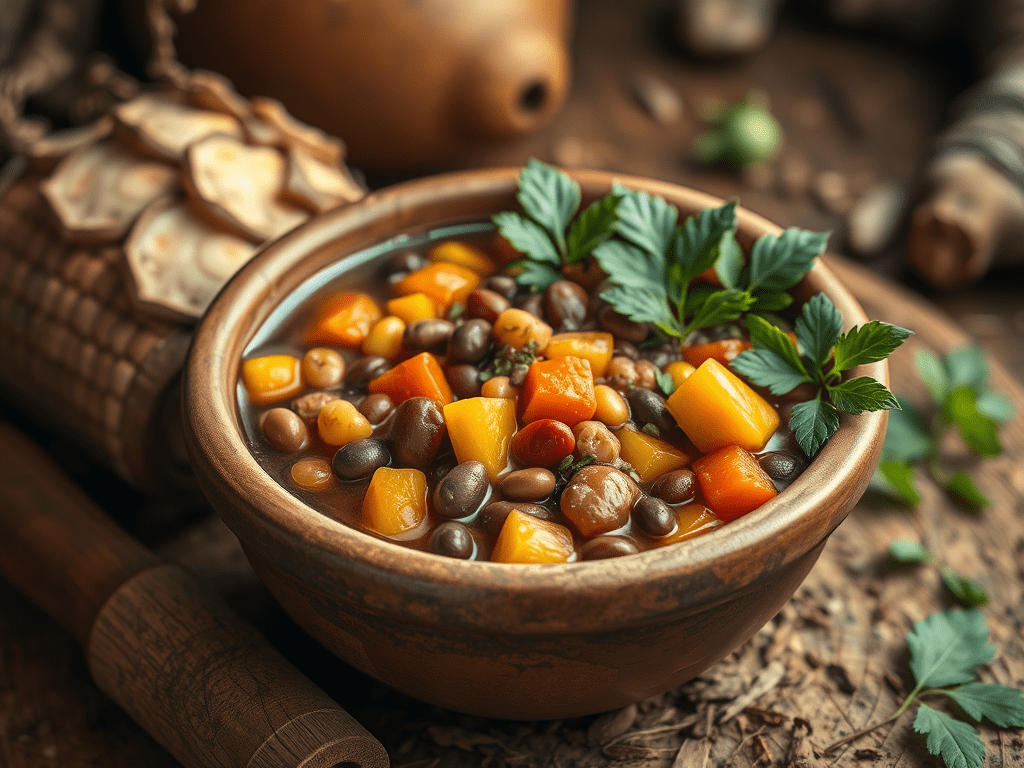
Okay, so this soup was solid. Though I’ll admit, my modern palate kind of missed the usual suspects: onions, garlic, maybe a dash of cumin. (Because let’s be real, what is a soup without onions?) But since I wanted to keep it true to the OG version, I skipped all that. And honestly? It was worth it. Though this isn’t a “serve at a dinner party” kind of soup, but it is an “I’d eat this again” kind of soup.
When we talk about the Three Sisters (corn, beans, and squash) most people think of Indigenous North America. But this brilliant system actually started much further south, right in ancient Mexico. By around 1000 BC, the Olmec and other early Mesoamerican peoples had already mastered growing these crops together: maize stalks gave the beans something to climb, beans fed nitrogen back into the soil, and broad squash leaves shaded the ground to hold in moisture. It was sustainable, beautiful, and revolutionary, the foundation of an entire cuisine and civilization.
Fun fact: you’ve probably heard that rice and beans make a complete protein. The Olmec didn’t have rice yet (that wouldn’t arrive for thousands of years), but corn and beans do the same thing! When eaten together, they provide all nine essential amino acids.
The people who ate this stew lived along Mexico’s Gulf Coast, near rivers and swamps thick with life. Their food came from fire and clay, just corn simmered with beans, chunks of squash, and wild herbs like epazote to tie it all together. It’s humble, earthy, and deeply connected to the rhythms of the land.
So while it may not hit the same “flavor bomb” notes as our modern soups, this stew offers something different, a taste of history, of connection, of how people really lived and ate thousands of years ago. It’s rustic, comforting, and quietly powerful. The kind of meal that reminds you just how creative humans have always been when working with what’s around them.
Yield: 6 servings
Prep time: 30 minutes
Cook time: 2 ½ – 3 hours
Total time: about 3 ½ hours
A Quick Note on the Ingredients: If there’s an ingredient below that doesn’t appeal to you or isn’t available at your store, don’t stress, just skip it, find a similar substitute, or let this recipe inspire you to add your own twist. Back in this time period, recipes didn’t exist in the structured way we know them today. People used whatever they had on hand, and measurements were more of a “feel it out” situation. So embrace the spirit of the age and make it yours!
- 2 cups dried maize kernels
- 1 cup dried beans (black, pinto-type, or tepary)
- 2 small sweet potatoes (about 3 cups diced)
- 2 cups diced native-style squash (calabaza, butternut, or kabocha are good equivalents)
- 2 handfuls wild greens or herbs (amaranth leaves, epazote, or hoja santa)
- 1 teaspoon sea salt (optional)
- 10–12 cups water
- 1 small dried chiltepín pepper per adult, for serving
(Optional, authentic additions)
- A handful of wild roots or yuca chunks, if available
- Crushed pumpkin seeds for garnish or thickening
- A splash of thick maize drink (atolli) or extra maize mash stirred in near the end to thicken
Soak and Soften
Rinse the maize and beans. Soak overnight in cool water, or bring to a quick boil for 10 minutes and let rest 1 hour.
Drain and place in a heavy clay pot or Dutch oven with 10 cups of fresh water.
Bring to a gentle simmer over medium heat and cook for about 1½ hours, stirring occasionally.
Add the Vegetables
Add diced sweet potato and squash to the pot. Continue simmering for another 45–60 minutes, adding water as needed to keep everything just covered.
Finish with Greens
Stir in the wild greens or herbs during the last 10–15 minutes so they soften but retain color and texture.
Season lightly with salt if using. Mash a few pieces of sweet potato against the side of the pot to naturally thicken the broth.
Prepare the Chili Condiment (Traditional Style)
Meals like this were cooked communally in clay pots and flavored with the earliest wild chili peppers, added at the table so everyone, including children, could eat comfortably.
Crush one dried chiltepín pepper in a small bowl or mortar.
Add 2 tablespoons of hot broth from the pot to make a spicy paste or infusion.
Each adult stirs a small amount into their own bowl at the table.
Serve
Ladle the stew into bowls and enjoy
 Time Traveling Table
Leave a comment