
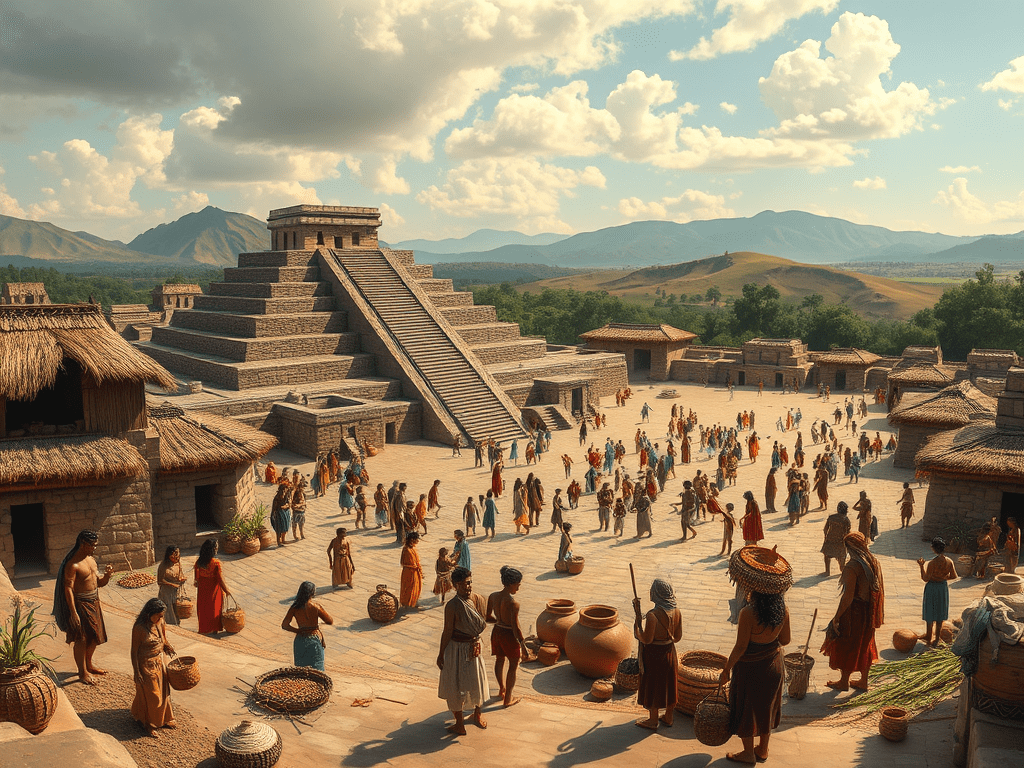
Before Mexico was a nation, it was a landscape of cities, families, and traditions already centuries in the making. This post looks at what daily life was like around 600 AD, the routines, responsibilities, and beliefs that held that world together.
Just so we’re all on the same page. Please ensure you’ve made yourself acquainted with my disclaimer
Before we dive in: Mexico in 600 AD wasn’t one big, unified vibe. Think less “one culture” and more “a whole group project where everyone brought their own snacks.” Teotihuacán was booming up in the highlands, the Maya were growing in the southeast, and hundreds of local communities were living life in their own amazing ways.
But even with all that diversity, there were some shared rhythms, patterns in how people cooked, dressed, built homes, raised kids, and navigated the world.
So everything below is the broad strokes version, unless I call out something culture-specific. Cool? Cool.
Home Life
Step into their house: how big was it, what did it look like, and how did people sleep?
Household Pests
I found BOTH mice and rats in and around my house this week, which I’d never had to deal with before, so naturally I spiraled into researching on what ancient Mexicans dealt with. Because when something takes over that much real estate in your brain, sometimes the only move is to turn it into content.
Before European contact, Mesoamerican homes didn’t have the classic “house mouse” or “city rat” we know today, those little invaders didn’t show up until the 1500s on Spanish ships. But that doesn’t mean ancient homes were magically pest-free. Not at all.
The main culprits were native deer mice (Peromyscus), packrats (Neotoma), and the occasional vole or pocket gopher depending on the region. These animals weren’t necessarily living inside households the way modern mice or rats do, but they absolutely hovered around food stores, maize cribs, clay pots, and outdoor kitchens looking for an easy snack.
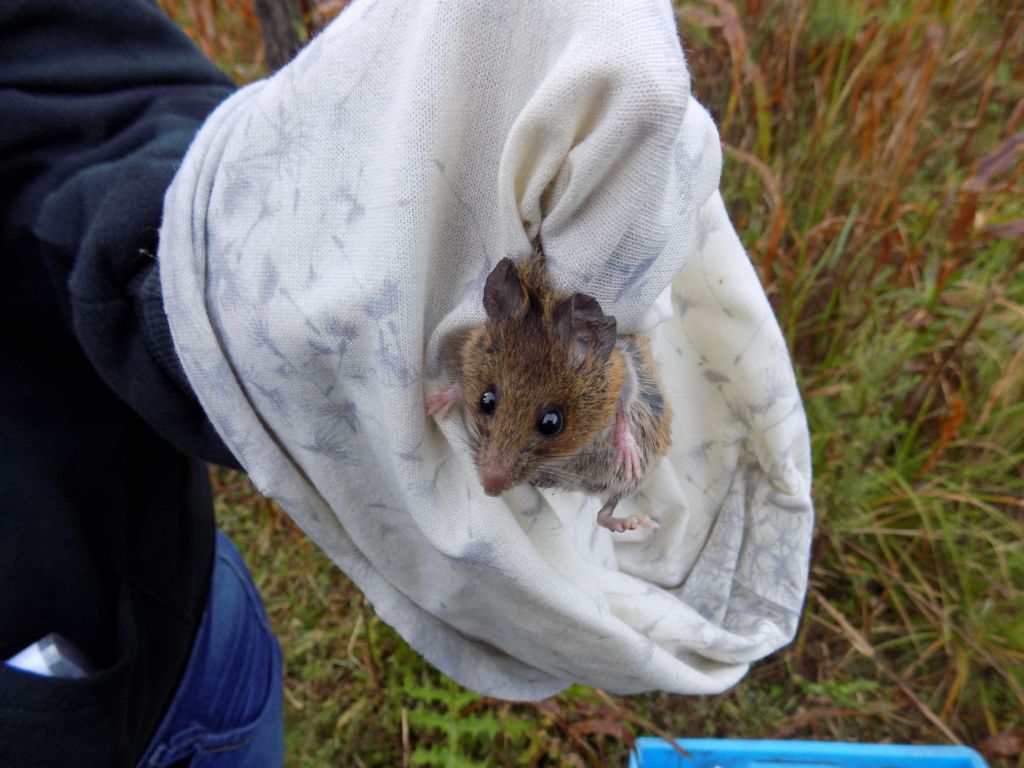
Because of this, families relied on:
- Raised storage platforms that kept grains off the ground
- Tightly sealed ceramic vessels
- Stone-lined pits
- Smoke from the hearth, which naturally discouraged pests
These weren’t just conveniences, they were survival tools. Protecting maize, amaranth, and beans from nibblers was essential for getting through the dry season.
Inside a Typical Home
How big was the average home? Think tiny by our standards, but perfect for the rhythm of life back then.
Most single-family houses were around 20–40 m² (215–430 ft²).
That’s basically:
- One main room
- A small attached space or lean-to
- And a patio that did a ton of the daily work
Elite families? Claro, they had spacious compounds. But for everyday people, the house was cozy designed for function.
The patio was the real heart of the home. Cooking, weaving, repairing tools, tending the fire… everything happened out there.
Bedrooms?
Nope. Families slept in the main room together, especially on cold nights. Privacy wasn’t the cultural priority like it is today.
Bathrooms?
Still no. People used:
- Simple latrines outside
- Or designated areas away from water sources
- And water jars or basins for washing hands, face, and feet
Elite urban homes might have had drainage channels, but the everyday compa? They lived very simply.
How You “Got” a House in 600 AD
A quick reality check: in 600 AD Mexico you didn’t stroll into an office, sign papers, and get a mortgage. A home was something you earned through family ties, communal approval, and a whole lot of labor. First, your lineage or neighborhood group (the calpolli in central Mexico, or the extended kin group in Maya regions) granted you the right to use a piece of land, not to own it, but to build on it and care for it. Then came the construction party: family, neighbors, and compas showed up with tools, earth, reeds, and timber. Walls of wattle-and-daub, roofs of thatch, floors of packed earth, all raised through teamwork and good gossip. In return, you owed the community help for their builds, plus regular tribute to the local authorities. A house wasn’t just a structure, it was a social contract, a promise that you belonged to this place and its people.
Sleep Schedules (and naps)
People followed the sun… literally.
A typical rhythm:
- Wake before dawn, around 4:30–5:00 am
- Start the fire, prep & grind nixtamalized maize
- Workday and chores from sunrise to late afternoon
- Sleep shortly after dark, maybe 8–9 pm
Artificial lighting was mostly small oil lamps in elite home, and the glow of the cooking fire for the average family.
Naps?
In hotter regions, oh yeah, siesta vibes.
People rested at midday when the sun hit that “bro, please chill” intensity. Not a long nap, but rest. In cooler highland regions, naps happened less.
Beds: What Were They Actually Like?
Beds weren’t this whole dramatic wooden bed frames, more like sleeping setups.
Common options:
- Petates (woven reed mats) rolled out at night
- Simple raised wooden platforms
- Mats with furs or blankets in colder zones
Families would unroll bedding at night, then roll it up in the morning to reclaim the floor for everything else.
Elite households might have had:
- Low wooden bedsteads
- Cotton-filled cushions (yes, cotton was bougie and soft)
Indoor Tools & Everyday “Appliances“
Essential household items included:
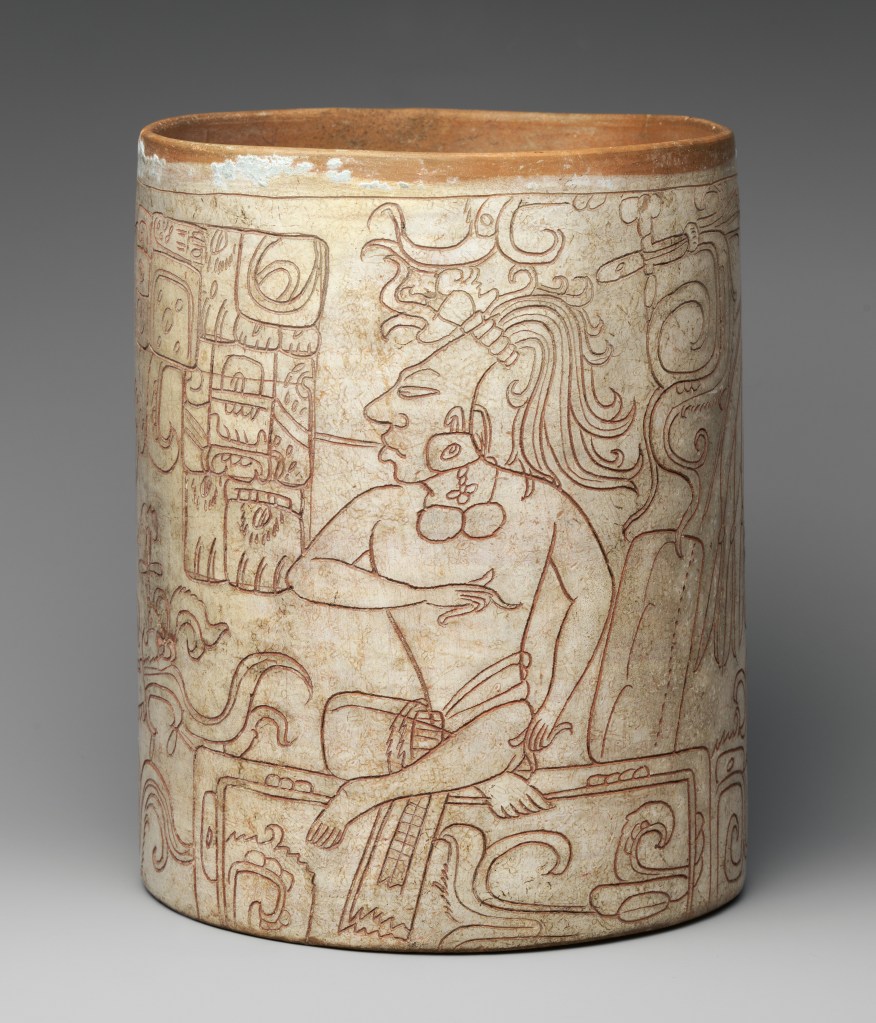
The Metropolitan Museum of Art, Accession No. 1978.412.163.
- Comal (clay griddle) for tortillas and roasting
- Metate & mano (grinding stone + hand roller) the absolute queen of the home
- Ceramic ollas (clay pots) for cooking beans, stews, atoles
- Jars (ollas, cántaros): storing water, maize, amaranth, beans
- Fiber baskets: used for everything (storage, transport, even winnowing grains)
- Spindle whorls & looms for weaving
- Maguey fiber ropes for tying, carrying, building
- Fire hearth (3-stone setup): the OG stovetop
- Obsidian blades kept in small boxes or baskets
Culturally Important Home Objects: These items carried meaning, identity, or beauty:
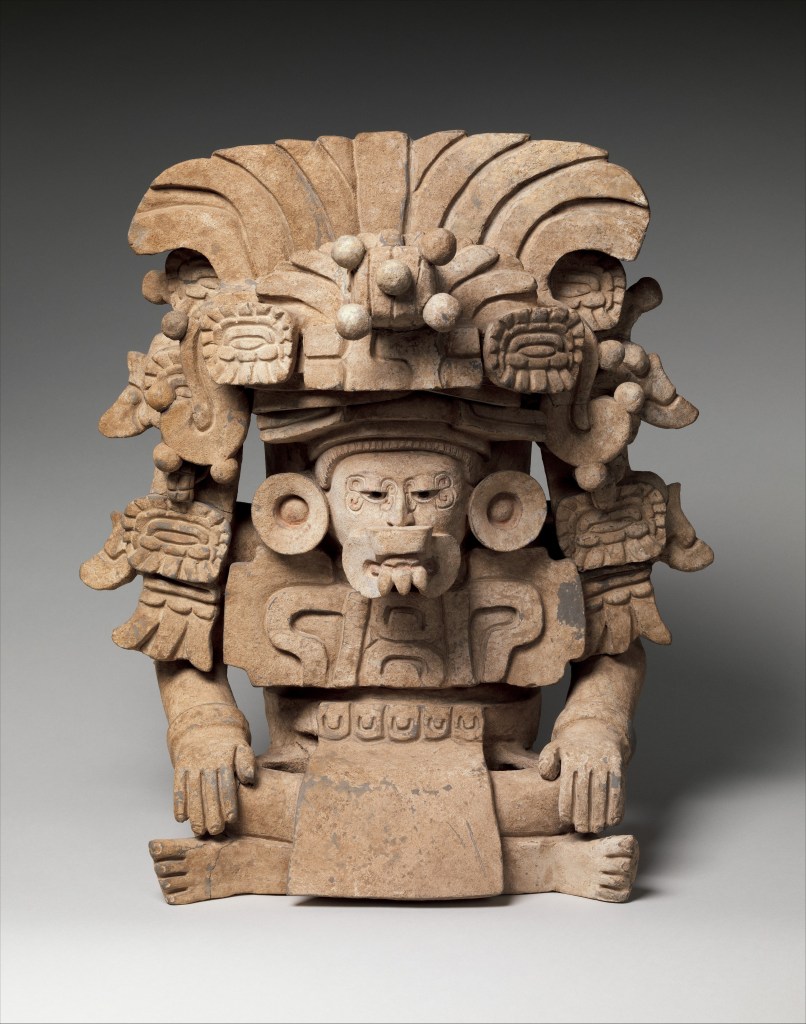
The Metropolitan Museum of Art, Accession No. 1975.363.1.
- Small household altars with incense burners
- Figurines of ancestors or protective spirits
- Pottery with regional patterns
- Cotton textiles (if the family could afford them)
- Gourd containers that doubled as bowls and ladles
Every item had an intention behind it. Nothing extra. Nothing ornamental just because.
Fashion & Beauty Standards
What did people wear, and what did society expect them to look like?
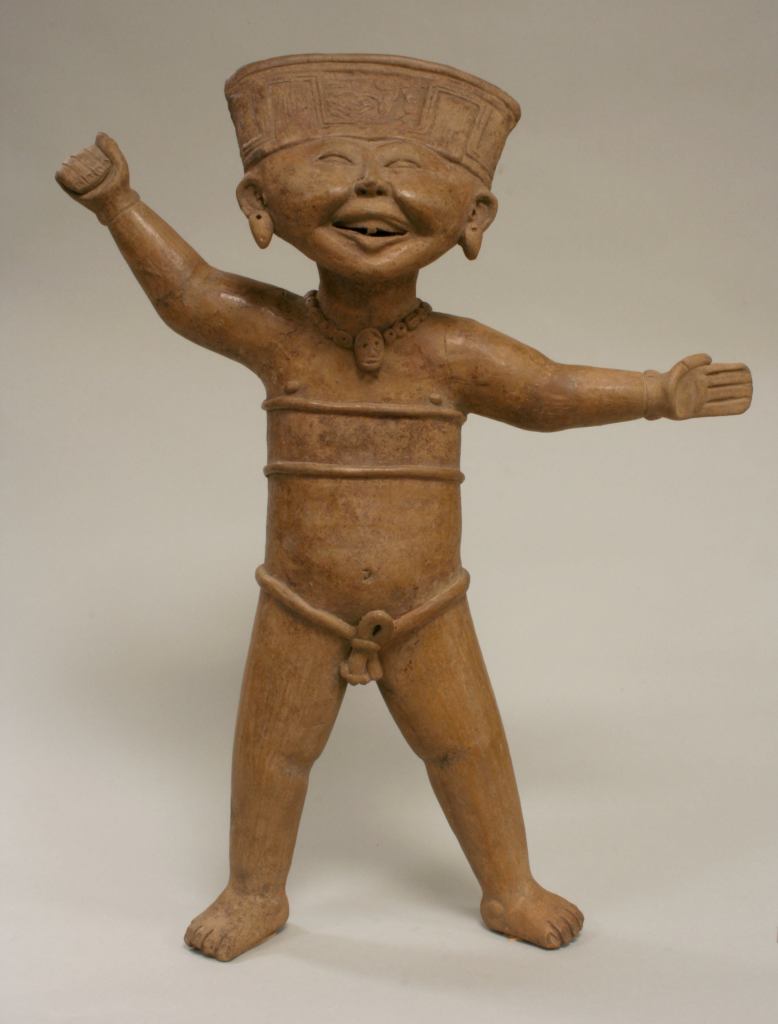
The Metropolitan Museum of Art, Accession No. 1979.206.1070.
Clothing was simple in cut but rich in meaning. Most garments came from cotton, maguey (agave) fiber, barkcloth, or fur, depending on region and status. Cotton was the premium fabric: soft, cool, and usually reserved for elites or highly skilled workers.
Typical silhouettes included:
- Men: Māxtlatl (loincloth) + tilma (cape or mantle)
- Women: Huipil (sleeveless tunic) or cueitl (wrap skirt) with a tied sash
- Children: minimal clothing, especially in hot regions
Fastening was simple. No buttons, no zippers just:
- Sashes
- Belts
- Knots
- Decorative ties
Clothes were often embroidered, painted, or woven with patterns tied to lineages, gods, or local identity. Weaving was one of the most important domestic arts, and a woman’s textile skill was deeply tied to social status.
Color, Style & Meaning
Color wasn’t just aesthetic, it was symbolic.
Common dyes included:
- Red: cochineal or hematite
- Fun fact: cochineal (a tiny cactus-dwelling insect) made such vibrant reds that once Spain introduced it to Europe, it became the signature dye for English redcoats and Catholic clerical capes.
- Blue-green: Mayan Blue (indigo + palygorskite clay)
- Yellow: tree resins
- Black: charcoal or soot
Elite clothing could be strikingly vibrant. Everyday clothing tended to be in natural whites, tans, and soft earth tones.
Hairstyles & Grooming
Women’s Hair
Certain hairstyles marked marital status or ritual roles. Women tended to wear hair:
- long and braided
- wrapped with ribbons
- tied into buns decorated with maguey cords or flowers.
Men’s Hair
- shorter hair around the face
- longer braided or tied sections at the back
- topknots for warriors or specialists
Warriors in some regions may have styled hair with lime paste or clay for rigidity (think ancient hair gel).
Facial Hair
Genetics + grooming meant… not much.
Most men naturally had minimal facial hair, and what grew in was plucked, not shaved.
Cosmetics, Scents & Skin Care
Cleansers & Soaps
The main cleanser was amole, several plants (soap plant, yucca, agave) whose roots foam when mixed with water. It worked for hair, skin, and laundry.
Perfumes & Scents
People in 600 AD Mexico didn’t wear perfume in the modern sense. Most aromatic materials were used as incense, especially copal burned in household altars and ceremonies. Others were applied more subtly: flowers braided into hair, herbs rubbed onto the skin, resin-based cosmetics with natural fragrance, or steam baths scented with healing plants.
Cosmetics
Common cosmetic materials:
- Red ochre for the cheeks or body
- Black charcoal around the eyes
- White clay for ceremonial painting
Maya and Central Mexican elites sometimes filed or inlaid their teeth with jade or pyrite as marks of status.
Bathing & Cleanliness
Bathing was a normal part of life. Water sources were public and central to the community.
People bathed using:
- rivers or lakes
- stone basins
- steam baths (temazcal) — especially in central Mexico. The temazcal served physical and spiritual health, almost like a sauna + therapy session in one.
Tattoos, Piercings & Body Modification
Not universal, but widely present, depending on culture and region.
Piercings
Common places:
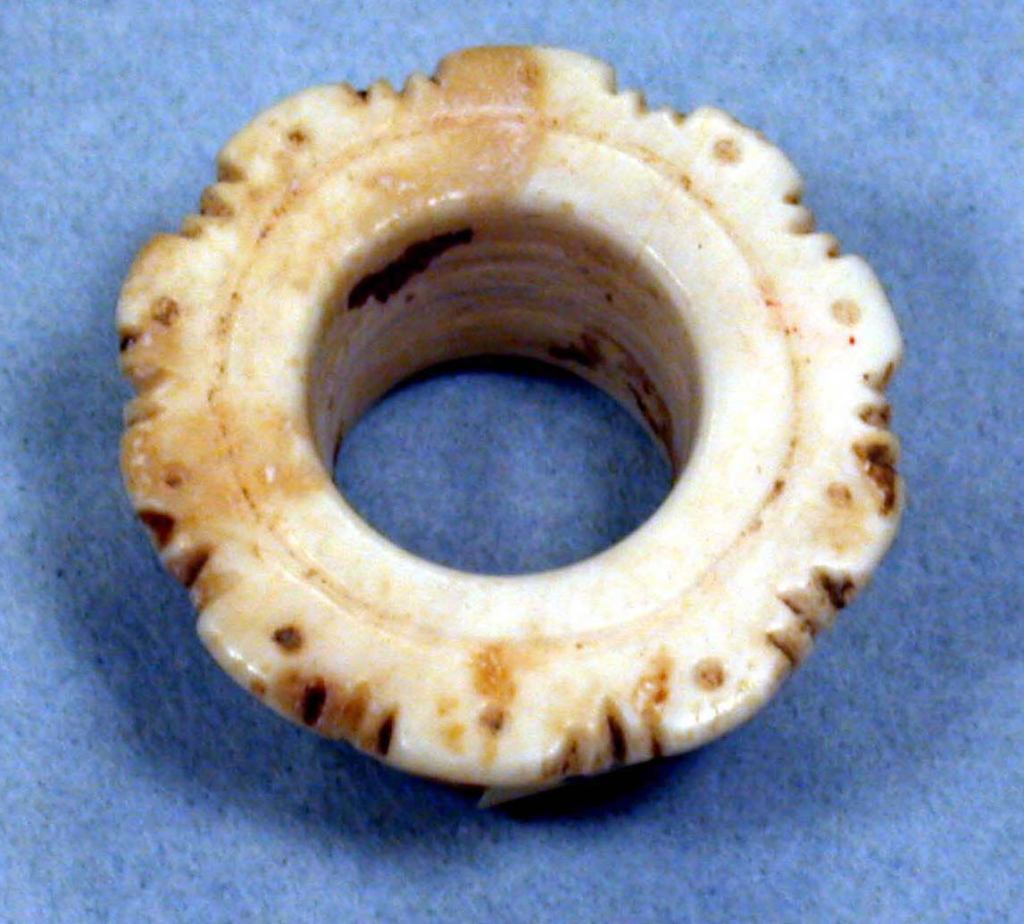
- Ears
- Nose (septum)
- Lips (for elite men)
Materials included jade, shell, obsidian, or bone.
Tattoos
More common among the Maya, less documented in central Mexican groups. Designs often tied to lineage, deities, or warfare.
Body Paint
Extremely common in ritual settings. Paint could signal:
- marriage
- warfare
- rank
- spiritual roles
- festivals
Head Shaping
Among the Maya, an elongated skull (cranial shaping) was considered beautiful, done by binding an infant’s head gently on a board
Diet & Daily Meals
Explore what they grew, hunted, cooked, and craved.
In 600 AD Mexico, food shaped daily life in a very real, practical way. What people grew, cooked, and shared connected them to their community and to the world around them. Every ingredient had a story; every crop had a spirit. And because so much labor went into preparing food, people didn’t separate “cooking” from “life” the way we do today, it was life.
The Staples: What the Average Household Ate
Across much of Mesoamerica, people relied on the milpa trio:
- Maize (the foundation of every meal)
- Beans
- Squash
This trio gave people complete nutrition and endless flexibility. From tortillas to atole to tamales, maize showed up in almost every dish.
Other everyday foods included:
- tomatoes, chiles, amaranth leaves, quelites
- fruits like guava, plums, zapote, cacao fruit
- nuts and seeds, especially squash seeds
- herbs and flowers
Most meals were plant-based. Meat was eaten, but not every day.
Animal Foods
People did hunt and raise animals, but different regions relied on different sources.
Highlands = more small game
Lowlands = more fish and forest animals.
Common Protein Sources:
- Turkey
- Dogs (techichi)
- Small mammals
- Fish, turtles, and waterfowl
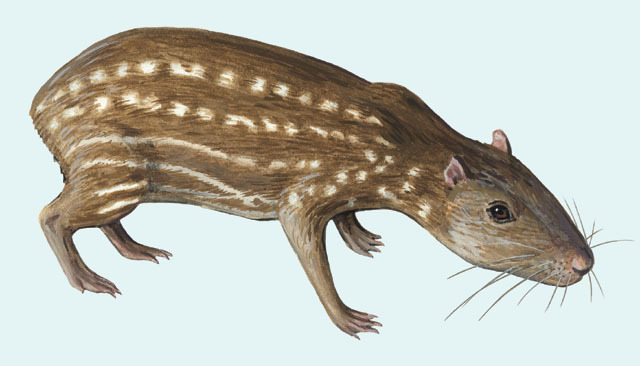
Photo source: Macdonald, G. 2013. “Cuniculus paca” (On-line), Animal Diversity Web.
Animal Diversity Web entry
Now, let’s talk about the paca (also called tepezcuintle), one of the most prestigious meats in Maya cuisine. Pacas are large rodents (like 9-14kg (20-30 lbs) large)
Why was it so valued?
- Flavor & Texture: Pacas have mild, almost pork-like meat perfect for stews, pit ovens, and wrapped dishes. Maya communities considered it one of the most delicious wild meats available.
- Feasting & Ceremony: Pacas often showed up in feasting contexts (celebrations, alliances, rituals) where good food reinforced social bonds. Serving tepezcuintle signaled hospitality and prestige.
- The “Good luck catching me” factor: They were not easy to catch. Pacas are nocturnal, fast, and live near dense vegetation and waterways. That scarcity made them even more special.
- Symbolic Value: Because they lived in the forest underbrush and fed on fruits and shoots, pacas were tied to ideas of fertility, abundance, and the generosity of the natural world, themes the Maya wove heavily into their cosmology.
So even though most households weren’t eating paca every week, when they did? It meant something. It marked the moment as important.
Staple Drinks
- Atole (masa drink; breakfast classic)
- Cacao beverages (bitter, frothy, elite daily drink; ceremonial for others)
- Pozol (masa + water, especially Maya regions; sometimes fermented)
- Pulque (fermented maguey sap; ritual + adult social drink)
- Herbal infusions and water
How Much of the Day Went to Getting Food?
A lot… but in a way that felt normal, not burdensome.
Women’s Daily Work
- grinding nixtamal: 3–5 hours
- making tortillas, tamales, stews
- gathering firewood, herbs, greens
- tending smaller patio gardens
Men’s Daily Work
- tending milpas
- clearing fields, planting, harvesting
- hunting/fishing
- trading for salt, obsidian, dried fish, cacao, cotton
Elders & Children
- watching gardens and animals
- foraging greens, fruits, flowers, firewood
- helping process maize
Daily Eating Pattern
Most households ate two main eating periods, plus light nibbling throughout the day from foods that were portable or already prepared.
Historical Meal Plan
- Morning Meal
- Warm maize atole: thin, lightly seasoned with chile; made from freshly ground nixtamal
- Snacks
- Handful of toasted squash seeds (pepitas) with a sprinkle of ground chile
- Fresh guava or chicozapote from nearby groves
- Drink: Herb-infused water: hoja santa or epazote steeped in a clay vessel
- Main Communal Meal (Served from shared pots, you take what you want.)
- Fresh maize tortillas from the comal
- Black beans simmered with epazote
- Squash stew with young squash, blossoms, stems, and seeds; thickened with masa
- Wild greens (quelites) wilted in chile paste
- Small portion of roasted tepezcuintle (paca) or turkey
- Stone-ground chile paste
- Drink: Cacao–Chile drink: water, a little ground cacao, toasted maize flour, chile; poured between vessels for froth
- Ocassional Sweet Item
- Steamed pumpkin with honey + chile: tender calabaza mashed lightly, drizzled with honey, touched with dried chile
Modern Meal Plan
- Breakfast
- Atole Latte: warm, lightly frothed masa beverage with honey and cacao dust
- Snack
- Pepita Crunch Bar: pepitas and amaranth bound with agave-honey and chile salt
- Fresh fruit: guava and persimmon with lime zest
- Drink: Herbal Sparkling Water: hoja santa & lime
- Main Meal
- Heirloom Masa Cake Stack: crisp masa cake layered with chile–honey turkey, velvet black beans, roasted squash, and wild greens
- Cacao Tonic — sparkling cacao infusion with chile
- Dessert
- Honey–Chile Pumpkin Mousse: roasted pumpkin mousse with warm honey-chile glaze, pepita brittle, and agave cream
Climate & Environment
How did geography and weather shape daily life?
Northern Highlands – La Gran Chichimeca (e.g., Zacatecas / San Luis Potosí)
High desert, thorn scrub, mesas & canyons
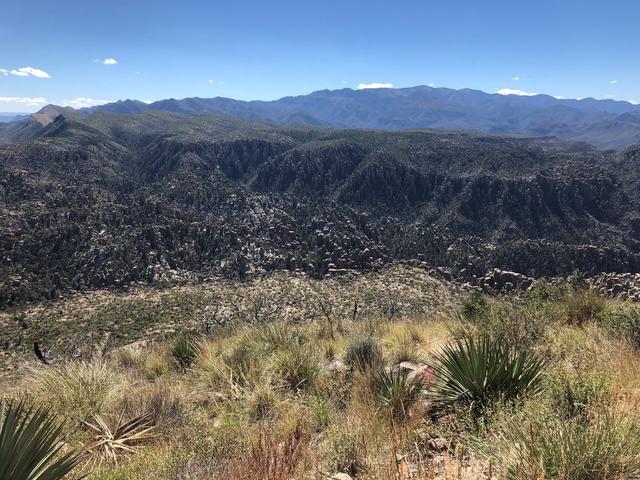
- Climate
- Summer: 22–28 °C (72–82 °F) daytime; cool nights around 12–15 °C (54–59 °F)
- Winter: 10–18 °C (50–64 °F) daytime; cold nights around 2–6 °C (35–43 °F)
- Humidity
- 15–35% most of the year
Feels like: skin dries instantly, sweat evaporates before you notice it, and shade makes a huge difference.
- 15–35% most of the year
- Landscape
- High-elevation semi-desert
- Scrubland, agave stands, cactus forests, rocky mesas
- Open skies, sparse trees
Central Highlands – Valley of Mexico (Teotihuacán region)
Volcanic basin, lakes (anciently), cool plateau climate
- Climate
- Summer: 18–26 °C (64–79 °F)
- Winter: 5–20 °C (41–68 °F), cold nights, occasional frost
- Humidity
- 40–60% typical
Feels like: dry-ish but not desert-dry; sweat evaporates, but afternoons can feel warm under direct sun due to elevation (2,200 m = 7,200 ft).
- 40–60% typical
- Landscape
- Volcanic mountains
- Open grasslands
- Pine–oak forests at higher elevations
- In Teotihuacán era: lake shores, irrigated fields, maguey fields
Gulf Coast Lowlands – Veracruz / Tabasco
Hot, humid, lush rainforests
- Climate
- Summer: 28–34 °C (82–93 °F)
- Winter: 20–26 °C (68–79 °F)
- Humidity
- 70–95%
Feels like: stepping into a warm bathroom after a shower: clothes stick to you, hair frizzes, you’re always aware of your skin. Shade helps but doesn’t save you.
- 70–95%
- Landscape
- Dense tropical forest
- Rivers, wetlands
- Mangroves near the coast
- Home of the paca/tepezcuintle
Maya Lowlands Petén / Campeche–Yucatán
Classic Maya heartland: jungle, karst, cenotes
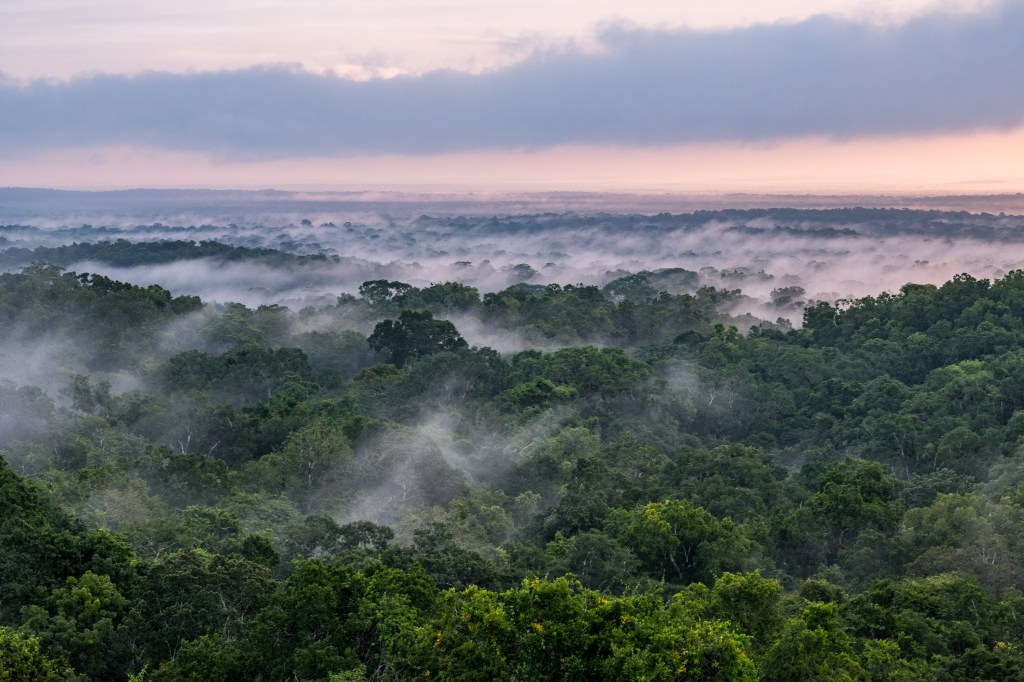
- Climate
- Summer: 28–35 °C (82–95 °F), very hot
- Winter: 20–27 °C (68–80 °F), warm, drier
- Humidity
- 65–90%
Feels like: heat wraps around you like a blanket; your sweat stays on your skin. Shade helps but doesn’t completely cool you.
- 65–90%
- Landscape
- Lush tropical forest (Ceiba, palms, ramón trees)
- Karst limestone terrain
- Sinkhole lakes (cenotes)
- Seasonal wetlands
Maya Highlands – Chiapas Highlands / Guatemala Highlands
Cool mountains, pine forests, misty valleys

- Climate
- Summer: 18–24 °C (64–75 °F) daytime; cool nights around 10–14 °C (50–57 °F)
- Winter: 10–20 °C (50–68 °F) daytime; nights can drop to 5 °C (41 °F)
- Humidity
- 50–70%
Feels like: cool, damp mornings; crisp air; warm sun; mist in the trees.
- 50–70%
- Landscape
- Pine–oak forests
- Cloud forests
- Deep valleys
- Waterfalls and rivers
Population & Top Cities
Where were people living, and how many were there?
By around 600 AD, Mesoamerica was densely populated, especially in the central and southern regions.
Estimated population of what is now Mexico: 10–15 million people
This was one of the most urbanized regions in the world at the time.
Top 5 Most Populated Cities
Teotihuacán: 100,000 to 200,000 people

Image: “Panoramic view of Teotihuacan,” Wikimedia Commons
Region: Central Highlands (Valley of Mexico)
Importance:
- The largest city in the Americas, one of the top 6–8 biggest cities on Earth at that moment. Sí, competing with giants like Constantinople and Chang’an.
- Political, religious, and economic powerhouse
- Home of the Pyramid of the Sun, Avenue of the Dead, huge apartment compounds
- Massive influence across all of Mesoamerica (you see Teotihuacán-style art everywhere)
Calakmul: ~50,000 people
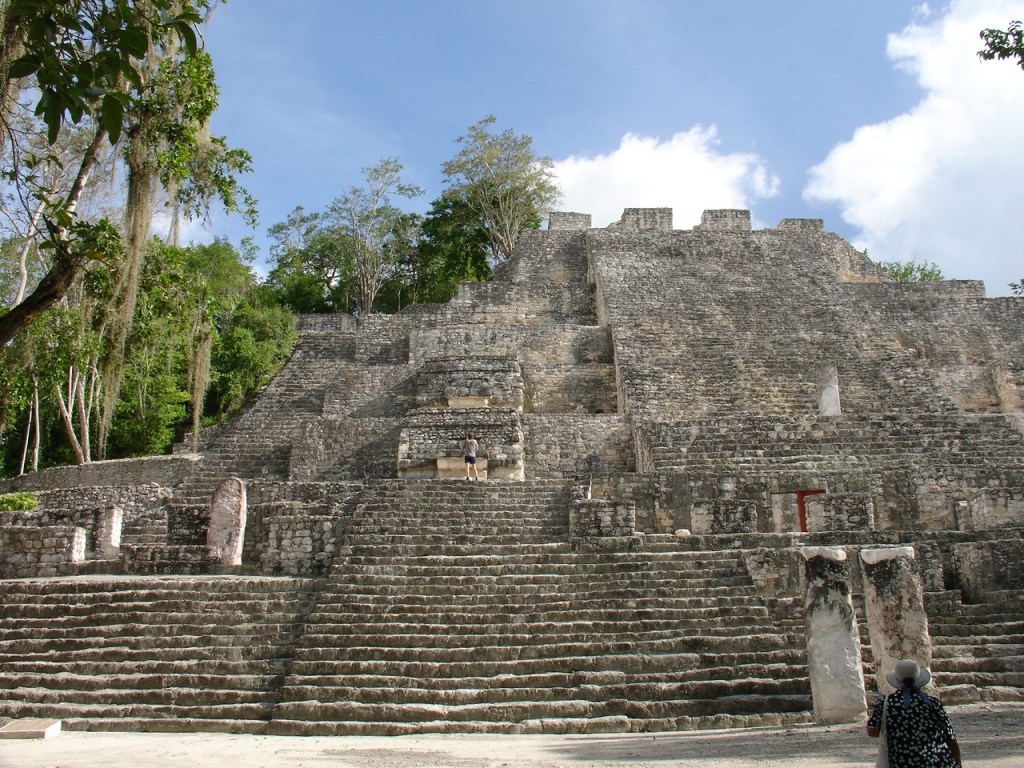
Image: “Calakmul95” Wikimedia Commons
Region: Campeche (southern Mexico)
Importance:
- Center of the “Snake Kingdom”
- Extensive political influence over dozens of smaller cities
- Huge agricultural hinterland supporting its population
- Locked in a generations-long rivalry with Tikal (ancient Mayan city in Northern Guatemala) for dominance of the Maya world.
A little political gossip: the Calakmul–Tikal beef.- Around 500 AD, Calakmul is like: “Hmm… what if we take over everything?” They start forming alliances across the Maya world, sending royal family members to marry into other cities. Maya Game of Thrones vibes. But Tikal is already an ancient powerhouse with a long dynasty.
- In 562 AD, Calakmul teams up with an ally (Caracol an ancient Mayan city in Belize) and absolutely wrecks Tikal. Like, not just a loss… a super embarrassing loss. Tikal’s king (Wak Chan K’awiil) is captured and probably sacrificed. Tikal basically goes quiet for decades. Inscriptions? Stopped. Construction? Slowed. Calakmul is thriving, like: “Look at us, the new main character.”
- Calakmul Builds an Anti-Tikal Empire (566–650 AD). They form alliances with any city that hated Tikal or needed protection. This is why Calakmul gets HUGE, tens of thousands of people, massive pyramids, inscriptions everywhere. It’s a golden age.
- This rivalry doesn’t just shape Calakmul, it shapes the political map of the entire Maya Lowlands for more than a century.
Monte Albán: ~25,000–35,000 people
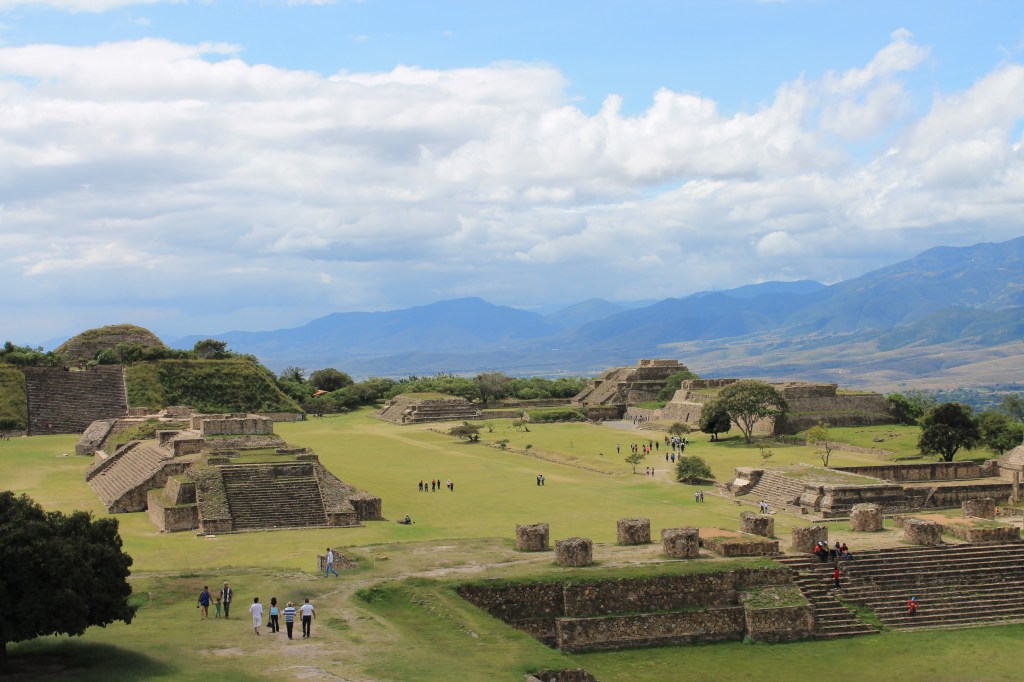
Image: “Borrala,” Wikimedia Commons
Region: Oaxaca Valley
Importance:
- Capital of the Zapotec
- Known for carved stone monuments, writing system, state-level politics
- Controlled a strategic mountaintop overlooking farmland and trade routes
- Declining slowly after 500 AD, but still a major population center at 600
Palenque: ~15,000–25,000 people
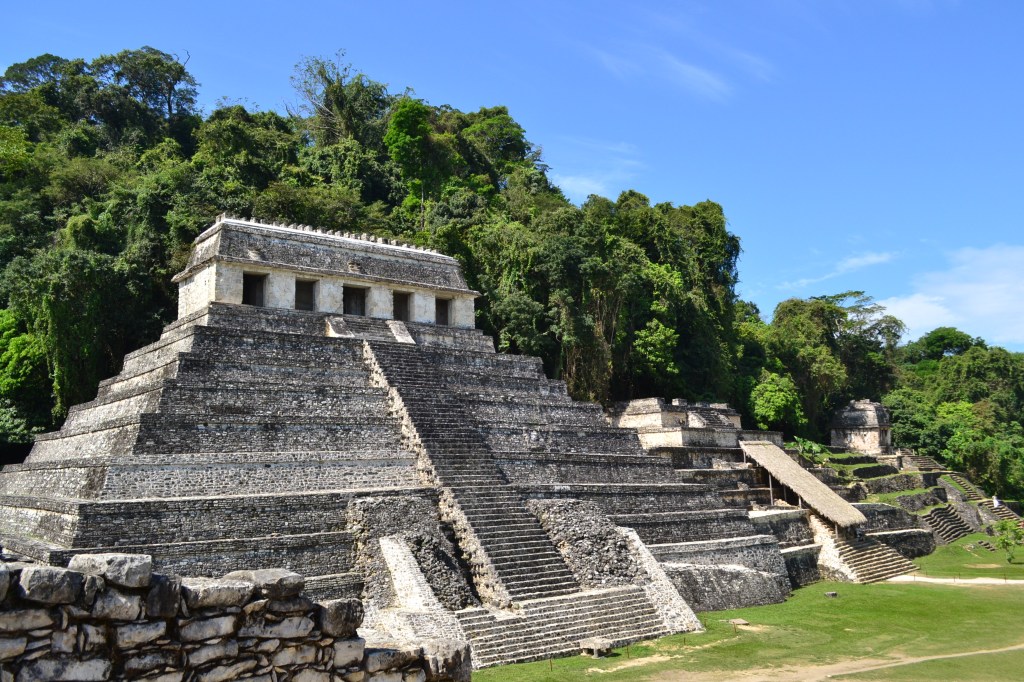
Image: “Tumba de Pakal, Chiapas,” Wikimedia Commons
Region: Maya Lowlands (Chiapas rainforest edge)
Importance:
- Seat of the B’aakal kingdom
- Flourishing under King K’inich Janaab’ Pakal’s dynasty (just a little after 600)
- Renowned for architecture, stucco sculpture, and intellectual elite
- Smaller than some Maya cities, but politically influential as the city was built in rugged terrain, so the city grew vertically and elegantly rather than sprawling like the big lowland cities.
- Full archaeological zone covers 17.8 km² / 6.9 sq mi
- Over 1,400 structures recorded so far. Only ~10% of the site has been excavated, the rest is still wrapped in jungle, clásico Maya Lowlands style
Comalcalco: ~10,000–20,000 people
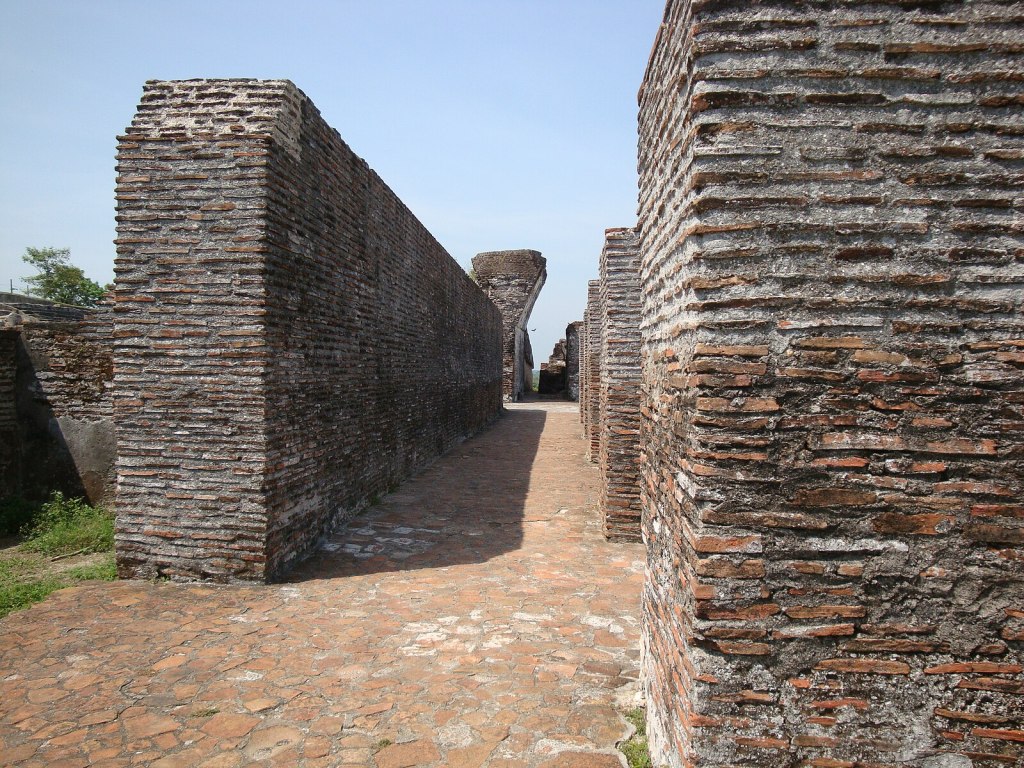
Image: “Comalcalco. El Palacio,” Wikimedia Commons
Region: Tabasco
Importance:
- Major cacao-production center
- Important for trade along the Gulf Coast
- Built with brick because this region has no limestone — the Maya adapted and still created architectural masterpieces.
Economy & Everyday Wealth
How did people earn a living and was money even used?
First big caveat: for 600 AD, we don’t have pay stubs or neat price lists. Most detailed economic data comes from Classic Maya (250–900 CE) and later Aztec (Postclassic), and we work backward carefully from that.
What we do know is that wealth was measured mostly in land access, labor obligations, tribute, and control of valuable goods (like textiles, cacao, jade) rather than in coins or wages. Tribute in food, cloth, and labor formed the backbone of state economies for both central Mexican cities (like Teotihuacán) and the Classic Maya region.
Barter, “Money,” and What Counted as Valuable
There were no metal coins in general use in Mesoamerica at this time. People mostly bartered (maize, cloth, tools, animals) but some goods functioned like money because everyone agreed they were valuable, portable, and countable.
Class Structure
Across Teotihuacán, Classic Maya cities, and Zapotec/Mixtec regions, you see a similar hierarchy:
- Nobles / rulers / ritual specialists/military leaders:
- Ran the city-state: handled political decisions, resources, tribute, and labor for massive construction projects, basically the administrative backbone of Maya life.
- Served as spiritual intermediaries: performed rituals and ceremonies, claiming a direct line to the gods that reinforced their divine right to rule.
- Led the armies: took charge in warfare, whether expanding territory or defending their home when things got spicy.
- Acted as cultural patrons: funded temples, palaces, murals, and carvings, the iconic art and architecture we still admire today.
- Preserved and advanced knowledge: educated in math, astronomy, and writing; helped refine the Maya calendar and hieroglyphic system.
- Skilled artisans and merchants
- Created prestige goods like jade ornaments, obsidian blades, fine ceramics, shell inlays, cotton textiles: the fancy stuff nobles loved to flex.
- Moved high-value items across long trade routes: jade, obsidian, cacao, salt, feathers, incense, spices.
- Merchants lived a high-stakes life: travel meant crossing rival territories, dealing with bandits, navigating political alliances, and knowing exactly who was fighting whom that season.
- Sketchy but essential: one wrong border, one offended city-state, and boom! You’re captured as a spy and either be detained, enslaved, or sacrificed. But successful merchants earned wealth, connections, and sometimes even elite favor.
- Common farmers: the majority:
- Worked the milpas (maize, beans, squash) and maintained terraces/canals.
- Paid tribute in food, goods, or labor.
- Provided construction labor for temples and public works.
- Anchored the whole system: the entire economy ran on their daily work.
- Slaves:
- Often war captives or debt-servants.
- Did heavy physical labor in fields, households, workshops, or elite compounds.
- Compensated in food, shelter, and basic goods (unless a war captive destined for sacrifice).
- Status wasn’t always permanent, some could earn or be granted freedom..
Social Mobility & Opportunities
Even in a pretty rigid hierarchy, a few paths allowed commoners to rise ranks, it was rare, but not impossible.
- Skilled artisans or traders could earn wealth or noble favor.
- Successful merchants sometimes married into noble families (money talks, even in the Classic period).
- Warfare offered a boost: standout warriors might receive land, titles, or public recognition.
- Elite sponsorship could elevate talented individuals, especially scribes, artists, and specialists.
But for most people, life stayed within the social role they were born into.
Health
Explore life expectancy, healthcare practices, and common dangers.
Quick note: Skeletons don’t talk, and the ones we do find tend to belong to people who were buried with care, often elites, which means the everyday poor, who left fewer durable traces, are underrepresented in the archaeological record. That bias shapes everything we think we know.
Even so, the broad patterns are clear.
Life Expectancy: if you survived childhood, your chances of living into your 40s or 50s are good, and a handful reached their 60s.
Childhood Survival: Most scholars estimate that 40–60% of children didn’t reach adulthood, depending on region and living conditions, a hard reality confirmed across multiple Mesoamerican sites.
Medicine, Midwives & Healers
- Herbal Healers: Used plants for fevers, swelling, urinary problems, wounds, and digestive issues.
- Midwives: Handled pregnancy, labor, and postpartum care with massage, steam baths, and herbal treatment.
- Ritual Specialists: Used incense, offerings, and sometimes psychoactive plants (like mushrooms and morning-glory seeds) to treat spiritually rooted illnesses. A severe, mysterious illness might be blamed on sorcery or angered deities and treated with ritual plus herbs.
- Bone-setting & Wound Care: Archaeology and early colonial accounts show knowledge of setting fractures and stitching wounds.
Common Health Issues/Causes of Death
- Parasites: A whole lineup (hookworms, roundworms, whipworms, pinworms) all common thanks to farming, barefoot life, and limited sanitation.
- Malnutrition: Childhood stress markers, anemia, and growth disruption
- Degenerative Joint Disease: From grinding maize, farming, carrying loads, and constant manual labor means joints wore out early
- Trauma: Fractures, accidental injuries, and warfare-related
- Childbirth Complications: A major cause of adult female mortality; difficult labor, infection, or hemorrhage could turn deadly fast without surgical intervention.
- Diarrheal Illness: Contaminated water, parasites, and foodborne bacteria made diarrheal disease a leading killer of infants and young children.
- Respiratory Infections: Crowded homes, seasonal humidity, and constant smoke exposure meant colds, pneumonia, and lung infections were common and sometimes fatal.
- Untreated Wounds: cut or burn that didn’t heal properly could lead to dangerous infections, especially in humid lowland environments.
- Tooth Wear: From grinding maize on stone metates. Tiny bits of grit got into the food and wore teeth down fast, leading to exposed nerves, infections, and sometimes fatal complications
Social & Family Life
Who lived together, and how did families actually work?
Family Life
- Extended families were the default: parents, kids, grandparents, aunts, uncles, cousins, all living together or in connected homes around a shared patio.
- Communal households were common: multiple generations working, eating, and doing ritual together.
- Nuclear families existed inside these bigger compounds, not by themselves.
- Neighbors were often relatives, creating mini-communities with shared obligations.
- Elders held serious authority: they kept lineage stories, managed rituals, and advised on marriages and disputes.
Marriage Customs
- Mostly monogamous for everyday people.
- Elites could have multiple wives, but only for political reasons. Forming alliances, securing heirs, and strengthening ties between noble families.
- Arranged marriages were the norm, negotiated by families or lineage elders.
- Marriage age:
- Women: usually late teens
- Men: early-to-mid 20s (once they could support a household)
- Marriage ceremony: small-scale but meaningful — offerings at the household altar, blessings from elders, shared food, and ritual acts like tying garments together to symbolize unity.
- New couples usually moved into the husband’s family compound.
Childhood & Parenthood
What was it like to be a kid… or raise one?
Being a Child
- Pros
- Never raised alone: children grew up surrounded by siblings, cousins, grandparents, and neighbors.
- Clear sense of belonging: identity came from family, lineage, and community, not individual achievement.
- Early responsibility = early competence: kids learned useful skills young and felt needed.
- Constant outdoor life: fresh air, movement, and hands-on learning.
- Ritual inclusion: children participated in ceremonies, festivals, and household rituals from an early age.
- Cons
- High risk of illness or death, especially in early childhood.
- Little downtime: play existed, but work expectations came early.
- Strict obedience norms: questioning elders wasn’t permitted.
- Limited personal choice: life paths were shaped by family needs.
- Early adulthood pressure: marriage and parenthood came young by modern standards.
Being a Parent
- Pros
- Built-in support system: grandparents, siblings, and extended family helped raise kids.
- Children were contributors, not dependents forever.
- Strong cultural roadmap: parents knew what children were expected to become.
- Lineage continuity and security: having children meant carrying on the family line, maintaining land access, ritual obligations, and ancestral identity.
- High social value of parenthood: raising children was central to status and identity.
- Cons
- High emotional risk: child mortality was a constant reality.
- Physical toll, especially on mothers due to frequent pregnancies.
- Economic pressure: feeding mouths depended on harvests and labor.
- Little privacy: parenting happened in public, communal spaces.
- Limited flexibility: survival left little room for experimentation or delay.
Pets & Animals (Yes, Some!)
- Dogs were the most common: companions, guards, sometimes hunting partners, and occasionally ritual or food animals.
- Turkeys were domesticated in many regions.
- Birds (like parrots) were kept for feathers or companionship.
Leisure & Recreation
How did people relax, celebrate, and enjoy life?
In 600 AD Mesoamerica, leisure wasn’t separate from religion or politics. There wasn’t a sharp line between “fun,” “ritual,” and “power.” Most recreation happened in public, with the community, and often on sacred calendars. If people weren’t working, they were gathering to play, watch, celebrate.
Leisure for Adults
Games & Sport
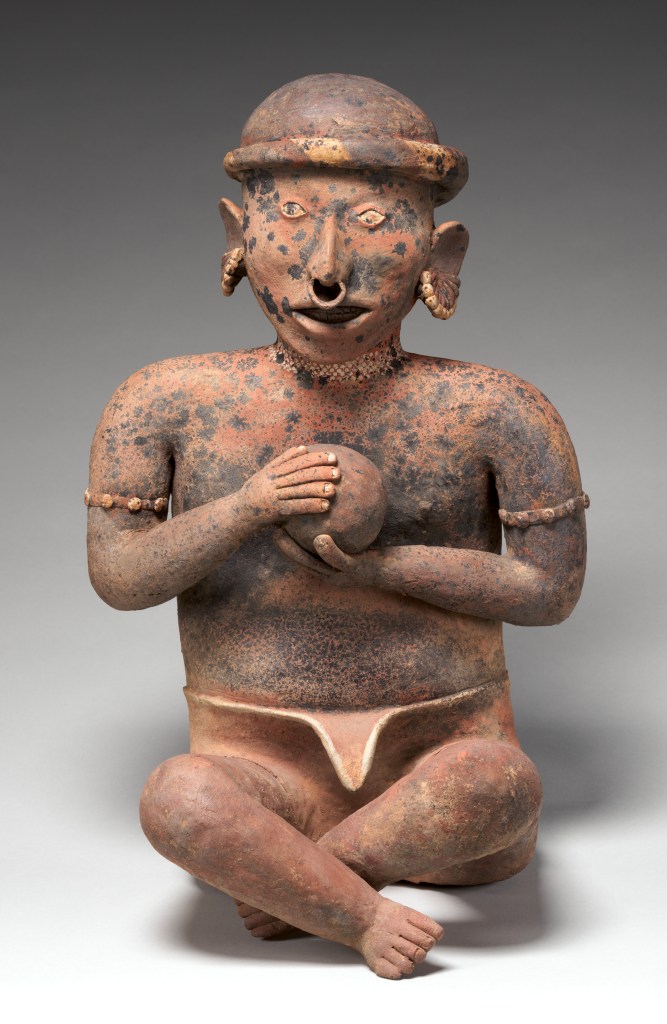
Hollow ceramic male figure seated with legs crossed, holding a solid rubber ball, a clear reference to the ritual ballgame (ōllamaliztli). His relaxed posture and carefully styled jewelry suggest ballplayers had real social weight, not just athletic skill. This wasn’t casual recreation; it was sport, ritual, and status all rolled into one.
The Metropolitan Museum of Art, Accession no. 2005.91.2.
- The Mesoamerican ballgame (ōllamaliztli) was the biggest spectator event of the era.
Played by adults (mostly men), sponsored by elites, and watched by crowds. - Chance-and-board games similar to later patolli existed. We can’t reconstruct exact rules, but gambling-style games using beans, stones, or seeds were popular social pastimes.
Music, Dance & Performance
These weren’t “shows” you bought tickets to, they were community events that blended celebration and belief.
- Public dances tied to festivals, rain ceremonies, harvests, and calendar dates.
- Live music using drums, flutes, rattles, shell trumpets, and whistles.
- Costumed performances reenacting myths, ancestors, or cosmic stories.
Political Theater (Power as Spectacle)
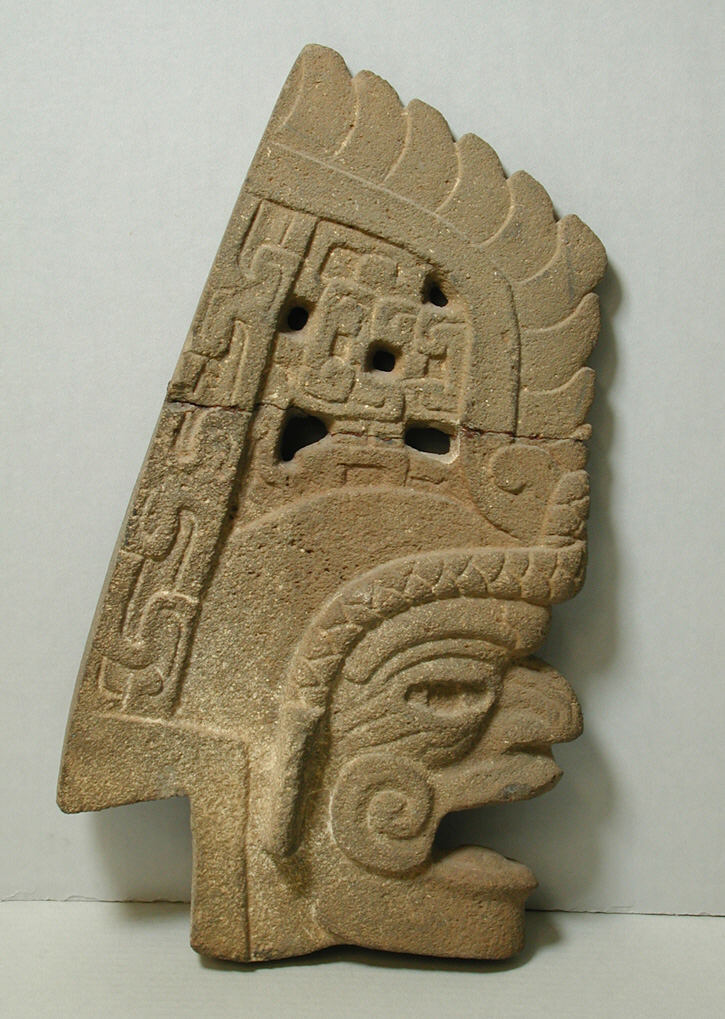
The Metropolitan Museum of Art, Accession no. 1979.206.31.
This is where leisure and politics fully overlap.
- Rulers staged public rituals on pyramids and plazas so everyone could see them, elevated, dressed as gods or ancestors.
- Bloodletting rituals performed by elites in public.
- War captives displayed or ritually sacrificed during major events.
- Processions, offerings, and ceremonies turned the city itself into a stage.
- Calendar timing mattered: political events were scheduled on auspicious days to show cosmic approval.
- Ballgames doubled as political theater: victories, rivalries, and diplomacy played out in front of spectators.
- Feasts followed performances, reinforcing loyalty through generosity.
Leisure for Children & Families
Children’s Games
- Running and chasing games (tag-like play).
- Simple ball play, not the full ritual ballgame.
- Clay figurines and dolls
- Songs, riddles, and storytelling, often led by elders.
Family & Community Time
- Market days: social hubs full of food, noise, music, gossip, and kids underfoot.
- Seasonal festivals: planting, rain, harvest, ancestor rites.
- Shared meals and feasts after major work efforts or ceremonies.
- Watching rituals together: children learned how the world worked by observing adults.
Culture, Language & Religion
How did people understand the world and their place in it?
Mexico in 600 AD wasn’t a single culture or story, it was a dense mosaic of peoples, languages, and traditions. From coastal communities and desert societies to highland cities and rainforest kingdoms, so many groups were living complex, meaningful lives all at the same time.
For this section, I’m spotlighting three major cultural groups, not because they were the only ones that mattered, but because they left the clearest archaeological footprints and had the widest historical influence during this period.
Plenty of other cultures were active at this time too, each with their own beliefs, art styles, and languages, but think of this as a wide-angle lens, not the whole map.
The Big Three Cultural Spheres
Classic Maya (Lowlands & Highlands)
Why they matter: intellectual depth, writing, timekeeping, cosmology
- Worldview & Religion
- Deeply polytheistic, with gods tied to maize, rain, death, fertility, and time
- The universe was layered: underworld, earthly plane, heavens
- Time was understood as repeating cycles rather than a straight timeline: days, seasons, and ritual calendars looped, and events gained meaning by where they fell in those cycles.
- Ritual life included offerings, bloodletting, feasting, dance, and the ballgame
- Moral order focused on balance, duty, and maintaining cosmic harmony
- Art & Aesthetic
- Highly detailed stone carving, stucco reliefs, murals
- Art showed rulers, gods, and ancestors to explain authority, lineage, and how the world was meant to work.
- Elegant, narrative-driven style
- Media: stone, painted plaster, ceramics, jade, shell
- Language & Writing
- Spoke multiple Mayan languages (Yukatek, Ch’olan, K’iche’, etc.)
- Fully developed writing system (logosyllabic glyphs… some symbols stood for whole words, while others represented sounds that could be combined to spell names and ideas)
- Literacy mostly limited to elites: scribes, priests, rulers
- Writing used for history, ritual, astronomy, and propaganda
Teotihuacán (Central Highlands)
Why it matters: urban scale, shared ideology, mysterious power
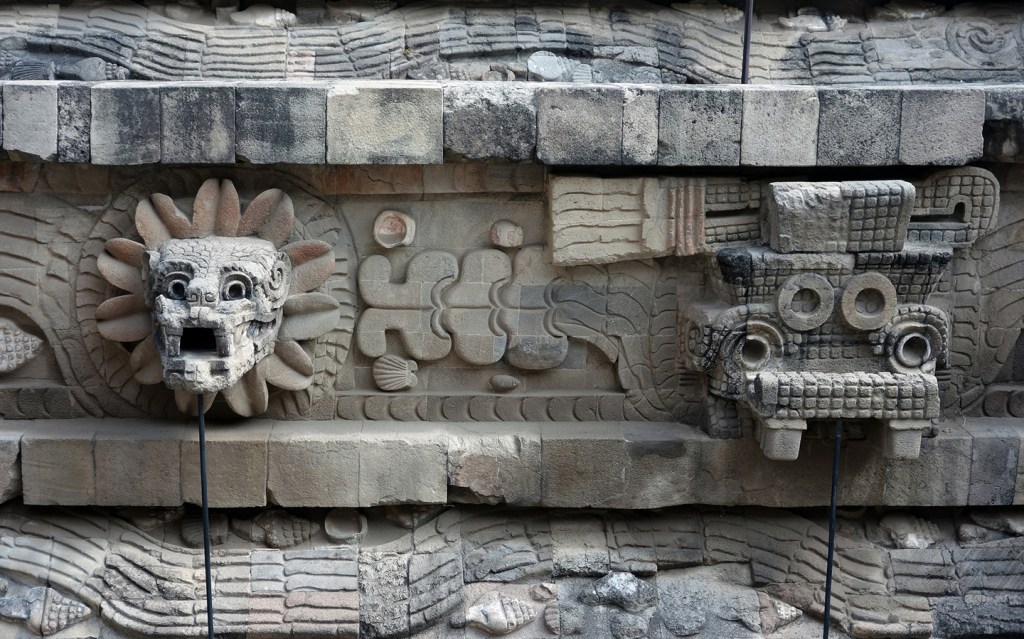
Stone relief showing the Feathered Serpent (left) and a storm-and-water deity (right) along the facade. The Feathered Serpent was associated with fertility, creation, agriculture, and the movement of life and water, while the goggle-eyed storm god represented rain, storms, and agricultural abundance. Together, they visualized the forces that sustained the city: water, growth, and cosmic order.
Teotihuacán, Mexico. Photo by Steven Zucker, CC BY-NC-SA 2.0.
- Worldview & Religion
- People didn’t see power as belonging to one famous ruler; it belonged to the city, its gods, and its collective rituals.
- Major gods linked to rain, water, fertility, fire, and warfare
- Rituals staged in massive plazas, religion was public and communal
- Human sacrifice at Teotihuacán was state-level and symbolic, not daily. Major architectural projects were often preceded by ritual killings, most famously at the Pyramid of the Feathered Serpent, where over 200 individuals were sacrificed and buried to sanctify the structure before construction began.
- Art & Aesthetic
- Bold, geometric, and symbolic
- Famous for murals, masks, standardized architectural forms
- Repeating imagery (feathered serpents, shells, fire symbols)
- Media: stone, mural painting, obsidian, ceramics
- Language & Writing
- Spoken languages are unknown (possibly early Nahuatl, Totonacan, or Mixe-Zoquean)
- No full writing system like the Maya
- Writing relied on iconography and visual symbols rather than texts
Zapotec (Oaxaca Valley)
Why they matter: early state formation, writing, continuity
- Worldview & Religion
- Polytheistic, with strong ancestor veneration
- Sacred kingship tied to lineage and place
- Ritual calendar shaped farming and governance
- Moral focus on duty to family, ancestors, and community
- Art & Aesthetic
- Known for stone carvings, especially carved monuments at Monte Albán
- Stylized human figures, captives, glyph-like signs
- Media: stone reliefs, ceramics, architecture
- Language & Writing
- Spoke Zapotec languages (still spoken today)
- Used an early writing system, mainly for names, places, and events
- Literacy restricted to elites and ritual specialists
Religion & Spiritual Life (Across Mexico)
Across regions, people shared some core ideas:
- Many gods, tied to natural forces and daily survival
- Ritual obligation: gods had to be fed, honored, remembered
- Taboos around ritual purity, timing, and sacred spaces
- No single holy book: belief lived in practice, not doctrine
- Moral life emphasized balance, respect, and fulfilling one’s role
Religion was not optional, it structured time, labor, politics, and identity.
Art as Meaning, Not Decoration
Art wasn’t just “pretty.” Every medium, mural, mask, figurine, carving — carried symbolic weight.:
- It made power visible
- It recorded history and myth
- It connected humans to gods and ancestors
Languages
- Mexico was linguistically diverse, not unified
- Major language families included:
- Mayan (south & southeast)
- Oto-Manguean (Zapotec, Mixtec regions)
- Possibly Mixe-Zoquean and early Nahuatl variants
- Most people were not literate
Music & Instruments
What did this world actually sound like?
Instruments You’d Actually Hear
Percussion (the backbone)
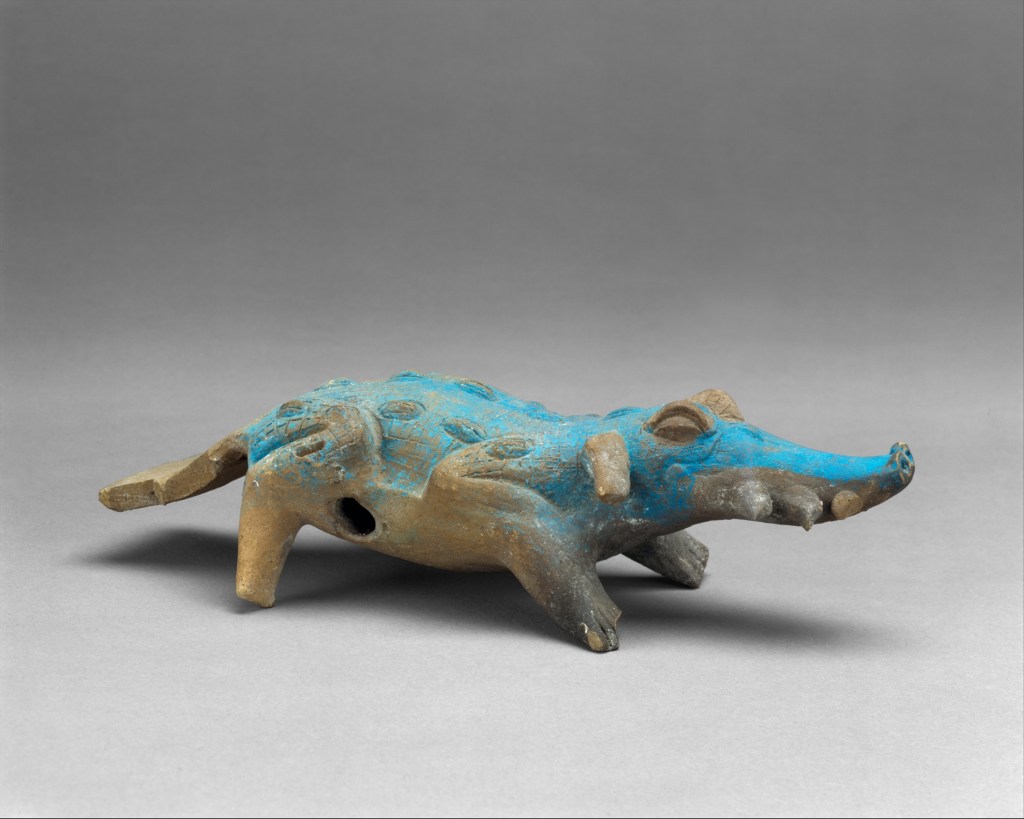
Covered in indigo Maya blue, this crocodile wasn’t just cute. Blow into it to whistle, shake it to rattle, and notice the raised bumps along its back, it’s likely reference cacao beans. Sound, symbolism, and wealth, all wrapped into one very overachieving instrument.
The Metropolitan Museum of Art, Accession no. 1979.206.
- Huehuetl: tall vertical wooden drum, played by hand
- Teponaztli: slit drum carved from a single log, struck with rubber-tipped mallets
- Rattles: made from gourds, clay, or turtle shells
- Foot bells: clay or metal, worn during dance
Wind Instruments
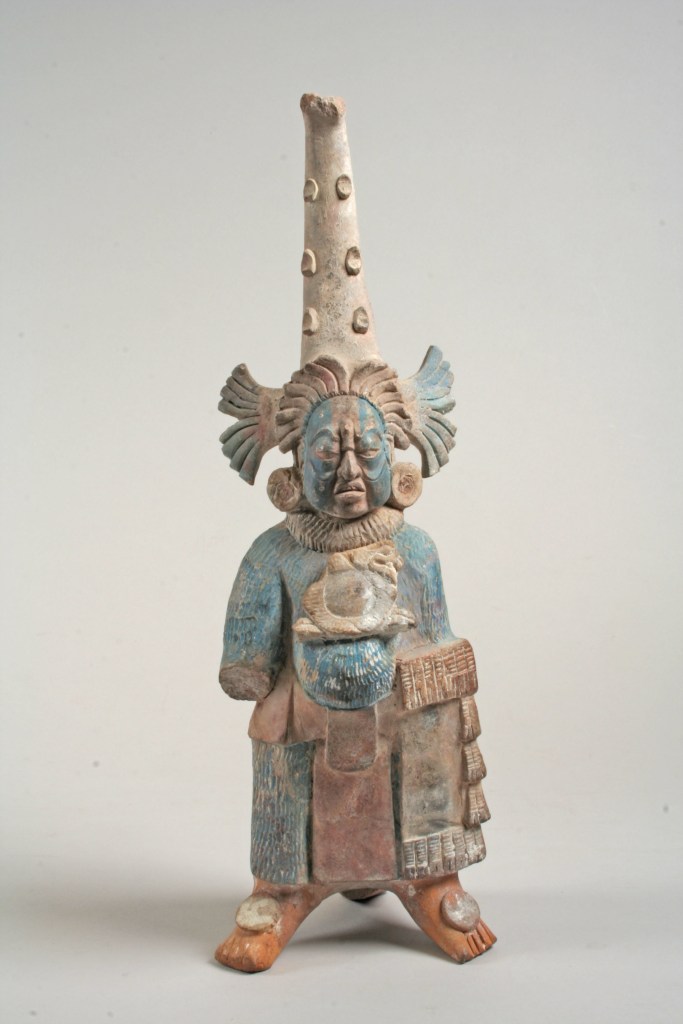
This blue-painted ceramic figure looks like he’s mid-complaint, mouth open, brow set, very “get off my lawn” energy. His armor-like bodysuit, shield, and heavy ornaments mark him as a warrior or elite type. He’s also a whistle, because apparently even sour puss warriors double as musical instruments.
The Metropolitan Museum of Art, Accession no. 1979.206.
- Clay flutes: often animal- or human-shaped
- Ocarinas: small vessel flutes with multiple holes
- Reed whistles: sharp, piercing sounds
- Shell trumpets (conch): loud, commanding, used for announcements and ritual moments
When & How Music Was Used
- Ritual & Religion
- Temple ceremonies, offerings, funerals, ancestor rites
- Music helped open ritual space and mark sacred time
- Certain sounds were believed to attract or communicate with gods
- Public Spectacle & Power
- Processions, dances, ballgame events, state rituals
- Music made authority loud and visible
- Drums and trumpets amplified political theater in plazas
- Daily & Communal Life
- Seasonal festivals tied to planting and harvest
- Work rhythms (especially group labor)
- Storytelling and oral tradition often blended with music
What Would a “600 AD Playlist” Sound Like Today?
Obviously we don’t have recordings, but some modern artists reconstruct Mesoamerican sound using traditional instruments, archaeology, and iconography.
- Xochipilli – “Teponaztli”
Reconstructed rhythms using slit drums and flutes inspired by Central Mexican traditions. - Jorge Reyes – “Ek Chuah”
One of the pioneers of Mesoamerican-inspired soundscapes using ancient instruments and modern recording. - Atrium Musicae de Madrid – “Música Precolombina”
Historically informed reconstructions based on archaeological instruments. - Carlos Nakai – “Sanctuary”
While pan-Indigenous and later in scope, Nakai’s breath-focused flute work captures the spiritual use of wind instruments common across ancient Mexico. - Xquiyehua – “Sonido Ancestral”
Modern Indigenous ensemble blending reconstructed instruments with ceremonial rhythm.
Media You Can Watch or Read Today
Continue your journey with these books and movies.
Adults
Movies
- Apocalypto (2006)
Language: Yucatec Maya (original); Subtitles: English
A high-intensity survival story set in the late Classic Maya world. It’s violent, stylized, and debated by scholars, but visually immersive in its depiction of ritual, hierarchy, fear, and power. Not a history lesson, but it feels like a world under pressure. - Kings of the Sun (1963)
Language: English (original); Dubbed: Spanish available
A very Hollywood take on a Maya migration story, but interesting as a mid-20th-century attempt to imagine pre-Hispanic politics and survival. Historically loose, culturally dated, still fascinating as pop history.
TV & Documentary Series
- Maya and Aztec: Ancient Civilizations (BBC / PBS)
Language: English (original); Subtitles/Dubbed: Spanish often available
Clear, well-researched documentaries that explain daily life, religion, warfare, and cities without dumbing things down. Very useful background watching. - Engineering an Empire: The Maya (History Channel)
Language: English (original); Subtitles: Spanish available
Focuses on infrastructure, cities, water control, and monumental architecture. Great for understanding how people actually lived inside these systems. - Secrets of the Maya (National Geographic)
Language: English (original); Subtitles/Dubbed: Spanish available
Leans into archaeology and new discoveries (tombs, glyphs, ritual spaces) and does a solid job separating myth from evidence. - El Mundo Perdido de los Mayas (INAH / Mexican documentaries)
Language: Spanish (original); Subtitles: English sometimes available
Mexican-produced documentaries that emphasize Indigenous perspectives and regional context. Less sensational, more grounded.
Books
- Popol Vuh (various editions)
Language: Originally K’iche’ Maya; Translated: English & Spanish available
The foundational Maya creation story. Gods, monsters, heroic twins, death trials. Essential for understanding Maya morality, cosmology, and symbolism. - The Maya – Michael D. Coe & Stephen Houston
Language: English (original); Translated: Spanish available
A classic overview that balances archaeology, history, and daily life. Dense but readable, and very solid for your time period. - 1491: New Revelations of the Americas Before Columbus – Charles C. Mann
Language: English (original); Translated: Spanish available
Big-picture, highly readable, and perfect for reframing how complex and interconnected the Americas were long before Europeans arrived. Not Mexico-only, but hugely helpful context. - Daily Life of the Maya – Nancy Gonlin
Language: English (original)
Exactly what it sounds like… food, homes, families, labor, religion. Scholarly, but very readable and grounded in real evidence. - Los Mayas – Román Piña Chan
Language: Spanish (original)
A Mexican scholarly classic that approaches Maya culture from within Mexican archaeology. Excellent if you want non-Anglo framing.
Kids
TV & Streaming Series
- Las Leyendas (Netflix)
Language: Spanish (original); Dubbed/Subtitled: English available
Ages: 8–12
This one’s a favorite for a reason. It mixes Mexican folklore, Indigenous monsters, and supernatural mystery with humor and heart. It’s spooky-but-not-scary, and while it’s not a history lesson, it constantly pulls from pre-Hispanic myth and worldview. Great for kids who like adventure but still need something age-appropriate. - Legend Quest: Masters of Myth (Netflix)
Language: Spanish (original); Dubbed/Subtitled: English available
Ages: 8–12
Think Percy Jackson, but rooted in Mexican mythology instead of Greek. Gods, underworld journeys, monsters, and jokes that actually land. It’s fast-paced and fun, and it sneaks in a surprising amount of Indigenous cosmology without feeling heavy. - Maya & Miguel (PBS Kids)
Language: English (original); Spanish episodes available
Ages: 6–10
Modern setting, but deeply grounded in Mexican culture and values. This is great for helping kids connect ancient traditions to living culture, family, food, celebrations, respect for elders. Very wholesome, very parent-approved. - Dora the Explorer (Nickelodeon / Paramount+)
Language: Bilingual English & Spanish; Dubbed/Subtitled: English and Spanish available
Ages: 3–7
Not historical, but incredibly important. Dora builds early comfort with Spanish, maps, journeys, landscapes, and problem-solving in a Latin American setting. For many kids, this is their first exposure to Mexican coded environments and language, which makes learning about ancient Mexico later feel familiar instead of foreign. - Go, Diego, Go! (Nickelodeon / Paramount+)
Language: English & Spanish; Dubbed/Subtitled: Spanish available
Ages: 4–8
A nature-focused companion to Dora that introduces animals, ecosystems, and conservation — many drawn from Mexico and Central America. Not ancient history, but great groundwork for understanding how people and land connect. - INAH Animated Shorts (Mexico’s National Institute of Anthropology & History)
Language: Spanish (original); Subtitles: English sometimes available
Ages: 7–12
Short, well-made animations explaining Maya life, calendars, gods, farming, and daily routines. These feel more educational, but they’re accurate and respectful, perfect when you want something trustworthy and bite-sized.
Books
- The Corn Grows Ripe – Dorothy Rhoads
Language: English (original); Spanish editions available
Ages: 8–12
A gentle story set in a Maya village, following a boy learning responsibility through farming and community life. This one is wonderful for showing kids how daily life, family, and food shaped childhood in the past. - Maize: A Mexican-American Story – Kenyon Adams
Language: English (original)
Ages: 6–10
A beautiful, accessible way to explain why corn matters so much in Mexico, culturally, historically, and spiritually. Great tie-in if you’re already talking about food or farming. - The Popol Vuh for Children (adapted editions)
Language: English & Spanish available
Ages: 9–13 (depending on edition)
Kid-friendly retellings of the Maya creation story, gods, heroic twins, underworld trials, and cosmic balance. Best for kids who already enjoy mythology, and ideal for reading together so you can pause and explain.
Conclusion
Would you thrive in 600 AD Mexico, or tap out the first time you had to grind maize before sunrise? No plumbing, no podcasts, but plenty of ritual, rhythm, and community. Tell me where you land in the comments or tag me on social.
 Time Traveling Table

Leave a comment