
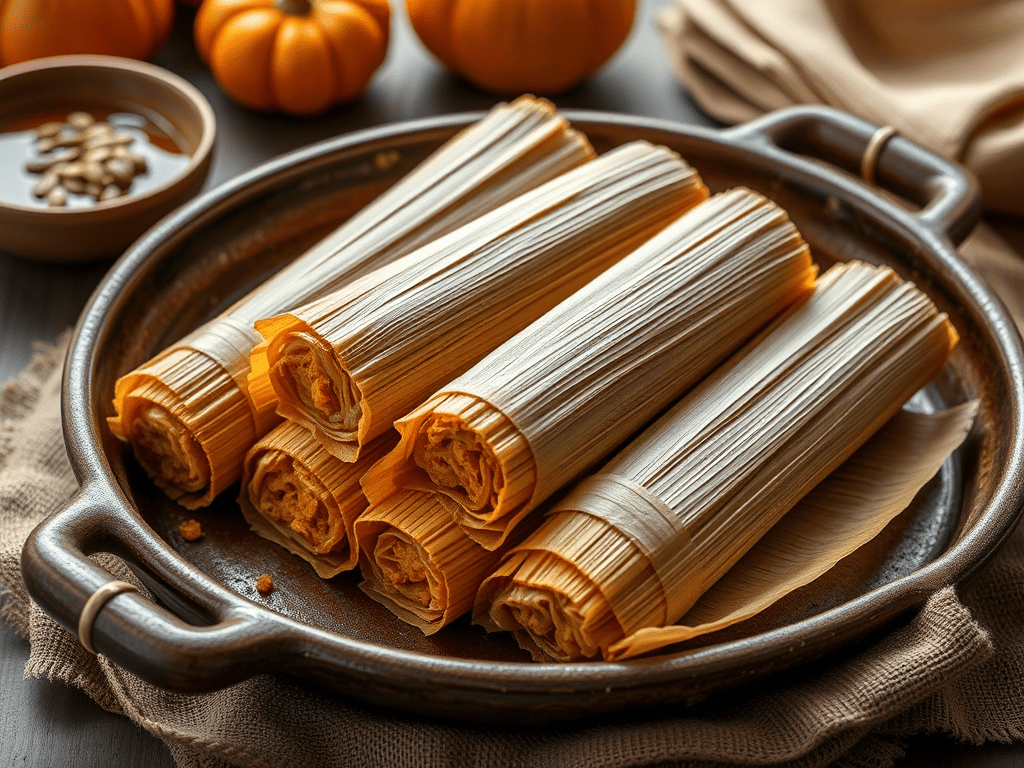
Tamales in central Mexico around 900 AD were not the overflowing, stuffed parcels we tend to imagine today. Most tamales at this time were simple masses of nixtamalized maize dough, steamed and eaten plain or lightly seasoned. They functioned less as a vehicle for fillings and more as a portable form of maize itself.
Filled tamales did exist, but they were far less common than modern versions and were typically reserved for special contexts, ritual days, honored guests, or moments when extra labor and rare ingredients could be justified. Adding a filling meant more time, more fuel, and more resources. Adding sweetness meant something else entirely.
Squash was one of the earliest domesticated crops in Mesoamerica and, alongside maize and beans, formed the foundation of daily eating. But the squash of 900 AD was not the sweet, dense pumpkin we know today. It was milder, more vegetal, often harvested young, and used primarily in savory preparations. To cook squash down, enrich it, and lightly sweeten it with honey, an ingredient that was rare and valuable, would have marked this dish as exceptional. Not everyday food. Not casual cooking. This was food that meant something.
That’s what makes these pumpkin–honey tamales so unusual, and so interesting. They sit at the intersection of necessity and ceremony: familiar ingredients, prepared in a way that signals occasion rather than routine.
Now, full honesty.
These were really good. My kids, however, were not impressed. They saw the canned pumpkin and immediately assumed pumpkin pie tamales, which these are very much not… though let’s be real, that idea does sound incredible and absolutely feels like a future post waiting to happen. These tamales are earthy, mostly savory, and only gently sweet. The sweetness shows up as a note, not a statement.
I loved them. Like, genuinely loved them. And I would happily make them exactly like this again.
Estimated Time:
- 1 hour 15 minutes (using canned pumpkin)
- 2½–3 hours (using fresh squash)
Serves: 8–10 tamales (as part of a shared meal)
Ingredients
Pumpkin Filling
- 360 g (1½ cups) pumpkin purée (see notes below for canned vs. fresh)
- 30–45 ml (2–3 tablespoons) honey
- Pinch of salt
- Optional: 15–30 g (1–2 tablespoons) finely ground pumpkin seeds (pepitas)
Masa (Corn Dough)
- 240 g (2 cups) masa harina (nixtamalized corn flour)
- 360–420 ml (1½–1¾ cups) warm water
- 3 g sal (½ teaspoon) salt
Wrapping & Steaming
- 10–12 dried corn husks, soaked in warm water until pliable
Instructions
1. Prepare the Pumpkin Filling
If using canned pumpkin:
Place the pumpkin purée in a small saucepan over low heat. Cook gently for 10–15 minutes, stirring often, until thickened and no longer watery or steamy.
Stir in the honey and a pinch of salt. Taste, the filling should be barely sweet, earthy first and sweet second. Add the optional ground pumpkin seeds if using, and cook 2–3 minutes more. Remove from heat and allow to cool completely.
If using fresh squash:
Peel, seed, and cube calabaza-style squash (see squash note below). Place in a pot with a small amount of water and simmer until fully soft, 25–35 minutes. Drain well, then mash until smooth.
Transfer the mashed squash to a saucepan and cook over low heat 15–20 minutes to remove excess moisture. Stir in honey, salt, and optional ground pumpkin seeds. Cool completely before assembling tamales.
2. Make the Masa Dough
In a bowl, combine masa harina and salt. Gradually add warm water, mixing with your hands, until a soft, pliable dough forms. The masa should be smooth and spreadable, not sticky or dry. Cover and rest 10–15 minutes.
3. Assemble the Tamales
Lay a soaked corn husk flat. Spread a thin layer of masa across the center, leaving space at the edges. Spoon a small amount of cooled pumpkin filling down the center. Fold the sides inward and then fold the bottom up.
Repeat until all tamales are assembled.
4. Steam
Arrange tamales upright in a steamer, open side up. Cover tightly and steam over a steady simmer for 60 minutes, checking water levels once halfway through.
Tamales are done when the masa firms up and pulls cleanly away from the husk.
Squash Note (Historical Context)
The squash available in central Mexico around 900 AD was not the same as modern pumpkin or winter squash varieties. Indigenous squash was generally:
- Less sweet
- More watery
- Often harvested young
Modern pumpkin purée is sweeter and denser, which is why this recipe uses very restrained honey and requires cooking the filling down. Zucchini or calabacita would have been more typical for daily meals, while denser squash preparations like this would have been reserved for special occasions.
This recipe reflects the idea of a ceremonial squash tamal, not an exact botanical replica.
 Time Traveling Table
Leave a comment