
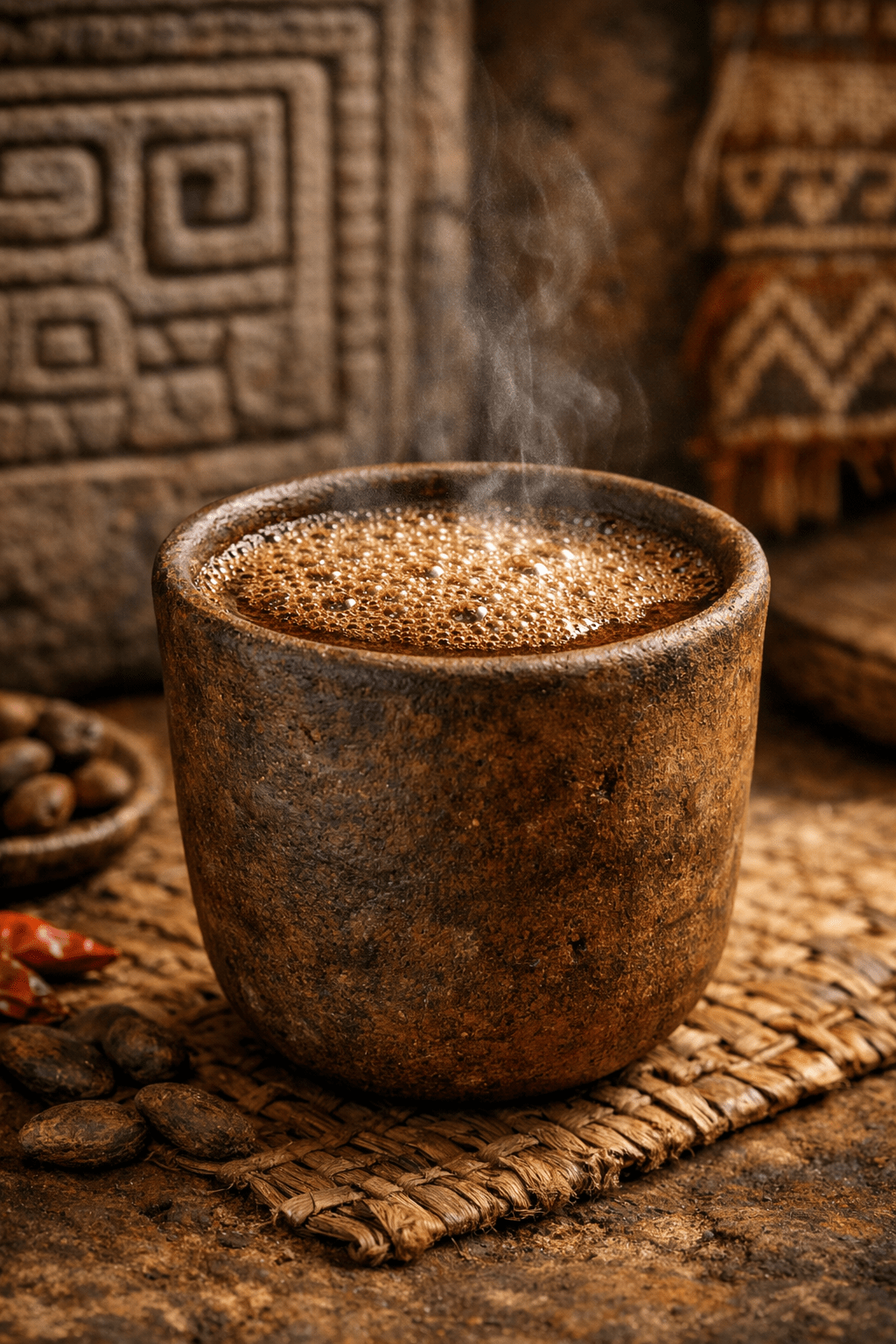
Before hot chocolate meant sugar, milk, and marshmallows, cacao was something entirely different. In Mesoamerica, cacao wasn’t a dessert or a treat, it was a drink tied to ritual, trade, status, and daily life. By around 1700 BC, people in what is now Mexico were cultivating cacao, fermenting and grinding the beans, and turning them into a warm, bitter, lightly spiced beverage that was meant to be experienced, not gulped. It showed up in ceremonies, marked important moments, and even functioned as currency in some regions.
When I made this version at home, I wasn’t expecting to love it as much as I did. But honestly? I think I prefer this to standard hot chocolate. It’s legit so good. If you’re into dark chocolate, the real kind, not the sugar-forward stuff, you may have just found your new cozy winter beverage. It’s warm, earthy, a little bitter, and incredibly comforting in a way that feels… grounded. Like your nervous system just exhaled.
My kids, on the other hand, had a very different experience. They were thrilled at first (“Hot chocolate! Yay!”). They smelled it. Still excited. Then came the first sip… and immediate, dramatic BLAH. Which honestly tracks. This isn’t a kid’s drink by modern standards, and it wasn’t meant to be. It’s not trying to be dessert, it’s trying to be cacao.
And once you stop expecting marshmallows? It’s kind of magical.
Ingredients
- 4 cups water
- 2 tablespoons unsweetened cacao powder
- 1 tablespoon masa harina
- 1–2 teaspoons honey (optional and very restrained)
- Tiny pinch chiltepín or chile piquín (optional)(These are what are historically used; if you can’t fidn them, use a very small pinch of whatever dried chile you have.)
Method
Heat the water until steaming, but do not boil (see note below). While the water heats, whisk the cacao powder and masa harina together with a small splash of the warm water until smooth. This helps prevent lumps.
Slowly whisk the cacao–masa mixture into the remaining warm water. Keep the heat low and stir until the drink is fully combined and lightly thickened. If using honey, add it sparingly and taste, this drink should be barely sweet, if at all.
Remove from heat and froth by whisking vigorously or pouring the drink back and forth between two cups until a light foam forms on top. Serve immediately.
Kid tip:
Pour cups for kids first without chile, then add a small pinch of chile to the pot for adults.
Why Cacao Drinks Shouldn’t Be Boiled
Boiling cacao is one of the fastest ways to ruin it, and historically, it wasn’t done.
1. Boiling makes cacao bitter and flat
Cacao isn’t the same as modern cocoa powder. When boiled, its delicate aromatic compounds are driven off, bitterness becomes harsher, and the floral, nutty notes prized in Mesoamerican cacao drinks disappear. Traditionally, cacao was heated gently, never boiled, and then aerated for flavor and texture.
2. Boiling destroys the foam
Foam was the point. High heat breaks down the fats and proteins that hold bubbles together, leaving you with a muddy, flat drink instead of a light froth. That’s why traditional preparation emphasizes pouring between vessels, not boiling.
3. Masa needs gentle heat
Masa harina acts as a thickener. With gentle heat, it creates a smooth, lightly bodied drink. Boiling causes clumping, chalkiness, or a gluey texture. Think silky atole, not paste.
4. This is historically accurate
Archaeological and ethnohistoric sources consistently describe cacao as:
- Warmed
- Frothed
- Poured
- Never boiled
Boiling cacao is a post-contact habit tied to sugar-heavy European-style hot chocolate.
 Time Traveling Table
Leave a comment