
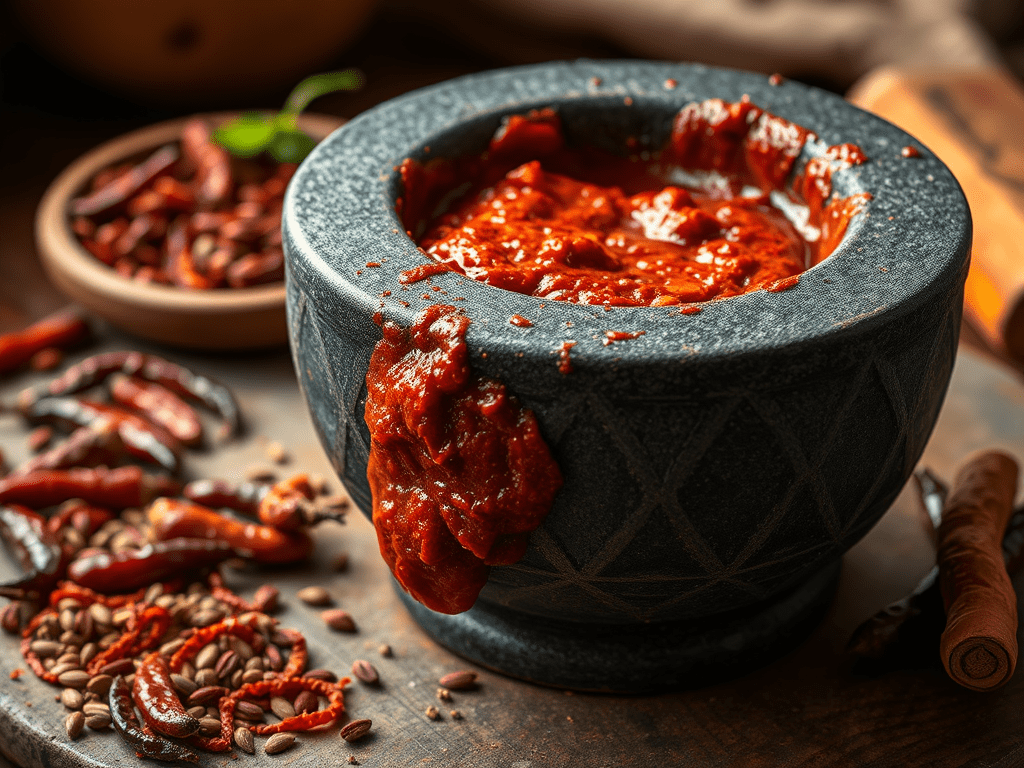
Chile sauces like this one were not optional condiments in pre-Hispanic Mexico. They were foundational. Long before oil, dairy, or animal fats were part of everyday cooking, chiles provided heat, flavor, and nourishment. When combined with seeds like amaranth, these sauces gained body and protein, helping stretch meals built around maize and beans into something filling and sustaining. This kind of sauce would have appeared at countless midday meals, shared from a common bowl and eaten with tortillas, binding the meal together rather than sitting on the side.
What gives this sauce its cultural weight is not just the ingredients, but the labor behind it. Grinding chiles and seeds by hand on stone was part of daily life. This work happened alongside the far more time-consuming task of grinding maize, which could take hours every single day. There were no shortcuts, no tools to speed things up, and no expectation that cooking should be fast. The effort itself was woven into the rhythm of the household.
Making this sauce gave me a deep appreciation for that reality. I received a molcajete for Christmas and decided to grind the chiles by hand. It took far more effort than I expected. Breaking down the dried chile walls was genuinely difficult, and I would estimate it took me about ten to fifteen minutes to get them fully ground. I had the strong sense that people from this time would have found that amusing. Compared to the hours they spent grinding maize each day, my effort was nothing. I can almost imagine them laughing from the past and saying, “Oh honey, if you only knew.”
The result, however, was completely worth it. I used ancho chiles, which are not spicy but have a deep, smoky richness that elevated the entire meal. I will absolutely be making this again, but next time I will do so with more patience and a lot more respect for the labor this kind of food once required.
Time Required
Prep time is about 10 minutes.
Cooking time is about 20 minutes.
Total time is approximately 30 minutes.
Yield
Serves 4 to 6 people.
Makes about 350 ml (about 1½ cups) of sauce.
This sauce is meant to be shared, not portioned individually.
Ingredients
3 dried chiles, ancho or pasilla work well
30 g amaranth seeds (about 2 tablespoons)
350 to 475 ml warm water (1½ to 2 cups)
A pinch of salt, optional for modern kitchens
Instructions
Heat a dry skillet over medium heat. Toast the dried chiles briefly, about ten to fifteen seconds per side, just until fragrant. Do not let them blacken. Remove the stems and most of the seeds.
Place the toasted chiles in a bowl and cover them with warm water. Let them soak for ten to fifteen minutes until fully softened.
In the same dry skillet, toast the amaranth seeds over medium low heat, stirring constantly, until they become aromatic and begin to lightly pop. This should take about two to three minutes. Remove from heat and allow them to cool slightly.
Combine the softened chiles, toasted amaranth seeds, and about half a cup of the soaking liquid in a blender or grinding bowl. Blend or grind until smooth but still slightly textured. Add more soaking liquid as needed to reach a thick, spoonable consistency.
Transfer the sauce to a small saucepan and warm it gently over low heat for five to ten minutes, stirring occasionally. Thin with a little water if needed. Add salt only if using.
Texture and Flavor
The finished sauce should be thick but pourable and able to cling to tortillas. The flavor is deeply chile forward, earthy, and subtly nutty. The surface should look matte rather than glossy.
How to Serve
Serve warm in a shared bowl alongside fresh maize tortillas, boiled beans, and roasted sweet potatoes. Use tortillas to scoop or drag through the sauce.
 Time Traveling Table
Leave a comment