
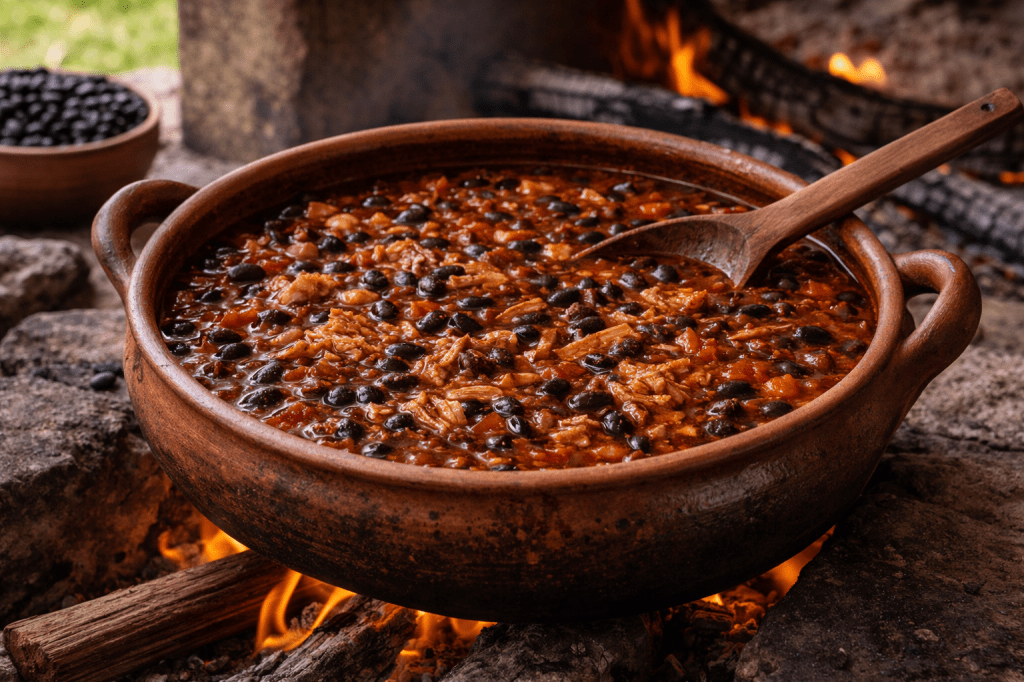
Step into a kitchen in central Mexico around 1700. A pot like this would’ve been simmering low and slow for hours, filling the air with the smell of chiles, garlic, and something that, not too long before this, didn’t even exist here… pork.
Beans had been a staple in Mexico for thousands of years. They were part of the milpa system, eaten daily, dependable, filling, and deeply rooted in Indigenous foodways. But pork? That came with the Spanish. And by 1700, it had fully worked its way into the rhythm of everyday cooking, especially in stews like this where a little meat could stretch a long way.
That’s really what this dish represents. It’s not fancy. It’s not trying to impress anyone. It’s practical, filling, and built for real life. You take what you have… beans, chiles, tomatoes, a bit of meat… and let time do the work.
And honestly? It still hits.
I’ve gotta say, the flavor of this was so good. Like, deeply satisfying in that way where you don’t need anything complicated. I served it over an early-style Spanish rice with some squash on the side and… wow. A+ meal.
What really surprised me though was the cost. After buying everything, I was kind of blown away at how cheap this was to make. You get a ton of food out of it, and it actually feels like a full, hearty meal.
Which, when you think about it, is exactly the point. This is the kind of food that feeds a household. Simple ingredients, big return, and something you’d absolutely come back to again and again.
Modern Note
I made this in a crockpot because… life.
Was that a thing in 1700? No.
Was slow cooking a pot of beans and meat all day? Absolutely.
So while the tool is modern, the method is the same. Low, slow, and letting time do the work.
Servings: 4–5 people
Total Time: ~9–10 hours (including soak + slow cook)
Ingredients
- 225 g dry black beans (½ lb / ~1 cup)
- 450 g pork loin, cut into 3–5 cm chunks (1 lb / 1½–2 inch pieces)
- 3–4 medium tomatoes
- 2 dried chiles (guajillo or ancho)
- ½ white onion
- 3 cloves garlic
- 1–2 sprigs epazote (optional but recommended)
- 5–7 g salt (1–1½ teaspoons, adjust to taste)
- 950–1200 ml water (4–5 cups)
- 15 g lard (1 tablespoon, optional but recommended)
Directions
1. Quick soak the beans
Rinse the beans and place in a pot. Cover with water.
Bring to a boil for 2–3 minutes, then turn off heat, cover, and let sit for 1 hour.
Drain and set aside.
2. Roast the flavor base
On a dry pan or comal, roast:
- tomatoes
- dried chiles (lightly toast, do not burn)
- onion
- garlic
Cook until:
- tomatoes are soft and blistered
- onion and garlic are lightly charred
- chiles are fragrant
3. Make the sauce
Blend or grind everything into a rough sauce.
It doesn’t need to be perfectly smooth, rustic is good here.
4. Load the crockpot
Add to the crockpot:
- drained beans
- pork
- roasted sauce
- water
- epazote
- small pinch of salt
- lard (if using)
Stir lightly.
👉 The pot should be about ½ to ⅔ full.
5. Cook
Cook on LOW for 8–9 hours.
6. Final adjust
Toward the end of cooking:
- stir well
- taste and add remaining salt as needed
If needed:
- add a little water if too thick
- mash a few beans to thicken if too thin
7. Serve
Serve hot with:
- warm corn tortillas
- roasted squash
- chile-tomatillo salsa
Tortillas = your utensil.
Notes
- Pork will naturally break down into a more shredded texture as it cooks
- Epazote adds a traditional herbal flavor and helps with digestion, but can be skipped
- This stew thickens as it sits, add water when reheating if needed
- Flavor gets even better the next day
 Time Traveling Table
Leave a comment