
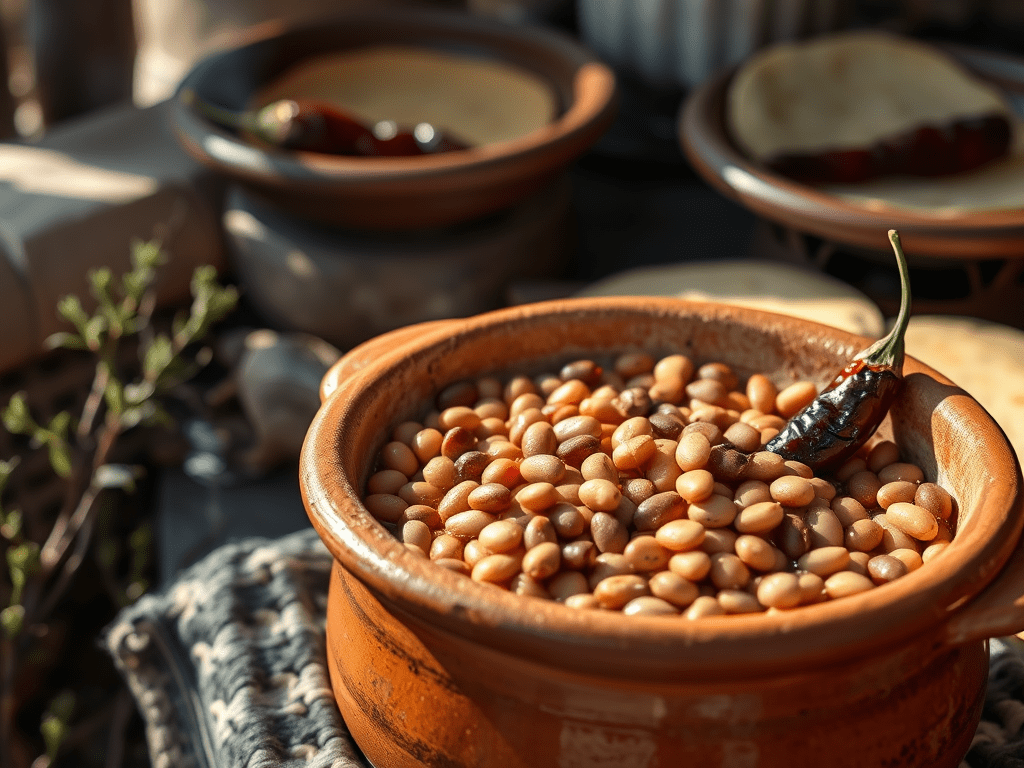
Beans weren’t a side dish in central Mexico before European contact, they were the backbone of daily life. Along with maize and squash, beans formed one of the three pillars of the Mesoamerican diet, providing protein, calories, and long-lasting energy for people whose days were built around physical labor. A pot of beans on the hearth wasn’t optional; it was essential. These were the foods that fed families, fueled farmers, and showed up at nearly every shared meal.
What’s fascinating is how little was needed to make them good. No long spice lists. No layers of aromatics. Just time, water, salt, and one very intentional herb: epazote. This was knowledge earned through generations of cooking the same foods, every day, for centuries.
I’ve made this recipe with both black beans and pinto beans, and honestly? They’re both excellent. I personally lean toward pintos, but that’s mostly because I firmly believe pinto beans are the superior bean of all beans, and you can fight me if you disagree. Before diving into this Mexican food adventure, my usual bean spice blend was cumin, coriander, garlic, onions, and a pinch turmeric. Epazote wasn’t even on my radar. I’d never cooked with it and hadn’t even heard of it.
Now? I get it.
Epazote has a bold, herbal flavor that’s hard to compare to anything else, and it does something really important: it makes beans easier to digest. Historically, epazote was added not just for flavor, but because it helps soothe the gut lining and reduce the whole bean induced flatulence situation. When beans are a daily food, not a once-a-week side, that matters. A lot.
These beans are simple and shockingly good. If you’ve ever thought beans were boring, this recipe might change your mind.
Estimated Time:
- 35–40 minutes (using cooked beans)
- 2–3 hours total (using dried beans, including simmering)
Serves: 6 (as part of a shared meal)
Ingredients
- 3 cans cooked beans (pinto, black or honestly whatever, 15–16 oz each), drained and rinsed
OR - 1½ cups dried beans, cooked until tender (see below for more info)
- 1–1½ cups water
- Salt, to taste
- ½–1 teaspoon dried epazote (or 1-2 fresh sprigs)
- Optional: 1 whole dried ancho chile, lightly toasted (other chili options could be guajillo, padilla, mulato)
Instructions
Place the beans and water in a pot with enough liquid to gently stew rather than boil. Stir in the dried epazote. Bring the pot to a gentle simmer and cook uncovered for 25–30 minutes, stirring occasionally.
As the beans soften, mash roughly one quarter of them against the side of the pot to naturally thicken the stew. Add salt during the final 5–10 minutes of cooking, adjusting carefully.
If using the optional ancho chile, toast it briefly in a dry pan until fragrant, then add it whole to the pot during the last 10–15 minutes of simmering. The chile may be removed before serving or left in the pot, both of which are fine.
Serve warm, traditionally alongside tortillas, with beans eaten by hand using the tortillas as scoops.
Cooking from Dried Beans (If You’ve Never Done This Before)
If you’re starting with dried beans, they need to be cooked before using the recipe above. This process takes time, but it’s simple and mostly hands-off.
Begin by placing 1½ cups dried beans in a large bowl. Pick through them to remove any small stones or damaged beans. Cover the beans with plenty of water, at least 3 to 4 inches of water above the beans. The beans will absorb water and expand as they soak, so extra water is important. Let the beans soak overnight, or for at least 8 hours.
After soaking, the beans will be noticeably larger. You can drain them, but you don’t have to. If you want the fullest bean flavor, you may use the soaking water to cook the beans as well. (If the water looks cloudy, that’s normal.)
Transfer the soaked beans and their soaking water (or fresh water if you prefer) to a pot. Make sure the beans are still fully covered with liquid by a few inches. Bring the pot to a gentle simmer, not a rolling boil, and cook until the beans are completely tender. This usually takes 1½ to 2½ hours, depending on the age and type of bean.
Once the beans are soft all the way through, they’re ready to be used in the recipe above. Salt should be added after the beans have softened, not at the beginning.
 Time Traveling Table
Leave a comment