
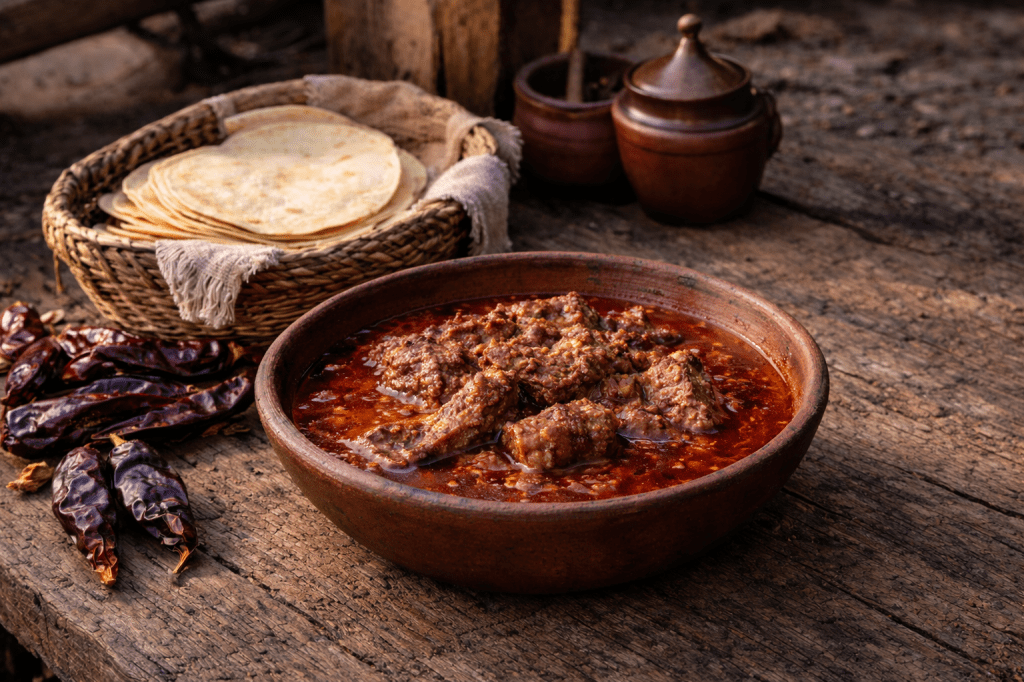
Step into western Mexico around 1810, and to a birria that is not a trendy dish. It is a practical, regional solution shaped by land, labor, and livestock.
Western Mexico, especially areas like Jalisco, was prime grazing country. Spanish-introduced animals like goats and sheep thrived in dry, rugged terrain where crop farming could be unreliable. Goats became common not because they were prized, but because they were abundant, hardy, and sometimes tough or gamey. Birria developed as a way to turn that kind of meat into something tender and deeply flavorful through slow cooking, chiles, and time.
This is where the dish really matters historically. Birria was about resourcefulness. Tough cuts became edible and rich. Dried chiles, which stored well and carried concentrated flavor, formed the base of the broth. Meals like this were cooked low and slow for hours, often feeding families or groups without waste.
What you get is something grounded in everyday life. No excess. No performance. Just meat, chiles, water, and patience turning into something far greater than it should be.
And honestly, making this kind of dish at home hits that same feeling.
I ended up using sheep instead of goat because it was more accessible where I live this time of year. This was also my first time cooking sheep. The result was solid okay. The broth, though, was incredible, and that alone made it worth it.
What I keep coming back to with this project is how much I enjoy stepping outside my normal routine and trying to feel what cooking in another time and place might have been like. One thing that has surprised me every time is how much I love chiles.
I had never really cooked with dried chiles before this, but they completely change the game. The depth, the warmth, and the way they build flavor instead of just heat is something else. And ancho chiles are honestly flavor perfection.
This is the kind of dish that makes you slow down, pay attention, and appreciate how much people were able to do with very simple ingredients.
Servings: 5
Prep Time: 20 minutes
Cook Time: 5–6 hours
Total Time: ~6 hours
Ingredients
A Quick Note on the Ingredients: If there’s an ingredient below that doesn’t appeal to you or isn’t available at your store, don’t stress, just skip it, find a similar substitute, or let this recipe inspire you to add your own twist. Back in this time period, recipes didn’t exist in the structured way we know them today. People used whatever they had on hand, and measurements were more of a “feel it out” situation. So embrace the spirit of the age and make it yours!
- 1.8–2.3 kg bone-in goat (4–5 lbs; shoulder, ribs, or mixed cuts)
- Water (enough to cover)
- 4–5 dried guajillo chiles
- 2–3 dried ancho chiles
- 4–5 cloves garlic
- 50–75 g onion (¼–½ cup, optional)
- 1 small stick cinnamon (canela)
- 2–3 whole cloves
- 15–30 ml vinegar (1–2 tablespoons)
- Salt (to taste)
Instructions
1. Prep the Chiles
Remove stems and seeds from the chiles.
Lightly toast on a dry pan or comal until fragrant, not burnt.
Soak in hot water for 10–15 minutes.
2. Make the Sauce
Grind the soaked chiles with garlic, cinnamon, cloves, onion (if using), and a small amount of the soaking liquid until combined.
You can blend until smooth or leave slightly textured for a more traditional consistency.
3. Start the Stew
Place the goat in a large pot.
Pour the chile sauce over the meat.
Add enough water to fully cover.
Add vinegar and salt.
Bring to a simmer, then reduce heat to low.
4. Slow Cook
Simmer gently for 5–6 hours.
Stir occasionally and add water as needed to keep the meat covered.
The stew is ready when the meat is tender and pulls apart easily, the broth is a deep red, and the chile flavor has fully mellowed.
5. Final Adjustments
During the last hour of cooking, taste and adjust salt.
Add a small splash of vinegar if needed to brighten the flavor.
Skim off any excess fat from the surface.
 Time Traveling Table
Leave a comment