
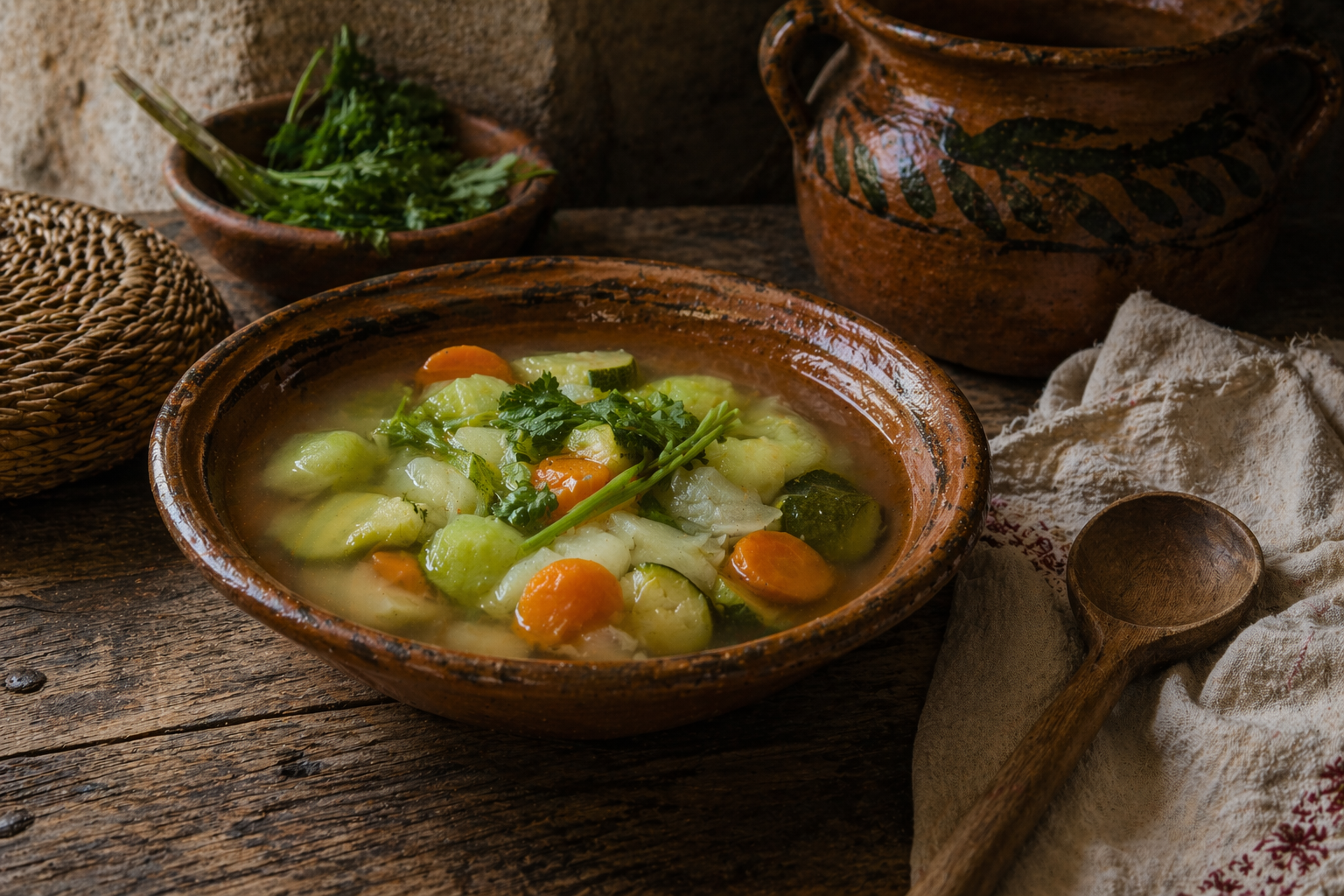
This is the kind of dish that does not look impressive on paper. Just vegetables, water, salt, and a few herbs. It reads like something you make because you have to, not because you want to.
And then you taste it.
I was fully expecting this to be fine. Maybe a little bland, maybe something you eat alongside other things and forget about. It was not that. It was so fresh, so clean, and somehow way more satisfying than it had any right to be. I ate a bowl, then another, and the next day I went back for leftovers and it still hit. This is the kind of food that quietly proves you wrong.
In 1857 Mexico, this kind of soup made a lot of sense. Most people were not eating heavy, complicated meals all day. Meals were built around what was available, what was affordable, and what could stretch. A simple caldo like this checked all those boxes. It used vegetables that were easy to grow or buy locally, required very little fuel to cook, and created something warm, filling, and nourishing without needing meat.
This was not a “main dish” in the way we think of it now. It showed up at the table as part of the meal. Something to start with or sip alongside tortillas, beans, or whatever else was being served. It helped round things out, added hydration, and made the whole meal feel more complete.
It also reflects something important about the time. Flavor did not always come from heavy seasoning. It came from the ingredients themselves and how they were handled. Gentle simmering, simple combinations, letting things taste like themselves. That is exactly what is happening here.
I will absolutely be making this again. Not because it is historical, but because it is genuinely good.

Caldo de Verduras (1857 Style Vegetable Broth)
Servings: 6
Estimated Time: ~45 minutes total
- Prep: 10–15 minutes
- Cook: 30 minutes
Ingredients
A Quick Note on the Ingredients: If there’s an ingredient below that doesn’t appeal to you or isn’t available at your store, don’t stress, just skip it, find a similar substitute, or let this recipe inspire you to add your own twist. Back in this time period, recipes didn’t exist in the structured way we know them today. People used whatever they had on hand, and measurements were more of a “feel it out” situation. So embrace the spirit of the age and make it yours!
- 2 liters water (8 cups)
- 1 medium chayote, peeled and chopped
- 2 medium carrots, sliced
- 150–225 g calabaza or zucchini, chopped (1–1½ cups)
- 1/4 white onion (left in a chunk)
- 1–2 cloves garlic
- Small handful fresh herbs (cilantro stems or epazote)
- Salt to taste
Instructions
1. Build the broth
In a large pot, add the water, onion, and garlic.
Bring to a gentle boil. You are building a light base, not a heavy stock.
2. Add vegetables in order
Add the vegetables in stages so everything cooks evenly:
- Carrots first → cook about 5 minutes
- Chayote → cook about 10 minutes
- Calabaza or zucchini → cook 5–7 minutes
Keep the pot at a gentle simmer. Avoid aggressive boiling so the broth stays clear and the vegetables hold their shape.
3. Add herbs and salt
Add your herbs during the last 5 minutes of cooking.
Season with salt to taste. Start light and adjust.
4. Finish
Remove the onion chunk if you prefer a cleaner broth.
Everything else stays in the pot.
What It Should Be
- Light, clear broth
- Vegetables tender but not falling apart
- Mild, clean flavor
This is not heavily seasoned. It is meant to open the meal, not dominate it.
Optional (Still Historically Grounded)
- Add a small piece of corn (cut from the cob) for a slightly heartier version
- Add a splash of bean broth for more depth
Keep it simple. That is the point.
Leave a Reply