
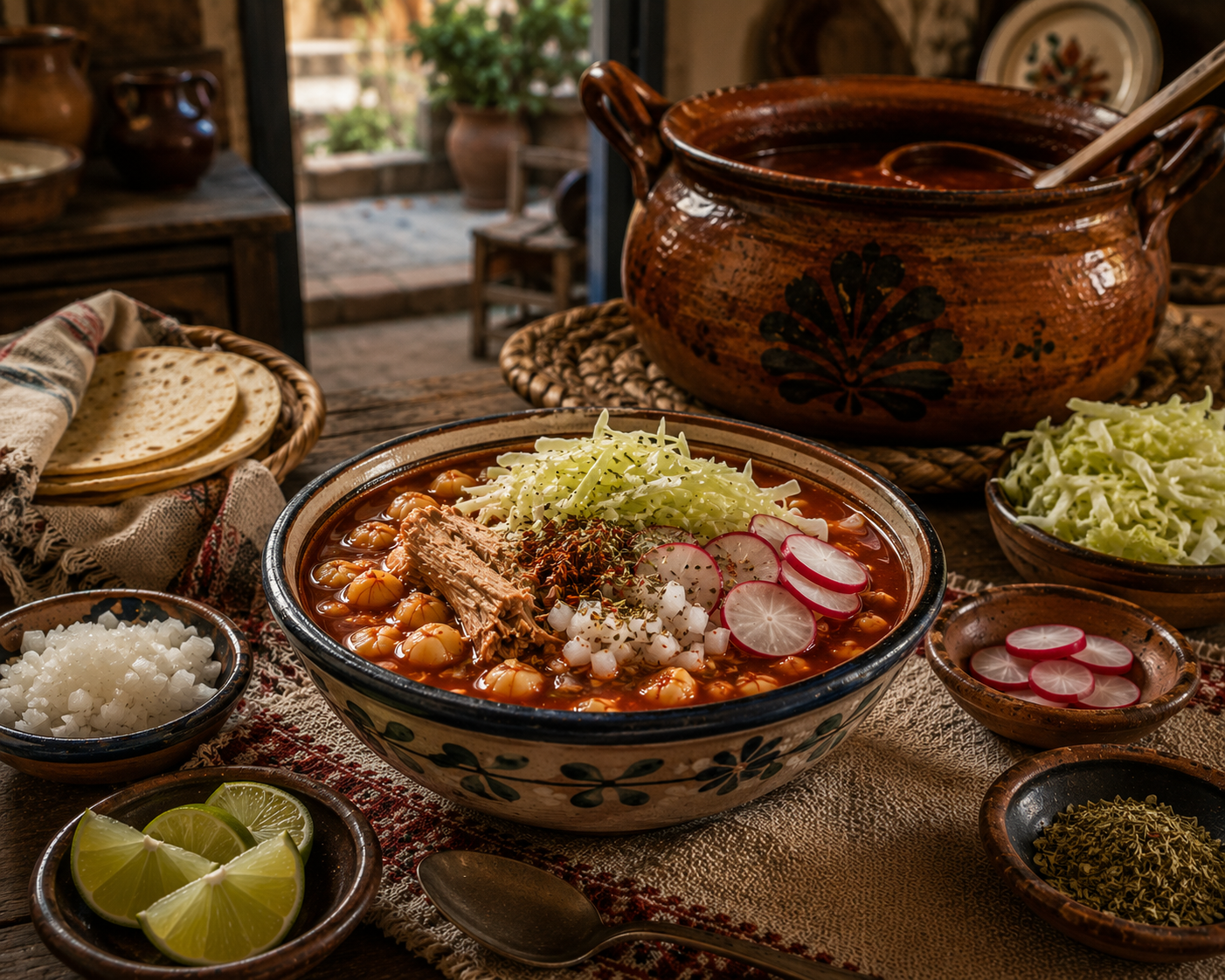
Some dishes make it immediately obvious why they endured for generations, and pozole is absolutely one of them. Yes, it takes time. A lot of time. But in 1876 Mexico, that was often simply the rhythm of domestic life. Kitchens were rarely idle spaces. Broths simmered, maize softened, beans cooked, tortillas were prepared, and food was built gradually throughout the day rather than rushed into modern convenience. For many households, especially those feeding large families, cooking was not a single event. It was an ongoing labor woven into the structure of everyday survival.
And honestly, it is hard not to come away from that reality with a deep sense of admiration for the women who carried so much of that burden. Managing long-cooking meals, tending fires, raising children, maintaining households, and sustaining entire families required extraordinary endurance, skill, and discipline. It is one of those culinary experiences that leaves you both grateful for modern efficiency and deeply fascinated by the resilience of the past.
Pozole rojo itself was already profoundly rooted in Mexican food history long before 1876, with origins tracing back to pre-Columbian maize traditions. By the late 19th century, it had evolved into a deeply communal meal that blended Indigenous culinary foundations with colonial-era ingredients like pork. The result was something practical yet celebratory. A dish centered on maize, enriched by chile, and stretched thoughtfully to nourish many.
And the flavor absolutely justifies the effort. Fresh, it is rich, warming, and deeply satisfying. But like many slow-built historical foods, it becomes even better the next day, once the broth has had more time to deepen and settle. Pozole is not fast food, and it was never meant to be. It is food shaped by patience, continuity, and the kind of kitchen wisdom that understood some things are worth waiting for.

Prep Time: 30 minutes (plus overnight soak if using dried maize)
Cook Time: 4–6 hours
Total Time: 4.5–6.5 hours
Servings: 6–8
Ingredients
- 900 g pork shoulder, pork shank, or mixed bone-in pork cuts (2 lbs)
- 450 g dried pozole corn / cacahuazintle (1 lb), or canned hominy for modern adaptation
- 1 large white onion, divided
- 8 garlic cloves, divided
- Salt to taste
- 4 dried guajillo chiles
- 2 dried ancho chiles
- Water for soaking chiles
- Shredded cabbage or lettuce for garnish
- Sliced radishes for garnish
- Chopped white onion for garnish
- Lime wedges for garnish
- Dried oregano for garnish
- Ground chile for garnish
- Fresh corn tortillas for serving
Instructions
- Prepare the hominy
- If using dried pozole corn, soak overnight.
- Cook in fresh water for several hours until kernels bloom and soften.
- If using canned hominy, drain and rinse thoroughly.
- Cook the meat
- In a large pot, combine pork, half the onion, 6 garlic cloves, and salt.
- Cover with water.
- Simmer over medium-low heat for 2–3 hours until meat is tender.
- Skim foam as needed.
- Remove meat, shred, and reserve broth.
- Prepare the red chile sauce
- Lightly toast guajillo and ancho chiles.
- Remove stems and seeds.
- Soak in hot water for 15–20 minutes.
- Blend softened chiles with remaining onion, garlic, salt, and a bit of soaking liquid until smooth.
- Build the pozole
- Strain chile sauce into the reserved broth.
- Add prepared hominy.
- Return shredded meat to the pot.
- Simmer for 45–60 minutes to develop flavor.
- Serve
- Ladle into bowls.
- Top with cabbage, radish, onion, lime, oregano, and ground chile.
- Serve with warm corn tortillas.
Notes
This dish was communal, practical, and often served as a substantial family meal rather than elite cuisine.
Historically, pozole remained deeply rooted in maize culture while adapting to colonial-era pork usage.
Bone-in cuts provide richer broth and better authenticity.
Chicken may be substituted for a lighter but still plausible variation.
Canned hominy is convenient, though dried cacahuazintle offers better texture and historical grounding.
Leave a Reply