
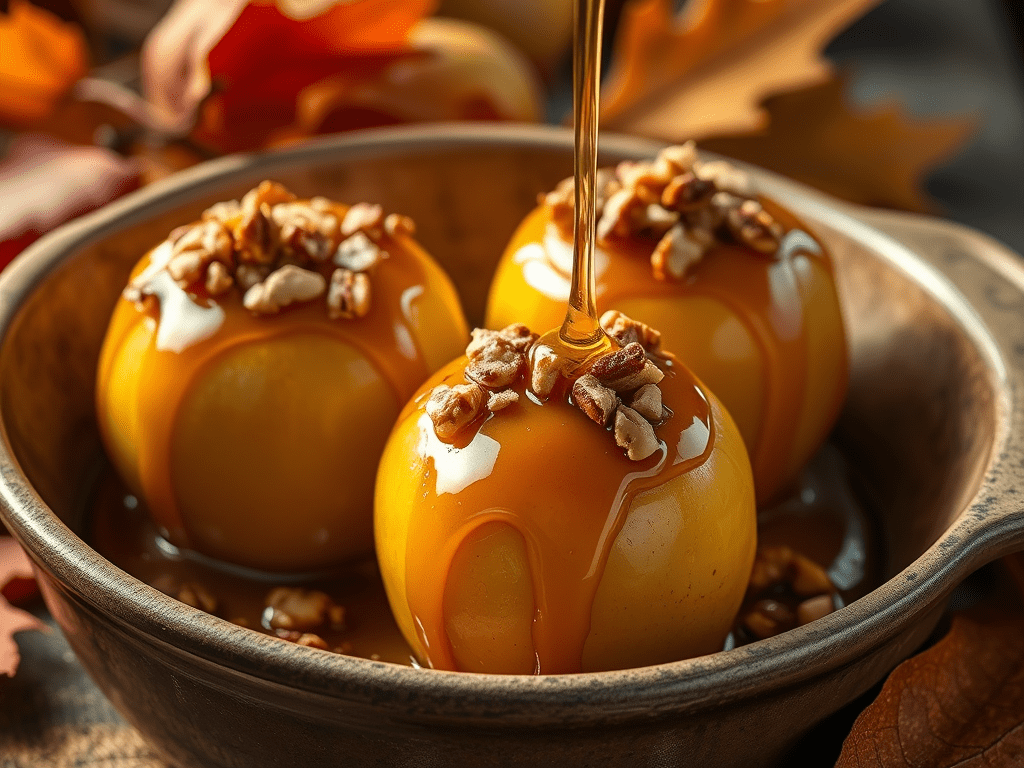
Apples have deep roots in the Americas, but the apples available in 1400 AD were nothing like the ones we bake into pies today. Native crabapples, the only apple species indigenous to the region, were small, intensely tart, and often more seed than flesh. For Indigenous peoples, these wild apples were likely eaten raw for their tangy bite or preserved by drying or fermentation to enjoy in the leaner months. They may have also been cooked or mashed with natural sweeteners like honey or maple syrup, creating a nourishing, flavorful treat.
While baking apples wasn’t a historical practice among Indigenous peoples, the warm, spiced aroma of roasted apples is simply synonymous with fall. This recipe draws inspiration from native ingredients and traditional preservation methods while embracing the comforts of modern baking. Think of it as a delicious blend of history and seasonal nostalgia.
Ingredients:
- 4 medium apples
- 4 tablespoons honey or maple syrup
- 4 tablespoons crushed nuts (walnuts or pecans)
- 1 teaspoon cinnamon (optional)
Instructions:
- Prepare the Apples:
- If using the halved method, cut the apples in half and remove the cores and seeds using a knife or spoon to create small wells in the center.
- If creating a hole, use a spoon or melon baller to hollow out the core from the top without going all the way through.
- Fill the Apples:
- Place the apple halves or cored apples into a fire-safe dish or baking pan.
- Drizzle about 1 tablespoon of honey (or maple sap) into each apple cavity.
- Sprinkle the crushed nuts evenly over the top of each apple. Add a pinch of cinnamon if desired for extra warmth and flavor.
- Bake the Apples:
- If using an oven, preheat to 375°F (190°C). Cover the dish with foil or a lid to retain moisture. Bake for 30-40 minutes, or until the apples are soft and the honey has caramelized slightly.
- If using a fire, place the dish near the embers or inside a covered clay pot, checking occasionally. Adjust baking time as needed based on heat intensity.
- Serve:
- Let the apples cool slightly before serving. Enjoy warm, as a sweet and wholesome dessert!
Notes:
These are the standard variety within my local store and here is the breakdown of how these stack up within this recipe.
- Fuji apples: Firm texture and lower water content make them hold their shape well during baking, while their natural sweetness enhances the dessert without requiring much added sweetener.
- Gala apples: Also sweet but softer than Fuji, they can become mushy when baked for extended periods.
- Honeycrisp apples: Crisp and juicy but have a higher water content, which may lead to a slightly watery baked dessert.
For your baked apples, Fuji apples will deliver the best balance of texture and flavor.
 Time Traveling Table
Leave a comment