
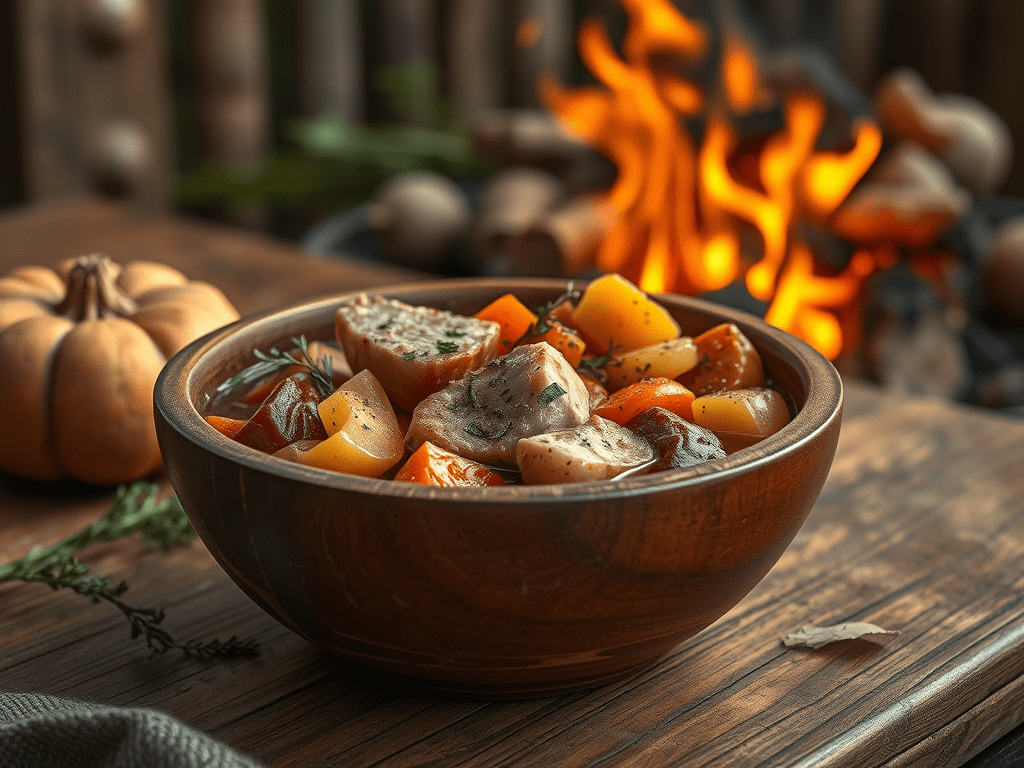
Nothing screams “fall” quite like a big ol’ pot of soup, right? As the temperatures drop and it turns to autumn, it’s time to swap out summer salads for something a little cozier. Enter soup: the MVP of chilly November days. But in 1400 AD, soups and stews weren’t just a cozy dinner option, they were the lifeblood of survival. Back then, soups and stews were more than just a meal, they were a cornerstone of survival and community. With ingredients like turkey and root vegetables, these dishes not only nourished but also celebrated the harvest season. Slow-simmered over an open flame, soups were an efficient way to stretch resources, combining proteins, vegetables, and herbs into a flavorful, sustaining meal.
This Turkey and Root Vegetable Stew channels that same resourceful spirit. Combining the essence of fall with the spirit of early Indigenous cooking practices. So grab your spoon and let’s dive into a soup that’s been 600 years in the making (well, sort of).
Soup-er Season is Here!
Ingredients:
A Quick Note on the Ingredients: If there’s an ingredient below that doesn’t appeal to you or isn’t available at your store, don’t stress, just skip it, find a similar substitute, or let this recipe inspire you to add your own twist. Back in this time period, recipes didn’t exist in the structured way we know them today. People used whatever they had on hand, and measurements were more of a “feel it out” situation. So embrace the spirit of the age and make it yours!
- 2 lbs bone-in turkey thigh
- 4-5 cups water (or enough to cover the meat)
- 1 cup wild onions (or substitute with regular onions), diced
- 2 medium carrots, peeled and chopped
- 2 medium turnips, peeled and chopped
- 1-2 sprigs of fresh herbs (optional, such as thyme or sage)
- Salt to taste (optional)
Instructions:
- Prepare the Turkey Thigh:
- Rinse the turkey thigh and pat it dry. Leave the bone intact—it will add depth to the broth’s flavor.
- Sear the Meat (Optional):
- Heat a large pot or Dutch oven over medium-high heat. Sear the turkey thigh on all sides until golden brown. This step enhances the stew’s flavor but can be skipped if needed.
- Slow-Cook the Turkey:
- Add 4-5 cups of water to the pot, ensuring the turkey is submerged. Bring the water to a boil, then reduce the heat to low.
- Cover and simmer the turkey for about 2 to 2.5 hours, or until the meat is tender and easily pulls away from the bone. Skim any foam or impurities from the surface as it cooks, see below for more info on this
- Prepare the Vegetables:
- While the turkey cooks, peel and chop the carrots and turnips into bite-sized pieces. Dice the onions.
- Add Vegetables to the Stew:
- Once the turkey is tender, carefully remove the turkey thigh from the pot and set it aside on a cutting board. Add the carrots, turnips, and wild onions to the pot.
- Simmer the vegetables for 20-30 minutes, or until tender.
- Shred the Turkey:
- Allow the turkey thigh to cool slightly. Remove the meat from the bone and shred it into bite-sized pieces. Discard the bone.
- Return Meat to the Pot:
- Add the shredded turkey back into the pot. Simmer for another 10-15 minutes to meld the flavors.
- Season and Serve:
- Taste the stew and add salt, if desired. Serve hot in bowls, optionally garnished with fresh herbs for added aroma.
Tip: The bone adds richness to the broth, so don’t skip simmering it for the full duration. This stew is both nourishing and flavorful, honoring the spirit of 1400s American cooking!
All About That Foam
The foam that forms when cooking meat, such as turkey, comes from coagulated proteins and impurities released from the meat as it heats up. While it’s not harmful to consume, skimming the foam improves the taste, texture, and appearance of the stew. Here’s why:
Reasons to Skim the Foam:
- Cleaner Flavor: The foam can carry off-flavors from impurities in the meat, which might make the broth taste muddy or bitter. Removing it ensures a cleaner, purer taste.
- Better Texture: If left in the stew, the foam may break down into tiny particles, which can make the broth cloudy and give it a slightly grainy texture.
- Improved Presentation: Skimming creates a clearer, more appealing broth that looks more appetizing.
How to Skim:
- Use a spoon or a fine-mesh skimmer to remove the foam gently as it rises to the top during the initial stages of cooking.
- Once the foam subsides, it usually doesn’t reform, and you can let the stew simmer without further skimming.
If you’re aiming for an authentic historical feel for this recipe, you could skip this step, as traditional cooking methods often left the broth unskimmed. However, for a more refined dish, skimming is recommended.
 Time Traveling Table
Leave a comment