
Just so we’re all on the same page. Please ensure you’ve made yourself acquainted with my disclaimer
History I Didn’t Know I Didn’t Know:
Who was the first European in America?
The first known European to set foot in what is now the contiguous United States was Juan Ponce de León, a Spanish explorer. He arrived in Florida in 1513, claiming the land for Spain.
If Columbus didn’t discover America, why do we have a national holiday for him?
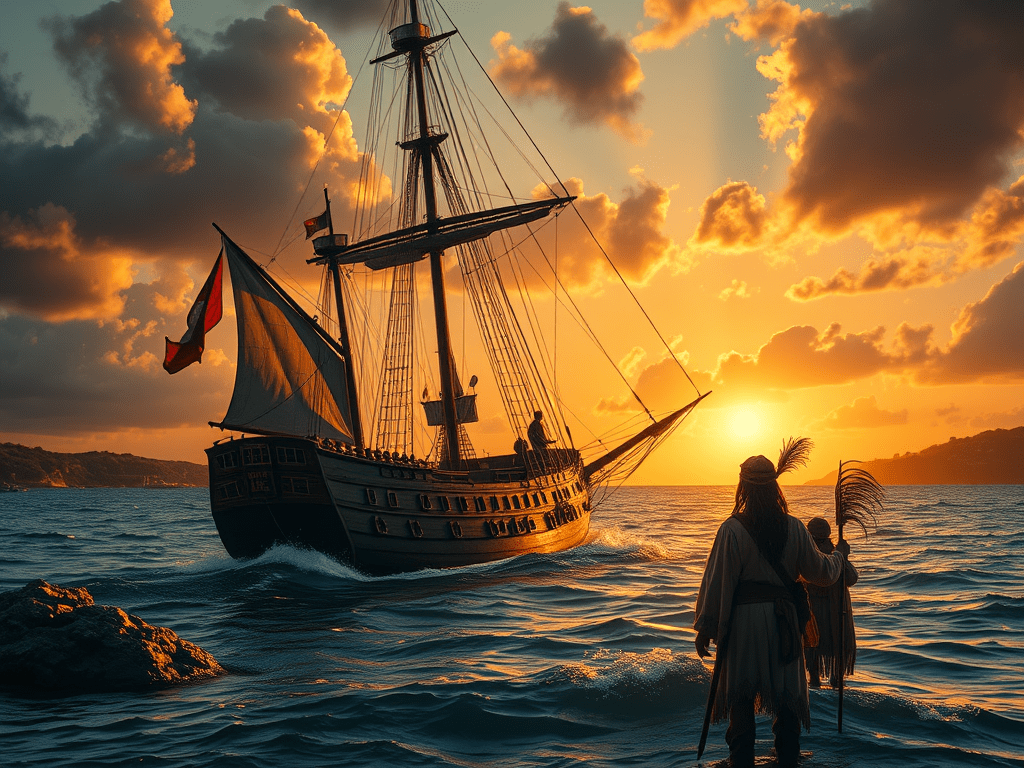
My whole life I have believed Columbus “discovered” America. I mean, why else would we have a whole national holiday dedicated to the guy? Turns out, my childhood understanding of my nation’s history was a complete fail. Columbus never even set foot in what is now the United States! So why do we celebrate him? The answer has less to do with actual history and more to do with symbolism, politics, and some serious 19th-century PR work. Here’s how Columbus sailed his way into the American holiday calendar—without ever actually landing here.
1. Columbus as a Symbol of Exploration
Christopher Columbus did not discover America. Indigenous peoples had lived there for thousands of years, and Norse explorer Leif Erikson reached North America centuries earlier. However, his voyages in 1492 initiated sustained European exploration and colonization. His journeys marked a turning point in world history, leading to lasting contact between Europe and the Americas.
2. Political and Cultural Influence
In the late 19th and early 20th centuries, Italian Americans pushed for Columbus Day as a way to celebrate their heritage. Columbus, an Italian sailing for Spain, became a figure of pride for Italian immigrants, who faced significant discrimination in the U.S. at the time.
3. Presidential Proclamation and National Recognition
President Benjamin Harrison declared a one-time celebration of Columbus in 1892, marking the 400th anniversary of his voyage. In 1937, President Franklin D. Roosevelt, under pressure from Italian-American groups, made Columbus Day a national holiday.
When did the Europeans arrive in California?
Another thing my history classes conveniently glossed over (or maybe I just wasn’t paying attention) is that people were already living on the opposite side of the continent long before Jamestown was even a thing. I had always assumed California only became relevant during the westward expansion of the 1800s or the Gold Rush, but the truth is far more interesting.
The first known non-Native person to reach California was Juan Rodríguez Cabrillo, a Portuguese explorer sailing for Spain. On September 28, 1542, he arrived in what is now San Diego Bay, marking the first recorded European contact with California. Cabrillo and his crew traveled north along the coast, encountering Indigenous communities and naming various landmarks, but they never established a permanent presence.
Spain, however, wasn’t done with California. While the East Coast was busy with early English settlements, Spanish explorers continued mapping and claiming land along the Pacific. It wasn’t until the late 1700s that they began to establish missions and settlements, solidifying their presence in the region. So, while most history books focus on the East Coast’s colonial beginnings, the West Coast was far from an unexplored frontier.
A Day in the Life of 1600: Simpler Times & a lot of Hard Work
In 1600, in what is now the United States was inhabited primarily by Native American nations and a small but growing number of European settlers, mainly Spanish in the South and French in the North. The English had not yet established a permanent colony (Jamestown was founded in 1607).
Estimated Population in 1600
- Native American Population: Estimated 3–5 million across North America, though diseases brought by Europeans had already begun to reduce this number.
- European Settlers: Fewer than 500 Europeans lived in what would become the contiguous United States, mostly Spanish and French traders and missionaries in Florida, New Mexico, and along the Mississippi River.
Climate and Weather
- Northeast
- Winters: 20–35°F (-7 to 2°C)—cold, with heavy snow.
- Summers: 65–85°F (18–29°C)—humid and warm.
- Southeast
- Winters: 40–60°F (4–16°C)—mild, but occasional frost.
- Summers: 75–95°F (24–35°C)—hot, humid, and rainy.
- Great Plains
- Winters: 10–30°F (-12 to -1°C)—cold, sometimes harsh blizzards.
- Summers: 70–100°F (21–38°C)—very hot, occasional droughts.
- Southwest
- Winters: 30–50°F (-1 to 10°C)—mild with occasional cold spells.
- Summers: 80–110°F (27–43°C)—very hot and dry, with some summer monsoons.
- Pacific Northwest
- Winters: 35–50°F (2–10°C)—mild, very rainy.
- Summers: 55–80°F (13–27°C)—cooler, wet coastal climate.
Diet: Staple Foods and Drinks
- Native Americans:
- Staples: Corn, beans, squash (Three Sisters), wild rice, fish, venison, bison, turkey, nuts, berries, and foraged greens.
- Drinks: Herbal teas, water, and in some regions, fermented corn drinks.
- European Settlers:
- Staples: Cornmeal, bread, salt pork, fish, beans, peas, root vegetables (turnips, carrots, onions), wild game.
- Drinks: Water, beer (brewed from corn or barley), cider from apples, and occasionally imported wine.
Clothing
- Native Americans:
- Buckskin tunics, leggings, moccasins.
- In winter, fur-lined cloaks or blankets.
- Decorative elements like beadwork and feathers.
- European Settlers:
- Wool or linen shirts and dresses.
- Leather shoes or wooden clogs.
- Heavy wool cloaks in winter.
- Women wore bonnets, men wore hats (tricorns, wide-brimmed).
Housing
- Native Americans:
- Longhouses (Iroquois), wigwams (Northeast), tipis (Plains), adobe dwellings (Southwest), and chickees (Southeast).
- European Settlers:
- Simple wooden cabins, wattle-and-daub huts, or stone homes in Spanish-controlled areas.
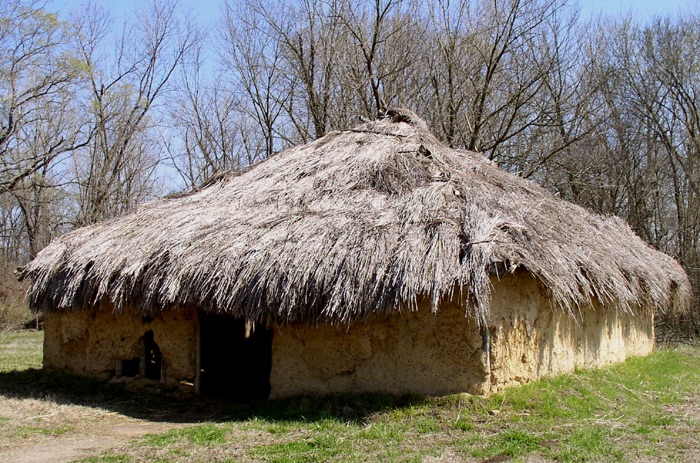
Spiro Wattle and Daub.” Image by Heironymous Rowe, licensed under CC BY-SA 3.0. No changes were made.
Health and Life Expectancy
- Child Mortality: Up to 50% of children died before adulthood due to disease, malnutrition, and accidents.
- Survivors’ Life Expectancy: If a person reached adulthood, they might live 45–55 years, though many lived longer if they avoided serious illness or injury.
- Healthcare:
- Native Americans used herbal remedies, sweat lodges, and spiritual healing.
- Europeans relied on folk medicine, bleeding, and poultices—doctors were rare.
- Major illnesses: Smallpox, dysentery, tuberculosis, influenza, and scurvy.
Social Structure and Family Life
- Native Americans:
- Matrilineal or patrilineal, depending on the tribe.
- Some practiced polygamy, while others were strictly monogamous.
- Marriages occurred young, usually 14–18 years old.
- Families were large, often 5–10 children, though many did not survive infancy.
- European Settlers:
- Monogamous marriages, usually arranged.
- Women married young, typically 16–20 years old.
- Families had 6–8 children, though disease often reduced family size.
- Challenges for Children:
- Hard labor from a young age (farming, hunting, cooking).
- Little formal education except for religious training.
- High risk of disease, malnutrition, and accidents.
Recreation and Games
- Native American Games:
- Lacrosse, dice games, running races, storytelling.
- European Settlers:
- Board games (Nine Men’s Morris, chess, checkers).
- Horseshoes, archery, singing, dancing, religious gatherings.
Economy and Currency
- Barter System: Most people traded rather than used money.
- Major Trade Items:
- Native Americans: Fur, corn, dried meat, shells, pottery.
- Europeans: Metal tools, firearms, cloth, glass beads.
- Currency:
- Spanish and French used silver and gold coins.
Religion and Art
- Native Americans:
- Polytheistic, with strong spiritual beliefs tied to nature.
- Art in pottery, beadwork, totem poles, rock carvings.
- European Settlers:
- Strongly Christian (Catholic in Spanish/French areas, Protestant in English).
- Art was mostly religious—wood carvings, woven tapestries, and simple paintings.
Musical Instruments
- Drums: Made from hollowed-out logs or wooden frames covered in animal hides. Used in ceremonies, storytelling, and communal gatherings.
- Flutes: Traditionally made from wood, bone, or cane. Used for spiritual ceremonies, courting rituals, and personal meditation.
- Rattles: Created from gourds, turtle shells, or deer hooves, often filled with small stones or seeds. Used in religious ceremonies and dances.
2. European Instruments (Brought by Colonists):
- Fiddles (Violins): Played in taverns and homes for dances and entertainment.
- Lutes & Guitars: Used for accompaniment in religious and secular songs.
- Bagpipes: Brought by Scottish and Irish settlers and played in traditional folk tunes.
- Psalteries: A stringed instrument plucked with fingers or played with a bow.
Language and Writing
- Native Americans:
- Over 300 different languages, with oral traditions.
- Some had symbolic writing (petroglyphs, wampum belts).
- Europeans:
- English, Spanish, French.
- Writing was primarily for record-keeping, religious texts, and official documents.
Major Tools Available
- Native Americans:
- Stone tools (arrowheads, axes, grinding stones).
- Bone and wood tools for farming, fishing, and hunting.
- Europeans:
- Metal tools (knives, saws, plows, hammers, muskets).
- Farming equipment like scythes and hoes.
Life in 1600 was harsh but community-centered, whether among Native Americans or early European settlers. Survival depended on agriculture, trade, and adaptation to the climate. If one could survive childhood and avoid disease, life could be long and fulfilling, but full of physical hardship and uncertainty.
During this time, the people living in what is now the United States faced numerous challenges, but also witnessed significant developments.
Challenges:
- Disease: The introduction of European diseases, such as smallpox, to which Native Americans had no prior exposure, led to devastating epidemics, significantly reducing Indigenous populations.
- Conflict and Displacement: As European settlers expanded their territories, conflicts over land and resources became frequent. Native American tribes often resisted encroachment, leading to wars and forced relocations.
- Cultural Disruption: The arrival of Europeans disrupted established Native American social structures, economies, and traditions. The imposition of foreign religions, languages, and governance systems challenged Indigenous ways of life.
- Environmental Changes: European agricultural practices and the introduction of new species altered the landscape, affecting hunting, farming, and the ecological balance upon which Native Americans depended.
Significant Events and Developments (1500–1600):
- European Exploration and Colonization: The 16th century saw increased European exploration, with figures like Ponce de León, Hernando de Soto, and Jacques Cartier charting parts of North America. These expeditions led to the establishment of settlements, such as St. Augustine in Florida (1565) by the Spanish and Roanoke Island by the English.
- Roanoke Colony Disappearance: Established in the late 16th century, the English settlement at Roanoke Island mysteriously vanished, leaving behind the enigmatic word “Croatoan.” Recent analyses of a 400-year-old map suggest that the settlers may have relocated to present-day Bertie County, North Carolina.
- Cultural Exchanges: Initial interactions between Native Americans and Europeans included trade and the exchange of knowledge. Indigenous peoples introduced Europeans to new crops like maize, potatoes, and tobacco, while Europeans brought horses, firearms, and metal tools, transforming Native American lifestyles.
The early 1600s were marked by a complex interplay of cooperation and conflict. While there were periods of peaceful trade and mutual assistance, misunderstandings and competing interests often led to violence. The introduction of European legal and economic systems disrupted traditional Native American governance and trade networks.
Despite these challenges, Indigenous communities demonstrated resilience, adapting to changing circumstances through strategic alliances, adopting new technologies, and, in some cases, relocating to maintain their cultural practices.
Understanding this period requires recognizing the profound impacts of European colonization on Native American societies and the ways in which these communities navigated the ensuing challenges.
Entertainment
5 Real Songs or Artists from the Early 1600s
Although recorded music did not exist, we can identify popular pieces and composers of the time:
For an authentic 1600s playlist, you could include:
- Traditional Native American drum and flute music
- Early Baroque compositions from William Byrd or John Dowland
- Colonial America Tavern Music
- Spanish Renaissance music, such as early variations of “La Folia”
Native American Music
- “Cedar Breeze” by R. Carlos Nakai – Traditional-style Native American flute music
- “Verdell Primeaux & Johnny Mike – Healing Song”— Traditional Native American harmonies from the Sioux and Navajo traditions, featuring soothing vocals and a deeply spiritual atmosphere.
- “Victory Song” by Northern Cree Singers – Modern powwow drumming, similar to what would have been heard in the 1600s
2. Early Colonial & European Music
- “Greensleeves” – Performed by The Broadside Band – A historically informed version of this classic tune
- “John Playford’s The English Dancing Master” – Performed by The Baltimore Consort – Features English folk dance music from the period
- “Lute Music by John Dowland” – Performed by Paul O’Dette – A collection of Elizabethan and early 17th-century lute pieces
Adult Media
Movies & TV Shows:
- “The New World” (2005) – Movie
- A dramatic retelling of the English colonization of Jamestown and the story of Pocahontas and John Smith.
- “Jamestown” (2017–2019) – TV Series
- Follows the first English settlers in Jamestown, Virginia, focusing on the challenges of survival, politics, and relationships.
- “Saints & Strangers” (2015) – TV Miniseries
- A historical drama about the Pilgrims’ journey on the Mayflower and their first interactions with Indigenous peoples.
- “A Field in England” (2013) – Movie
- A psychological historical drama set during the English Civil War (mid-1600s), with themes of war, survival, and mysticism.
- “The Witch” (2015) – Movie
- A dark and historically accurate portrayal of Puritan settlers in New England, exploring religious fears and superstitions of the time.
Books:
- “Mayflower: A Story of Courage, Community, and War” by Nathaniel Philbrick
- A deep dive into the Pilgrims’ journey, their settlement in Plymouth, and King Philip’s War.
- “New England Bound: Slavery and Colonization in Early America” by Wendy Warren
- Explores the often-overlooked history of slavery in early colonial America.
- “Jamestown: The Buried Truth” by William M. Kelso
- A book by an archaeologist who unearthed significant discoveries about the Jamestown settlement.
- “Changes in the Land: Indians, Colonists, and the Ecology of New England” by William Cronon
- Examines how European colonization transformed the land and environment.
- “The Winthrop Woman” by Anya Seton
- A novel based on the true story of Elizabeth Winthrop, a Puritan woman who defied the rigid norms of early colonial society.
Podcasts
- How Thanksgiving Works: The Real History Behind the Holiday -Stuff You Should Know
- Hosts explore the origins of the holiday, separating fact from myth about the famous 1621 feast
Children’s Media
Movies & TV Shows:
- “Pocahontas” (1995) – Animated Movie
- A Disney adaptation of the story of Pocahontas, though not historically accurate, it introduces children to early colonial encounters.
- “Colonial House” (2004) – PBS Docuseries
- A reality show where families live as if they were in the 1600s, giving kids a sense of everyday life in the era.
Books:
- “If You Lived in Colonial Times” by Ann McGovern
- A fun and informative book answering questions about life in the colonies.
- “The Pilgrims of Plymouth” by Marcia Sewall
- A well-illustrated and historically accurate children’s book about the Pilgrims.
OG Meal
(Historical Cooking Methods and Ingredients Only)
Breakfast
- Meal: Scrambled Eggs with Salt Pork
- Lightly scrambled farm eggs cooked with crispy, pan-fried salt pork
- Beverage:Warm spiced milk
- Whole milk heated with a touch of cinnamon and nutmeg
Main Meal
- Light Snack:Roasted Nuts and Dried Fruit
- A mix of foraged or stored nuts (such as walnuts or chestnuts) with dried cranberries or wild raisins.
- Entree:Turkey Potage with Dried Berries
- A hearty stew made by simmering turkey pieces in a clay pot with dried cranberries, wild onions, turnips, carrots, parsnips, and sweet potatoes, thickened slightly by prolonged cooking.
- Side:Corn Fritters
- Cornmeal mixed with water and salt, fried in lard over an open fire.
- Side:Cornbread
- A dense bread made from ground cornmeal, water, and a bit of lard or bear fat, baked over hot coals in a clay or iron pan.
- Dessert:Apple Tansey
- Sliced apples cooked in a pan with eggs and honey, forming a sweet custard-like dish.
- Beverage:Warm Spiced Cider
- Apple cider heated over a fire with cinnamon bark and cloves (if available through trade).
Modern Meal
(Using Contemporary Ingredients and Tools)
Breakfast
- Meal:Scrambled Eggs with Turkey Sausage
- Fluffy scrambled eggs with spiced turkey sausage crumbles
- Beverage:
Maple Cinnamon Latte- Steamed milk with a shot of espresso, maple syrup, and a dash of cinnamon
Main Meal
- Light Snack:Candied Nuts and Dried Cranberries
- Pecans and walnuts toasted with honey and a touch of sea salt, mixed with dried cranberries.
- Entree:Savory Turkey Stew with Cranberries and Root Vegetables
- Ground turkey simmered in broth with fresh cranberries, diced onions, turnips, carrots, parsnips, and sweet potatoes
- Side:Crispy Corn Fritters
- Cornmeal mixed with water and salt, fried in butter.
- Side:Moist Cornbread with Brown Butter and Sage
- Cornbread made with cornmeal, flour, eggs, baking powder, butter, and a hint of fresh sage, baked until golden brown.
- Dessert:Apple Tansey
- Sliced apples baked into a custard-like filling with eggs, cream, cinnamon, and honey
- Beverage:Mulled Apple Cider
- Apple cider simmered with cinnamon sticks, cloves, nutmeg, and orange zest, served warm.
 Time Traveling Table

Leave a comment