
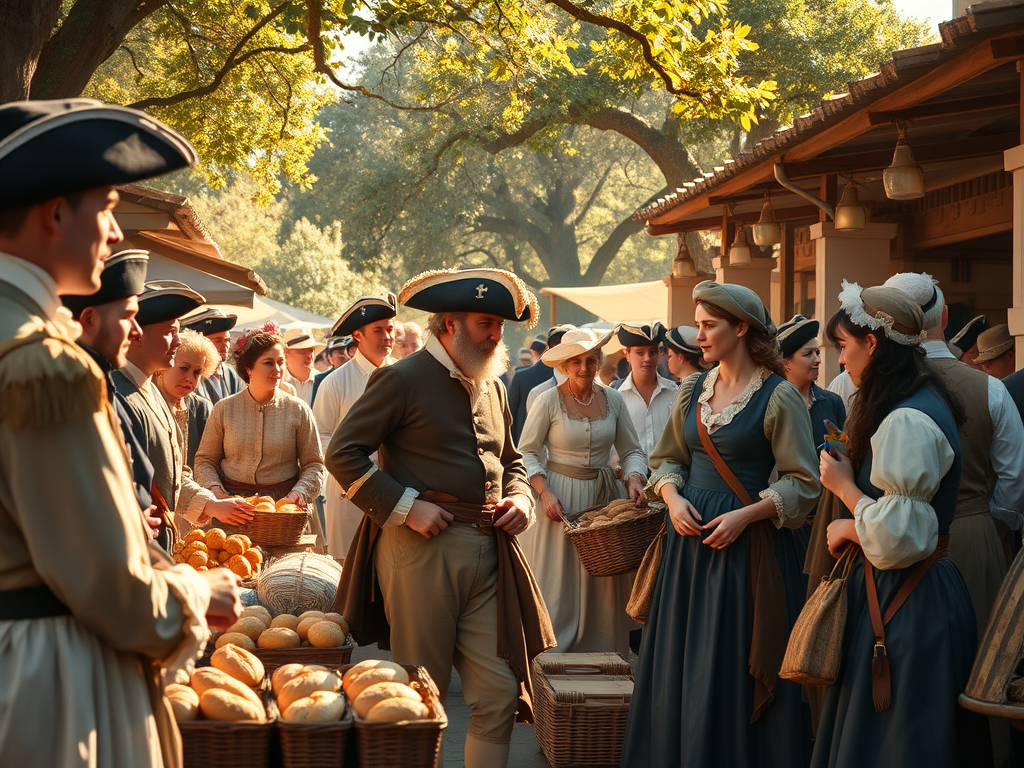
Just so we’re all on the same page. Please ensure you’ve made yourself acquainted with my disclaimer
Here’s an overview of life in the United States (primarily the British colonies) in 1750 AD, with detailed information on various aspects:
Population and Demographics
- European Colonists: Roughly 1.5–1.8 million in the 13 colonies.
- Native Americans: Approximately 1 million, though numbers had declined drastically due to disease, displacement, and conflict.
- African Population: Around 350,000,
with about 95% enslaved and concentrated in the Southern colonies like Virginia, South Carolina, and Georgia, and a small number of free Black individuals, mostly in the North. - Population centers: Major cities like Boston, New York, Philadelphia, and Charleston were small by modern standards, with Philadelphia being the largest, at around 20,000 people.
Climate and Weather
Northeast
- Winters: Cold and snowy (0°F to 30°F / -18°C to -1°C).
- Summers: Mild to warm (60°F to 85°F / 15°C to 29°C).
- Challenges: Harsh winters, nor’easters, and shorter growing seasons.
South
- Winters: Mild (30°F to 50°F / -1°C to 10°C).
- Summers: Hot and humid (75°F to 95°F / 24°C to 35°C).
- Challenges: Hurricanes, disease outbreaks, and long growing seasons.
Plains
- Winters: Harsh with snow (-10°F to 25°F / -23°C to -4°C).
- Summers: Warm (65°F to 90°F / 18°C to 32°C).
- Challenges: Tornadoes, seasonal flooding, and blizzards.
Rocky Mountain Region
- Winters: Bitterly cold with deep snow (-20°F to 30°F / -29°C to -1°C).
- Summers: Mild (50°F to 80°F / 10°C to 27°C).
- Challenges: Short growing seasons, rough terrain, and extreme weather shifts.
Southwest
- Winters: Cool (30°F to 50°F / -1°C to 10°C).
- Summers: Extremely hot (85°F to 105°F / 29°C to 40°C).
- Challenges: Droughts, scarce water, and intense heat.
West Coast
- Winters: Mild (45°F to 65°F / 7°C to 18°C).
- Summers: Cool to warm (55°F to 75°F / 13°C to 24°C).
- Challenges: Coastal storms, wet winters in the north, and droughts in the south.
Diet
- Europeans:
- Bread (wheat or cornmeal), meats (pork, chicken, wild game), vegetables (potatoes, beans, squash, pumpkins, turnips), grains (corn, oats, barley), and sweeteners (molasses, honey).
- Beverages: Water (often unsafe), cider (common among all classes), beer, tea, and some coffee. Milk was rarely drunk but used for butter and cheese.
Native Americans:
- Staple foods included corn, beans, and squash (“Three Sisters”), along with wild game, fish, nuts, and berries.
Enslaved People:
- Food was scarce and typically limited to basic rations provided by slave owners, including cornmeal, salt pork, molasses, and rice. In some cases, enslaved people supplemented their diets by growing small gardens, hunting, fishing, or gathering wild foods when allowed.
Free Africans:
- Most were in urban areas and had more access to a variety of food sources, such as markets and the opportunity to own food-producing businesses. However, they too faced economic challenges that limited their access to a full diet.
Clothing
Europeans:
- Materials: Wool, linen, and leather were common. Cotton was rare until later in the century.
- Styles:
- Men: Breeches, waistcoats, and coats with tricorne hats.
- Women: Long dresses with fitted bodices, aprons, and caps or bonnets.
- Shoes were often handmade, and buckles were common.
- Wealthier colonists had finer clothes, often imported from Europe.
Native American Clothing:
- Made from animal hides, fur, and plant fibers, often decorated with beads, shells, or porcupine quills.
African Clothing:
- Rough, inexpensive garments provided by enslavers, often made from coarse materials like osnaburg.
Housing
Europeans:
- Rural Homes: Log cabins or small wooden houses with dirt floors and thatched roofs.
- Urban Homes: Brick or timber-framed houses, often more spacious but still basic by modern standards.
- Heating: Fireplaces were the primary source of heat and cooking.
Native American Housing:
- Northeast: Longhouses housed multiple families in a communal style.
- Plains: Tipis made of bison hide were portable and suited to nomadic lifestyles.
- Southwest: Adobe or stone pueblos provided permanent, multi-story homes.
- Northwest: Cedar plank houses were large and communal.
Enslaved African Housing:
- Small, crudely built cabins or huts made of wood, clay, or brick. These structures were often overcrowded and poorly insulated.
- Bedding was minimal, often consisting of straw or rags.
Health and Medicine
Europeans:
- Life Expectancy:
- If you survived childhood, you could expect to live to 40–50 years.
- Child Mortality: 40–50% of children died before reaching adulthood due to disease and poor sanitation.
- Common Diseases: Smallpox, dysentery, malaria (in the South), and tuberculosis were prevalent.
- Medicine: Based on herbal remedies, bleeding, and basic surgeries. Professional doctors were rare, and midwives handled childbirth.
- Vaccination: Smallpox inoculation was controversial but emerging in practice.
Native Americans:
- Health was maintained through herbal remedies, spiritual practices, and communal care.
- Shamans or medicine people played crucial roles in diagnosing and treating illnesses, often using plants, rituals, and chants.
- The arrival of European diseases like smallpox devastated populations due to a lack of immunity.
Enslaved Individuals:
- Health conditions were poor due to overwork, malnutrition, and inadequate housing.
- Enslaved people relied on traditional African remedies and knowledge of herbal medicine to treat illnesses.
- Access to professional medical care was rare and often rudimentary when provided by enslavers.
Social Structures and Family
Europeans
- Marriage:
- Most people were monogamous.
- Average marriage age: Women in their early 20s, men in their mid-20s.
- Family Size: 6–10 children were typical, though high child mortality often meant fewer survived to adulthood. First child often followed quickly after marriage.
- Social Roles:
- Men: Primarily laborers, farmers, or tradesmen.
- Women: Managed households, cooked, gardened, and cared for children.
Native American Social Structure:
- Societies were organized around kinship and clans, with extended families forming the core of social life.
- Many tribes were matrilineal, tracing lineage through the mother’s side.
- Leadership varied: some tribes had chiefs, councils, or spiritual leaders guiding decisions.
- Marriages were often arranged within tribal customs. Divorce was possible in many tribes.
- Family size varied but was generally smaller than European settler families.
Enslaved Individuals:
- Family bonds were central to the lives of enslaved people, though families were routinely torn apart through sales or forced relocation.
- Extended kin networks and communal care helped sustain family structures.
- Marriage among enslaved people was not legally recognized, but couples often held private ceremonies or “jumped the broom” to symbolize their union
Free African Families:
- Families had the opportunity to form legally recognized marriages and raise children in a relatively more stable environment, but they still faced social exclusion and racial discrimination.
Entertainment and Games
Europeans
- Adults: Reading, storytelling, music, and dancing were popular pastimes. Card games, chess, draughts (checkers), and backgammon were common. Outdoor activities included horse racing, hunting, and early forms of baseball (town ball). Community events like barn raisings, harvest festivals, and church socials were central to entertainment.
- Children: Played with homemade dolls, wooden toys, marbles, and hoops. They enjoyed simple games like tag, blind man’s bluff, and leapfrog. Older children might participate in chores but also played games mimicking adult life, such as pretend farming or cooking.
Native Americans
- Adults: Storytelling, music, and dance were integral to ceremonies, celebrations, and social life. Popular games included lacrosse, chunkey (rolling a stone and throwing spears), and dice or stick games. Seasonal feasts and spiritual gatherings also played a key role in entertainment.
- Children: Learned through play by imitating adults in hunting, cooking, and crafting. Many played games that developed skills needed later in life, such as shooting arrows at rolling hoops to improve accuracy. Dolls, small bows and arrows, and toy canoes were common playthings.
Africans (Both Enslaved and Free)
- Adults: Enslaved Africans found entertainment through music, storytelling, and communal dances, blending African traditions with new influences. Games using sticks, shells, or stones were common, along with foot races and wrestling. Secret gatherings allowed for singing, drumming, and cultural expression.
- Children: Played with handmade dolls, stones, and simple musical instruments. Group games like hide-and-seek and clapping games were popular. Older children often worked alongside adults but still found moments for play, especially in storytelling sessions that passed down cultural knowledge.
Economy and Currency
Europeans:
- Currency included Spanish dollars, British pounds, and colonial paper money. Bartering was common in rural areas. Major items included livestock, crops, and handmade goods like tools or textiles.
Native Americans:
- Native Americans engaged in extensive trade networks before and after European contact.
- Goods like furs, shells, copper, and pottery were exchanged among tribes.
- After European contact, they began trading for items like metal tools, firearms, and cloth.
- Bartering remained a key part of the economy within tribes.
Enslaved Individuals:
- Some were permitted to trade or earn money in their limited free time, often buying their own freedom or that of family members.
- To interject my own thoughts: When considering the idea of purchasing a family member’s freedom, one can only imagine it was often a parent buying the freedom of a child, or perhaps even a spouse. This act would have been a bittersweet, double-edged sword. Once freed, they could never return, as many freed Africans could be kidnapped and sold back into slavery. To secure their freedom, they would likely have to move north, where the chances of ever seeing or hearing from them again were slim. Yet, there would also be immense joy in knowing that your loved one’s chains were gone, and they had been set free. While it’s possible that, in rare cases, you could later buy your own freedom and reunite, the likelihood of purchasing freedom twice in one lifetime seemed almost unattainable.
Religion and Faith
Native Americans:
- Spiritual beliefs were deeply connected to nature and varied by tribe. Ceremonies, dances, and rituals were central to life.
- Native American spirituality was deeply tied to the natural world and emphasized harmony with nature.
- Tribes conducted ceremonies to honor seasons, harvests, and significant life events.
Rituals often involved dances, songs, and offerings, with sacred objects like pipes or masks playing central roles.
Enslaved Individuals:
- Many enslaved people practiced a blend of African spiritual traditions and Christianity, often in secret.
- Many enslaved people retained elements of African spirituality, blending them with Christian practices introduced by slaveholders.
- Religion offered solace, hope, and a sense of community. Enslaved people often held secret prayer meetings and sang spirituals expressing their faith and longing for freedom.
Free Africans
- Were able to attend Christian churches more openly, though they were often segregated from white congregants. Many Black people embraced Christianity as part of their spiritual practice, while others continued African-based religious practices, especially in more private settings.
Colonists:
- Christianity dominated, with Puritans, Quakers, Anglicans, and other denominations playing central roles in daily life and governance.
Art and Culture
- Native Americans:
- Art included beadwork, pottery, weaving, and carvings, often tied to spiritual and ceremonial practices.
- Art was both functional and symbolic, with pottery, beadwork, weaving, and carving reflecting tribal identity and spiritual beliefs.
- Oral traditions preserved histories, myths, and knowledge. Storytelling was a vital cultural practice.
- Enslaved Individuals:
- Music, dance, and oral storytelling preserved African traditions and influenced American culture, laying the foundation for blues, jazz, and other forms.
- Music, dance, and storytelling were vital ways for enslaved people to preserve African traditions and resist cultural erasure.
- Quilting and crafts often incorporated symbolic patterns and stories.
Folktales, often featuring clever tricksters like Br’er Rabbit, conveyed moral lessons and survival strategies.
- Colonists:
- Art was practical, focusing on furniture, textiles, and religious paintings. Music and dance reflected European traditions.
Language and Writing
Native Americans
- Languages: Hundreds of Indigenous languages were spoken across North America, varying by region and tribe. Some major language families included Algonquian (Northeast), Iroquoian (Great Lakes), Siouan (Plains), Muskogean (Southeast), and Uto-Aztecan (Southwest).
- Oral Tradition: Storytelling was the primary way of preserving history, laws, and cultural knowledge. Oral histories, myths, and spiritual teachings were passed down through generations.
- Writing Systems: While many Native American cultures did not use written scripts. Pictographs and wampum belts were used by some tribes to record important events and agreements.
Europeans
- Languages: English was the dominant language in the British colonies, but other European languages were spoken, including German, French, Dutch, and Spanish.
- Writing & Literacy: Literacy rates were higher among wealthier colonists, particularly in New England, where Puritans emphasized education. Many men and some women could read and write, though formal schooling was limited.
- Publications: Newspapers, almanacs, and pamphlets were widely read, with Benjamin Franklin’s “Poor Richard’s Almanack” (1732) being particularly popular. Laws and religious texts, such as the Bible, were primary reading materials.
Africans (Both Enslaved and Free)
- Languages: Many newly arrived enslaved Africans spoke West African languages (e.g., Wolof, Yoruba, Igbo, Mandinka) but were forced to learn English, French, or Spanish, depending on their location. Over time, African Creole and Gullah dialects developed in areas like South Carolina and Louisiana.
- Oral Tradition: Enslaved Africans maintained rich oral traditions, passing down folktales, proverbs, and history through storytelling. Oral communication was essential, as literacy was often restricted.
- Literacy: Enslaved people were generally forbidden from learning to read or write, though some secretly learned from sympathetic individuals or by studying Bible passages. Free Black individuals, especially in the North, had slightly better access to education but still faced barriers.
Tools and Technology
Native Americans:
- Tools made from bone, wood, and stone for farming, hunting, and cooking.
Enslaved Individuals:
- Used simple agricultural tools; skilled enslaved artisans used tools for carpentry, blacksmithing, and weaving.
Colonists:
- Plows, spinning wheels, and muskets were common.
Significant Advancements and Challenges in America (1701–1750)
Between 1701 and 1750, the American colonies saw significant developments in politics, economics, culture, and warfare. During this time, colonial societies became more structured, slavery expanded, conflicts with Indigenous peoples and European rivals intensified, and intellectual movements like the Enlightenment and the Great Awakening influenced American thought. Below is a detailed overview of key advancements, challenges, and significant events.
1. Population Growth and Expansion
- Population Boom: The population of the American colonies grew significantly, from around 250,000 in 1700 to about 1.25 million by 1750.
- Westward Expansion: Colonists pushed further into Indigenous lands, leading to increased conflicts. The Appalachian Mountains marked the edge of English settlements, but many settlers still moved beyond.
2. Major Wars and Conflicts
Queen Anne’s War (1702–1713)
- Part of the War of Spanish Succession in Europe, Queen Anne’s War was fought between the English, French, and Spanish for control over North America.
- It resulted in England gaining Newfoundland, Nova Scotia, and the Hudson Bay from France through the Treaty of Utrecht (1713).
Yamasee War (1715–1717)
- A significant conflict between the Yamasee and other Indigenous groups against English settlers in South Carolina.
- The war ended with the near-destruction of the Yamasee, opening more land for European settlement.
King George’s War (1744–1748)
- Part of the War of Austrian Succession, it saw fighting between the English and French in North America
3. Slavery and the Growth of the Plantation Economy
- The Slave Trade Expands: By 1750, slavery had become deeply entrenched in the Southern colonies, particularly in Virginia, South Carolina, and Georgia.
- The Middle Passage: The transatlantic slave trade continued to bring enslaved Africans to the Americas under brutal conditions. If you’d like to read some truly heartbreaking stats go here
- The Stono Rebellion (1739): One of the largest slave uprisings in British North America. Enslaved people in South Carolina revolted, killing white colonists before being brutally suppressed.
- Some escaped to free territories or joined maroon communities, like the ones in the Great Dismal Swamp or Spanish Florida.
4. Intellectual and Religious Movements
The Enlightenment (Late 1600s–1700s)
- This intellectual movement emphasized reason, science, and individual rights.
- Benjamin Franklin was a major Enlightenment figure, making advancements in science (electricity) and founding institutions like the American Philosophical Society (1743).
- The movement encouraged education and political thought, laying the groundwork for the later push for independence.
The Great Awakening (1730s–1740s)
- A major religious revival that swept through the colonies, challenging traditional religious authority.
- Preachers like Jonathan Edwards (“Sinners in the Hands of an Angry God”) and George Whitefield emphasized personal faith and emotional sermons.
- The revival led to the growth of Baptist and Methodist churches, as well as increased religious diversity.
5. Advances in Science, Medicine, and Technology
Medical Developments
- Smallpox Inoculation (1721): During a smallpox outbreak in Boston, Cotton Mather promoted an early form of inoculation, reducing death rates.
Technology and Innovation
- Benjamin Franklin’s Experiments (1752): Franklin’s famous kite experiment demonstrated that lightning was a form of electricity.
- Printing Press Growth: The printing industry expanded, with Benjamin Franklin’s “Poor Richard’s Almanack“ (1732) becoming widely popular.
6. Social and Cultural Developments
Education
- The first colleges in America were established primarily for training ministers:
- Yale (1701)
- University of Pennsylvania (1740) (founded by Franklin)
- Princeton (1746)
- Most education was still home-based, with formal schooling primarily for the wealthy.
Arts and Literature
- Literature and newspapers became more common, with colonial newspapers spreading ideas more quickly.
- Benjamin Franklin’s writings, including newspapers and pamphlets, were highly influential.
Currency and Trade
- Most colonies lacked a standardized currency and often used barter, wampum, and foreign coins (Spanish pieces of eight, English pounds).
- The Navigation Acts (1700s): England imposed strict trade laws, forcing the colonies to trade only with Britain, fueling economic frustrations.
8. Political and Legal Developments
Colonial Government
- Most colonies operated under royal charters, with a governor appointed by the British Crown but local assemblies (like the Virginia House of Burgesses).
- Freedom of the Press: The John Peter Zenger trial (1735) established an early precedent for freedom of the press, after Zenger was acquitted for printing criticisms of the government.
Growing Tensions with Britain
- While not yet a full revolution, tensions were rising due to British taxation, land restrictions, and trade limitations.
- The Molasses Act (1733) was an early attempt to control colonial trade by taxing imported sugar and molasses.
Entertainment
What Would a Colonial Playlist Sound Like?
Music was a vital part of life in 1750 America, shaping social gatherings, religious practices, and even political movements. Without recorded music, songs were passed down through oral tradition, played on instruments like the fiddle, flute, banjo, or harpsichord, and performed in homes, taverns, churches, and fields. The soundscape of colonial America was diverse, reflecting the influences of European settlers, enslaved Africans, and Native American communities.
If you were to create a playlist from 1750, here are some essential tracks that would have been heard across the colonies.
🎶 Essential Tracks for a 1750 Colonial Playlist
1. “God Save the King” (1745) – Anonymous (British National Anthem)
- Style: Patriotic song, sung in taverns, churches, and official gatherings.
- Why It Fits: As the British colonies were still under British rule, this anthem was widely known and performed at public events and military ceremonies.
2. “Greensleeves” – Traditional English Folk Song
- Style: Folk ballad, played on lute, violin, or harpsichord.
- Why It Fits: This English tune was widely recognized in the colonies, often played in homes and social gatherings. It was enjoyed by both aristocrats and common folk.
3. “The Beggar’s Opera” (1728) – John Gay & Johann Christoph Pepusch
- Track Suggestion: “Over the Hills and Far Away”
- Style: Ballad opera, folk song.
- Why It Fits: This opera was incredibly popular in Britain and its colonies, with songs that were frequently sung in taverns. It combined humor with social and political commentary.
4. “Follow the Drinking Gourd” – African American Spiritual
- Style: Spiritual/folk song.
- Why It Fits: Enslaved Africans created songs blending West African rhythms with Christian hymns, often carrying hidden messages about freedom and escape routes to the North. While its exact origins are debated, spirituals like this were an integral part of early African American music.
5. “Lilliburlero” – Popular 18th-Century British March & Folk Tune
- Style: Military/folk tune played on fife, drum, or fiddle.
- Why It Fits: This tune was widely recognized in both British and American colonies, played at military events, taverns, and community celebrations. It was often used for parades and political satire.
6. “Robin Adair” (Mid-1700s) – Traditional Irish Folk Song
- Style: Folk ballad.
- Why It Fits: Irish and Scottish immigrants brought their music to America, and songs like “Robin Adair” remained popular among frontier settlers and city dwellers alike.
Bonus Artists & Instruments of the Era
Aside from popular songs, the musical landscape of 1750 America was shaped by various artists and musical traditions:
- Johann Sebastian Bach (died 1750): His harpsichord and organ compositions were known among educated colonists, particularly in churches and wealthier households.
- Fiddle & Banjo Tunes: Enslaved Africans adapted the banjo from West African instruments, influencing early American folk music. Fiddle music was common in taverns and rural dances.
- Native American Drumming & Flute Music: Used in ceremonies, storytelling, and social gatherings, Native American music was deeply spiritual and communal.
Adult Media
- Roots (1977, TV Miniseries) & Roots (2016, TV Miniseries)
- Genre: Historical Drama
- Why It Fits: Chronicles the journey of Kunta Kinte, a young man captured in Africa and enslaved in America. The story covers the brutal realities of slavery in the 18th century, showing life in the American South during the early 1700s.
- A Narrative of the Captivity and Restoration of Mrs. Mary Rowlandson – Mary Rowlandson (Book, 1682, but widely read in the 1700s)
- Genre: Memoir/Autobiography
- Why It Fits: While written earlier, this firsthand account was highly influential in 1700s America. It describes Rowlandson’s experience as a captive of the Native Americans during King Philip’s War, offering insight into colonial-Native relations.
- Crucible of War – Fred Anderson (Book, 2000)
- Genre: Nonfiction History
- Why It Fits: This book provides a deep analysis of the French and Indian War (1754–1763), covering the early 18th-century colonial struggles between the British, French, and Native Americans, with context on life in America during the 1700s.
- Ben Franklin’s World (Podcast, Ongoing)
- Genre: History Podcast
- Why It Fits: Explores life in colonial America, covering topics such as early American politics, trade, slavery, and daily colonial life in the first half of the 18th century.
- The Divided Ground: Indians, Settlers, and the Northern Borderland of the American Revolution – Alan Taylor (Book, 2006)
- Genre: Nonfiction History
- Why It Fits: Focuses on the relationships between Native Americans and European settlers in the decades leading up to the American Revolution, including the tensions and alliances that shaped life in the 1700s.
Children’s Media
- Colonial House (2004, PBS TV Series)
- Genre: Historical Reality Show
- Why It Fits: A reenactment where modern families live as 18th-century colonists, experiencing the daily challenges and customs of early American life.
- The Matchlock Gun – Walter D. Edmonds (Book, 1941)
- Genre: Historical Fiction
- Why It Fits: Set during the French and Indian War (1756), this novel follows a young boy defending his home in colonial New York, highlighting frontier struggles.
- If You Lived in Colonial Times – Ann McGovern (Book, 1993)
- Genre: Nonfiction
- Why It Fits: Provides an easy-to-understand look at what life was like in the 1700s, covering daily routines, food, clothing, and schooling for colonial children.
- Struggle for a Continent: The French and Indian Wars 1689–1763 – Betsy Maestro (Book, 2000)
- Genre: Nonfiction
- Why It Fits: Explains the French and Indian War in a way that children can understand, offering a broad picture of the conflicts that shaped early America.
- Colonial Williamsburg Past & Present (Podcast, Ongoing)
- Genre: History Podcast
- Why It Fits: Focuses on life in 18th-century Williamsburg, exploring trades, culture, and the perspectives of colonists, Native Americans, and enslaved people.
OG Meal Plan
Using only ingredients and tools available in 1750, this meal plan reflects how early American settlers would have prepared their food, relying on seasonal ingredients, preservation methods, and simple cooking techniques.
Breakfast
Meal:
- Cornmeal Mush – A warm porridge made by slowly cooking cornmeal with water or milk, sweetened with molasses or honey, and topped with a pat of butter if available. Cooked over an open hearth in an iron pot.
- Salt Pork or Bacon – Lightly fried over the fire in a cast-iron skillet, adding a rich, smoky flavor.
Beverage:
- Hot Cider – Apple cider, either freshly pressed from stored apples or fermented into hard cider, heated over the hearth for a warm, comforting drink.
Dinner
Light Snack:
- Pickled Vegetables – Cabbage, carrots, or cucumbers, preserved in vinegar and stored from the autumn harvest. Served in a wooden bowl.
Entrée:
- Roast Pork or Chicken – Slowly roasted over a spit or in a Dutch oven near the fire, basted with drippings for flavor.
- Side: Stewed Turnips or Cabbage – Root vegetables stored in cellars, simmered in an iron pot with butter, salt, and dried herbs.
- Side: Cornbread – Made from cornmeal, salt, water, and possibly a little butter or lard, baked in a hearth oven or cast-iron skillet.
- Dessert: Molasses Gingerbread – A dense, spiced cake made with molasses, flour, eggs, butter, and ginger, baked in a brick oven or Dutch oven.
Drink:
- Hard Cider – A staple colonial beverage, made by fermenting apples from the autumn harvest. Stored in barrels and enjoyed throughout winter.
Modern Meal
This version reimagines colonial flavors with modern ingredients and cooking techniques while keeping the spirit of the era alive.
Breakfast
Meal:
- Creamy Cornmeal Porridge – Cooked with whole milk, sweetened with maple syrup, and topped with cinnamon-spiced roasted apples and a butter drizzle.
- Crispy Bacon Strips – Oven-baked for a perfectly crisp texture with a hint of smoked paprika for added depth.
Beverage:
- Spiced Hot Cider – Apple cider simmered with cinnamon sticks, cloves, orange slices, and star anise for a fragrant winter drink.
Dinner
Light Snack:
- Pickled Vegetable Platter – A mix of pickled carrots, radishes, cucumbers, and pearl onions, served with a herb-infused honey mustard dip.
Entrée:
- Herb-Roasted Pork Loin – Oven-roasted with garlic, rosemary, thyme, and a maple-mustard glaze for a savory-sweet crust.
- Side: Buttered Roasted Root Vegetables – A medley of roasted turnips, carrots, and parsnips, drizzled with brown butter and fresh sage.
- Side: Skillet Cornbread with Honey Butter – Classic cornbread made fluffier with buttermilk, baked in a cast-iron skillet and served with whipped honey butter.
Dessert:
- Molasses Gingerbread Cake with Vanilla Glaze – A light, fluffy gingerbread cake with warm spices, topped with a vanilla bean glaze for a modern finish.
🍷 Drink:
- Apple Cider Bourbon Cocktail – A colonial-inspired cocktail made with spiced apple cider, bourbon, and a cinnamon-sugar rim, garnished with a dried apple slice.
 Time Traveling Table
Leave a comment