
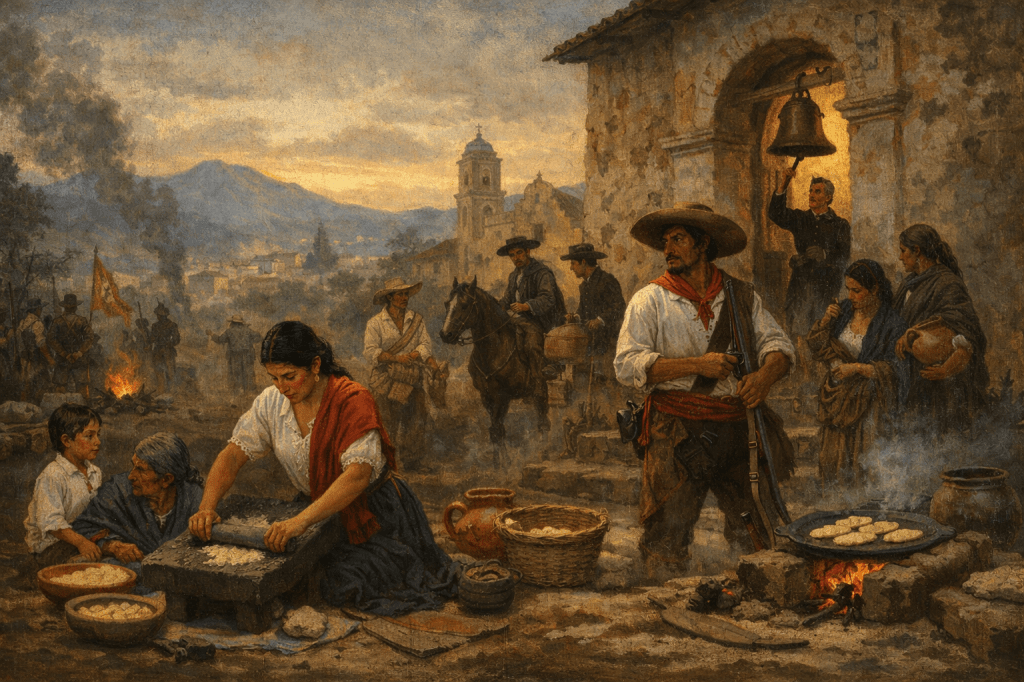
Step into a different time. In this post, we’re looking at what daily life actually felt like in Mexico around 1810, from morning routines to what’s simmering on the stove. But this is not just another year, compa. This is where things start to shift.
Just so we’re all on the same page. Please ensure you’ve made yourself acquainted with my disclaimer
If you read the 1700 post, you saw a world that felt stable. Structured. Predictable. People knew their place, and most stayed within it. Now, a century later, that same system is still standing, but it is not as steady as it looks.
It’s 1810. New Spain is restless. People are still cooking, working, raising families, heading to the market. On the surface, life looks the same. But underneath, there’s pressure building. A quiet kind of ya basta energy spreading across classes and regions.
This is the year the Mexican War of Independence begins. And once that spark hits, everything changes.
So grab something warm to drink, settle in, and let’s step into Mexico right at the edge of that shift.
Home Life
What homes looked like, how space was used, and how daily life actually unfolded inside them.
In 1810, most people in Mexico are living in homes that are simple, practical, and built with intention. Nothing fancy for the majority, pero everything serves a purpose. These are spaces shaped by climate, family, and daily work. You are not just living here. You are cooking, grinding, storing food, raising kids, and sometimes even working all in the same space.
Where you live changes everything. A rural Indigenous family, a small-town mestizo household, and an urban criollo home all look very different. So when we talk about “home,” we’re really talking about a range of experiences tied to class, region, and access.
Typical House Size and Layout
Small, flexible spaces for most. Larger, structured homes for the elite.
For the majority of people, especially in rural areas, homes are modest and highly functional:
- Size: about 20 to 60 m² (215 to 650 sq ft)
- Rooms: usually 1 to 2 multi-use spaces
- Kitchen: often outdoors or in a separate cooking area
- Bathroom: none inside the home
Walls are made of adobe or stone. Roofs vary by region and wealth, from thatch to wood beams to clay tile. Floors are usually packed earth, sometimes swept smooth every morning.
Inside, space is flexible. The same room shifts throughout the day. Cooking area in the morning, workspace in the afternoon, sleeping area at night.
In cities like Mexico City, wealthier families live very differently. Homes are larger and more structured:
- Size: about 100 to 400 m² (1,075 to 4,300 sq ft) or more
- Layout: built around a central courtyard or patio
- Rooms: separate spaces for sleeping, cooking, and receiving guests
- Sanitation: sometimes includes indoor latrines or drainage systems
These homes reflect Spanish architectural influence, especially the courtyard style still common today.
Sleeping Arrangements and Daily Rhythm
Sleep follows the sun and space is shared.
Daily life is tied closely to natural light. No electricity, no late nights. People move with the day.
A typical rhythm looks like:
- Wake: around sunrise
- Midday: short rest, especially in hotter regions
- Sleep: shortly after sunset
Sleeping setups depend on resources:
- Petates: woven mats laid on the floor
- Simple wooden frames: with straw or fiber padding
- Textiles: sarapes or rebozos used as blankets
Families often sleep in the same room. Children stay close to parents, especially when young. Privacy, in the modern sense, is not the priority. Safety and closeness are.
Clothing for sleep is simple:
- Lightweight cotton garments
- Undergarments or shifts
- Sometimes just a wrapped blanket depending on climate
Cleanliness and Staying Fresh
Different methods, same priority.
There’s this assumption that the past was dirty. Not really. Cleanliness matters, people just work with what they have.
- Bathing: water carried from wells, rivers, or communal sources
- Frequency: varies, but regular washing is common, especially in warm climates
- Soap: made from animal fats and plant ash
In many Indigenous communities, the temazcal is still used. It’s a small, enclosed sweat bath used for:
- Deep cleaning
- Healing
- Ritual and recovery
Waste is handled outside the home:
- Latrines or designated outdoor areas
- Chamber pots in some urban households
Household Tools and Everyday Objects
The home is also a workspace.
This is where daily life really comes into focus, porque the home is not just where you live. It’s where food is made from scratch every single day.
Core tools include:
- Metate: flat grinding stone used to process maize into masa
- Comal: flat surface for cooking tortillas
- Molcajete: stone mortar for grinding sauces and spices
- Clay pots (ollas): used for beans, stews, and drinks
- Baskets and wooden utensils: for storage and prep
These are essential tools, not optional.
By 1810, there are some small shifts, mostly in urban and wealthier homes:
- Increased use of metal cookware alongside clay
- More furniture like tables and chairs
- Greater access to imported goods through trade
But for most people, daily life still runs on tools that have been used for generations.
Culturally Important Objects in the Home
Small objects, deep meaning.
Homes are not just functional. They hold identity, belief, and memory.
Common items include:
- Religious objects: small altars, crosses, images of saints
- Textiles: handwoven blankets, rebozos, clothing
- Storage vessels: clay jars for water, grains, and fermented drinks
Religion is part of daily life, not separate from it. A small corner of the home might be dedicated to prayer or offerings.
Mexico is not one climate, and that matters more than anything. You have dry northern deserts, cool central highlands, humid coasts, and dense southern jungle. Where you live changes what you eat, how you build your home, and how your day is structured. People are not adapting to “Mexico.” They are adapting to their region, their land, their specific environment.
Fashion & Beauty Standards
Clothing, grooming, and appearance reveal class, culture, and identity in 1810 Mexico.
Clothing in 1810 Mexico is doing a lot of work, compa. You can read a person before they even speak. Their class, ancestry, region, even their values are visible in what they wear.
This is still the world of the casta system, but it’s loosening. Styles are starting to mix more, especially in cities. Indigenous traditions remain strong. Spanish influence is still present. And now, with independence movements beginning, identity itself is starting to shift.
Men’s Clothing and Grooming
Simple and practical for most. Structured and formal for the elite.
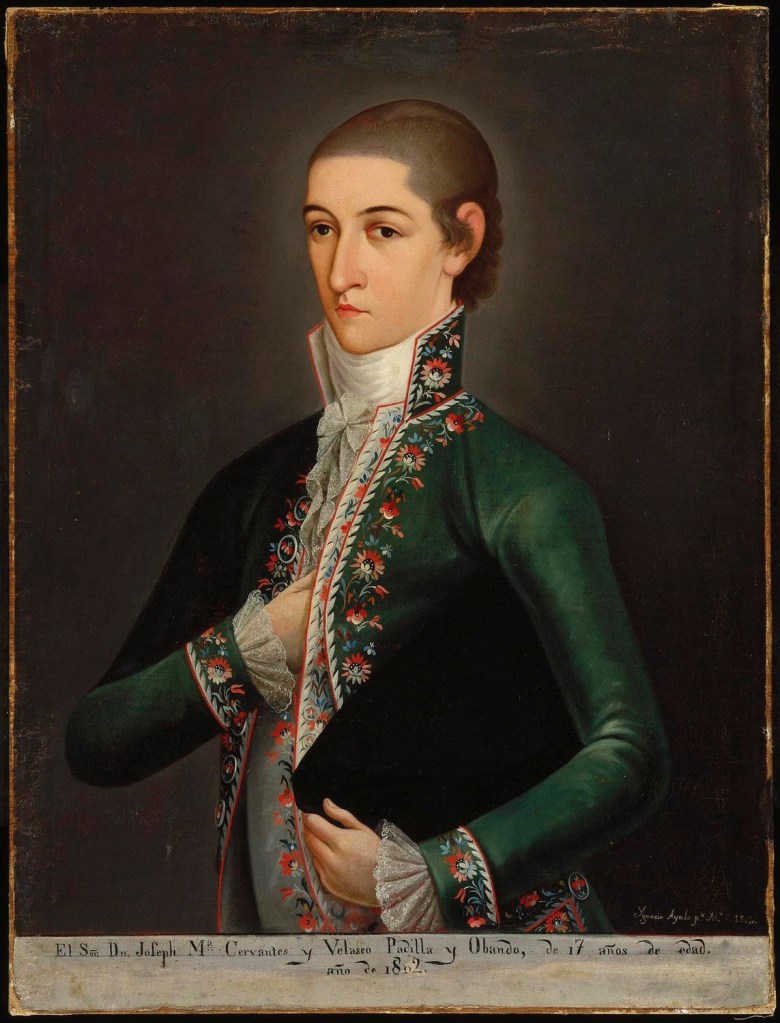
signers of the Mexican Act of Independence, painted at just 17 years old. A glimpse into elite criollo fashion at the turn of the 19th century.
For most working men, clothing is built for labor and climate:
- Shirt: loose cotton or maguey fiber tunic, light and breathable
- Trousers: simple, straight-cut, often undyed or earth-toned
- Footwear: barefoot or huaraches
- Outerwear: a serape for warmth and protection
Hair is usually short to medium length, not heavily styled. Facial hair varies. Some are clean-shaven, others wear mustaches or light beards, especially in rural areas.
In urban or elite settings, appearance shifts:
- Tailored jackets and waistcoats influenced by Spanish fashion
- Leather shoes or boots
- Hats, including wide-brimmed styles and early sombrero forms
- Accessories like belts, sashes, and watches for the wealthy
Women’s Clothing and Beauty
Layered, expressive, and deeply tied to identity.
Women’s clothing is where cultural blending becomes most visible.
For most women:
- Blouse: huipil or camisa, loose and often embroidered
- Skirt: enagua, long and full, sometimes layered
- Rebozo: used as a shawl, baby carrier, or head covering
- Footwear: barefoot or simple sandals
Materials vary by region, mostly cotton, sometimes wool. Indigenous garments are often constructed with wraps, ties, and hand stitching rather than buttons.
Hair plays a major role in presentation:
- Long and braided, often in one or two braids
- Woven with ribbon or fabric
- Covered with a rebozo in public or for modesty
Beauty is not about heavy cosmetics. It centers on:
- Clean skin
- Well-kept hair
- Modesty and presentation
In elite circles:
- Layered dresses influenced by Spanish fashion
- Structured silhouettes with fitted waists
- Jewelry such as gold earrings, necklaces, and hair pieces
Children and Babies
Integrated into daily life from the start.
Children are dressed simply. There is no separate “kids fashion” culture. They wear smaller versions of adult clothing.
- Simple tunics or shirts
- Loose trousers or skirts
- Often barefoot, especially in rural areas
Babies are typically:
- Wrapped in cloth or blankets
- Carried using a rebozo tied to the caregiver
Hair is kept natural. Grooming is minimal but clean.
Children’s appearance reflects expectation. They are part of the household economy early, learning roles through daily life.
Materials, Textiles, and Construction
Handmade, regional, and built to last.
Most clothing is made locally or at home. Every piece takes time, and that changes how people value it.
Common materials include:
- Cotton for everyday wear
- Maguey fibers for durable garments
- Wool in cooler regions
- Silk and fine fabrics for elite classes
Construction is practical:
- Loose silhouettes for airflow and movement
- Wrap and tie fastenings instead of buttons or closures
- Hand embroidery for decoration and identity
Clothing is repaired, reused, and passed down.
Quick Note on Cochineal
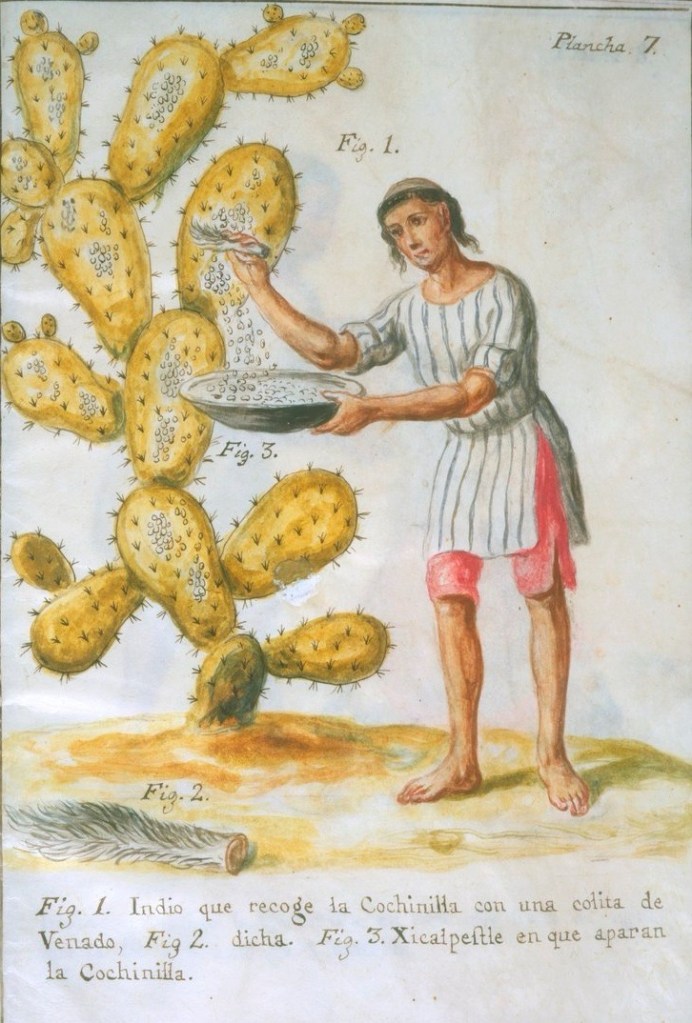
The tiny insect behind one of the most powerful colors in the world.
That deep red you see in textiles is not just decorative. It comes from cochineal, a small insect that lives on nopal cactus. When dried and crushed, it produces carmine, a rich red dye that holds its color over time.
By the 1700s, cochineal is one of New Spain’s most valuable exports:
- Used in luxury textiles across Europe
- Worn by elites, clergy, and royalty
- Traded across the Atlantic at high value
- In some periods, second only to silver in export importance
Spain tightly controls production, especially in Oaxaca, because of its profitability.
This color shows up globally:
- British military uniforms
- Catholic Church garments
- European aristocratic fashion
Even today, cochineal is still used in:
- Food
- Cosmetics
- Textiles
That red carries labor, trade, and power. Something tiny shaping global systems.
Grooming and Personal Care
Simple routines, built on knowledge.
People care about hygiene. They just approach it with natural materials and local knowledge.
- Washing with water and handmade soap
- Herbal rinses for hair
- Regular brushing and braiding
Soap is typically made from:
- Animal fats
- Plant ash
- Natural fragrances when available
There are no commercial beauty products, but there is generational knowledge behind these practices.
Body Ideals and Appearance
Shaped by health, labor, and social expectations.
Beauty standards vary, but some patterns are consistent.
For women:
- A fuller figure is associated with health and fertility
- Clear skin and maintained hair are valued
- Modesty in dress and behavior matters
For men:
- Strength and endurance matter more than appearance
- A capable body reflects ability to work and provide
Most people are physically active through daily labor. Bodies are shaped by work, not exercise routines.
- Lean builds are common
- Strength comes from daily tasks
- Little focus on altering the body beyond grooming
Beauty is tied to function and health, not perfection. That s
Diet & Daily Meals
What people grew, cooked, and shared in everyday life in 1810.
Food in 1810 Mexico is not just about survival. It’s identity, routine, and community all at once. Most people are not choosing between cuisines or trends. They are eating what the land provides, what the season allows, and what they can make from scratch.
There isn’t really a modern middle class here, so we’re focusing on the majority. Indigenous and mestizo households in rural areas and small towns, feeding themselves through farming, local trade, and daily labor.
How People Thought About Food
Food is not separate from life. It is part of it.
Food is tied directly to land, labor, and tradition. You don’t just eat. You grow, grind, cook, and share.
There is a strong understanding that:
- Maize is life. Not just a crop, but the foundation of existence in Mesoamerican culture
- Food should be fresh and seasonal
- Meals are communal, not individual
- Nothing is wasted if it can be used
People are not tracking calories or chasing variety. The focus is nourishment, consistency, and keeping the household running.
Staple Foods and Everyday Drinks
Simple ingredients, built into endless variation.
For most households, daily food revolves around a core group of ingredients. What changes is how they are combined and prepared.
Common staples:
- Maize
Tortillas, tamales, atole, pozole - Beans (frijoles)
Slow-cooked and eaten daily - Chiles
Used for flavor, heat, and preservation - Squash (calabaza)
Flesh, seeds, and blossoms all used - Tomatoes and tomatillos
Base for sauces and stews
Protein depends on access:
- Turkey or chicken in some households
- Wild game in rural areas
- Eggs when available
Everyday drinks:
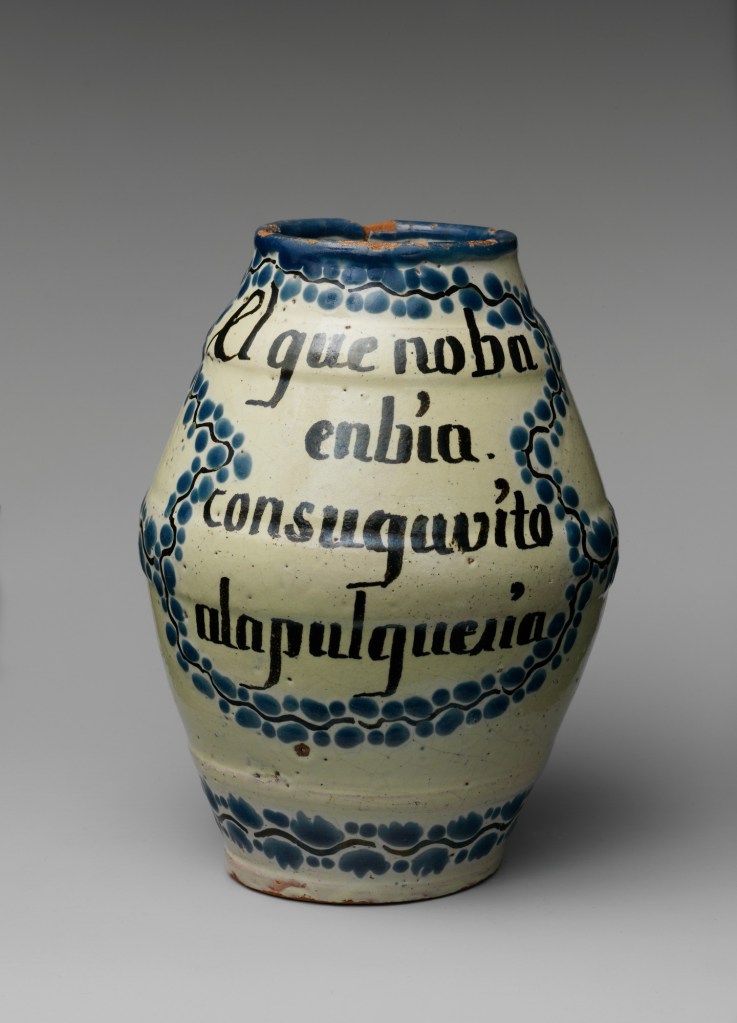
- Atole
Warm masa-based drink, often flavored with piloncillo and canela - Pulque
Fermented maguey drink, common among adults - Water and herbal infusions
In more urban or wealth-influenced households, additional foods appear:
- Rice dishes
- Wheat bread and flour tortillas
- Sugar-based sweets
Even as new ingredients enter the picture, the foundation stays the same. Maize, beans, chile. Always.
Time Spent Getting Food
Food takes time, and a lot of it.
There is no quick trip to the store. No refrigeration. No shortcuts.
A large part of the day is tied to food:
- Farming maize, beans, and calabaza
- Grinding maize on the metate, often daily
- Cooking from scratch over fire
- Trading in local markets for what cannot be grown
For many women, food preparation alone takes hours each day. Grinding maize can take up a large part of the morning.
In rural households, food production and preparation can easily take 4 to 6 hours daily. When food takes that much effort, it changes how you see it. Meals are not rushed. They are earned.
The Main Meal of the Day
Midday, filling, and shared.
The main meal usually happens in the mid-afternoon, after most of the day’s work is done.
Eating style is simple but structured:
- No formal dining table in many homes
- People sit on stools, mats, or low surfaces
- Tortillas act as utensils
- Food is shared from common dishes
Children eat with adults. Everyone participates. There are no separate courses. Everything is served together.
Meals hold the household together. Food is one of the few times everyone pauses together.
There is:
- Conversation
- Shared responsibility
- Routine and stability
Even as tension builds in 1810, this rhythm continues. Meals remain consistent even when the outside world is not.
Food is not just what people eat. It is how they stay connected, especially when everything else starts to shift.
Meal Plans
OG Meal
A full day of eating in 1810, grounded in the milpa, daily labor, and shared meals.
Morning
- Fresh corn tortillas
Hand-pressed and cooked on a hot comal, soft with a light char - Frijoles de olla
Whole beans simmered in broth with garlic and onion, sometimes epazote - Fresh farmhouse cheese
Soft, mild queso fresco made the same day - Drink: Atole
Warm maize-based drink, lightly sweetened or left plain
Snack
- Fresh fruit
Guava or other seasonal fruit, ripe and naturally sweet - Toasted seeds
Pumpkin seeds when available, lightly roasted - Drink: Water
Main Meal
- Birria de Chivo
Goat slowly stewed in a rich chile broth, deeply savory - Fresh corn tortillas
Warm and pliable, used for scooping and eating - Frijoles de olla
Ayocote beans, cooked and served brothy - Arroz en caldo
Rice cooked in broth, lightly seasoned - Mild tomatillo salsa
Roasted and ground, bright with minimal heat - Drink: Agua fresca de guayaba
Light, refreshing, and naturally sweet
Sweet
- Arroz con leche
Creamy rice pudding simmered with milk, piloncillo, and canela, soft and lightly sweet - Drink: Atole or diluted chocolate beverage
Warm and comforting, depending on availability
Modern Adaptation
A restaurant-style interpretation that pulls from the same ingredients and techniques, but reimagines them for a modern table.
Morning
- Blue corn masa cakes with queso fresco and warm beans
Thick, hand-formed masa cakes served with creamy beans and fresh cheese - Charred tomato salsa
Lightly blistered, bright, and smoky - Drink: Oat milk atole with cinnamon and vanilla
Smooth, lightly sweet, café-style
Snack
- Seasonal fruit with toasted pepitas and piloncillo drizzle
Fresh, textured, and lightly sweet - Drink: Chilled hibiscus agua fresca
Main Meal
- Lamb birria in reduced chile broth
Slow-braised and served with a more concentrated, rich consommé - Handmade heirloom corn tortillas
Warm, aromatic, and slightly nutty - Refried heirloom beans with epazote
Smooth, rich, and deeply savory - Mexican-style rice with garlic and broth
Fluffy, fragrant, and lightly toasted - Roasted tomatillo salsa with a hint of smoke
Bright, balanced, and layered - Drink: Guava agua fresca or mezcal cocktail
Traditional or modern, depending on the setting
Sweet
- Arroz con leche with piloncillo caramel and citrus zest
Creamy rice pudding finished with deeper caramel notes and a bright lift - Drink: Cinnamon cream or spiced milk
Soft, warm finish to the meal
Population & Top Cities
Where people lived, how many there were, and how society was structured in 1810.
By 1810, Mexico is still officially New Spain, and it is one of the most populated regions in the Americas. But that population is not evenly distributed. Most people live in rural areas, small towns, or Indigenous communities tied closely to land and tradition. Cities exist, but they are not the norm.
This is also a deeply stratified society. Population is not just about numbers. It reflects identity, ancestry, and your place within a system that is starting to show cracks.
Total Population and Breakdown
A large, diverse population shaped by unequal power.
Most historians estimate the population of New Spain around:
- 5.5 to 6.5 million people in 1810
The majority of people are not Spanish. Not even close.
Approximate breakdown:
- Indigenous peoples: ~55–60%
The largest group, especially in rural and southern regions - Mestizos: ~20–25%
Mixed Indigenous and Spanish ancestry. A growing population, especially in towns and cities - Criollos: ~15–20%
Spanish descent, born in Mexico, economically powerful but politically limited - Peninsulares: ~1–2%
Born in Spain, holding the highest positions of authority - Afro-Mexicans: ~5–10%
Free and enslaved populations, often concentrated in coastal regions like Veracruz and Guerrero
Where People Lived
Mostly rural, rooted in land and region.
Even though cities get most of the attention, most people are living outside of them.
Population distribution looks like:
- Rural villages and Indigenous communities make up the majority
- Agricultural regions support most families
- Mining towns create smaller population clusters tied to labor
- Cities function as political, religious, and trade centers
Travel is slow. Communication is slower. Communities stay locally focused, and regional identity becomes strong.
Major Urban Centers
These are the key cities around 1810. The numbers are estimates, but these places shape life across New Spain.
- Mexico City
~130,000 to 150,000 people
The capital and center of political power, religion, and trade. One of the largest cities in the Americas at the time - Puebla
~50,000 to 60,000 people
A major religious and manufacturing hub, known for textiles and ceramics, positioned along key trade routes - Guadalajara
~30,000 to 40,000 people
A growing regional center in western Mexico, tied to agriculture and trade - Guanajuato
~25,000 to 35,000 people
A mining city built on silver wealth, though that wealth is unevenly distributed - Veracruz
~15,000 to 20,000 people
The main port of New Spain, connecting Mexico to the Atlantic world through trade and movement
Economy & Jobs
How people earned a living and navigated a layered economy in 1810.
In 1810, the economy of New Spain is active, complex, and uneven. Money is used in cities, markets, and mining centers, but daily life is not built on cash alone.
Instead of cash versus barter, think in layers. Coins, credit, trade, and obligation all exist at the same time. Where you land in that system depends on your class, your land, and your connections.
How Money Worked
Silver coins mattered, but they were not everything.
The main currency is the peso, worth 8 reales and made of silver. These coins are widely trusted because New Spain is one of the world’s largest silver producers.
- 1 peso = 8 reales
- Small purchases use 1 to 2 reales
- Larger transactions use full pesos
But most people move between money and exchange. In rural areas and small towns, daily life often relies on:
- Barter
- Credit with local merchants
- Labor exchanged for goods
- Community reciprocity
Common exchanges include maize, beans, textiles, livestock, prepared food, and skilled labor.
Income and Work
Different roles, very different lives. Below is a simplified ladder of common roles. These are rough estimates and vary by region and consistency of work.
Hired Laborer
- ~2 reales per day
- Inconsistent work, lowest stability
Artisan
- ~3 to 4 reales per day
- Skilled, but dependent on demand
Ranchero (a small-scale farmer or livestock owner)
- ~200 to 400 pesos per year
- Stability tied to land and seasons
Silver Miner
- ~300 to 350 pesos per year
- Higher pay, dangerous work
Clergy (lower roles)
- ~300 to 600 pesos per year
- Stable position, often includes housing
Merchant (upper tier)
- ~500 to 2,000+ pesos per year
- Wealth tied to trade and networks
Officials and Elite Landowners
- 1,000 to 5,000+ pesos per year and beyond
- Income tied to ownership and power
The gap here is not just income. It is a completely different way of living.
Mobility and Opportunity
Possible, but limited. Moving up is possible, but not easy. People rise through:
- Trade or successful business
- Church roles
- Military service
- Marriage
- Moving to growing cities
But barriers are real. Social class, ancestry, education, and connections all shape opportunity. Systems like the casta hierarchy still influence who moves up and who stays put, even as those boundaries begin to loosen in 1810.
Falling is often easier than rising. Debt, illness, or a bad harvest can shift a family’s position quickly.
New Spain is wealthy on paper. It has silver, trade, and active markets. But most people are not experiencing that wealth. They are working hard, earning inconsistently, and navigating a system where resources sit at the top while the majority keeps everything running.
Cost of Living
What did everyday life actually cost in 1810?
In 1810, cost of living is not just about prices. It is about how much work it takes to get something.
Most households are not buying everything with coins. They are growing food, making what they can, and only purchasing what they cannot produce themselves. So even when something has a price, that price is measured against time, effort, and consistency of work.
Everyday Costs in 1810
From major needs to daily essentials
- Building a small home (materials only)
~100–300 pesos total
Adobe, wood, and roofing materials. Labor is usually done by family or community, so the real cost is time as much as money. - Simple cloth (partial garment)
~4–8 reales
Enough fabric for part of a garment. Clothing is expensive because everything is handmade and requires multiple pieces. - Clay cooking pot (olla)
~2–4 reales
A daily essential used for beans, stews, and drinks. This is not optional. It is part of survival. - Beans (1 kg / 2.2 lbs)
~1 real
A core food eaten almost daily and one of the main protein sources. - Maize (daily supply for tortillas)
~0.5 real
The foundation of the diet. Bought constantly unless grown at home.
What This Actually Meant
Prices look small, but income is smaller
A typical laborer earns about 2–4 reales per day.
So in real terms:
- A day’s maize can take a noticeable portion of a day’s wage
- Beans are affordable, but still a daily expense
- A single cooking pot can cost multiple days of work
- Clothing can take weeks to piece together
And that assumes steady work, which is not guaranteed.
Most households make it work by:
- Growing as much food as possible
- Buying only what they cannot produce
- Reusing and repairing what they own
- Relying on family and community support
Cost of living is not just about what things cost. It is about how hard you have to work to keep your household going. And for most people in 1810, that balance is tight.
Health
How did people stay well, and what risks shaped everyday life in 1810?
Health in 1810 Mexico is a mix of knowledge and limitation. People understand their bodies, their environment, and how to treat many everyday issues using plants, tradition, and community care. But they are also living without modern medicine, without antibiotics, and without a clear understanding of how disease spreads.
So survival often comes down to environment, access, and sometimes luck.
Life Expectancy and Survival
If someone makes it past early childhood:
- Many live into their 40s or 50s
- Some reach 60+, especially in stable conditions
Child survival is the biggest factor:
- Roughly 50–70% of children reach adulthood
High infant mortality is driven by infection, malnutrition, and complications during birth.
Healthcare and Medicine
Healthcare is not centralized. Care happens at home or within the community, supported by different types of practitioners:
- Indigenous and folk healers using herbal remedies and generational knowledge
- Midwives (parteras) guiding pregnancy and childbirth
- Trained doctors, mostly in cities, practicing European medicine
European medicine is based on humoral theory, which focuses on balancing the body through:
- Diet
- Bloodletting
- Herbal treatments
At the same time, Indigenous knowledge continues to play a major role, especially in rural areas.
Common Health Risks and Causes of Death
Health challenges in 1810 are closely tied to environment, daily labor, and access to care. The most common issues people face, and often die from, include:
- Infectious diseases like smallpox, measles, and typhus
- Gastrointestinal illness from contaminated water or food
- Malnutrition, especially during unstable periods
- Injuries from farming, mining, and manual labor
- Respiratory problems from smoke and crowded living spaces
- Complications during childbirth
- Infant mortality
Epidemics remain a major threat, continuing to shape population patterns well into the 1800s. Cities tend to see faster disease spread, while rural areas face limited access to care.
Where you live often determines what you are most likely to face, and whether you survive it.
Social & Family Structure
Who lived together, how families functioned, and where power sat in daily life.
Family in 1810 Mexico is everything. It is your safety net, your workplace, your identity, and often your future. Life is not built around individuals, but around households and extended networks that shape daily survival.
Family structure shifts by class, region, and ancestry, but certain patterns show up across the board.
Family Units and Living Arrangements
Most households are not strictly nuclear. Parents and children live together, sí, but extended family is common.
Typical patterns include:
- Nuclear families
Parents and children, especially in smaller or more mobile households - Extended families
Grandparents, aunts, uncles, and cousins living together or nearby - Clustered households
Related families sharing land, space, and resources
Homes function as shared environments:
- Cooking is collective
- Childcare is shared
- Work is distributed across the household
In Indigenous communities especially, kinship ties are practical. Land, labor, and responsibility are tied to family, not individuals. Living close to family is not just cultural. It is necessary for stability.
Marriage Customs and Relationships
Marriage in 1810 is religious, structured, and closely tied to family influence. It is recognized through the Catholic Church, usually requiring a ceremony, public acknowledgment, and some level of family approval, especially for younger couples.
For wealthier families, marriage can shape property, status, and alliances. It is not just about the couple. It is about protecting or advancing a family’s position and securing a more stable future.
For working households, the focus is more practical. Marriage brings shared labor, economic stability, and community support. But family involvement is not just strategic. It is also very, very personal.
Most people live with extended family or right next door to them, including in-laws. So when families weigh in on a marriage, it is not just about long-term plans. It is about daily life. Who you marry is someone your parents, siblings, and relatives will see constantly, work alongside, and share space with.
They are not just thinking about your future. They are thinking about their own lived reality too. If this person is difficult, lazy, or hard to get along with, everyone feels it.
Age at Marriage and Children
Marriage happens earlier than it does today.
Typical ranges:
- Women: ~16–20
- Men: ~18–25
Children often come soon after marriage. Families tend to have multiple children, though not all survive to adulthood.
Childhood & Parenthood
What was it like to be a kid, and what did it take to raise one in 1810?
Childhood in 1810 Mexico is not a separate world. Kids are part of everything. Work, family life, daily routines. You grow up inside the rhythm of the household, not outside of it.
Parenting is not about creating a protected phase of life. It is about preparing children to survive, contribute, and eventually carry the family forward. That does not mean it is cold. There is care, pride, and attachment. It just looks different than today.
What Childhood Looked Like
Childhood is short and closely tied to responsibility. Children begin helping early, as a normal part of life. A child might spend the day grinding maize on the metate, carrying water, tending animals, or learning a trade by watching and doing.
Education depends on class. Some elite children receive formal schooling through the Church, but most learn through family and community. Skills are passed down through practice, not classrooms.
Play exists, but it is woven into daily life rather than separated from it.
Parenting Structure and Roles
Parenting is shared across the family, not limited to parents.
Mothers manage daily care, food, and early childhood needs. Fathers provide labor, teach skills, and hold formal authority. Grandparents and extended family step in constantly, offering childcare, guidance, and support.
The compadrazgo system (godparents) also plays a meaningful role, helping guide a child’s spiritual and social life.
Children are raised within a network, not a single household unit.
Parenting Style, Discipline, and Affection
Parenting is structured and firm, with clear expectations.
Respect and obedience are emphasized early. Discipline can include verbal correction, physical punishment in some homes, and social pressure from the broader community.
Affection is present, but less openly expressed. Care shows up through food, protection, physical closeness with young children, and pride in their contributions.
The goal is not self-expression. It is readiness for adult life.
Pets and Animals in Daily Life
Animals are part of daily life, even if not treated like modern pets.
Dogs provide protection and companionship. Cats help control pests. Chickens and turkeys are raised for food but remain part of the household environment.
Relationships with animals exist, but they are practical first, but of course people still form connections with animals.
Pros and Cons of Being a Child
Pros:
- Strong sense of family and belonging
- Learning real-life skills early
- Daily connection to community
- Clear role and expectations
- Active, outdoor lifestyle
Cons:
- Early responsibility and labor
- Limited access to formal education
- High risk of illness or injury
- Less personal freedom or choice
- Pressure to conform to family roles
Pros and Cons of Being a Parent
Pros:
- Strong family support system
- Children contribute to household work
- Clear cultural expectations
- Community involvement in raising children
- Deep sense of purpose and continuity
Cons:
- High child mortality
- Economic pressure to provide
- Limited medical care
- Large households to support
- Social pressure to raise “proper” children
Leisure & Recreation
How people relaxed, gathered, and made space for joy in 1810.
Free time in 1810 Mexico is not separate from life. It is woven into it. Work is constant, sí, but so are moments of music, conversation, celebration, and gathering. You do not “clock out” and then go have fun. It happens in the same spaces where life is already unfolding.
Leisure depends on class and location, but across the board, it is social. You are rarely doing anything alone.
Adults
When adults relax, it usually happens in shared spaces like plazas, markets, taverns, or during religious events. Evenings and feast days are key moments to step out of daily work.
Common ways adults spend time include:
- Music and dancing
Live music with guitars, violins, and regional instruments, often in plazas or gatherings - Pulquerías and taverns
Places to drink pulque, talk, and unwind with others - Markets (tianguis)
Not just for buying goods, but for socializing, eating, and exchanging news - Religious festivals and feast days
Processions, celebrations, and gatherings tied to the Church calendar - Performances and theater
More common in cities, including religious plays and traveling performers
In urban centers like Mexico City, you start to see more structured entertainment like formal theater. In smaller communities, it stays more informal and community-based.
Children and Families
For children, play is simple, creative, and built into daily life.
There are no designated play spaces or organized activities. Kids make games from what is around them:
- Tag and chasing games
- Rolling hoops or objects
- Simple dolls made from cloth or natural materials
- Riddles, songs, and storytelling
- Imitation play, copying adult roles like cooking or farming
Play often blends into work. A task like grinding maize or carrying water can turn into a game or competition. Play is not something you buy. It is something you create.
For families, leisure overlaps with daily routines:
- Sitting together in the evenings
- Sharing stories, music, or conversation
- Participating in festivals and community gatherings
Children are not separated from adult life. They are included in it, learning by being present.
Culture, Language & Religion
The beliefs, languages, and artistic expression shaping identity
If you really want to understand 1810 Mexico, you look at what people believe, how they speak, and how they express themselves. That is where identity lives.
And in this moment, identity is layered. You have Catholic Spain on top, Indigenous traditions underneath, and everyday people blending the two into something that is not fully either. It is not clean. It is not uniform. But it is deeply rooted.
Religion and Spiritual Life
Catholicism shapes public life, but belief is more layered underneath.
By 1810, the official religion across New Spain is Catholicism. It influences law, education, and daily routine.
Daily religious life includes:
- Attending Mass
- Praying at home altars
- Observing feast days and fasts
- Participating in processions and rituals
But underneath that structure, many Indigenous traditions continue in adapted forms:
- Sacred views of land and nature
- Agricultural rituals tied to seasons
- Blended practices alongside Catholic belief
This mixing is called syncretism, meaning belief systems combining into something new.
Moral Code and Social Values
Honor, faith, and family shape behavior.
Society is guided by a mix of religious teaching and cultural expectations. Behavior reflects not just the individual, but the family and their place in society.
Core values include:
- Honor and reputation
- Obedience to authority
- Religious devotion
- Family responsibility
- Awareness of social hierarchy
The Church plays a major role in defining acceptable behavior, especially around marriage, gender roles, and public conduct.
Art and Aesthetic Expression
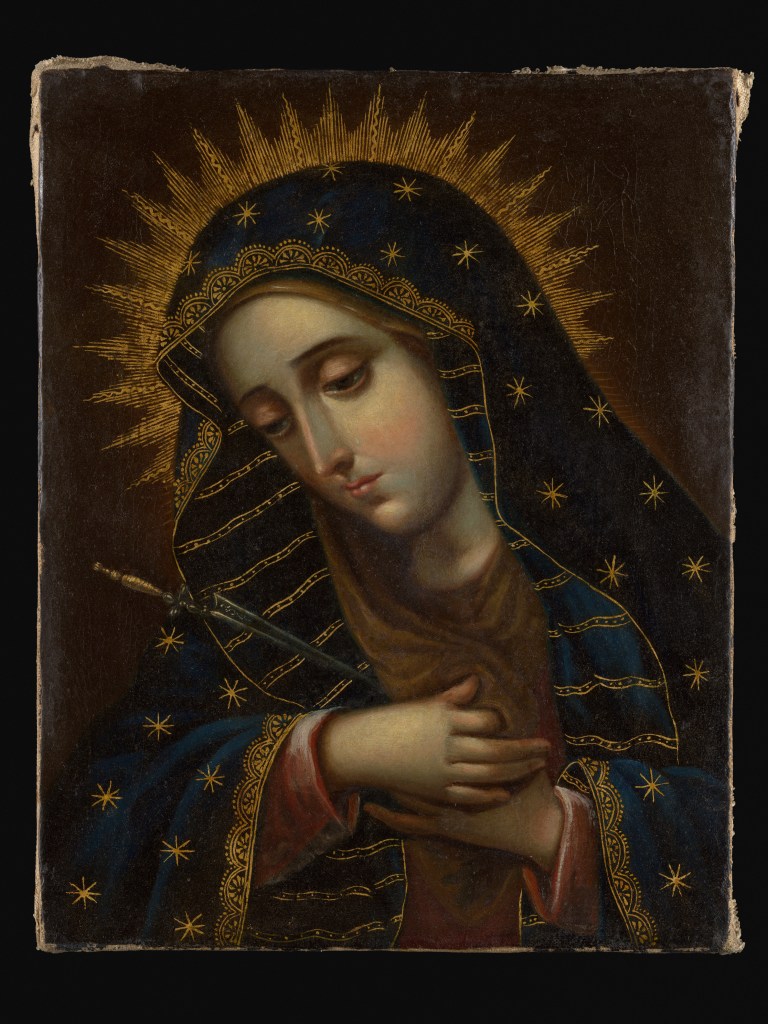
Religious, dramatic, and becoming distinctly Mexican.
Art in 1810 is heavily shaped by the Church, but it is no longer purely European. You start to see a shift.
Dominant styles include:
- Baroque, detailed and emotional
- Late colonial styles moving toward structure and symmetry
Common forms:
- Religious paintings
- Church murals and altarpieces
- Sculptures of saints
- Ceramics and textiles
One key figure is Miguel Cabrera, known for religious works and portraiture. Art is not just decoration. It teaches, reinforces belief, and reflects power.
Language and Communication
Spanish is the official language of government and religion, but daily life is multilingual.
Languages spoken include:
- Spanish
- Nahuatl
- Maya languages
- Mixtec, Zapotec, and others
Many people are bilingual, especially in Indigenous communities.
Literacy is limited:
- Most people do not read or write
- Literacy is more common among clergy and elites
Oral tradition remains essential for passing knowledge, history, and culture.
Historical Context
What changed between 1700 and 1810, and why it could not stay the same
If 1700 feels stable, 1810 feels tense. The systems are still in place. The Church, the crown, the social order. But over the past century, pressure has been building.
Not all at once. Slowly. Through reforms, economic shifts, population growth, and new ideas about power. By the time you reach 1810, the structure is still standing, but it is not steady anymore.
Bourbon Reforms
The crown tightens control, and people feel it.
In the 1700s, Spain’s ruling family shifts to the Bourbons, and they begin reorganizing how New Spain is governed. The goal is efficiency and control, but the result is tension.
Key changes include:
- More direct oversight from Spain
- New taxes and stricter collection
- Reduced influence of local elites and the Church
- Centralized administrative systems
For criollos especially, this feels like being pushed out of power in their own land.
Expulsion of the Jesuits (1767)
A shock to education, trust, and identity.
In 1767, the Spanish crown orders the removal of the Jesuits from New Spain. This is immediate and enforced.
The Jesuits had been:
- Educators of elite and criollo families
- Leaders in intellectual life
- Influential in missions and communities
Their removal disrupts schools, weakens cultural institutions, and creates resentment, especially among the educated class.
So… why would the crown do that?
The Crown’s Problem with Them
The Jesuits are powerful, independent, and not fully under royal control.
By the mid-1700s, Spain’s Bourbon monarchy is trying to tighten control over its empire. The Jesuits do not fit neatly into that plan.
Key concerns:
- They answer to the Pope, not the Spanish king
- They hold land, wealth, and influence
- They shape education and ideas
- They are especially popular with criollos, who are already frustrated with Spain
To the crown, this is a risky combination. Influence without direct control. This is part of a larger shift happening across Europe.
The Jesuits are expelled from multiple countries during this time as part of a broader push tied to the Bourbon Reforms. The goal is simple:
- Reduce competing power structures
- Bring authority back to the crown
In New Spain, that looks like:
- Jesuits gathered quickly
- Given little notice
- Forced onto ships and sent to Europe
For many in New Spain, this moment breaks trust. It shows that institutions people rely on can disappear overnight.
Economic Growth and Inequality
More wealth, but not more fairness.
The 1700s bring real economic growth to New Spain:
- Expansion of silver mining
- Growth in agriculture and ranching
- Increased trade through ports like Veracruz
But that wealth concentrates at the top.
- Wages remain low
- Rural and Indigenous communities stay vulnerable
- Most people do not feel the benefits of growth
Population Growth
More people, more strain. Between 1700 and 1810, the population nearly doubles:
- From about 3–4 million to over 6 million
This creates:
- More demand for land
- More competition for jobs
- More pressure on food systems
Especially in central regions, this begins to stretch resources. When resources stay limited but people increase, tension follows.
Enlightenment Ideas Reach New Spain
People begin to question how power should work. By the late 1700s, new ideas begin circulating through New Spain. These ideas challenge traditional authority and introduce new ways of thinking about society.
They include:
- Questioning absolute monarchy
- Ideas about rights and governance
- New approaches to reason and authority
- Awareness that nearby colonies like the American Revolution had already broken away from European rule
- News of upheaval in Europe, including the French Revolution challenging monarchy and hierarchy
These ideas spread through:
- Books and trade
- Clergy and educators
- Criollos and urban elites
They do not immediately cause rebellion, but they shift what people believe is possible. Once people see that power can change, it becomes harder to accept that it never will.
Ongoing Indigenous and Rural Struggles
Not new problems, but unresolved ones. These pressures never really go away after the 1500s. They just evolve. By 1810, many Indigenous and rural communities are still dealing with:
- Economic instability
- Limited mobility
- Heavy labor demands
Sometimes revolutions are not about new problems. They are about old problems finally reaching a breaking point.
The Spark in 1810
Everything finally connects.
In September 1810, in the town of Dolores, Miguel Hidalgo y Costilla does something that changes everything.
In the early hours of the morning, he rings the church bell and gathers people from the town. What follows becomes known as the Grito de Dolores (Cry of Dolores).
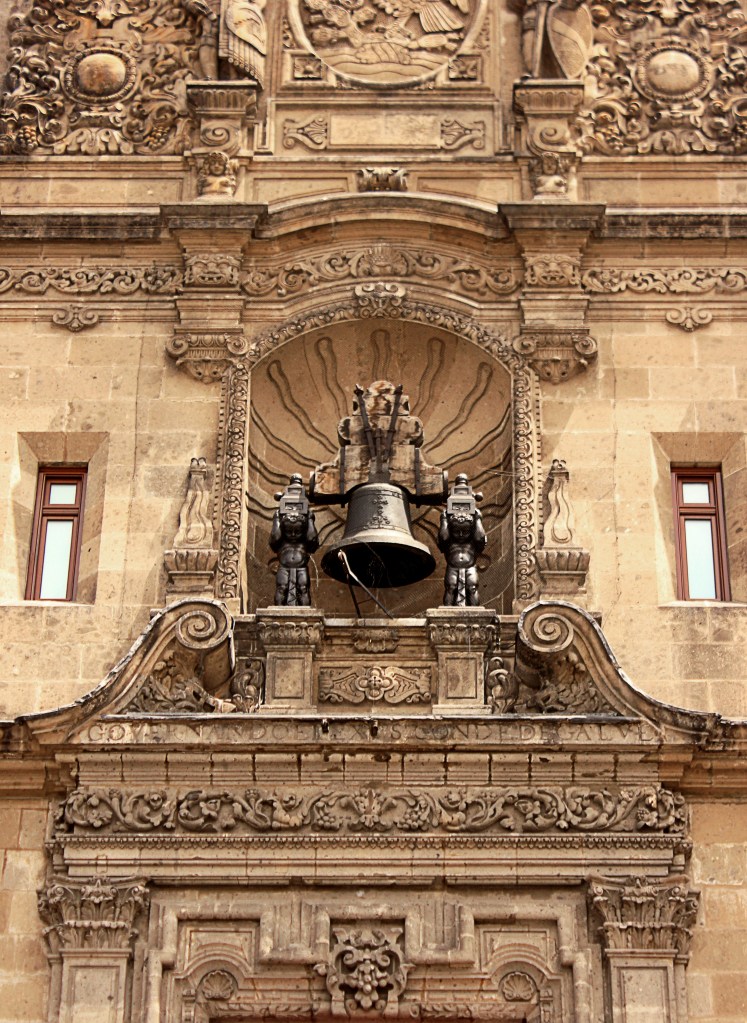
It is not a formal speech. It is a call to action.
He urges people to rise up against colonial rule, to challenge the authority of the Spanish government, and to take back control of their future. According to historical accounts, he calls on his parishioners to leave their homes and join him in rebellion.
And they do.
Farmers, laborers, miners, Indigenous communities, mestizos. Within hours, what starts as a local call turns into a growing movement. Within days, thousands are following him.
This is not a trained army. It is people. Carrying tools, sticks, whatever they have. Moving from town to town, gaining momentum.
Early on, they see success. Cities like Guanajuato fall quickly, driven by sheer numbers and emotion. But that same energy also leads to chaos. There is violence. There is lack of structure. What begins as a call for change becomes unpredictable fast.
Still, something irreversible has happened. For the first time, large groups of people are no longer just frustrated. They are acting on it. The authority of Spain, which had felt distant but permanent, is suddenly being challenged in a very real, very visible way.
This is the moment everything shifts. Not because it is perfect or controlled, but because people decide, all at once, that they are done accepting things as they are.
Music & Instruments
What did it sound like, and what rhythms filled everyday life?
If you close your eyes and step into 1810 Mexico, you are not hearing silence. You are hearing layers. Indigenous rhythms, Spanish melodies, African influences, all blending into something that is starting to sound distinctly Mexican.
Instruments You Would Hear
Most instruments are portable, acoustic, and built for everyday life. Many are handmade or locally crafted.
Common instruments include:
- Guitar (early Spanish-style)
The backbone of many songs, carrying both rhythm and melody - Harp (arpa)
Bright and resonant, especially in regional traditions - Violin
Used in both folk settings and more formal performances - Drums and percussion
Including Indigenous instruments like huéhuetl and teponaztli - Flutes and whistles
Often made from wood or clay - Vihuela and early string variants
Smaller, higher-pitched companions to the guitar
You would hear these in homes, at gatherings, during religious ceremonies, in markets, and in theaters in larger cities.
Emerging Musical Styles
By 1810, you do not yet have mariachi as we know it, but you can feel its roots forming.
Key styles include:
- Sones
Regional folk music blending Indigenous, Spanish, and African elements. This is where mariachi will eventually grow from - Jarabes
Lively dance music, sometimes seen as bold or even controversial because of its energy and social mixing - Religious music
Choral singing and instrumental accompaniment within churches - Tonadillas
Short theatrical songs, often humorous or satirical
These styles reflect different parts of life, from church to celebration to storytelling.
A “Playlist” from 1810
We cannot hit play, but we can get close. There are no recordings from 1810, but we do have preserved compositions and traditional pieces that reflect what people would have heard.
Here are five examples that capture that sound:
- “Xicochi Conetzintle” – attributed to Gaspar Fernandes
A Nahuatl lullaby. Soft, intimate, and a clear example of cultural blending - “Hanacpachap Cussicuinin” – anonymous
An Indigenous-language sacred hymn used in colonial churches
Media You Can Watch or Read Today
Continue your journey with stories that bring this world to life.
If you want to really feel 1810 Mexico, you do not just read dates and facts. You step into stories. Some land right in independence, others circle around it, but all help you understand the mindset, tension, and culture.
Movies & TV Shows
- Hidalgo: La historia jamás contada (2010)
Language: Spanish (original); English subtitles/dub available
A bold take on Miguel Hidalgo y Costilla that shows him as a real, complicated human. Political, messy, and honestly more believable because of it. - El Grito (2010)
Language: Spanish (original); Limited English subtitles
More grounded and historical. Walks through the early independence movement and how quickly things escalate. - Gritos de Muerte y Libertad (2010, TV Miniseries)
Language: Spanish (original); Some English subtitles
One of the best ways to understand the era. Short dramatized episodes that feel like snapshots of history. - Juana Inés (2016, TV Series)
Language: Spanish (original); English subtitles available
Set earlier, but gives strong context on colonial intellectual life, gender roles, and the power of the Church.
Books (Historical + Fiction)
- The Underdogs (Los de abajo) – Mariano Azuela
Language: Spanish; English translation widely available
Set later, but captures the long-term consequences of inequality and rebellion that start building in 1810. - Mexico: Biography of Power – Enrique Krauze
Language: Spanish; English available
A readable overview of Mexico’s major figures and shifts, including independence. - The Labyrinth of Solitude – Octavio Paz
Language: Spanish; English available
Not about 1810 directly, but key to understanding Mexican identity. - Las venas abiertas de América Latina – Eduardo Galeano
Language: Spanish; English available
Connects colonization, economics, and exploitation across Latin America.
Media for Kids
Stories your kids can actually enjoy and understand.
Preschool (Ages 3–6)
- Cantinflas Show (Animated Series)
Language: Spanish; English available
Introduces historical figures like Hidalgo in a fun, simple way. - Dora the Explorer (Select Episodes)
Language: English with Spanish
Not historical, but great for cultural and language exposure. - My First Book of Mexican Folk Tales – Anita Yasuda
Language: English; some bilingual editions
Short folklore stories that build cultural understanding.
Kids (Ages 6–10)
- Las Leyendas (Netflix)
Language: Spanish; English available
Folklore-based adventure. Think Scooby-Doo with Mexican legends. - El Grito: Independence Story (Animated Shorts)
Language: Spanish; some English subtitles
Simple explainers of independence for kids. - Miguel Hidalgo y Costilla – Little People Big Dreams
Language: Spanish & English
Easy intro biography with strong visuals. - Funny Bones – Duncan Tonatiuh
Language: English; Spanish available
Focuses on later culture, but great for understanding identity and art.
Tweens (Ages 10–14)
- Gritos de Muerte y Libertad (Select Episodes)
Language: Spanish; subtitles available
Great intro to independence with guidance. - The Fight for Freedom: Mexican Independence – Lynn Peppas
Language: English
More structured, good for kids who want clear timelines.
History sticks better when you can see it.
Facts give you knowledge. Stories give you context, emotion, and memory.
Would you thrive in 1810 Mexico, compa, or struggle with the pace, the labor, and the uncertainty of a world on the edge of change?
Leave your thoughts below or tag me on social.
 Time Traveling Table
Leave a comment