
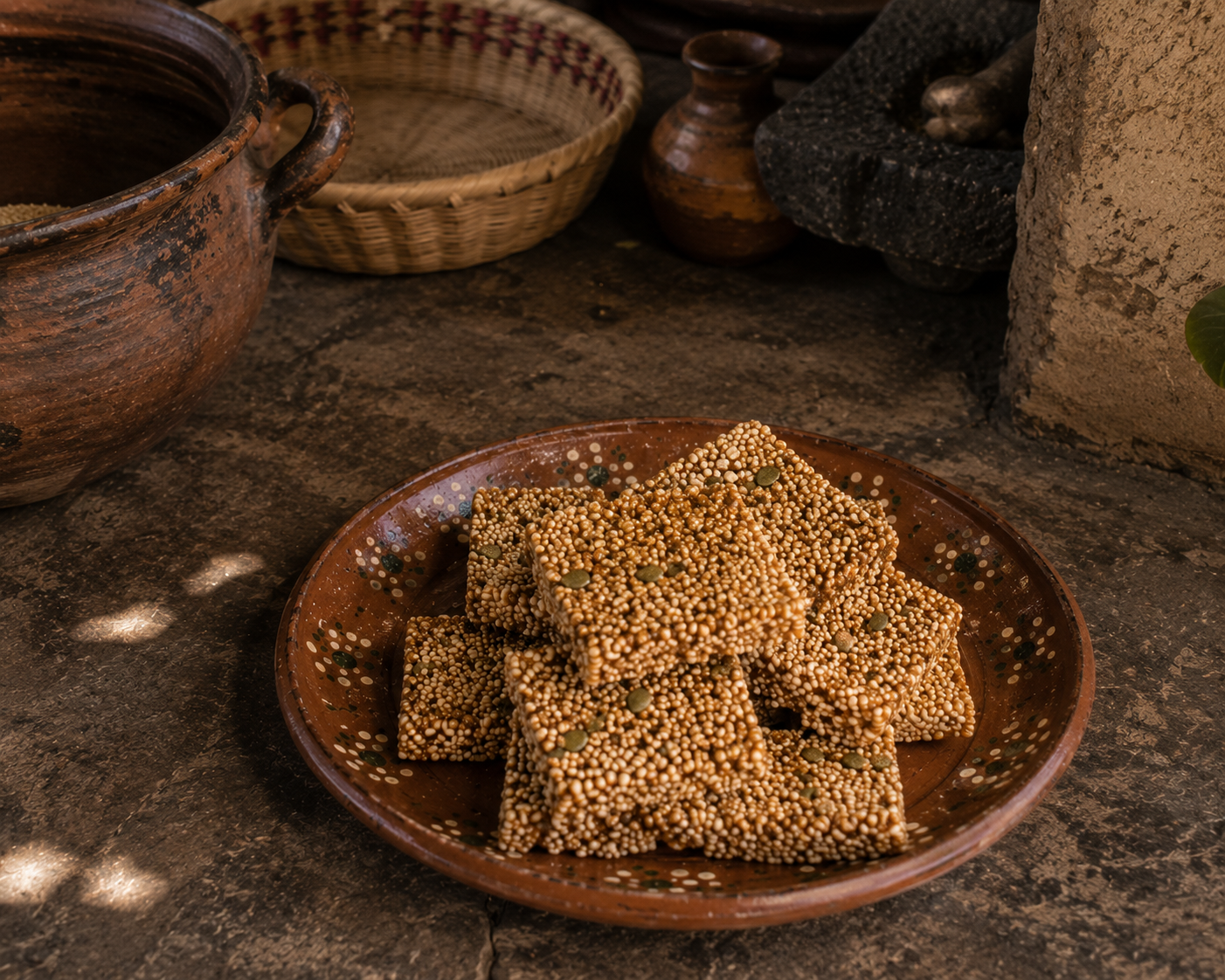
There is something genuinely satisfying about watching amaranth pop. Even after doing it multiple times, it still feels a little surprising every single time. Tiny seeds suddenly puffing up within seconds almost feels like kitchen magic. It is also much trickier than it looks. Too little heat and nothing happens. Too much and they burn immediately. And honestly, trying to imagine doing this consistently over the uneven heat of a wood fire or charcoal brazier makes me appreciate modern stovetops a whole lot more.
What really gets me, though, is the amount of work behind the ingredient itself. I have grown amaranth before, and processing enough seed to end up with even a single cup is no joke. Harvesting, drying, separating the seeds… it is a process. It gives you a completely different appreciation for how much labor historically went into foods that now seem simple or ordinary.
Alegrías themselves have incredibly deep roots in central Mexico, tracing back to Indigenous amaranth traditions long before 1876. By the late 19th century, versions sweetened with piloncillo had become common and were sold in homes and markets as practical little treats that were filling, portable, and surprisingly nutritious.
And honestly, they are just fun. Lightly crisp, chewy, earthy, and sweet in a way that feels comforting rather than overwhelming. I have also made a more pre-European version before, mostly just amaranth and honey, and my family ended up completely divided on which was better: the older style or this piloncillo version. Personally, I liked this one more. The piloncillo gives it a deeper warmth that I really enjoyed. But both are genuinely good, and tasting them side by side makes the long history behind this little candy feel surprisingly tangible.

Prep Time: 20 minutes
Cook Time: 25–35 minutes
Total Time: 45–60 minutes
Servings: 12–16 small bars or clusters
Ingredients
- 200 g raw amaranth seeds (1 cup)
- 170–200 g piloncillo, chopped or grated (6–7 oz)
- 60 ml water (¼ cup)
- 1 canela cinnamon stick
- 15–30 ml honey (1–2 tbsp, optional)
- 5 ml lime or orange juice (1 tsp, optional)
- 15–30 ml pumpkin seeds, sesame seeds, or chopped nuts (2–4 tbsp, optional)
Instructions
- Pop the amaranth
- Heat a large dry pot, deep skillet, or Dutch oven over medium-high heat.
- Test the heat with a few grains first.
- Once hot, add amaranth 15–30 ml at a time (1–2 tbsp).
- Stir or shake constantly.
- The seeds will pop within seconds.
- Immediately transfer popped amaranth to a bowl to prevent scorching.
- Repeat in batches until all amaranth is puffed.
- Prepare the mold
- Lightly grease a tray, shallow baking dish, or parchment-lined pan.
- Make the piloncillo syrup
- In a pot, combine piloncillo, water, and cinnamon stick.
- Heat over medium until fully dissolved and slightly syrupy.
- Remove cinnamon stick.
- Add optional flavorings
- Stir in honey if using.
- Add lime or orange juice if desired.
- Combine
- Immediately mix the popped amaranth into the syrup.
- Stir rapidly to coat evenly.
- Add seeds or nuts if using.
- Shape
- Press mixture firmly into prepared tray for bars.
- Or shape into rustic clusters by hand while still warm.
- Cool
- Let set until firm.
- Slice or break apart before serving.
Notes
- Amaranth expands dramatically once popped, so small batches are essential.
- Historically, alegrías were rooted in Indigenous amaranth traditions long before the 19th century.
- Piloncillo provides the most authentic flavor and texture.
- Honey and citrus are historically plausible additions for slightly wealthier households.
- Avoid overcrowding the pan while popping or the grains may scorch instead of puff properly.
- These sweets store well and were practical for sharing, travel, or market sale.
Leave a Reply