
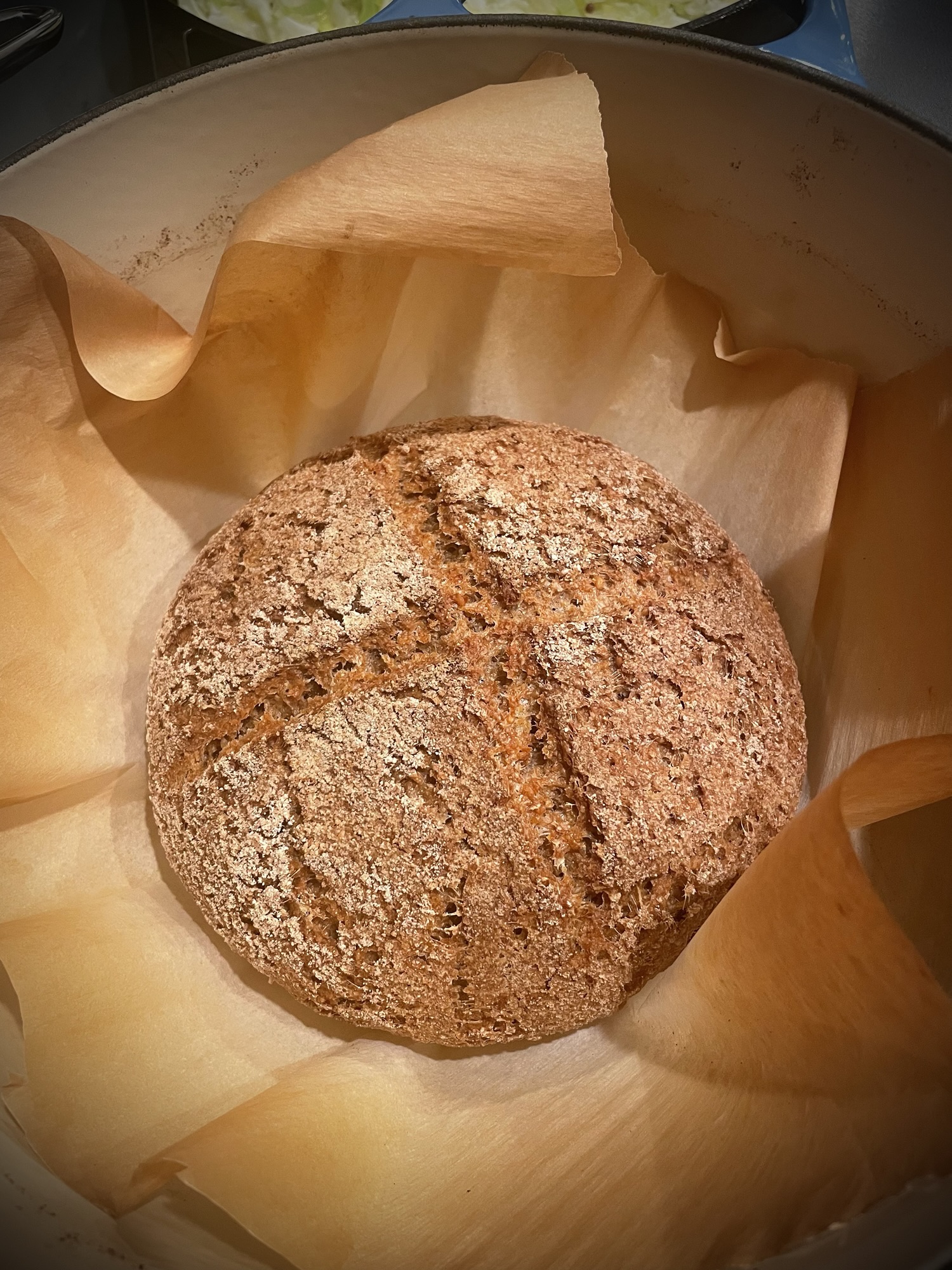
For my 410 AD meal, I decided it was time to make sourdough. I had already been working with spelt for earlier meals in this series, but this would be my first sourdough adventure. Before I could make the bread, though, I needed to grow the thing that would make it rise. This turned out to involve two named jars of flour and water, considerably more suspense than I expected, and eventually a loaf I was very pleased to eat.
Saving a Little for Tomorrow
One historical way to keep bread going was to save a piece of fermented dough and use it to start the next batch. In Book 18 of his Natural History, the Roman writer Pliny the Elder described using dough kept from the previous day as leaven. That gives us a written Roman example of the practice, although it doesn’t tell us exactly how every household in Britain made bread in AD 410.
I loved the idea of one batch helping to make the next. However, much as I love bread, I was not about to bake it every day, or even every other day, to keep that chain going. Maintaining a separate sourdough starter felt like the closest practical approach for my kitchen. I could keep feeding it between baking days and use some when I was ready for another loaf.
Æthelred Was, Unfortunately, Unready
My first attempt began with instructions from a source that shall remain unnamed, and it struggled from the beginning. I watched for bubbles, checked for a rise, and tried to work out whether anything was happening at all. Somewhere along the way, he acquired the name Æthelred the Unready. It proved a little too appropriate.
There were moments when I thought we might finally be getting somewhere, but eventually I spotted something fuzzy. Mold. That was the end of Æthelred, and into the trash he went. My first sourdough adventure had become my first sourdough funeral.

After that, I switched to the advice on Grant Bakes and started again. If you’d like to try this yourself, I followed Grant’s sourdough starter guide.
The new starter was Sir Rise-a-Lot, who had a fairly low bar to clear: remain alive and eventually help me make bread. This time, the bubbles became more encouraging, and eventually he was growing. From the beginning, this starter seemed to be doing better. Maybe we might actually be having bread after all.
From Jar to Actual Bread
Getting the starter ready was one achievement. Turning it into dinner was the next. For the loaf itself, I followed Grant’s spelt sourdough bread recipe. Sir Rise-a-Lot never quite doubled, but he got close. I was grinding the flour myself, and it was more sandy than fine, so I wondered whether that was part of the problem. Still, I refused to let that stop me. Bread would be made, whether it came out as bread or not!

I’ve made plenty of loaves with store-bought flour, but sourdough made with home-ground spelt was new territory. I had made it through growing the starter, and now there was an actual loaf to worry about. It hadn’t expanded as much as I’d hoped, and I suspected it needed more rising time in my cool house. But dinner was looming, and I’d waited as long as I could. Into the oven it went.
A Very Good Loaf Behind a Very Firm Door
After all those days of feeding flour and water, I finally had bread! It was smaller and denser than I’d hoped, but the flavor was so good: nutty, with a soft inside. Hot out of the oven with a generous smear of butter, it was amazing. The crust, however, required some determination. Cutting a slice took considerably more effort than I had anticipated.
It wasn’t a perfect first loaf, but I was delighted with it. Æthelred had never made it this far, Sir had done his job, and we had homemade spelt sourdough to eat with our AD 410 meal. I have things to work on for the next bake, particularly that crust.

Sir’s English Adventure Is Just Beginning
Sir Rise-a-Lot’s work isn’t finished. I’m planning to keep this starter with me through most of my journey across England’s history, gradually changing the flours I feed him to reflect the grains we’ll be using next. He gets to come along on this English adventure with me, one loaf at a time. Assuming, of course, that I can keep him alive. Fingers crossed.
Leave a Reply