
Just so we’re all on the same page. Please ensure you’ve made yourself acquainted with my disclaimer
Heads up! This post contains affiliate links. If you click and buy, I might earn a small commission – think of it as a tip for my historical taste-testing adventures. It won’t cost you a penny more, but it keeps my time-traveling table spinning. Thanks for the support!
Sunrise to Stew: A Day in the Life of 1400s America
Estimated Population
- The population of the present-day United States in 1400 AD was between 5–10 million, largely consisting of Indigenous peoples organized into diverse cultures, tribes, and confederacies. Major population centers included the Mississippian cultures (e.g., Cahokia), the Southwest Pueblo communities, and the Eastern Woodlands tribes.
Climate and Weather
- Climate: The region was at the start of the Little Ice Age (1300–1850 AD), resulting in cooler-than-average global temperatures. Weather patterns varied significantly by region:
- Eastern Woodlands: Temperate climate with cold winters (~20–40°F) and warm summers (~70–90°F).
- Great Plains: More extreme; cold winters (~10–30°F) and hot summers (~80–100°F).
- Southwest: Arid to semi-arid, with mild winters (~30–50°F) and hot summers (~80–100°F).
- Pacific Northwest: Cool, wet winters (~30–50°F) and mild summers (~60–80°F).
Diet
- Staple Foods:
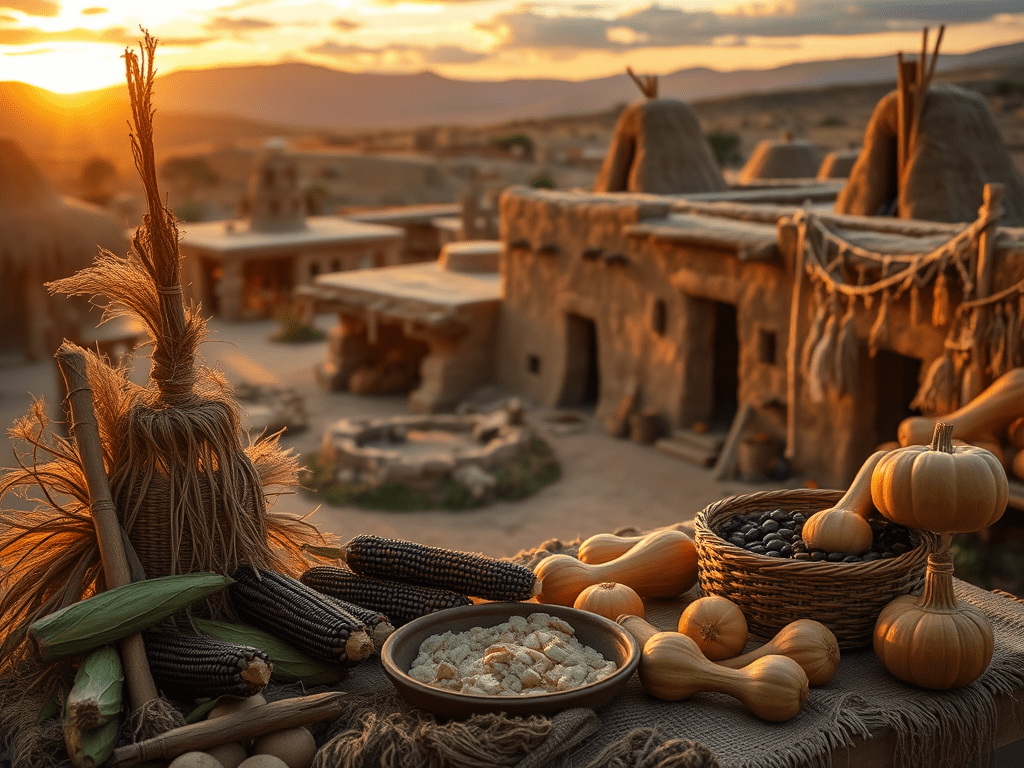
- Eastern Woodlands and Mississippian cultures: Corn (maize), beans, squash (the “Three Sisters”), along with nuts, berries, fish, and game like deer and turkey.
- Great Plains: Bison was central to their diet, supplemented with wild berries, roots, and seeds.
- Southwest: Corn, beans, squash, and chili peppers were staples, with domesticated turkeys and wild game.
- Pacific Northwest: Salmon, shellfish, seaweed, berries, and roots (e.g., camas) were key foods.
- Drinks: Water was the primary drink. Some communities used herbal teas or made beverages like black drink (a caffeine-rich tea) in ritual contexts.
Clothing
- Clothing was made from locally available materials:
- Eastern tribes: Deerskin tunics, leggings, and moccasins.
- Great Plains: Bison hides for clothing and blankets.
- Southwest: Cotton textiles dyed with natural pigments, often in geometric patterns.
- Pacific Northwest: Clothing from cedar bark, grasses, and animal hides.
Clothing was seasonally adjusted, with warmer layers in colder regions.
Housing
- Eastern Woodlands: Longhouses or wattle-and-daub homes made of wooden frames and covered with bark or clay.
- Great Plains: Portable tipis for nomadic groups, especially those reliant on bison.
- Southwest: Pueblo-style dwellings made of adobe or stone, often multi-story and built into cliffs.
- Pacific Northwest: Large wooden plank houses made of cedar.
Health and Life Expectancy
- Childhood Mortality: Estimated 30–50% of children did not survive to adulthood due to disease, malnutrition, and accidents.
- Life Expectancy: If a person survived childhood, they could expect to live into their 40s–50s. Elders in their 60s were rare but highly respected.
- Healthcare: Based on herbal medicine, spiritual healing, and traditional knowledge passed through generations. Common remedies included:
- Willow bark: A natural source of salicylic acid (like aspirin).
- Herbs and roots: For wound care, fevers, and digestive issues.
- Major health threats included infectious diseases, malnutrition, and injuries.
Social Structures
- Communities were often egalitarian, with roles divided by gender and age:
- Men typically hunted and engaged in war.
- Women farmed, gathered food, and maintained the household.
- Elders held leadership roles as advisors and keepers of oral traditions.
- Monogamy: Most tribes practiced monogamy, though some allowed polygamy.
- Marriage and Family:
- People married in their late teens or early twenties.
- Families often had 4–6 children, but not all survived.
- Children were deeply cherished but faced challenges like hunger, disease, and the need for early labor contributions.
Leisure and Games
- Popular activities included:
- Lacrosse-like games: Played by Eastern Woodland tribes.
- Dice and guessing games: Often used for gambling or ceremonial purposes.
- Storytelling, music, and dancing were central to cultural life, with drums and flutes being common instruments.
Religion and Faith
- Indigenous religions were animistic, with a deep reverence for nature and belief in a spirit world. Ceremonies often revolved around seasonal cycles, agriculture, and hunting.
Art and Language
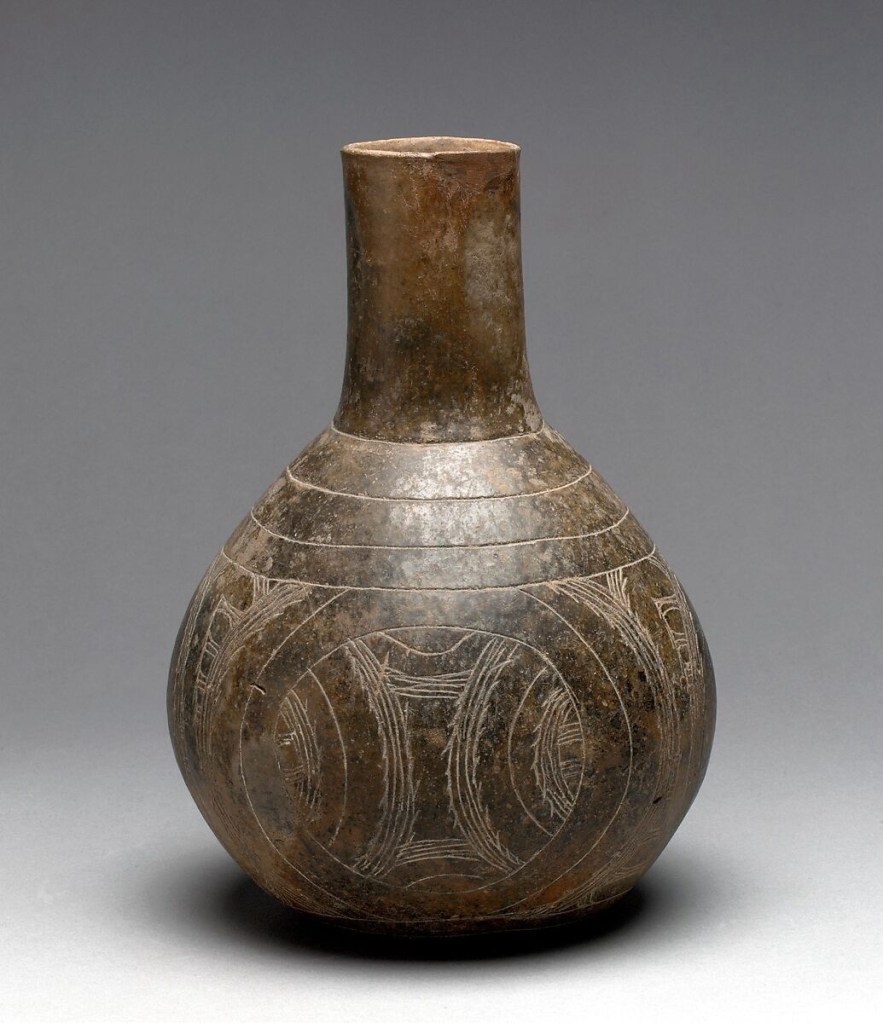
Image Credit: The Metropolitan Museum of Art, “Seed Jar,” Pueblo (Ancestral), 14th–15th century, Clay and pigment, Accession Number: 1978.412.85. Available at: The Metropolitan Museum of Art
- Art: Focused on pottery, basket weaving, beadwork, and textiles. Artistic designs often had spiritual or ceremonial significance.
- Language and Writing: Most tribes had rich oral traditions but lacked formal writing systems. Petroglyphs and pictographs were used for symbolic communication.
Musical Instruments
1. Drums:
- Usage: Drums were central to ceremonies, dances, and storytelling. Made from hollowed-out logs or clay bases with animal hide stretched over them, they were used to maintain rhythm during rituals and connect with spiritual forces.
2. Flutes:
- Usage: Flutes were crafted from wood, reeds, or bone and used in courtship, storytelling, and spiritual ceremonies. They produced melodic tones that were often tied to nature and personal expression.
3. Rattles:
- Usage: Made from gourds, turtle shells, or wood, filled with seeds or stones, rattles accompanied dances and ceremonies, often symbolizing the natural world or ancestral spirits.
Tools and Technology
- Tools included:
- Stone tools: For hunting (arrowheads, spear points) and farming (hoes made from bone or stone).
- Wooden tools: For construction and crafting.
- Ceramics: For cooking and storage.
- Bow and arrow technology and advanced agricultural techniques (e.g., irrigation in the Southwest) were in use.
Challenges
- Environmental challenges: The Little Ice Age caused shorter growing seasons and occasional crop failures.
- Conflicts: Tribes competed for resources and territory. Large-scale warfare was uncommon but did occur.
- Diseases: Indigenous peoples faced outbreaks of localized diseases.
Advancements Since 1300
- Growth of trade networks, such as the Mississippian trade routes, connecting distant tribes.
- Increased agricultural innovations, such as terracing and irrigation in the Southwest.
- Cultural and ceremonial developments, including large-scale mound-building.
This snapshot highlights the resilience, ingenuity, and rich cultural life of Indigenous peoples in 1400 AD. Despite environmental and social challenges, these communities thrived, creating societies deeply attuned to their environment.
Entertainment
Jam Like It’s 1400 AD: The Ultimate North American Banger Playlist:
While no recorded tracks from this period exist, these modern interpretations and recreations offer insight into Indigenous musical traditions:
1. “Song for the Morning Star” by R. Carlos Nakai
- Features Native American flute music evoking spiritual and natural themes.
- Highlights traditional drumming and vocal styles from Indigenous ceremonies.
4. “Katsitsi-Yos” by Joanne Shenandoah
- A vocal track inspired by Indigenous storytelling and spirituality.
- A captivating fusion of traditional Native American flute melodies and contemporary rhythms, reflecting his Maricopa and Dakota heritage.
Media Picks
Movies specifically portraying America in the 1400s, before European contact, are rare, but some films provide culturally sensitive glimpses into pre-Columbian life or Native American perspectives. Here are five good options for children, focusing on respect for Indigenous cultures and historical authenticity:
1. Brother Bear (2003 Movie)
- This animated Disney film tells the story of a young boy who is transformed into a bear and embarks on a journey of self-discovery and respect for nature. While not set specifically in the 1400s, it reflects Native American values and a connection to the land.
2. “Children of the Longhouse” by Joseph Bruchac
- A historical fiction novel set in an Iroquois village, depicting the daily lives, games, and traditions of the time.
3. “We Shall Remain” (2009 TV Show)
- Includes segments appropriate for older children about Native American life and history, focusing on pre- and post-contact eras.
Adult Options
1. Native America (2018 TV Show)
- A PBS documentary series that showcases the sophisticated cultures, innovations, and traditions of Indigenous peoples before European contact.
2. “1491: New Revelations of the Americas Before Columbus” by Charles C. Mann
- This non-fiction book explores the thriving civilizations in the Americas before European colonization, including their innovations and ways of life.
3. 500 Nations (1995)
- A documentary series narrated by Kevin Costner that explores the histories and cultures of Indigenous peoples across North and South America before and after European contact.
These films provide insights into Indigenous cultures and perspectives, although some are not strictly set in the 1400s or North America. Use them as a way to engage with and respect Indigenous histories and experiences.
OG Meal
Breakfast
- Cornmeal Porridge: Ground corn is simmered with water over an open flame. It is gently sweetened with honey or maple syrup. Roasted sunflower seeds are added on top for a nutty crunch.
- Herbal Tea: A warm infusion of wild mint leaves steeped in boiled water.
Main Meal
- Snack (Starter): Roasted pumpkin seeds, lightly toasted over a fire.
- Entree: Turkey stew, made by slow-cooking turkey chunks, wild onions, carrots, and turnips in a clay pot over an open flame.
- Side: Sautéed greens, such as amaranth or lamb’s quarters, cooked with crushed wild garlic and toasted piñon nuts in a stone or clay dish.
- Side 2: Cornbread, made from ground cornmeal and water, shaped into flat rounds, and baked on a hot stone.
- Dessert: Baked apples roasted near the fire, drizzled with wildflower honey, and topped with crushed nuts like walnuts or pecans.
- Beverage: Maple syrup water, created by stirring a small amount of maple syrup into fresh spring water.
Preparation Notes
- Cooking Methods:
Stews and porridges would typically be cooked over an open fire in clay or stone pots.
Cornbread would be baked on heated stones or in clay ovens.
Flavors and Seasoning:
Salt was available in some regions. Flavors often relied on herbs, wild garlic, or smoked elements for depth.
This meal plan highlights the ingenuity and resourcefulness of Indigenous food practices in pre-contact America. It uses ingredients and techniques authentic to the time.
Modern Meal
A Quick Note on the Ingredients: If there’s an ingredient below that doesn’t appeal to you or isn’t available at your store, don’t stress, just skip it, find a similar substitute, or let this recipe inspire you to add your own twist. Back in this time period, recipes didn’t exist in the structured way we know them today. People used whatever they had on hand, and measurements were more of a “feel it out” situation. So embrace the spirit of the age and make it yours!
Breakfast
- Creamy Cornmeal Porridge: Cornmeal cooked with water and a splash of cream, sweetened with maple syrup, and sprinkled with candied sunflower seeds.
- Mint-Infused Herbal Tea: Brewed with fresh mint leaves and a hint of lemon.
Main Meal
- Snack (Starter): Roasted pumpkin seeds tossed with smoked paprika and sea salt, baked to crispy perfection.
- Entree: Turkey stew slow-cooked in a crockpot or Dutch oven with turkey thighs, caramelized onions, diced carrots, and turnips, finished with a sprinkle of fresh herbs like sage or thyme.
- Side: Sautéed greens (spinach or Swiss chard) with minced garlic, toasted pine nuts, and a dash of olive oil for a smooth finish.
- Side: Cornbread, my personal fav is Bob’s.
- Dessert: Oven-baked apples stuffed with a mixture of honey, crushed nuts, and cinnamon, served warm with a dollop of whipped cream.
- Beverage: Maple lemonade, made by mixing fresh lemon juice, water, and a hint of maple syrup for sweetness.
 Time Traveling Table

Leave a comment