
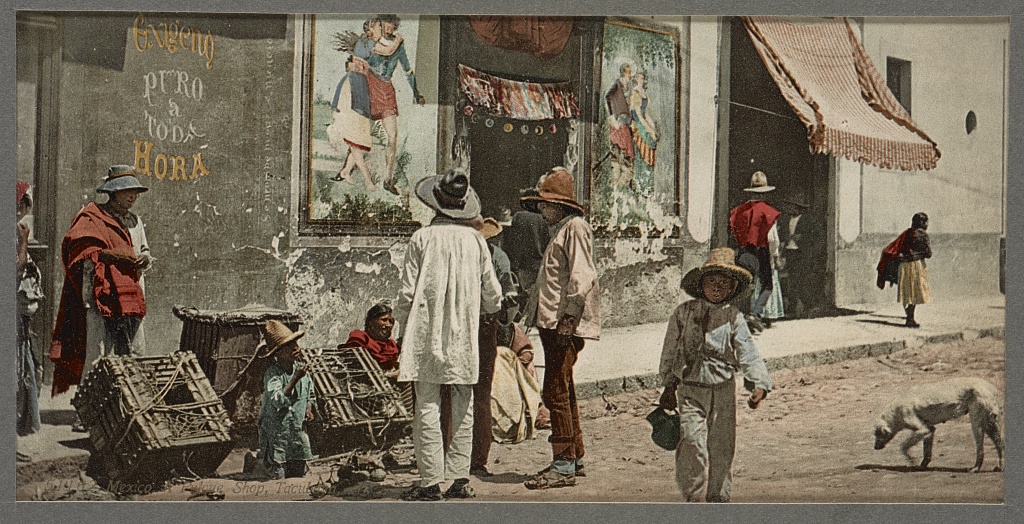
Sit with me for a moment. Picture dust lifting off a sunbaked road, the scent of woodsmoke settling into your clothes, and a church bell in the distance pulling the morning into motion. This is Mexico in 1876, not a quiet chapter, but one still carrying the aftertaste of conflict while stepping into a new kind of order under Porfirio Díaz (more on him later).
If you’ve already spent time in my 1857 post, then you’ve seen a country in tension, fractured, uncertain, still figuring out what it wanted to be. By now, some of that instability lingers, but daily life has begun to settle into something more structured, more rhythmic, at least on the surface. The chaos hasn’t disappeared, it has simply been absorbed into routine.
So instead of staying in the realm of politics, let’s move closer to the ground. Step inside the home, into kitchens warmed by clay stoves, out into fields where the milpa still anchors survival, and into the small, repeated motions that quietly shape a life. Because culture does not live in speeches or decrees. It lives in habit, in flavor, in labor, and in care.
And once you start to see that rhythm, you recognize it. Not as something distant or antique, but as something that still hums underneath modern Mexico, steady, familiar, and very much alive.
Just so we’re all on the same page. Please ensure you’ve made yourself acquainted with my disclaimer
A Day in the Life
Daily life followed light, heat, and the physical limits of labor. What mattered was not the hour, but what could be finished before dark.
Sit with the rhythm for a moment and it starts to come into focus. Most people were not organizing their day around clocks or appointments, but around heat, distance, and physical effort. The morning often began in cooler air, sometimes brisk in the highlands, already warm in coastal regions, and by midday the sun pressed hard in most parts of the country. Work bent around that reality, pushing forward early, slowing when the heat demanded it, and tapering as the light gave out.
Across the household, that rhythm was shared, but the experience of it looked very different depending on your role.
Daily Rhythm Across the Household
- Men
The day began just before sunrise, with something quick to drink or eat, often atole or café de olla with a tortilla, enough to carry the body into the morning. If work stayed close to home, in a family milpa or nearby field, there was a return for the main mid-day meal when the heat peaked and movement slowed. In more distant settings, especially on haciendas, food had to be carried out instead. The bulk of the day moved through planting, tending crops, repairing tools, or managing animals, with labor easing as the sun dropped. - Women
Work started earlier and stretched longer. Before first light, there was already motion, grinding nixtamal on a metate, shaping tortillas, and beginning the long process of preparing the main meal. Nothing was assembled quickly. Ingredients were soaked, ground, and cooked slowly, with careful timing across multiple elements. Beyond food, the day carried on with washing clothes by hand, hauling water, tending small animals, and managing children. Domestic labor was constant and foundational, not confined to a set block of hours. - Children
Children moved within that same current of work from an early age. Mornings often included gathering firewood, carrying water, or assisting with food preparation, small tasks that still mattered to the household. As they grew, responsibilities shifted with need. Boys were more likely to move into field labor, while girls often remained closer to domestic work, though this division could flex depending on circumstance. Schooling existed but was inconsistent, especially outside urban areas, and usually tied to church instruction focused on reading, writing, and religion. The mid-day meal stood out as one of the few reliable moments when everyone gathered together. - Infants & Toddlers
Care stayed close and physical. Infants were often carried in rebozos, allowing constant contact while work continued without pause. Childcare was shared across the household, with older siblings stepping in naturally throughout the day.
Home Life
Homes are built from what the land offers and shaped by how people actually live. Space is shared, purposeful, and constantly in use.
Step inside a typical home and everything else about daily life starts to make sense. The layout, the materials, even the way objects are placed all reflect access, climate, and necessity. These are not spaces designed for privacy or specialization, but for flexibility, where the same area shifts from kitchen to sleeping space to workspace over the course of a single day.
What a Typical House Looked Like
For most families, especially outside major cities, a home was modest, practical, and built with local materials. Instead of separate rooms with fixed purposes, space stayed open and adaptable.
A common house might be:
- Roughly 20–50 square meters (215–540 sq ft)
- One main room, sometimes with a small cooking area
- No formal bedrooms
- No indoor plumbing
The materials carried their own logic. Adobe walls, thick and slightly rough, held onto coolness even in strong heat. Roofs varied by region, thatch, tile, or wood, depending on what was available. Floors were usually packed earth, swept smooth and sometimes treated with ash or clay to reduce dust.
Furniture stayed minimal, not because of lack of care, but because space and resources were limited:
- A wooden table, if the household could afford one
- A few stools or benches
- Storage in baskets, chests, or along the walls, some similar to surviving 19th-century examples preserved in museum collections
Urban homes could be larger and more structured, especially among wealthier families, but most people lived in spaces like this.
Sleeping & Rest
Sleep followed the same practical logic as everything else. It was flexible, communal, and tied closely to the cycle of daylight.
- Families often slept in the same room
- Beds included petates, simple wooden frames, or rope cots
- Blankets were layered depending on season, often wool or cotton
Children stayed close to parents, both for warmth and safety. The idea of separate bedrooms or individualized sleeping space simply did not fit the structure of the home.
Clothing for sleep was minimal:
- A light shift or undergarment
- Or loosened versions of day clothing
People generally slept soon after dark and rose before sunrise. Midday rest was common, especially after the main meal, when both heat and physical fatigue set in.
Cleanliness & Bathing
Cleanliness existed within the limits of access. Water was not turned on, it was carried, which changed how and when it could be used.
Bathing depended on what was nearby:
- Rivers, lakes, or communal water sources
- Basins used inside the home
- Occasional use of temazcal, a traditional steam bath in some regions
Soap was available, often handmade from animal fat and ash, but used carefully. Daily hygiene focused more on maintenance than full bathing:
- Washing hands and face
- Keeping clothing functional
- Maintaining cooking and living areas
Tools, Objects & Everyday Materials
What filled the home was not decorative in the modern sense. Objects were used daily, worn in, and deeply tied to tradition.
Core items included:
- Metate and mano for grinding maize
- Comal for cooking tortillas over fire
- Clay ollas for simmering beans and stews
- Petates for sleeping and sitting
- Rebozos used for carrying, warmth, and modesty
Many of these tools stretch back generations, even centuries. What begins to shift during this period is the slow introduction of new materials. In more connected areas, you start to see metal cookware replacing some clay, glass containers appearing in households, and kerosene lamps gradually taking the place of candles.
Even so, most homes remained anchored in older systems. Industrial goods existed, but they had not yet reshaped daily life for the majority.
What This Space Tells You
The home was never just one thing. It functioned as:
- A kitchen
- A sleeping space
- A workspace
- A storage area
- A social environment
All at once.
There was very little separation between parts of life. Cooking happened near where people slept. Children grew up surrounded by the same labor that sustained the household. Nothing was hidden away or compartmentalized.
Fashion & Beauty Standards
Clothing was not about expression in the modern sense. It signaled labor, region, class, and respectability, often before a person ever spoke.
Before you even heard someone speak, you could read quite a bit about them just by looking. Clothing carried information, what kind of work they did, where they likely came from, how much access they had to materials. It was shaped less by trend and more by necessity, climate, and social expectations. Fabrics were breathable but often coarse, sun-faded, and repaired repeatedly. Nothing was disposable, and very little existed purely for decoration.
Clothing Across the Household
- Men
Most men dressed for work first. Loose cotton shirts and trousers allowed movement and airflow, often in undyed or muted earth tones that hid wear. A sombrero was essential, not decorative, but practical, shielding the face and neck from prolonged sun exposure. In colder regions or seasons, a sarape added warmth. Footwear varied widely, from huaraches to going barefoot, depending on terrain and income. In more urban or affluent settings, clothing shifted toward European influence, with tailored jackets, waistcoats, and leather shoes beginning to appear, a quiet signal of status and access to imported goods. - Women
Women’s clothing balanced movement with modesty. Long skirts and blouses, often layered, were made from cotton or wool depending on climate. The silhouette allowed for bending, lifting, and constant motion while maintaining expected coverage. The rebozo was indispensable, functioning as a wrap, a carrier for children, and a marker of social identity. Jewelry was minimal for most, though small earrings or simple necklaces appeared in some regions. Among wealthier women, European silhouettes began to take hold, with more structured bodices and finer fabrics entering urban wardrobes. - Children & Infants (Function & Continuity)
Children wore simplified versions of adult clothing, often made from the same materials and passed down between siblings. Clothing showed wear, patched, resized, and reused. Babies were wrapped in cloth and frequently carried in rebozos, staying physically close throughout the day. Shoes were not guaranteed, especially for younger children, and practicality always came first.
Appearance & Grooming
Cleanliness mattered, but it existed within the limits of access. Grooming was simple, consistent, and tied to respectability rather than vanity.
- Men kept hair short or medium length for practicality. Facial hair, especially mustaches, was common and carried a sense of maturity and presence. Washing was done with water and handmade soap when available, enough to maintain a presentable appearance even in labor-heavy conditions.
- Women typically wore their hair long, braided or pulled back to keep it out of the way during work. Washing relied on simple soap or natural cleansers. Cosmetics were minimal, though some used natural pigments for subtle color. In urban elite circles, lighter skin was often idealized, reflecting lingering colonial standards.
- Children were kept neat as a reflection of family care. Hair was trimmed or managed for practicality, and hygiene followed the same routines as the household. Ear piercings for girls appeared early in some communities.
Materials & Construction
Clothing was shaped by what could be grown, woven, or acquired. Textile production remained largely local, though changes were beginning to appear.
- Cotton was the most common fabric in many regions
- Wool appeared in cooler climates
- Handwoven textiles showed visible variation in texture and pattern
Fastenings stayed simple and functional:
- Ties, sashes, or belts
- Limited use of buttons in poorer households
- More structured closures in urban or imported garments
In more connected areas, imported fabrics and manufactured goods began to circulate.
Body Ideals & Physical Reality
Body expectations were grounded in function, not aesthetics in the modern sense. What mattered was capability.
Diet and labor shaped the body more than fashion ever could. With meals built around maize, beans, and seasonal foods, and days filled with physical work, bodies tended to be lean, durable, and often shorter than modern averages.
Diet & Daily Meals
Food was not built around convenience or endless variety. It followed labor, land, and the deep agricultural systems that kept households alive.
To understand daily life, you have to start with food. Not just what people ate, but how deeply survival depended on producing, preparing, and stretching it. For most households, especially among rural, Indigenous, and mestizo communities, food was shaped less by preference than by access, season, and labor. Meals were not rigidly segmented into modern breakfast, lunch, and dinner. Instead, eating followed work rhythms, with the true anchor of the day arriving at midday, when physical exhaustion and household coordination met at the table.
At the center of everything was maize. You did not simply eat corn. Maize structured daily life, nutritionally, economically, and culturally, in ways that stretched back thousands of years.
The Foundation of Everyday Eating
For most households, the food system rested on remarkable consistency rather than abundance.
Core staples included:
- Maize transformed into tortillas, atole, tamales, and masa-based dishes
- Beans as the primary protein source
- Calabaza and seasonal vegetables
- Chiles for flavor, preservation, and complexity
- Quelites and local herbs for supplemental nutrition
This was not accidental. The milpa system, the deeply sophisticated agricultural pairing of maize, beans, and squash, created a sustainable and nutritionally effective foundation that fed communities far more reliably than hunting or foraging alone. Rather than building survival around uncertainty, households invested in systems that produced consistent calories, protein, and resilience.
Protein beyond beans depended heavily on means:
- Eggs
- Occasional pork, goat, or chicken
- Regional access to insects, fish, or small game
For most people, meat was supplemental, not central.
Daily Meal Rhythm
Meals followed physical need more than formal structure.
- Morning: something sustaining but simple, often atole, tortillas, or leftovers
- Midday (comida): the largest and most important meal
- Evening: lighter foods to sustain through the night
If people truly felt “fed,” it was usually during comida.
The Midday Meal (Comida)
This was the real center of daily food culture, where labor paused long enough for the household to gather and replenish.
Setting & Space
For most families, this was not a formal dining experience. Meals unfolded in active, working spaces.
- In towns, a wooden or simple plank table might serve as the gathering point
- In modest homes, people often ate near the cooking area
- In rural households, meals could happen near the hearth or outdoor cooking space
This was a lived-in environment, not staged presentation. Food moved directly from comal or fire to shared space, with children, movement, and conversation surrounding it.
Shared Serving Style
Western-style individual plating was uncommon for most households.
Instead:
- Beans simmered in clay ollas
- Stews or broths were served communally
- Tortillas arrived fresh from the comal, often wrapped in cloth
- Salsa and accompaniments remained accessible to everyone
People built meals dynamically:
- Tearing tortillas
- Scooping beans
- Adding chile
- Layering bites by hand
Tortillas were not side items. They were both food and utensil.
Utensils & Eating Mechanics
Formal cutlery existed unevenly, depending on class and region.
- Tortillas functioned as primary utensils
- Spoons were common for soups or beans
- Knives were practical tools, not individualized place settings
- Forks appeared more consistently in urban or upwardly mobile households
This made eating tactile, adaptive, and efficient, built around practicality rather than imported etiquette.
Pace & Atmosphere
Comida was often the closest thing to a daily pause, but not indulgent leisure.
- Work slowed
- Families gathered
- Conversation happened
- Hunger was addressed directly
The atmosphere was often:
- Warm
- Busy
- Slightly chaotic
- Filled with the smell of corn, smoke, and chile
Sweets, Cravings & Small Luxuries
Sweet foods existed, but they mattered precisely because they were not constant.
Common treats included:
- Piloncillo
- Seasonal fruit
- Candied calabaza
- Alegrías
These were not daily indulgences for most households. Their rarity made them memorable.
Drinks, Pulque & Daily Hydration
For many households, nourishment did not come from food alone. Drinks often provided calories, hydration, and social ritual.
Common beverages included:
- Atole for dense morning sustenance
- Café de olla in increasingly connected regions
- Chocolate, especially in central and southern households
- Agua fresca or simple water where accessible
- Pulque, particularly in central Mexico, as both nourishment and social drink
Pulque, made from fermented maguey sap, occupied a unique place in daily life. It was not merely recreational alcohol, but often a working-class beverage tied to agriculture, local commerce, and longstanding Indigenous fermentation practices.
Markets, Foraging & Supplementation
While agriculture formed the base, food systems remained flexible.
Supplemental sources included:
- Foraged greens
- Herbs like epazote
- Seasonal fruits
- Local tianguis markets for salt, spices, or specialty goods
Markets remained critical centers of exchange, connecting households to broader regional economies while preserving longstanding Indigenous and colonial trade systems.
A Full Day at the Table
From first light to evening sweetness, these meals reflect the flavors, labor, and cultural continuity that shaped everyday eating.
Historical Daily Menu
Mexico City / Central Mexico, middle-class household
Morning Meal
- Chilaquiles in silky bean sauce
Day-old corn tortillas lightly fried or toasted, simmered in smooth frijol sauce, finished with fresh cheese, onion, and simple chile salsa. - Drink:
Café de olla brewed with piloncillo and cinnamon
Mid-Morning Snack
- Hand-formed bean sopes
Small masa rounds topped with slow-cooked beans, salsa, and optional fresh cheese. - Drink:
Chocolate caliente or traditional Oaxacan-style drinking chocolate
Main Communal Meal (Comida)
- Pozole in rich chile broth
Hominy stew with meat when available, layered with onion, lime, chile, and fresh corn tortillas. - Verdolagas con limón
Fresh purslane with lime, onion, salt, and chile. - Drink:
Agua fresca de limón con chía
Sweet Finish
- Alegrías
Amaranth bound with piloncillo into lightly sweetened bars or clusters. - Drink:
Chocolate caliente
A Modern Table, Rooted in the Same Tradition
Contemporary interpretations inspired by the same foundational foodways
Breakfast
- Black bean chilaquiles verdes
Crisp tortilla chips tossed in roasted tomatillo salsa with black bean purée, cotija cheese, soft egg, and pickled onion. - Drink:
Café de olla latte with cinnamon, piloncillo, and steamed milk
Mid-Morning Snack
- Mini masa cakes with whipped beans
Small masa cakes layered with creamy bean spread, queso fresco, chile oil, and seasonal herbs. - Drink:
Iced Oaxacan drinking chocolate
Main Meal
- Pozole rojo or verde
Traditional pozole elevated with deeply developed broth, premium pork or chicken, fresh garnishes, tostadas, radish, cabbage, and lime. - Purslane & Lime Salad
Fresh purslane, lime, radish, herbs, and chile flakes. - Drink:
Sparkling lime-chia agua fresca
Sweet Finish
- Amaranth-piloncillo crunch bars with dark chocolate drizzle
A modern homage to alegrías with richer texture and presentation. - Drink:
Mexican hot chocolate with cinnamon and vanilla
Population & Power Centers
Most people lived close to the land, not in sprawling cities. Urban centers shaped politics, trade, and modernization, but rural communities remained the true backbone of everyday life.
When people imagine the late 19th century, there can be a temptation to picture national life through capitals and major streets. But the reality was far more rural. Mexico was overwhelmingly agricultural, with most families living in villages, farming communities, or hacienda systems rather than dense urban centers. Cities mattered deeply, yes, but primarily as hubs of power, governance, and commerce rather than as the dominant lived experience.
By the late 1870s, national population estimates generally fall between 9 and 10 million people.
The National Population Reality
What mattered most was not just population size, but distribution:
- Roughly 70–80% of people lived in rural areas
- Most households were tied to agriculture, village systems, or hacienda labor
- Urban centers held disproportionate political and economic influence
So while cities shaped national decisions, they did not represent the average daily reality for most Mexicans.
The Largest Cities & Their Roles
- Mexico City (Political Core)
With an estimated population of roughly 200,000–250,000, Mexico City stood as the nation’s political and administrative center. Government institutions, elite families, and major public works concentrated here. It was also among the earliest spaces where modernization became visible through paved roads, gas lighting, and expanding infrastructure. - Puebla (Industry, Craft & Religion)
Puebla’s strength came through manufacturing, especially textiles and ceramics, alongside its strategic location between the capital and coastal trade routes. Deep colonial architecture and religious institutions reinforced its importance as both cultural and economic center. - Guadalajara (Western Regional Power)
Guadalajara functioned as the leading urban center of western Mexico, tied closely to agriculture, ranching, and growing regional commerce. Its identity as a center of education and cultural influence was already taking shape in this period. - Guanajuato (Mining Wealth)
Silver remained central here. Guanajuato’s economic significance rested heavily on mineral wealth, shaping urban density, architecture, and broader regional importance. Even as mining productivity shifted, its influence remained substantial. - Veracruz (Global Gateway)
Veracruz served as Mexico’s primary port, linking interior systems to global trade. Imports, exports, foreign influence, and migration all moved through this humid and strategically essential coastal city.
Economy, Labor & Class Power
Work was survival, but ownership was power. For most people, daily life was shaped less by wages than by land, labor, and deeply unequal systems of control.
To understand how Mexico functioned in this period, you have to look beyond coins and commerce alone. Economic life was rooted in who controlled land, who worked it, and who benefited from that labor. For the vast majority of people, especially rural laborers, Indigenous communities, and modest urban households, survival depended more on physical endurance and access to resources than on cash wealth. This was an economy where landowners and political elites held disproportionate control, while most families lived much closer to subsistence.
Land was not just property. It was status, leverage, food security, and political power.
Land, Currency & Everyday Survival
Broad social divisions shaped nearly every aspect of life:
- Elite landowners and political figures who controlled estates, regional production, and governance
- Small urban middle sectors including merchants, clerks, artisans, and professionals
- Mass rural labor populations made up of peons, agricultural workers, domestic servants, and Indigenous communities
In urban centers and trade hubs, money circulated more regularly, especially silver pesos, one of the world’s most trusted currencies due to Mexico’s mining output.
In rural areas, however, economic life often relied just as heavily on:
- Barter
- Labor exchange
- Local credit systems
- Goods-based transactions
Common exchanges included:
- Maize and beans
- Eggs or livestock
- Handmade textiles
- Skilled labor or favors
For many households, food production and labor held equal or greater value than formal currency.
Jobs Across Social Classes
Daily work varied widely, but most labor was physically demanding and economically limited.
- Peones (Agricultural Laborers)
Worked fields, haciendas, and estates, often under debt-based systems that restricted mobility - Domestic Servants
Maintained elite or middle-class households, sometimes compensated partly through lodging or food - Artisans & Skilled Tradespeople
Weavers, carpenters, potters, and blacksmiths formed an important but economically vulnerable skilled sector - Market Vendors (Tianguis Sellers)
Participated in regional trade, often with unstable but potentially flexible income - Teachers, Clerks & Minor Officials
Represented a small but growing educated class - Merchants & Landowners
Held far greater economic influence through ownership, trade control, and political ties
For most laborers, wages supported subsistence, not advancement. Physical survival and family continuity mattered far more than upward mobility.
Debt, Haciendas & Structural Control
This is where economic life became especially restrictive.
Large haciendas often operated through systems of debt peonage, where workers:
- Lived on land they did not own
- Purchased goods through employer-controlled stores (tiendas de raya)
- Accumulated debt that limited freedom of movement
This meant laborers were often trapped economically, even when technically “paid.” Wages might come partially in goods, credit, or restricted purchasing systems rather than free cash.
Labor in Motion: Cargadores & Urban Work
Urban labor had its own physically demanding systems. One striking example was the cargador, a porter or goods carrier responsible for moving heavy merchandise through crowded city streets, markets, and commercial districts.
Cargadores were essential to urban commerce, carrying:
- Food
- Building materials
- Market goods
- Imported products
Their work was grueling, highly physical, and often underpaid, but absolutely central to keeping goods moving in expanding urban economies.

Early Industrial Shifts
By the late 1870s, larger economic transformations were beginning to emerge:
- Railroad expansion
- Increased global trade
- Growing industrial sectors
- More centralized political-economic systems
These developments would accelerate dramatically under Porfirio Díaz, but for most households, life remained grounded in older agricultural and labor systems for the time being.
Health, Healing & Survival
Daily life demanded resilience, but survival was never guaranteed. Health depended as much on environment, labor, and community knowledge as it did on medicine itself.
Health in this period was a constant negotiation between endurance and vulnerability. People built practical systems of care, often rooted in generations of observation, herbal knowledge, and communal support, but disease, injury, and childbirth still carried serious risks. Survival was not simply about strength. It was deeply tied to sanitation, nutrition, geography, and whether help was accessible when things went wrong.
Life Expectancy & The Reality of Survival
- If a person survived childhood, living into their 40s or 50s was fairly common, with some living longer depending on health, labor, and environment.
- Only about 60–70% of children survived to adulthood
Healthcare Access & Medical Reality
There was no universal healthcare system. Treatment depended heavily on class, location, and local knowledge.
Most households relied on:
- Curanderos, traditional healers blending herbal remedies with spiritual and practical care
- Parteras, midwives who managed pregnancy, childbirth, and postpartum care
- Household and regional knowledge passed through generations
Doctors existed, especially in urban centers, but access was uneven:
- Professional care was costly
- Rural populations often had little direct access
- Medical science was still evolving and not always reliably effective
This meant many families balanced traditional healing systems with selective use of formal medicine when available.
Healing Practices & Traditional Medicine
Healing was deeply observational, practical, and often holistic.
Common approaches included:
- Herbal remedies using manzanilla, árnica, ruda, and other medicinal plants
- Poultices and infusions for wounds, fevers, or digestive illness
- Temazcal steam baths for cleansing, respiratory support, and recovery
- Spiritual rituals addressing emotional or energetic imbalance alongside physical symptoms
Common Illnesses & Major Health Risks
The most serious threats often came from environment and circumstance rather than old age.
Common causes of illness included:
- Gastrointestinal disease from contaminated water
- Respiratory infections like pneumonia or tuberculosis
- Smallpox, typhus, and other infectious diseases
- Malnutrition during poor harvest cycles
Major causes of death also included:
- Childbirth complications
- Agricultural or industrial injuries
- Mining accidents
- Epidemic outbreaks
Social & Family Structure
Family was not just emotional support. It was labor system, survival strategy, social identity, and the foundation of daily life.
To understand everyday Mexico, you have to understand that the household was rarely built around individualism. Family functioned as an interconnected economic and social unit, shaping everything from work and childcare to marriage, authority, and survival. Privacy was limited, but support was deeply embedded. Who you lived with, who you answered to, and who you relied on often defined your place in the world more than personal ambition ever could.
Household Structure & Living Arrangements
For most families, especially in rural communities, households often extended beyond the modern nuclear model.
A typical family network might include:
- Parents and children
- Grandparents
- Unmarried siblings
- Extended relatives living nearby or within the same compound
Homes were often small, so space was shared rather than specialized. Multiple generations frequently lived together or within walking distance, creating daily overlap in:
- Childcare
- Food preparation
- Labor
- Resource sharing
This created a highly communal rhythm, where family support was practical, constant, and necessary.
Social Expectations & Household Rules
Daily life depended on clear expectations that maintained order and survival.
- Respect for elders was expected, not optional
- Work was shared, though often divided by gender
- Religion structured major life events and weekly rhythms
- Reputation influenced marriage prospects, social standing, and community support
- Neighbors and extended kin often became critical support systems during hardship
Survival frequently blurred strict boundaries when necessary, but social hierarchy remained deeply ingrained.
Gender Roles & Authority
Households were largely patriarchal, though internal dynamics were more nuanced than formal power structures alone suggest.
- Men typically served as public-facing authority, labor providers, and official decision-makers
- Women managed food systems, domestic organization, child-rearing, and internal household stability
- Children contributed labor early, gradually assuming larger responsibilities
Marriage, Family Formation & Children
Marriage was strongly shaped by Catholic structures and community expectation.
- Women often married in their late teens to early 20s
- Men typically married once financially capable of supporting a household
- Family approval played an important role
- Religious ceremonies often held greater cultural weight than civil contracts
Large families were common:
- Four to eight children was not unusual
- High birth rates were balanced by high child mortality
Children were expected to contribute early, and family life centered heavily around practical continuity rather than romantic ideals.
The Role of Elders
Elders held substantial social and practical authority.
They often:
- Helped raise children
- Passed down agricultural, domestic, and cultural knowledge
- Mediated disputes
- Reinforced family expectations
Respect for elders was built directly into daily social structure.
Childhood & Parenthood
Childhood began with belonging, but also with responsibility. From an early age, children were expected to contribute, learn, and gradually step into the labor systems that sustained family life.
Childhood was not treated as a long protected stage of self-discovery. It was practical, communal, and deeply tied to survival. That did not mean it was joyless. Children still played, explored, and formed strong bonds within family and neighborhood life. But responsibility arrived early, and parenting focused less on individual emotional cultivation and more on raising capable, reliable members of the household.
Parenting & Family Roles
Parenting was woven directly into daily life rather than isolated as a separate specialized task. Children learned primarily through participation, observation, and repetition.
Key family roles often included:
- Mothers as primary caregivers, food providers, and early teachers
- Fathers as authority figures, providers, and labor models
- Grandparents as active transmitters of skills, stories, and cultural knowledge
- Godparents (padrinos) as socially and spiritually significant support figures
Parenting generally emphasized, structure, clear expectations, and communal responsibility. Affection absolutely existed, but it was more often expressed through, provision, protection, teaching, and reliability. Rather than through constant verbal affirmation.
Discipline, Respect & Socialization
Children were expected to understand hierarchy early.
- Obedience to parents and elders was expected
- Discipline was direct, sometimes physical depending on household norms
- Household contribution began young
- Respect for authority was deeply embedded
The goal was not to make children feel exceptional. It was to prepare them to function.
Childhood Responsibilities
As soon as children were physically able, they often began contributing to family survival.
Common responsibilities included:
- Carrying water
- Watching younger siblings
- Assisting in kitchens
- Helping in fields
- Running errands
- Supporting household production
Education, where available, often focused on:
- Basic literacy
- Religious instruction
- Social discipline
But for many families, especially in rural settings, labor needs often outweighed formal schooling.
What It Was Like to Be a Child
Childhood carried both advantages and hardships.
Pros:
- Strong sense of belonging within family and community
- Deep integration with siblings and extended kin
- Early development of practical survival skills
- Frequent outdoor movement and communal play
- Clear role within family structure
Cons:
- Limited formal education access
- Early physical labor demands
- High exposure to disease and mortality
- Reduced personal autonomy
- Shortened childhood in terms of responsibility
What It Was Like to Be a Parent
Parenthood offered its own profound trade-offs.
Pros:
- Strong multigenerational support systems
- Children actively contributed to household survival
- Clear social expectations and role structures
- Deep continuity of cultural values
- Family and work remained interconnected
Cons:
- High child mortality rates
- Constant physical and emotional labor
- Limited medical care
- Heavy economic strain
- Lifelong responsibility with little separation from work
Animals, Companionship & Household Life
Animals were often present, though usually within practical frameworks rather than purely sentimental ones.
Common household animals included:
- Dogs for protection
- Chickens for eggs and food
- Goats or pigs depending on region and means
While emotional attachment certainly existed, animals were generally integrated into labor and sustenance systems.
Leisure & Recreation
Free time was rarely separated cleanly from daily life. It appeared in evenings, festivals, market days, and shared social spaces, woven naturally into community rhythms rather than scheduled apart from them.
Leisure did not usually arrive as long stretches of personal free time, especially for working households. Instead, recreation emerged in moments, after labor slowed, during religious celebrations, in plazas, markets, and communal gatherings. Entertainment was often collective rather than individual, shaped by music, storytelling, ritual, and social connection. Rest was less about withdrawing from life and more about participating in it differently.
Adult Leisure & Social Spaces
For adults, recreation centered heavily around shared environments and communal interaction.
Common pastimes included:
- Plaza gatherings where neighbors exchanged news, conversation, and observation
- Informal music and dance with guitars, singing, and regional performance styles
- Pulquerías and taverns serving as important social hubs
- Religious events, feast days, and public celebrations
Pulquerías, especially in central Mexico, functioned as more than drinking establishments. They were spaces of conversation, labor exchange, and social identity, deeply tied to the longstanding cultural role of pulque.
Public Entertainment & Larger Events
Depending on region and class, broader entertainment could include:
- Local dances during festivals or community gatherings
- Theater performances, particularly in urban areas
- Bullfighting and public spectacles
- Tianguis market days, which doubled as major social spaces
In larger towns and cities, theater and public performances remained culturally significant, carrying strong Spanish colonial influence while evolving into localized forms.

Physical Recreation & Informal Sport
Structured modern sports were not dominant for most people, but physical recreation still existed.
Common forms included:
- Horse racing or riding displays
- Informal regional competitions
- Traditional local games
- Dancing as both recreation and social performance
Childhood Play & Family Recreation
For children, play existed more fluidly between work and responsibility.
Common games included:
- Tag and chasing games
- Hoop rolling or improvised object games
- Handmade dolls from cloth or corn husks
- Storytelling, riddles, and oral games
Children were not separated into heavily structured recreational worlds. Their leisure often moved organically between chores, social gatherings, and open communal spaces.
Holidays, Festivals & Religious Celebrations
This was where leisure became most vibrant and socially visible.
Major events often included:
- Catholic feast days
- Saint celebrations
- Harvest festivals
- Regional community events
These gatherings typically brought:
- More elaborate foods
- Music and dance
- Street processions
- Expanded social interaction
Birthdays & Personal Celebrations
Modern-style birthdays were not universally central.
- Family acknowledgment was possible
- Formal birthday parties were less common, especially in rural households
- Baptisms, saint’s days, and religious milestones often carried greater social significance
Individualized birthday culture would become far more prominent later.
Culture, Language & Religion
Belief, language, and creative expression were not isolated parts of life. They shaped morality, identity, social structure, and the daily rhythms through which people understood the world.
Culture was lived, not compartmentalized. Religion informed calendars and morality. Language reflected both power and belonging. Art existed in grand academic institutions, yes, but also in woven cloth, carved saints, ceramics, and domestic spaces. Identity was built through overlapping systems of faith, tradition, family, and regional heritage, creating a Mexico that was deeply layered rather than culturally uniform.
Religion & Spiritual Life
Religion was foundational, not peripheral. Roman Catholicism dominated public life, shaping social expectations, feast days, family structures, and moral codes. But in practice, religion was rarely a simple colonial transplant. Across much of Mexico, Catholicism blended with longstanding Indigenous spiritual traditions, producing highly localized expressions of belief.
Daily spiritual life often included:
- Mass attendance on Sundays and feast days
- Home altars with saints, candles, and devotional imagery
- Baptisms, marriages, funerals, and saint celebrations
- Community religious festivals
At the same time, older traditions often persisted through:
- Herbal healing
- Spiritual cleansing rituals
- Beliefs around luck, balance, and unseen forces
Social Morality, Rituals & Taboos
Daily life operated within deeply embedded moral expectations.
Core values often emphasized:
- Obedience
- Modesty
- Family responsibility
- Respect for elders and authority
Community reputation carried serious weight, shaping:
- Marriage prospects
- Social standing
- Economic trust
- Public respectability
Violations of accepted social roles, especially around gender, family, or religious expectations, could carry significant social consequences.
It is also worth noting that while same-sex activity was decriminalized nationally in 1871, social stigma remained intense. Legal shifts did not necessarily translate into broad public acceptance, and exposure could still lead to severe social repercussions.
Language, Identity & Communication
Language itself reflected Mexico’s layered social realities.
- Spanish dominated government, education, and formal institutions
- Indigenous languages remained deeply present in rural communities and regional daily life
Major Indigenous language groups included:
- Nahuatl
- Maya languages
- Zapotec
- Mixtec
Many households remained bilingual or primarily Indigenous-language speaking, particularly outside urban centers.
Literacy rates remained relatively low:
- Formal education access was limited
- Oral tradition remained central
- Storytelling, observation, and repetition preserved cultural knowledge
Art, Expression & Aesthetic Life
Art existed on multiple levels.
Elite & Academic Art
Urban centers increasingly supported formal artistic institutions influenced by European academic traditions.
Characteristics included:
- Realism
- Historical narratives
- National identity
- Scientific observation
José María Velasco stands as one of the clearest examples, using landscape painting to visually define national space and identity.
Everyday Art & Functional Beauty
Outside elite circles, artistic life remained embedded in practical production:
- Handwoven textiles
- Decorative ceramics
- Religious carvings and paintings
- Embroidery
- Domestic craft traditions
These forms were often not separated from labor, yet they carried enormous cultural and aesthetic significance.
Historical Context
This was a country still carrying the scars of war while stepping into a new era of centralized control. Reform, invasion, reconstruction, and authoritarian modernization all collided to shape daily life.
To understand daily life in this period, you cannot separate it from the political upheaval that came before it. By 1876, Mexico was not emerging from a single conflict, but from decades of restructuring, violence, foreign intervention, and ideological struggle. The routines of ordinary people, from farming to family life, unfolded within a nation still actively redefining itself.
Reform, Resistance & Civil War
The Mexican Constitution of 1857 attempted to fundamentally reshape national power structures.
Key reforms included:
- Separation of church and state
- Reduction of church and military privilege
- Expanded legal equality
- Individual rights protections
These reforms were transformative, but deeply controversial. Conservative resistance led directly to the Reform War (1857–1861), a brutal internal conflict that fractured communities, destabilized infrastructure, and intensified political division.
For ordinary people, this meant:
- Economic disruption
- Regional instability
- Forced political alignments
- Social fragmentation
Emperor Maximilian I & Mexico’s Second Empire

Yes, Mexico really did have an emperor.
Following internal political fragility and financial crisis, conservative elites, backed by Napoleon III of France, supported foreign intervention as a means of restoring hierarchical control. In 1864, Austrian archduke Maximilian I of Mexico was installed as emperor during the Second Mexican Empire.
How It Happened:
- Mexico suspended debt payments
- France invaded
- Conservative factions supported monarchy
- Maximilian was installed with French military backing
Maximilian’s Contradictory Rule
Maximilian was not simply a cartoonish tyrant. In fact, he supported several moderate reforms:
- Certain labor protections
- Administrative modernization
- Scientific and cultural initiatives
- Limited continuation of some liberal reforms
This created immediate tension. Conservatives expected rigid restoration, but Maximilian’s politics often proved more complex.
Why It Failed:
- Heavy reliance on French troops
- Limited domestic legitimacy
- Strong republican resistance led by Benito Juárez
- U.S. pressure following the Civil War
- French withdrawal
By 1867:
- Maximilian was captured
- Court-martialed
- Executed
This brief imperial experiment dramatically reinforced Mexican resistance to foreign domination and strengthened long-term republican nationalism
Rebuilding a Fragile Republic
After the fall of the empire, Benito Juárez restored republican governance, but stability remained fragile.
The country faced:
- War-damaged infrastructure
- Ongoing regional tensions
- Weak economic systems
- Political factionalism
Mexico was rebuilding, yes, but it remained unstable, vulnerable, and far from unified.
The Rise of Porfirio Díaz & The Porfiriato

Porfirio Díaz rose to power presenting himself as a defender of constitutional order, anti-reelection principles, and national stability. And here’s where Mexican history gets deeply ironic, because one of his earliest political identities was built on resisting the exact prolonged presidential control he would later perfect.
From Plan de la Noria to Plan of Tuxtepec
Díaz first challenged Benito Juárez through the Plan de la Noria in 1871, denouncing reelection and alleging electoral fraud after Juárez secured another presidential victory.
The movement centered on opposition to reelection, constitutional legitimacy, and liberal political reform. Though unsuccessful, it established Díaz as a national political force.
After Juárez’s death and Sebastián Lerdo de Tejada’s rise, Díaz again mobilized under the same anti-reelection platform through the Plan of Tuxtepec in 1876. This rebellion succeeded, and Díaz seized national power.
Constitutional Manipulation
Despite rising through anti-reelection ideology, Díaz gradually amended constitutional protections to secure his own prolonged rule.
Key shifts included:
- Initial limits against reelection
- Later constitutional revisions allowing additional terms
- Eventual removal of reelection restrictions altogether
This allowed Díaz to remain in power for almost three decades, repeatedly winning elections by implausibly overwhelming margins, often under highly questionable conditions.
Political critics responded with biting irony, transforming his original slogan:
Original:
Sufragio Efectivo, No Reelección
(Effective suffrage, no reelection)
Satirical revision:
Sufragio Efectivo No, Reelección
(Effective suffrage? No. Reelection.)
Honestly, the sarcasm writes itself.
The Transformation into Authoritarian Rule
Though Díaz maintained the outward structure of elections, these increasingly functioned as political theater rather than meaningful democratic process.
His rule became defined by:
- Controlled elections
- Suppression of dissent
- Press censorship
- Military intimidation
- Political patronage
Díaz famously balanced conciliation and repression through what became known as, “pan o palo” (bread or the bludgeon). In practical terms, cooperation could bring stability, favors, or advancement. Resistance often brought repression, imprisonment, or violence.
Land Seizure, Elite Expansion & Rural Devastation
Perhaps one of the most damaging aspects of the Porfiriato was aggressive land privatization.
Between 1883 and 1894, vast communal and Indigenous lands were reclassified as vacant (terrenos baldíos), corrupt legal systems enabled seizure, local judges were bribed, wealthy elites and Díaz allies accumulated enormous estates
The consequences were devastating. Indigenous communities were systematically dispossessed of ancestral lands, while massive haciendas expanded their reach and consolidated wealth among political allies and elites. Debt peonage intensified, trapping rural laborers in cycles of economic dependence that were often nearly impossible to escape. Resistance to these systems was frequently met with violent repression.
In some cases, opposition carried lethal consequences. Political dissidents and local resistors could be killed, entire communities were forcibly displaced, and laborers were at times captured or funneled into plantation systems that functioned little differently from slavery.
This was not equitable national development. Much of Porfirian modernization operated instead as elite consolidation, enforced through legal manipulation, corruption, and coercive power.
What Díaz Achieved
To be fair, Díaz did transform Mexico dramatically.
Positive developments included:
- Massive railroad expansion
- Telegraph modernization
- Industrial growth
- Increased foreign investment
- Urban infrastructure development
- Relative political order after decades of instability
For elites, investors, and many urban centers, this was a period of visible modernization. He helped propel Mexico into industrial modernity, but often by concentrating power and sacrificing millions of ordinary people to achieve that vision.
Díaz did not simply stabilize Mexico. He fundamentally restructured it.
He offered progress, infrastructure, and national cohesion. But often at the cost of democracy, equity, rural autonomy, and political freedom, and that tension is exactly why his legacy remains so fiercely debated.
He was a transformational force whose vision of order came with consequences Mexico would grapple with for generations. terms.
Music & Instruments
Music was not background noise. It was woven directly into public life, domestic gatherings, labor, ritual, and celebration, carried through strings, voices, and communal participation.
What Daily Life Sounded Like
The soundscape was acoustic, regional, and layered.
You might hear:
- String instruments in plazas or family gatherings
- Group singing during celebrations or work
- Church bells and sacred music structuring religious life
- Folk melodies carried through markets, taverns, or festivals
Common Instruments
Music relied heavily on portable, durable, and often locally crafted instruments.

String instruments formed the backbone:
- Guitarra as one of the most common foundations
- Vihuela, smaller and rhythmically sharp
- Arpa (harp), especially in regional traditions like Veracruz
- Early guitarrón-style bass instruments emerging in ensemble traditions
Wind & Percussion:
- Indigenous flutes and reed instruments
- Folk drums and percussion
- Ceremonial rhythm instruments
Musical Styles in Transition
This period was musically dynamic. Mexico’s musical identity was actively evolving.
Major forms included:
- Son mexicano, blending Indigenous, African, and Spanish influences
- Jarabe, including early forms of regional dance traditions
- Vals (waltz) adapted from European forms
- Polka, increasingly localized in northern regions
European styles certainly entered Mexico, but they rarely remained untouched. They were reshaped through regional interpretation, instrumentation, and local rhythm until they became distinctly Mexican.
A Realistic Soundtrack of the Era
While no Spotify playlist existed, several documented pieces help modern audiences approximate this evolving soundscape:
- Sobre las Olas by Juventino Rosas
A globally recognized Mexican waltz reflecting international and local fusion - Dios Nunca Muere by Macedonio Alcalá
Deeply associated with Oaxacan musical identity
Media You Can Watch or Read Today
If you want to feel this world instead of just reading about it, these are the closest windows we have. Some are exact to the period, others capture the culture, the tensions, and the rhythm.
Adults
- Juarez (1939) (Film)
Language: English (original); Subtitled: Spanish available
This one drops you right into the political chaos around Benito Juárez and the French Intervention. It is dramatic in that old Hollywood way, but honestly, it gives you a strong sense of the stakes. Power, resistance, foreign control, it is all there. If you want context for why the country feels tense leading into 1876, this helps. - El Vuelo del Águila (TV Series)
Language: Spanish (original); Subtitled: Limited availability
This is about Porfirio Díaz, so you are watching the man who defines this era. It is long, a little slow at times, but if you stick with it, you start to understand how someone builds power and why people followed him. It fills in the political side while your blog is covering the daily life. - La Cucaracha (1959) (Film)
Language: Spanish (original); Subtitled: English available
This is technically set a bit later during the Revolution, but the rural life, the textures, the way people move and interact, it feels very close to what you are describing. It is gritty, character-driven, and gives you that lived-in countryside feeling. - The Underdogs (Book)
Language: Spanish (original); Translated: English widely available
Same situation, slightly later in time, but this is one of the clearest looks at rural Mexican life, class struggle, and how people experience conflict on the ground. It reads fast, and it does not romanticize anything. - Noticias del Imperio (Book)
Language: Spanish (original); Translated: English available
This one leans more literary, but it is powerful. It centers around Emperor Maximilian and the French Intervention. It is layered, sometimes intense, but it gives you a sense of how people were trying to make sense of everything happening to their country.
Kids & Families
- Las Leyendas (Netflix)
Language: Spanish (original); Dubbed/Subtitled: English available
Ages: 8–12
This is such a good entry point. It pulls from Mexican folklore and mixes it with adventure and humor. It is not strictly set in 1876, but it introduces kids to the kinds of stories and beliefs people grew up with. If your kid likes spooky but not too scary, this works. - The Book of Life (Film)
Language: English (original); Dubbed: Spanish available
Ages: 6–12
This one is bright, musical, and very rooted in Mexican traditions like Día de los Muertos. It is not historically specific, but it gives kids a feel for values like family, memory, and culture. It is emotional but still fun and easy to follow. - Coco (Film)
Language: English (original); Dubbed: Spanish available
Ages: 5–12
Honestly, this is one of the best cultural bridges out there. It shows how important family and ancestors are, which ties directly into what life felt like in the 1800s. It is colorful, musical, and gives kids a clear emotional connection to Mexican traditions. - Funny Bones: Posada and His Day of the Dead Calaveras (Book)
Language: English (original); Spanish editions available
Ages: 6–10
This one is great because it actually ties into the time period. It introduces José Guadalupe Posada, whose artwork becomes iconic in Mexican culture. It is short, visual, and helps kids understand how art connects to history. - The Princess and the Warrior (Book)
Language: English (original); Spanish editions available
Ages: 6–10
This is based on an Aztec legend, so it is earlier than your time period, but it helps kids understand the deeper cultural roots that are still present in 1876. The art style is inspired by codices, which makes it visually different in a good way.
Would you thrive in a world where your day begins before sunrise, where survival depends on what you can grow, grind, build, or barter, and where every member of the household is expected to contribute? Or would the relentless physical labor, limited autonomy, and absence of modern convenience wear you down fast?
Because life in 1876 Mexico was not simply slower. It was demanding in ways that modern life rarely is. Daily existence was shaped by land, labor, family obligation, and communal continuity. There was deep structure, cultural richness, and powerful connection in that rhythm, but also little room to step outside of it.
So what about you? Would you find meaning in that kind of life, or would modern independence start calling your name real quick?
Tell me below or tag me on social.
Leave a Reply